AI social digest — 2026-10-13
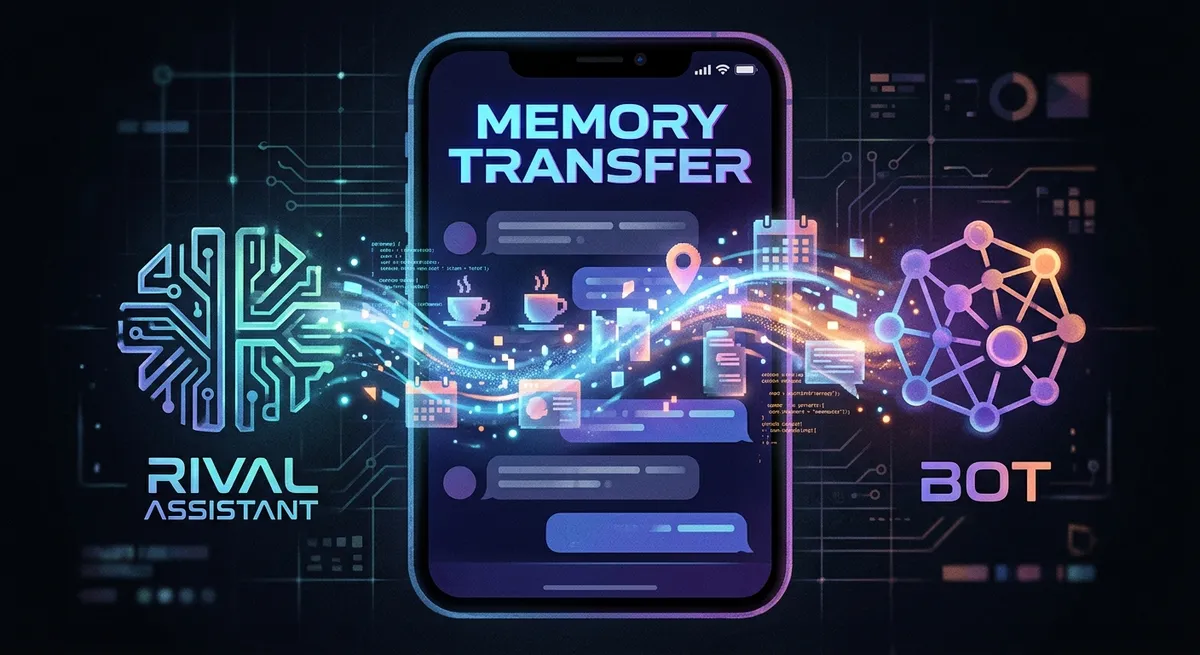
Top line: A heavy, X-led window with nine substantive items: xAI's Grok Bot announces a "Memory Transfer" capability to import learned user context from rival assistants (Claude, ChatGPT) — an agent-portability and lock-in move in the running Grok Bot cadence — and the same day's 0.70.2 changelog cadence lands without a Memory Transfer line, while adding bot email, X-search, in-chat app cards, payments, a Supabase/Cursor backend plugin and curated X Communities — and Mistral Large 4 ("Le Chonk") posts 13.3% on Surge AI's sudo L7 staff-level-engineering benchmark, ahead of Muse Spark 1.3 (12.2%) and Grok 4.7 (10.6%) — the first independent third-party eval to land for the Oct 6 open-weights entrant — and Gemini 4 Argon's global availability is confirmed on Google's own channels (paid Gemini API tier and platform, Ultra in Antigravity, Ultra/Pro in the Gemini app and Search), with 6 months of the highest Antigravity usage tier offered free to 10,000 scientists — and OpenClaw counter-releases v2026.10.3 with Muse Wonder support inside 48 hours of Meta's launch — and an AI agent, XBOW, collects Google's $250,000 full-chain Chrome bounty, the second in Chrome history, run on Sol 5.6 — and Mistral announces its models in orbit, joining Orbitworks and Loft Orbital's 50-satellite AI satellite constellation with NVIDIA AI Infra, with the Loft-side claim that the first satellite (Altair) launched "a few weeks ago" — and Morgan posts the first user-side cost check on Meta's Muse Wonder (the October 12 launch): weekly Muse Code limits hit inside 12 hours at Low Effort, with preliminary cost-per-task comparisons against Opus 5.5 and GPT 6.1 Sol judged "very high" — and Anthropic discloses that agent-scale merge volume (roughly 2,500 code changes per day in May to more than 30,000 per day in September) forced a five-month monorepo migration off git to in-house source control. The rest is anecdote and deployment color: a claimed end-to-end autonomous bug-fix-and-ship by Grok Bot, Starlink rescue and emergency-services vignettes, a Starlink #1 rural-UK Opensignal relay and a free-internet pilot in Vietnam's Hai Phong, a Reliance Jio plan for a satellite network covering roughly 600,000 Indian villages (reportedly around 2035) that extends the Starlink-India feud, Kratsios's "The Super Intelligence era is here" post pointing at SI.gov alongside a Melania Trump "2027 Presidential Superintelligence Challenge," a Morgan Stanley "Distributed Inference Cloud" note Musk endorses as "a very big deal," Google's Jeff Dean flagging hard fundraising for African and South American AI research events, the OpenClaw Foundation's first in-person meeting, and a Perplexity Decider-API land-use classification demo run at Phoenix city scale.
1. Grok Bot "Memory Transfer" announced — bring your Claude or ChatGPT context with you
What happened: Elon Musk relayed a launch post from Brian Roemmele (published Monday, October 13, 2026, around 12:43 AM ET) announcing a new Grok Bot capability: "AI Memory Transfer." The described feature lets the bot import what Claude or ChatGPT have already learned about a user — "your old AI knows you. Your new one shouldn't have to start from zero" — so users don't spend weeks re-explaining themselves. The same window carried a companion use-case anecdote (Musk RT of "Texas Twins Dad," published Monday, October 13, 2026, around 3:20 AM ET on X, i.e. late Sunday night US Eastern): a Grok Bot allegedly monitored a customer email, found bugs, fixed them, and "shipped on its own" while the developer was out with family — an unverified single-source claim, not the bot completing a verifiable external deployment.
What's genuinely new: This is a development of the running thread "ai — Agent-harness race: OpenClaw 2.0 and xAI Grok Build," which the storylines memory shows deep in Grok Bot sprint mode — the Oct 10–11 commerce-day purchase-loop push, the Oct 7 model-agnostic routing turn, and a public changelog (x.ai/changelog/bot), with OpenClaw counter-releases tracked on the same ledger. Memory Transfer extends that cadence in a new direction: rather than opening Grok Bot to rival models (the Oct 7 routing move), it targets rival products' accumulated user context — the harness layer competing on switching costs. The framing is also notable for treating competitors' memory data as portable at all; nothing in the window shows Claude or ChatGPT interoperating, so this appears one-directional. As ever on the AI beat this is announced via X, not shipped in a verifiable form — no changelog line, spec, or independent confirmation appears in the window. The bug-fix anecdote, if taken at face value (it should not yet be), would be the cadence's first claimed code-to-production loop; it is demo-grade and ledgered as such.
Addendum — the 0.70.2 changelog lands, without Memory Transfer: hours after the announcement, the Grok Bot 0.70.2 rollout hit the window (Mark Kretschmann and eric zakariasson relayed via Musk, ~2:17 PM and ~5:57 PM ET; matt palmer's video walkthrough ~5:45 PM ET): bots claim their own email addresses at @mail.grokbot.com and draft or send mail with approval, search X and read public posts and profiles without connecting an account, apps including Figma, Notion and Canva surface as live cards in chat, payments run through X Money or Stripe Link, plus a Shopify connection, QuickBooks Online integration, template search, PR previews, five new languages, and approval checks before irreversible actions (purchases, posting, deleting data). The itemized feature list does not include Memory Transfer — the changelog itemization watch gains its first negative datapoint while staying open. A companion integration also shipped: the Supabase plugin (Supabase blog relayed ~1:14 PM ET), where a change requested in chat is built and run on the user's Supabase backend through the Supabase MCP server, with Cursor credited on the build side. And xAI opened curated Grok Bot X Communities (x.ai/bot/community, relayed ~11:26 AM ET) with group chats segmented by GTM, Product, Marketing, Engineering, Recruiting and Design.
Watch: whether a later public changelog (x.ai/changelog/bot) line itemizes Memory Transfer and what data it actually moves (system-level facts vs. conversation history) — the day's 0.70.2 lists are the negative baseline; whether OpenClaw or the closed assistants respond — OpenClaw's counter-cadence shipped v2026.10.3 the same day (§8), though not a Memory-Transfer counter; and whether any "shipped on its own" anecdote ever produces a receipt-grade artifact, the record's standing demo→receipt gap.
Links: Brian Roemmele via Elon Musk (X) · Texas Twins Dad via Elon Musk (X) · Mark Kretschmann 0.70.2 via Elon Musk (X) · Supabase via Elon Musk (X) · Grok Bot X Communities via Elon Musk (X)
2. Jio plans its own satellite network for 600,000 Indian villages, reportedly around 2035 — while Starlink waits on India
What happened: Musk relayed (RT of Joe Hansen, published Monday, October 12, 2026, around 11:15 AM ET) a claim that Reliance Jio "now wants its own satellite network for 600,000 villages, reportedly done around 2035," against the backdrop that roughly one in three Indian schools still lacks internet connectivity by the government's own count — with the post arguing Starlink could serve those villages "this year" and urging regulators to "let it switch on."
What's genuinely new: A development of the thread "space — SpaceX as a US carrier: Starlink Mobile gets FCC clearance," whose most recent entry (October 12) records Musk's India pricing commitment — Starlink "will need to make price affordable … or no one will buy" — timed against Reliance Jio's parent Ambani group's IPO. The window now shows the feud's other side: a reported Jio satellite-building counter with a ~2035 horizon, which is a capital-and-competition datapoint in the India market-access fight. It is X-grade sourcing with a "reportedly" hedge; no regulatory filing or Jio statement appears in the window.
Watch: whether Jio's satellite plan surfaces in a corporate or regulatory document; the licence→commercial conversion timeline for Starlink India; whether the affordability line survives the IPO pricing environment.
Links: Joe Hansen via Elon Musk (X)
3. Mistral Large 4 ("Le Chonk") scores 13.3% on Surge AI's sudo L7 — first independent eval lands, ahead of Muse Spark 1.3 and Grok 4.7
What happened: Mistral's X account relayed Surge AI's leaderboard update (published Monday, October 12, 2026, around 2:03 PM ET): Mistral Large 4 has been added to sudo L7, Surge AI's benchmark for "staff-level software engineering," which tests "whether coding agents can go beyond writing correct code to exercise the judgment of experienced engineers: navigating messy systems, spotting hidden risks, and knowing when technically correct code is still the wrong thing to ship." Mistral Large 4 scores 13.3%, ahead of Meta's Muse Spark 1.3 (12.2%) and xAI's Grok 4.7 (10.6%). Surge AI frames the addition as "Le Chonk joins the sudo L7 leaderboard."
What's genuinely new: A development of the thread "ai — Efficient tier: GLM 5.3/Flash + the cheap-frontier race," whose October 6 entry introduced Mistral Large 4 ("Le Chonk": vendor-claimed 1T parameters, natively multimodal, open weights) with independent third-party runs explicitly listed as pending — "vendor-claimed numbers; independent runs pending. Watch: … third-party evals." This window delivers exactly that: the first independent third-party number in the record for Mistral Large 4, and from an eval vendor rather than a first-party amplification. It is also a cross-storyline datapoint: the sudo L7 ordering places Grok 4.7 (10.6%) behind both Mistral Large 4 and Muse Spark 1.3 on an independent coding-agent judgment board, whereas the agent-harness-race ledger so far carries Grok 4.7's third-party corroboration chiefly as X-amplifications of AI-runs. Caveats: the news breaks through Mistral's own account amplifying its own favorable placement; sudo L7 is a single benchmark from a single vendor, and the absolute numbers (13.3% top score) make cross-board comparisons meaningless.
Watch: whether sudo L7's sudo-level framing (correct code ≠ right thing to ship) gets adopted or contested by other eval vendors; whether xAI or Meta acknowledges the board; whether the Mistral-ahead-of-Grok ordering holds on other benchmarks or inverts, per the standing one-board-one-vendor caveat.
Links: Mistral (X) RT of Surge AI
4. Mistral goes to orbit: Ministral 3 joins the Orbitworks/Loft Orbital AI satellite constellation with NVIDIA AI Infra
What happened: Mistral's X account posted (published Monday, October 13, 2026, around 9:25 AM ET): "Look up! Mistral models are in orbit 🌍" — announcing that Mistral has joined @orbitworksspace and @LoftOrbital's "first-of-its-kind AI satellite constellation with @NVIDIAAIInfra." The post quotes Loft Orbital: "Just a few weeks ago," Orbitworks launched Altair, the first of a 50-satellite AI constellation that "will enable users to receive AI-generated alerts within minutes," with NVIDIA AI Infra "making this possible, supporting models like Mistral's Ministral 3 to deliver" those alerts.
What's genuinely new: A development of the thread "space — AI-enabled imaging constellations: Loft Orbital/Marlan $1B," opened September 10, 2026 from the Sep 10 digest: Marlan Space (UAE, an IHC subsidiary) + Loft Orbital leading a $1B consortium (Royal Group of Abu Dhabi money) for a 50-satellite "AI-enabled" constellation serving France/Europe/UAE, with Altair buses produced by Orbitworks (Abu Dhabi) and the first satellite due "next month" on a Falcon 9 rideshare — i.e., October 2026. The October 13 claims line up with that thread point for point (the 50-satellite constellation, the Altair-bus lineage, a launch "a few weeks ago") and tentatively satisfy the record's open launch prediction — but the confirmation is the consortium's own ecosystem speaking (Mistral relaying Loft Orbital), and no independent launch receipt — a rideshare manifest, catalog entry, or mission page — appears in the window. New on the AI beat: this is the first in-record in-orbit deployment of a Mistral model (Ministral 3), and it converts the thread's "AI-enabled" label from undefined marketing into a concrete advertised stack — NVIDIA AI Infra running Ministral 3 to produce alerts within minutes. An announced constellation role is not a verified orbital compute capability; this is announcement-grade from all parties involved.
Watch: an independent launch/mission receipt for Altair (SpaceX rideshare manifest or orbital catalog entry) closing the prediction's review window by November 30, 2026; what "AI-generated alerts within minutes" means operationally for customers; whether Ministral 3's orbital edge role gets its own spec sheet, and how this Mistral datapoint sits alongside the efficient-tier and sudo L7 threads from this same window.
Links: Mistral (X)
5. Morgan's first user-side cost check on Muse Wonder: weekly limits hit inside 12 hours, cost-per-task "looking very high"
What happened: Morgan, amplified via a Peter Steinberger RT (published Monday, October 13, 2026, around 6:07 AM ET): "Out of the gate, I am finding Muse Wonder to be a very expensive model to use." At Low Effort, Morgan hit the weekly usage limit on the Muse Code plan "in less than 12 hours"; on VulcanBench, an effort-level run could not be completed before limits were hit. The comparison point in the post: Astra "did every effort level, in under 12 hours, for less than $50" — making Muse Wonder, on Morgan's read, more expensive and a lot slower. Morgan also posted preliminary token-use results comparing Muse Wonder to Opus 5.5 and GPT 6.1 Sol, with the model "looking like an accurate model" but cost-per-task "looking very high" — and the practical choice framed as either paying "a small fortune" to benchmark the model given its token appetite, or stretching the benchmark over a month or longer.
What's genuinely new: A development of the storyline "ai — Meta bets on Muse consumer agent": the October 12 entry recorded the Muse Wonder / Muse Wonder Full launch (claimed to go "toe-to-toe with the industry's best") with three explicit watch items — "independent benchmarks vs the claim, the Muse-on-Wonder cutover actually shipping, API pricing/limits." This post executes two of the three: it is the first independent named-user benchmark exercise against the launch claim, and the first pricing/limits datapoint. The sourcing is stronger than the digest's usual anecdote layer — Morgan is already in the record as the agent race's verdict-giving practitioner (the Oct 2 three-way Grok Bot/Muse/Dots verdict; the Oct 4 Frontier-v4 model-layer reversal) — but it remains single-source, self-run, and partial: the full writeup Morgan has owed since Oct 4 is again absent, and "VulcanBench" is not an eval the record has seen before. The friction direction matters for the race ledger: Meta's Wonder arrives with token-hungry economics and weekly caps inside seven days of launch, while cost-per-task has been a running weapon in the harness race.
Watch: Morgan's full VulcanBench writeup (and whether the promised Oct 4 material finally surfaces); whether the weekly caps are launch-window throttling or the standing Muse Code shape; whether the Muse-on-Wonder cutover survives these token economics; whether Meta or any second reviewer contests the cost-per-task read.
Links: Morgan via Peter Steinberger (X)
6. Anthropic: agent-scale merges — ~2,500 code changes/day in May, 30,000+/day in September — broke git; monorepo migrated to in-house source control in five months
What happened: Anthropic's X account (published Monday, October 13, 2026, around 12:36 PM ET) announced a new engineering-blog post, "Creating in-house source control": "In May, we merged around 2,500 code changes per day. In September, we merged more than 30,000 per day. As a result, we became bottlenecked by developer infrastructure built for human (rather than agent) scale." The post describes how the company built a new version control system and "fully migrated our monorepo from git" in five months (anthropic.com/engineering/redesigning-source-control).
What's genuinely new: No storyline in the memory covers Anthropic's engineering infrastructure, so this enters as a debut datapoint with one clear adjacency: the Perplexity thread carries an October 12 entry — Perplexity Projects, "every Project is a Git repo," framed as "version control purpose-built for machine actors" — and the Anthropic post is the same pressure asserted from the other side: agent-scale change volume breaking version control built for humans inside a frontier lab. The numbers are self-reported by a company whose framing is itself the story (the stated bottleneck is agent workload, and Anthropic carries an IPO watch and an agent-incident corpus in the record); the "~2,500 → 30,000+ per day" trajectory and the "agent scale" attribution are company framing, not independently verified. Even so, the claim is concrete, dated, and tied to a checkable published artifact — a step above the X-grade layer this window otherwise runs on.
Watch: the blog post's technical detail — what the new source-control system changes about branching, review, and merge mechanics at "30,000 changes/day" scale; whether OpenAI, Meta or xAI disclose comparable agent-scale infrastructure numbers; whether this converges with the Perplexity Git-for-agents move into an agent-native version-control standard, or stays an in-house footnote.
Links: Anthropic (X) · Anthropic engineering blog
7. Gemini 4 Argon goes global: paid API, Ultra in Antigravity, Ultra/Pro in the Gemini app — plus six months free top tier for 10,000 scientists
What happened: Sundar Pichai posted (published Monday, October 13, 2026, around 2:39 PM ET, amplified by Musk as "Congrats!"): "Gemini 4 Argon is here. It's available globally today for developers and enterprises in the paid tier of the Gemini API and the Gemini platform, for Ultra subscribers in Google Antigravity, and Ultra and Pro subscribers in the Gemini app and Search." A Google DeepMind-side post (Hassabis RT of Jun Cheng, ~12:22 PM ET) states Gemini 4 Argon "is now globally available" — "built to solve your hardest problems from start to finish," across "coding, enterprise workflows, and cyber defense" — and announces a research give: the highest usage tier in Google Antigravity free of charge for 6 months to 10,000 scientists, with an application form. The same day, the GoogleAI account (~3:03 PM ET) demos Argon in research: using videos of humans performing tasks to "autonomously spin up training simulations," with a humanoid robot studying the videos, running the simulations and "mastering the game of cornhole."
What's genuinely new: A development of the thread "ai — Gemini 4: the Kavukcuoglu ship window": the storyline's October 13 entry already recorded Argon "opens to developers and Pro users" (Il Sole 24 Ore, ~1:00 PM ET) plus a same-day DeepMind robotics post — Google's own channels now confirm the widening and enumerate the full access surface (paid Gemini API + Gemini platform + Antigravity Ultra + Gemini app and Search). That converts the Sep 30 ledger's "developer/enterprise/consumer access undated" item to a dated one. The 10,000-scientist free highest-usage-tier promo (6 months) is a new adoption instrument aimed at the research class, and the cornhole demo is a vendor-run look at Argon's video→simulation pipeline rather than a third-party result. Caveats: "globally available" is the vendor's own wording; no tier spec, API status page, or independent access check appears in the window.
Watch: independent replication of the board #1 claims (Vals Index, Text Arena) — the thread's standing watch, now testable with open access; whether the 10,000-scientist promo produces named adopters or institution announcements; whether the highest Antigravity usage tier gets published limits/pricing.
Links: Sundar Pichai via Elon Musk (X) · Jun Cheng via Demis Hassabis (X) · GoogleAI (X)
8. OpenClaw counter-cadence: v2026.10.3 ships Muse Wonder support, alongside a day of UI movement
What happened: the @openclaw account posted (published Monday, October 13, 2026, around 4:55 PM ET): "OpenClaw v2026.10.3 patch release is out" — @Muse Wonder support plus MiniMax improvements, update/Doctor fixes, Mac setup fixes, conversation-recovery fixes, and "97 contributors" (docs.openclaw.ai/releases/2026.10.3). Hours earlier, a Patrick Erichsen changelog post relayed via Peter Steinberger (~3:25 PM ET) showed the UI layer moving: a right-hand sidebar rail for task progress, automations and dashboards; first-class multiplayer presence indicators (who's online); smarter model-picker options — with Erichsen's verdict: "I do all my coding work in OC now."
What's genuinely new: A development of the thread "ai — Agent-harness race: OpenClaw 2.0 and xAI Grok Build," whose October 13 ledger entry states "No OpenClaw counter-cadence step this window" — this answers exactly that: the open harness shipping support for Meta's two-day-old Muse Wonder models (launched October 12) the same day Grok Bot rolled 0.70.2 (§1), putting both flanks of the harness race on one Tuesday. Cross-thread datapoint: OpenClaw's Wonder integration lands before Meta's own Muse-on-Wonder cutover has visibly shipped — a counter-reading of the "ai — Meta bets on Muse consumer agent" launch watch. Caveats: single-source release notes; the depth of the Wonder support (full agent-loop operation vs. model access) is unspecified in the window.
Watch: documentation detail on the Muse Wonder support — full harness operation or partial model access; whether Meta's Muse-on-Wonder cutover lands within the same fortnight; whether OpenClaw adds Memory-Transfer-style context portability now that the feature exists to counter; whether the multiplayer-presence UI work signals the "one person, many agents" direction the Grok Bot anecdotes claim.
Links: OpenClaw (X) · Patrick Erichsen via Peter Steinberger (X)
9. XBOW collects Google's $250,000 full-chain Chrome bounty — "the second time in Google Chrome's history" — run on Sol 5.6
What happened: a jason post relayed by Peter Steinberger (published Monday, October 13, 2026, around 3:11 PM ET): Oege de Moor's account of a team event — "For the second time in Google Chrome's history, Google awarded a $250,000 bounty for a full-chain exploit… to @XBOW," set against a challenge posed at an all-hands in Malta at the start of 2026; the thread's correction clause pins the run to sol 5.6 ("it was with sol 5.6 ._."). A full-chain exploit is a top-tier, end-to-end browser compromise; the bounty figure is USD as stated.
What's genuinely new: A debut — no storyline in the memory carries XBOW, AI-agent penetration testing, or a bug-bounty record; this opens the thread. It is the strongest receipt-grade AI-security datapoint in the window: a named agent, a named payer (Google), a specific product (Chrome), a specific dollar figure ($250,000), and a "second time in Chrome history" frame, with the model used (Sol 5.6) called out by the source of the relay. It also reads against the same-day sudo L7 board (§3) as the "judgment beyond writing correct code" thesis cashing out in security work. Caveats: single X-thread source; the "second time" framing is the author's own account, and no Chrome vulnerability-rewards page or Google acknowledgment appears in the window.
Watch: Google's own acknowledgment or patch notes for the exploit; identification of the first-ever full-chain bounty award; whether AI agents become a standing vulnerability-rewards category rather than a one-off headline; whether XBOW's result reproduces on other bounties or boards.
Links: jason via Peter Steinberger (X)
Brief
- Grok Bot power-user scale RT: a Musk RT (published Monday, October 13, 2026, around 7:00 AM ET on X) of a user "seriously considering switching full-time over to grok bot" claiming to run 62 agents and 29 scheduled routines — newsletter writing, market-news pulls, self-auditing for duplicate work — billed as running "a one-person company." Anecdote-grade, single X source; scale-metric color for the autonomous-actions record, no receipt. Link
- Starlink rescue at sea: a RT (published Monday, October 13, 2026, around 1:11 AM ET) recounts a sinking boat ("Magic Bus") off the North Carolina coast whose captain used a Starlink Mini to reach the U.S. Coast Guard after radio failed; five people rescued by helicopter. Anecdote-grade, sourced only to an X post — rescue color within the Starlink value-case narrative, not a new storyline. Link
- Starlink to South Korea's fire service: a RT (published Monday, October 12, 2026, around 7:19 PM ET) says Gyeongbuk Fire Headquarters equipped a command vehicle with Starlink as a pilot for wildfire/flood/typhoon coordination in remote mountain areas. First Starlink emergency-services deployment in the record's Korea material; single-source. Link
- Grok Bot SaaS-cancellation anecdote: a post (published Monday, October 13, 2026, around 1:36 AM ET on X) claims the bot "made me cancel 7 SaaS subscriptions … autonomously." Cadence color for the autonomous-actions record; unverified. Link
- AI-outreach funding squeeze: Jeff Dean (published Monday, October 13, 2026, around 2:59 AM ET on X) says his family foundation has personally supported the Khipu (South America) and Deep Indaba (Africa) AI researcher events and endorses Discovery Loop's support, relaying Nando de Freitas' report that this year's fundraising is unusually hard. A small signal from the AI-institution layer about funding conditions outside the capex centers. Link
- OpenClaw Foundation's first in-person meeting: the @openclaw account (published Monday, October 13, 2026, around 12:02 PM ET) posts "See some of the faces behind the claw," with McBain noting the OpenClaw foundation "met in SF for the first time" last week. A governance-institution datapoint for the open harness that now sits under Microsoft's Autopilot, ships an Enterprise control plane with Red Hat, NVIDIA and OpenAI named as collaborators (since September 29), and underlies the Muse lineage — but the window carries no agenda, participant list, or outcomes. Link
- Perplexity's Decider API at city scale: an Arav Srinivas RT (published Monday, October 13, 2026, around 11:30 AM ET) shows the "Computer" agent classifying land use across Phoenix from aerial photos — 203,883 tiles of public USDA imagery run through Perplexity's Decider API, 98.8% accuracy against labeled OpenStreetMap data, at $9.63 in API costs. A vendor-run demo on the decision-model thread's Decider plank (pplx-decider vs Jev/Decisions API); figures single-source and self-graded. Link
- Starlink tops rural-UK speed study: a Musk RT (published Monday, October 13, 2026, around 5:46 PM ET) of DogeDesigner relayes an Opensignal study ranking Starlink #1 for download speed and Consistent Quality in rural UK, ahead of EE, Three and Vodafone, and leading rural download speeds "in all 14 European markets studied" — market-quality datapoint for the Starlink-as-carrier value case; the study itself does not appear in the window, so figures are relay-grade. Link
- Starlink pilot in Vietnam's Hai Phong: a Musk RT (published Monday, October 13, 2026, around 5:47 PM ET) reports Vietnam's Hai Phong government partnering with Starlink for free internet on remote islands — 10 Starlink terminals (6 in Cat Hai, 4 in Bach Long Vi), with FPT handling deployment and technical support. The first Vietnam deployment datapoint in the record since the country's late-September commercial-expansion entries; single-source X. Link
- Morgan Stanley's "Distributed Inference Cloud" note, Musk-endorsed: a Musk RT (published Monday, October 13, 2026, around 5:38 PM ET) quotes Adam Jonas's new Morgan Stanley SpaceX note — the Distributed Inference Cloud is the part of the SpaceX story holding "the greatest growth potential" yet "largely ignored/not contemplated by investors" — with Musk's endorsement: "True, this is a very big deal." Companion RT (~5:35 PM ET): on supercomputer data centers, demand is high, but "getting money to build complex hardware systems with massive power, cooling & networking is not the same as doing it … even we find it very difficult!" Analyst layer for the record's space-compute lineage; X-grade, headline-only. Link
- "The Super Intelligence era is here" — SI.gov surfaces; a 2027 challenge named: an OSTP Director Michael Kratsios post (published Monday, October 13, 2026, around 12:32 PM ET, Musk-amplified): "The Super Intelligence era is here. 🇺🇸 https://SI.gov" — the first standalone federal-branded site datapoint in the record for the superintelligence-rebrand thread. First lady Melania Trump posts "THE 2027 PRESIDENTIAL SUPERINTELLIGENCE CHALLENGE" (~12:44 PM ET). Both announcement-grade posts; no text, rules, or budget for the challenge appears in the window. Link
- λ-JEPA joins the JEPA paper cadence: a LeCun RT (published Monday, October 13, 2026, around 11:50 AM ET) relays Berker Demirel's arXiv note (2609.35288): a high-rank projected representation "does not guarantee a non-collapsed backbone" in JEPA models; λ-JEPA is "designed to target this gap" — the representation-collapse question pressed on the lineage's backbone. Academic/vendor-adjacent as standard for the LeCun-amplified stack; no benchmark claims graded in the window. Link
- Grok Bot household/agents anecdotes: a Musk RT (published Monday, October 13, 2026, around 2:49 PM ET) shows a three-bot "food prep team" — Meal Organiser, Shopper, Cooking Bot — filling the grocery cart while checkout stays with the human; a companion post (~5:50 PM ET) shows a "Scam Email Detector" bot triaging daily phishing from a public inbox. Multi-bot orchestration color for the autonomous-actions record; demo-grade, no receipts. Link · Link
Dropped
- "Insanely bullish $META" / "Of course" (Tesla free supercharging) / Ben Affleck–StarCraft / "AGI" 30-minute phone-call anecdote / Erika Donalds Grok Bot use-case list: market-cheer, off-topic, entertainment, or demo color with no news substance.
- RT "KC" and RT "Cicily" Grok Bot promotional reposts: flagged stale-update — the same 24/7-agent framing already covered in the storyline memory's Oct 10–12 entries; no new fact.
- Citroën 2CV "new 2CV" car-reveal tweet (on sale 2028, €15,000/£13,000) plus the "what a vibe" reaction: consumer-auto product news, off-topic.
- Roemmele "71 large clients brought to Grok Bot" post and RT Jerrod Lew "strongest personal agent / bundle X-Grok-Grok Bot subscriptions" RT: same promotional/testimonial framing already ledgered as stale-update cadence color; no new fact.
- RT Melvin Vivas (bare X article link) and RT SpaceX Falcon 9 / ISS Dragon resupply launch broadcasts (6:33 AM EDT launch to resupply Expedition 75, 6,300 pounds of cargo): link-only post and station-logistics space-ops items with no AI-social tie in the window.
- Demis Hassabis–Isomorphic Labs joins the Virtual Biology Initiative (with CZI) as a founding member: published October 7, 2026, six days before this window's close — stale relative to a daily record, no fresh delta attached, and no thread in the storylines memory carries it.
- trq212 "excited to be back home": no subject, fact, or substance stated in the post.
- Paul Graham Tesla FSD praise ("so much future for $40k") and the 2018 Eberhard-story clip thread: product-cheer and company-history color, off-topic to the AI-social beat.
- RT Debbie O'Brien and RT Déborah Grok Bot promotional reposts, the nichochar "day-in-the-life video for itself," and RT Yun-Ta Tsai "anyone can operate like a CEO" (story_id 6990/6726 cluster): flagged stale-update promotional color — same-use framing already ledgered; no new fact.
- LeCun political RTs (Kenneth Roth on Trump/Ukraine/fuel prices; Steve Rattner's $5,000 post-midterm checks costing $1.2 trillion against a $40 trillion federal debt; Morgan J. Freeman "why Trump is terrified of losing Congress"): off-topic US politics.
- Micron memory-pricing RT ("reasonable regarding future memory prices, while others have been extortionate"): off-topic chip-supply comment thread.
- Benji Taylor "taste" boundary take ("I no longer see any compelling reason to believe that taste is some permanent boundary LLMs won't cross"): opinion with no checkable fact attached.
- Grok Bot use-case one-offs (Explainer Video Bot; Action Button voice-mode delegation): demo-grade single posts, no news substance beyond the cadence covered in §1.
- Starship 40's return to base (first Starship back at its launch site, now vertical at Starbase with flown-heatshield/Raptor data claims): space-ops item with no AI-social tie in the window.
- DeepMind FNV3 Hurricane Isaias forecast RT (signal picked up September 23, landfall-location call 4 days ahead, published October 10, 2026): three days stale relative to this window's close, no fresh delta attached, and no storyline in the memory carries DeepMind weather.