AI social digest — 2026-10-17
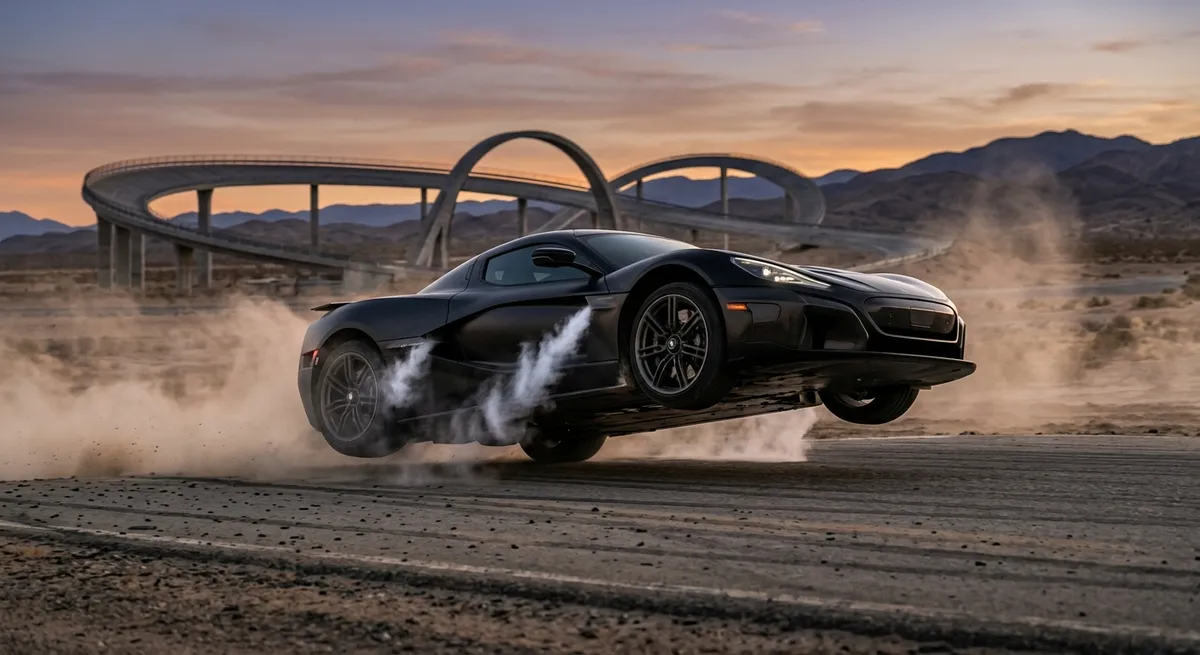
Top line: The window is a continuation day with one dominant thread and a handful of solid product datapoints. The Tesla Roadster flight-demo storyline thickens from four directions — Musk puts an autonomy/"sentient" claim and a Texas test track on record, Carmack supplies the thread's most grounded technical and sales skepticism, LeCun adds a hard-physics takedown with actual thrust math, and Top Gear carries mainstream amplification. Perplexity's decision-model line gets a priced, shipped v1.2 refresh; OpenClaw's harness thread gains a named security milestone (Trail of Bits audit) plus a six-city RTX Spark launch-day recap; and Notion's AI lead supplies the strongest second voice yet for the CPU-inference argument. Claude-side items are mostly backfill of already-recorded launches plus a first-birthday note for Skills. Midday October 17 brings two new layers: LeCun amplifies Nirit Weiss-Blatt's investigation mapping nearly $3 billion in historical and projected funding behind the AI existential-risk ecosystem — the doomer-backlash thread's first follow-the-money move — and Musk floats a future-demo escalation (Snake River/Grand Canyon flights at over half the speed of sound). The evening side of October 17 adds the decision-model thread's first third-party performance claim — Arav amplifying Wolfram Ravenwolf's tests finding pplx-decider-flash-v1.2 matching a comparator's accuracy at roughly twice the speed, on-device on a 16 GB Mac mini — plus an NVIDIA amplification of the already-recorded SPACE sandbox open-source. The later evening and remainder of the window add four layers: LeCun amplifies the Roadster thread's first consumer-trust critique — a broken-promises accounting running from the undelivered 2017 second-gen Roadster through FSD robotaxi income marketing, the August 2026 Solar Roof shutdown, and Cybertruck shortfalls; Richard Sutton amplifies a Pirate Wires deep dive interrogating the psychology of prominent AI doomers, the doomer-backlash thread's first movement-psychology piece; Musk replies to Kalshi with his most checkable superintelligence claim yet — "useful output of US" growing more than 50% by 2030 due to SI barring a major war; and the Grok @bot testimonial lane produces its first refund-and-carrier-dispute receipt plus a "bot pays for itself" claim, both landing Brief-only beside a nichochar RT framing Notion as the "data backpack" constant across agents. Two low-weight nichochar items land Brief-only: Opus 5.5 learning-prompt color from his "prompt collection" and a self-prediction of a coming wave of AI-assisted personal hacks. Earlier in the window, two low-weight adds land Brief-only: nichochar's "suspiciously quiet" anticipation of a big Anthropic launch, and a Musk RT of a DogeDesigner Starlink–India fact-sheet that carries a new Jio-side launch timetable (September 2027 test, early-2028 mass deployment).
1. Roadster flight demo: the "sentient" claim, a Texas test track, Carmack's cold water, and LeCun's thrust math
What happened: The Roadster flying-demo storyline (opened October 15–16 after the public flight demonstration) gained new layers in this window. On October 16, 2026 at ~3:00 PM ET, Musk relayed Top Gear's "the new Tesla Roadster can actually fly." On October 17 at ~3:12 AM ET, Musk replied to Robert Scoble that buyers "will be able to ask the Roadster to perform any of the tricks shown autonomously, as it will be sentient," adding that a "wild looping track (crazier even than Hot Wheels)" will be built at Tesla's Texas HQ where owners can test the car. Separately, Carmack supplied the thread's toughest technical commentary to that point: on October 15 at ~11:07 PM ET he argued compressed-air tanks are less dangerous than the CNG/hydrogen tanks in thousands of existing vehicles ("Still, I wouldn't want to be in a crash with one"), and said "I doubt there will be a hundred of the full-flight models sold, but the thrust package is just practical enough for the fringe of the supercar market"; a companion post (~11:09 PM ET) attributed the extreme cornering and launches to suction fans rather than thrusters, doable "without the tight time limits." At ~12:13 PM ET on October 17, LeCun RT'd a long-form consumer-trust critique (AdrianoFeria.eth) arguing the flying-Roadster backlash is about accumulated broken promises rather than hostility to innovation: the post recounts the second-generation Roadster unveiled in 2017 with customer deposits taken and 2020 deliveries promised that never arrived, Full Self-Driving marketed with robotaxi income for Model 3 owners that did not materialize, the Solar Roof (unveiled 2016) struggling and then discontinued in August 2026, and Cybertruck falling short of its original pitch in build quality, recalls, and demand — closing that the flying demo is "an expensive, impractical engineering stunt" with "no credible near-term path toward mass-market usefulness" and asking "why not just deliver what was promised?" At ~12:37 PM ET the same day, LeCun put the thread's first hard-physics quantification on record: "it's just compressed air… But crappy specific impulse (less than 50 seconds). Even assuming that 50% of the mass of the car is the compressed air, that gives you less than 10s of useful thrust… Probably more like 5 seconds, actually. So the car must be an empty, lightweight shell containing big compressed air tanks. Cute demo, but totally impractical." At ~1:18 PM ET, Musk escalated the forward demo program: coming Roadster demos "will include flying over the Snake River or maybe Grand Canyon and landing on its wheels and exceeding half the speed of sound," with the attached line "Turns out the future does have flying cars."
What's genuinely new: A development of the tick-2026-10-16-tesla-roadster-flight-demo thread, which already carries the demo, the official 0.81-second claim, and Moravy's engineering detail. New here: Musk's own autonomy claim — with the notable escalation that the car "will be sentient" — plus the first physical test-facility commitment (the Texas looping track). Carmack's posts add the first independent danger-sizing of the air tank and the first sales-ceiling estimate for the full-flight variant, and re-attribute the handling claims to suction fans. LeCun's thrust post is the sharpest skeptic layer yet — a specific thrust-duration argument (~5–10 seconds of usable flight) against Carmack's broader framing, making three independent technical skeptics on the record — and his RT of AdrianoFeria.eth diversifies the skeptic bench from physics to consumer trust: the thread's first track-record critique, recasting the argument from thrust math to Tesla's history of undelivered promises, though every dated reference in it (the 2017 unveiling, the deposits, the August 2026 Solar Roof shutdown) is the post's own accounting, not independently confirmed in the window. The Snake River/Grand Canyon line is the first named-future-demo escalation since the demonstration itself. Note the discipline still applies: this remains a demonstrated car, not a shipped one — there is still no delivery date, price, or regulatory artifact anywhere in the window, and the forward demo claims are promises, not flown flights.
Watch: Whether "sentient" gets an engineering definition or quietly softens; whether the Texas track produces a dated, verifiable customer-testing program; how Moravy's ~200 L nitrogen vessel stands up to LeCun's specific-impulse math (the two accounts have not yet been reconciled); independent verification that the cornering figures survive the suction-fan (vs thruster) attribution; any actual production unit count against Carmack's sub-100 estimate; whether the Snake River or Grand Canyon demo happens on any dated schedule; any Musk or Tesla response to the broken-promises framing and the still-undelivered 2017-deposit Roadster; and whether the trust-erosion frame travels into mainstream coverage against the demo coverage.
Links: Musk reply to Scoble (X) · Top Gear RT (X) · Carmack on tank safety and sales ceiling (X) · Carmack on suction fans (X) · LeCun compressed-air thrust critique (X) · Musk on future Snake River/Grand Canyon demos (X) · AdrianoFeria consumer-trust critique via LeCun RT (X)
2. Perplexity refreshes its open decision models: v1.2 ships in two sizes, and gets its first third-party grade
What happened: On October 16, 2026 at ~3:46 PM ET, Arav Srinivas announced the next generation of Perplexity's open-weight decision models: pplx-decider-flash-v1.2 (4B parameters, 1 cent per million tokens, the top 4B model on the HF Decision Index) and pplx-decider-v1.2 (27B parameters, 2 cents per million tokens, #2 on the HF Decision Index overall). Perplexity's developer account followed with the detail that text and vision scores improved and inference is up to 5x faster because all questions in a request run in one pass. Clem amplified at ~4:41 PM ET, noting the weights are on Hugging Face. On October 17 at ~4:10 PM ET, Arav then amplified third-party testing of Flash: "Perplexity Decider Flash is pretty good and can run super fast and on-device on your M4 Mac 16GB" — pointing to Wolfram Ravenwolf's account of tests in which Decider Flash "matched Wald's accuracy at nearly twice the speed on a 16 GB Mac mini" across "synthetic agent decisions, real email threads, prompt injections," and is Ravenwolf's new pick for email-completion checks.
What's genuinely new: A development of the decision-models thread (the TypeSafe AI's Jev storyline), which already tracks the earlier pplx-decider generations, Strands Decider, and the still-missing independent head-to-head. New here: a version bump from v1.1 to v1.2 with concrete parameter counts and per-million-token USD pricing for both sizes, actual open weights published on Hugging Face, and a measurable inference-speedup claim. The October 17 layer adds the record's first third-party performance claim for the family — on-device operation on a 16 GB consumer Mac with a claimed accuracy-parity-at-roughly-2x-speed result — though it reaches the record through the vendor's own amplification, and the comparator named only as "Wald" (model identity not identified in capture) is unverified. Unlike the Roadster beat, this one is shipped — weights, API availability, and now a named consumer-hardware deployment path are all claimed live, though the benchmarks remain vendor- or vendor-relayed-self-reported.
Watch: An independent run of v1.2 against Jev, Clef, and the OpenAI Decisions API — the comparison the thread has never captured; the published Ravenwolf methodology and what "Wald" actually is; whether Jev, Clef, or the Decisions API get the same on-device treatment; adoption of the 5x single-pass inference framing elsewhere; whether the "#2 overall, will improve rapidly" HF Decision Index position holds.
Links: Arav Srinivas announcement (X) · Clem RT on Hugging Face weights (X) · Arav on Decider Flash on-device (X)
3. OpenClaw's security record goes on file: Trail of Bits audit done, six-city launch day tallied
What happened: On October 16, 2026 at ~7:49 PM ET, steipete relayed josh avant's account of taking security "very seriously at OpenClaw for a while now" — the team completed a Trail of Bits audit (with a public engagement recap posted) and publishes security advisories, "unlike every other agent product." The same evening, at ~9:15 PM ET, the NVIDIA RTX Spark account (RT'd via the OpenClaw account) recapped the RTX Spark launch day across six cities — Seoul, Taipei, Beijing, Berlin, Istanbul, and San Francisco — including "Build-a-Claw" sessions and the #ShareYourSpark campaign, two days after the same thread recorded OpenClaw shipping out of the box on RTX Spark laptops.
What's genuinely new: A development of the agent-harness-race thread. OpenClaw's out-of-the-box RTX Spark presence is already on the record from October 16; what is new is the named third-party security milestone — a completed Trail of Bits engagement with a published recap — and the first published-advisories claim, an unusually concrete trust-and-safety Differentiator for a harness product. The six-city count also enlarges the launch-day footprint beyond the San Francisco framing first captured.
Watch: Whether other harness vendors match the published-advisories practice; the audit recap's actual scope (what was tested, what was excluded); whether local-model performance on RTX Spark resolves the earlier Verge hands-on's "not yet" finding.
Links: steipete RT of josh avant (X) · RTX Spark six-city launch recap (X)
4. CPU-inference argument gains a second voice: Notion's "CPUs underrated" case
What happened: On October 17, 2026 at ~2:30 AM ET, nichochar amplified a clip of Notion AI's lead Sarah Sachs arguing that "a lot of things should be served on CPU that are served on GPU," citing "a lot of benefit and determinism in executed code," with a follow-on about agents; his own framing: "CPUs underrated. GPUs overrated. people are dramatically underestimating how much software wants to be running in the future."
What's genuinely new: A development of the Anthropic CPU-inference thread (the Akamai deal storyline), which so far rests on one company's CPU-based distributed-inference arrangement with no detail on which workloads moved. This is the first independent, named second voice in the record arguing the same direction — served-on-CPU over served-on-GPU, on determinism grounds — from a company actually running agent workloads.
Watch: Whether any named Notion workload actually moves from GPU to CPU; whether Anthropic's Akamai arrangement discloses which models or tiers run on CPU; any follow-on numbers from either side.
Links: nichochar on CPUs vs GPUs (X)
5. Follow the money: Weiss-Blatt maps nearly $3B behind the AI existential-risk ecosystem
What happened: On October 17, 2026 at ~12:15 PM ET, LeCun RT'd Nirit Weiss-Blatt's announcement of a new investigation "mapping nearly $3 BILLION in historical and projected funding behind the AI existential-risk ecosystem."
What's genuinely new: A development of the doomer-backlash strand inside the risk-governance thread (Huang's named-targets "irresponsible" charge, the Jeffries taxonomy, the EA/digital-minds debate). That backlash has so far been personalities and rhetoric; the funding map moves the argument to follow-the-money, and Weiss-Blatt is a repeat LeCun amplification (he carried her read of The Economist's EA piece on October 3). The headline figure is the investigation's own promo line as relayed in the RT — the underlying report is not in the window, so the $3B is a claimed total, not a published document on record.
Watch: The investigation's published form and methodology — who is counted, historical vs projected split, what period it covers; whether the figure survives scrutiny; any named funder or grantee response; whether the map enters mainstream coverage the backlash has so far lacked.
Links: Weiss-Blatt investigation via LeCun RT (X)
6. The doomer-backlash thread probes psychology: Pirate Wires' "sincere" rationalist deep dive, amplified by Sutton
What happened: On October 16, 2026 at ~3:25 PM ET, Richard Sutton RT'd "jane ~ in SF" celebrating a deep dive published with Pirate Wires — "a sincere investigation into why so many prominent AI doomers are also extremely kinky, & what this overlap reveals about the movement's underlying psychology." The outlet's framing on record: "It's easy to find sensationalized, low-brow, bad-faith writing about 'rationalists' in the AI world. But is there perhaps a more sincere way of scrutinizing the worldview of the people at the heart of this movement: one that is currently shaping public discourse, policy…"
What's genuinely new: A development of the doomer-backlash strand inside the risk-governance thread, which on October 17 gained its first follow-the-money layer (the Weiss-Blatt funding map). This is the strand's first movement-psychology piece — investigating the personalities and psychology behind doomer prominence rather than funding or rhetoric — and the record's first Richard Sutton amplification on this beat, with the experience-first-AGI researcher landing on the backlash side of the argument. The piece's substance beyond its promo framing is not in the window.
Watch: The investigation's argument and evidence in its own pages; who it names; response from the doomer/EA side; whether the psychology frame travels alongside the funding map into mainstream coverage the backlash has so far lacked.
Links: jane/Pirate Wires via Sutton RT (X)
Brief
- Grok @bot receipts turn to refunds and self-funding (October 17, 2026): Musk RT'd Katie Miller at ~7:17 PM ET describing a dress ordered for a black-tie event via @bot, never delivered (with DHL named), after which the bot submitted a refund request to the merchant "including contacting the DHL," tracked the delivery, followed up with the merchant, and reported the refund appearing back on her credit card — "It's automating the worst part the shopping experience: refunds & returns." At ~8:16 PM ET Musk relayed a "Mike P." testimonial — "I told my Grok Bot to go figure out how to pay for itself" — under his own line "This really works! Grok @Bot can pay for itself." Development of the @bot testimonial lane (Miller's September recurring-payment-unsubscribe anecdote and the October 15 Amazon-block returns bot are the prior entries): the thread's first consumer refund-and-carrier-dispute case and the first self-funding framing — both Musk-relayed user testimonials without independent verification; receipts, not shipments. (Katie Miller refund via @bot (X) · Grok @bot pays for itself (X))
- Musk quantifies the superintelligence economy (October 17, 2026, ~8:11 PM ET): replying to Kalshi, Musk wrote that if the metric is "useful output of US," then ">50% growth by 2030 due to SI is extremely likely, unless there is a major war." His most checkable superintellence claim on record — a dated, condition-on-no-major-war growth forecast rather than a vibe; logged to predictions. Development of the superintelligence-rebrand thread's Silicon Valley-adoption strand, where Musk's color to date (the "dollars" line, the Optimus Prime quip) carried no checkable claim. (Musk reply to Kalshi (X))
- nichochar: Notion as the "data backpack" constant (October 17, 2026, ~7:11 PM ET): RT'ing Nick Beaird ("across every agent / tool i've used @NotionHQ has been the one constant") with his own line "notion is a data backpack." Adjacent to the Notion CPU-inference section but a different claim — Notion as persistent agent memory rather than CPU-served inference; unclustered, no artifact. (nichochar (X))
- Claude Skills turns one (nichochar, October 16, 2026, ~9:11 PM ET): "happy birthday to skills, they turn 1" — a one-year anniversary marker for the reusable-capability system Alex Albert introduced in claude.ai, Claude Code, and the API. No new capability claims in the post; unclustered — no dedicated Skills thread exists on the record yet. (nichochar (X))
- Argon/Gemini quota reset on Antigravity (Varun Mohan RT'd by Demis Hassabis, October 16, 2026, ~6:18 PM ET): Argon and Gemini model quotas reset for everyone "through the weekend" "after lots of excitement this week" — a developer-relations datapoint on the Gemini 4 post-ship thread. (Hassabis RT (X))
- Perplexity Computer rollout pacing (Mitchell Hashimoto, October 16, 2026, ~10:10 PM ET): "Another 1000 invited today" — the invite-by-invite rollout continues at a pace of small batches, not general availability. (Hashimoto (X))
- Anthropic product-layer items surfacing in the window: Claude Haiku 5.5's launch framing (October 7, 2026, ~2:01 PM ET — already ledgered in the Opus 5.5 thread); Claude Dashboards and Claude Motion entering beta (October 8, 2026, ~3:01 PM ET); the Claude Startups program expanding to more founders with a year of Claude Team and API credits (October 6, 2026, ~12:49 PM ET). All re-surfaced older items, not new events; Dashboards/Motion and the Startups expansion are unclustered. (Dashboards/Motion (X) · Claude Startups (X) · Haiku 5.5 (X))
- Musk color, one-liners (October 17, 2026): "sometimes I wonder how many dollars there are in the world, because super intelligence seems to want them all" (~12:32 AM ET) and "Optimus will build Optimus Prime" in reply to a Polymarket reference (~1:25 AM ET) — no checkable claims. (Musk on superintelligence (X) · Musk on Optimus Prime (X))
- OG Roadster lore (Trung Phan relayed by Musk, October 17, 2026, ~3:35 AM ET): Jay Leno's reaction to the first production 2008 Tesla Roadster, including the 6,831-cell battery pack and torque-from-0-RPM remarks — nostalgia adjacent to the new Roadster thread, no new claim. (Musk RT (X))
- nichochar's Anthropic-quiet tease (nichochar, October 17, 2026, ~9:26 AM ET): "Anthropic has been suspiciously quiet. I suspect they will launch something really big soon. exciting!" — pure anticipation from Anthropic's own Claude Code lead, no artifact, no date, no named product. Unclustered for now: the Opus 5.5 model-line thread's September pledge has fully delivered (Sonnet 5.5 on September 28, Haiku 5.5 on October 7), so there is no open ledger this tease attaches to. (nichochar (X))
- Starlink–India fact-sheet RT (Musk RT of DogeDesigner, October 16, 2026, ~10:56 AM ET): a fact-sheet framing of the satcom row, amplifying the Reliance "welcomes competition" statement recorded earlier that day — Starlink claims on file: "11,000+" satellites in low Earth orbit, India-specific security controls with Indian users' data kept in India, and 20 gateway sites built (the gateway count already ledgered). Counter-side is new to the record: Jio has launched no satellites for its proposed LEO constellation, with a first test launch reportedly targeted for September 2027 and mass deployment from early 2028. Development of the Starlink Mobile India leg; the same-day "much appreciated" softening from Musk on Reliance's stance is already on the record. (DogeDesigner RT (X))
- "No more meat proxy PR reviews" (nichochar RT of Will Larson, October 17, 2026, ~12:25 PM ET): Larson's commentary that the agentic-development patterns in circulation were introduced to cut down on "meat proxy review," which he calls "a bottleneck-masquerading-as-a-solution for useful PR review" — opinion adjacent to the agent-harness thread, no product or claim on record. Unclustered. (nichochar RT (X))
- SPACE open-source gets its named amplifier (Arav RT of NVIDIA AI, October 17, 2026, ~12:04 PM ET): NVIDIA AI's account — "Building safer AI agents takes more than model safeguards" — amplified Perplexity's already-recorded SPACE open-sourcing with the platform's mechanics on record: each agent task runs in its own Firecracker microVM, with credentials and outbound traffic controlled from outside the VM, and the repo is live under Apache 2.0. A development of the October 15 SPACE open-source record arriving via a named amplifier; the mechanics are the same post's claims, vendor-stated. (Arav RT of NVIDIA AI (X))
- Opus 5.5 learning-prompt color (nichochar, October 17, 2026, ~2:58 PM ET): "another good prompt for the prompt collection" — relaying gabriel's claim of learning "anything in 20x faster" with an Opus 5.5 "bottoms up explainer" prompt requesting the simplest step-by-step animations; use-case color on the Opus 5.5 model line, unclustered, no artifact. (nichochar (X))
- nichochar's "personal hacks" prediction (October 17, 2026, ~3:00 PM ET): "we're going to see a whole lot of personal hacks in the next year. people are going to get identity stolen and bank accounts wiped" — retail affected worst ("poor security hygiene") and an AI reputation that worsens as a result. A dated self-prediction adjacent to the agent-security threads, logged to predictions; no incident on record in the window. (nichochar (X))
Dropped
- Musk RT of Joe Gebbia ("Invasion update from France"): Marseille city hall / Palestinian flags via Shai Goldman — political content surfacing in the fetch, unrelated to the AI beat.
- Musk RT of Peter H. Diamandis and the "Your optimism is refreshing" reply: an optimism-of-reading-100-stories-a-week motivational thread and its one-line reply — no AI claim.
- Musk "Re @tetsuoai Yikes 😬", "Re @Geiger_Capital 💯", "Re @StefanMolyneux True", "Re @kevinnbass 🤔", and the LeCun RT of Alexandr Wang's highway teaser: single-word/emoji replies and referent-less RTs with no checkable claim in capture.
- Musk "Re @shaunmmaguire Almost. One last chance this election": election-politics color, off the AI beat.
- Musk "Re @KettlebellDan Just use X Chat": pointer reply with no named problem or context in capture; no checkable claim.
- nichochar "s tier advice" RT of Tim Ferriss: relaying a "How to Use Writing to Sharpen Your Thinking" piece — advice content, no AI artifact.
- RT DimiX (McLaren F1 crash, Zip2-to-PayPal anecdote): a 2000-era Musk anecdote retold as engagement bait — entertainment content, not news.
- RT X Ethan (Elon Musk conversing with Elon Musk): novelty/entertainment post; no verifiable AI artifact in capture.
- RT @EpochTimes ("Truth Under Fire"): political-media plug unrelated to the AI beat.
- RT The New Yorker (Susan B. Glasser, Trump/Putin/Zelensky): political-media commentary surfacing in the fetch via LeCun but unrelated to the AI or satcom beats.
- Musk RT of X Freeze (Starlink healthcare kits, Morobe Province, Papua New Guinea): Starlink color without a claim or thread this topic tracks; no AI-social content.
- Musk Boring Company credit attribution (Steve Davis and team "deserve almost all the credit"; duplicate capture of the same reply): engagement color on tunneling, not news for this topic.
- Musk "It will not access anything unless asked specifically to do so" (reply to AdamLowisz): reply with no named system or referent in capture; no checkable claim.
- Musk "Re @aelluswamy: Yes" and "Re @anabology: No roads in space": one-word/joke replies with no substantive content.
- Musk "Since fate maximizes for ironic entertainment…" and the anabology "TESLA ROADSTER: DOWNFORCE / Flying cars are real" RT: amplification of the already-recorded Roadster demo, no new claim.
- RT Robert Scoble / DogeDesigner full-unveiling RT / stevenmarkryan reaction compilation: amplification of the already-recorded Roadster demo; the Scoble steer-by-wire commentary and the reaction-video timestamps add no new on-record claim.
- Musk replies "@Red5djedi… Optimus will build Optimus Prime" beyond the brief: kept in Brief only as color; the surrounding Polymarket context remains unverified in capture.
- Musk one-word/emoji replies ("💯😂", "Nobody's perfect", "Anomalies in the matrix are inevitable", "Sadly, propaganda works", "Why are you using old versions of Imagine?") and the "beautiful ads" RT thread: single-line reactions with no checkable content; the Imagine-related items are already accounted for in the existing Grok Imagine storyline.
- Franz von Holzhausen "Designed, engineered, and made in America": marketing amplification.
- Carmack on solar-panel clamping and Q-learning/bootstrapping convergence: off-beat technical lore in reply threads, dated September 2026; not news for this topic.
- trq212 "we should be more ambitious" and the Max-plan API-credits/Chrome-extension thread: vendor-adjacent product color, largely already represented via the Claude items in Brief; the separate "failure case" prompting item is commentary rather than news.
- LeCun RT of Pew Research Center (Trump approval by religious group): national political polling, unrelated to the AI beat.
- Musk RT of More Births (Canadian birth/immigration demographics) and the "suicidal empathy" book plug (Gad Saad, October 17, 2026): demographic-statistics and political-book content, off the AI beat.
- Musk RT of SpaceX (Bandwagon-5 rideshare, 32 payloads encapsulated): launch-ops amplification outside this topic's satcom threads.
- Musk one-word replies "Re @MoreBirths Wow", "Re @Uebey !!", "Re @seanmdav Exactly", "Re @EuroDale Extremely disturbing": replies with no referent or checkable claim in capture.
- nichochar Vulfpeck post (October 17, 2026, ~4:52 PM ET): "ai is cool but it will never replace live music best funk band alive @vulfpeck" — banter with no AI artifact.