Robots digest — Oct 25, 2026
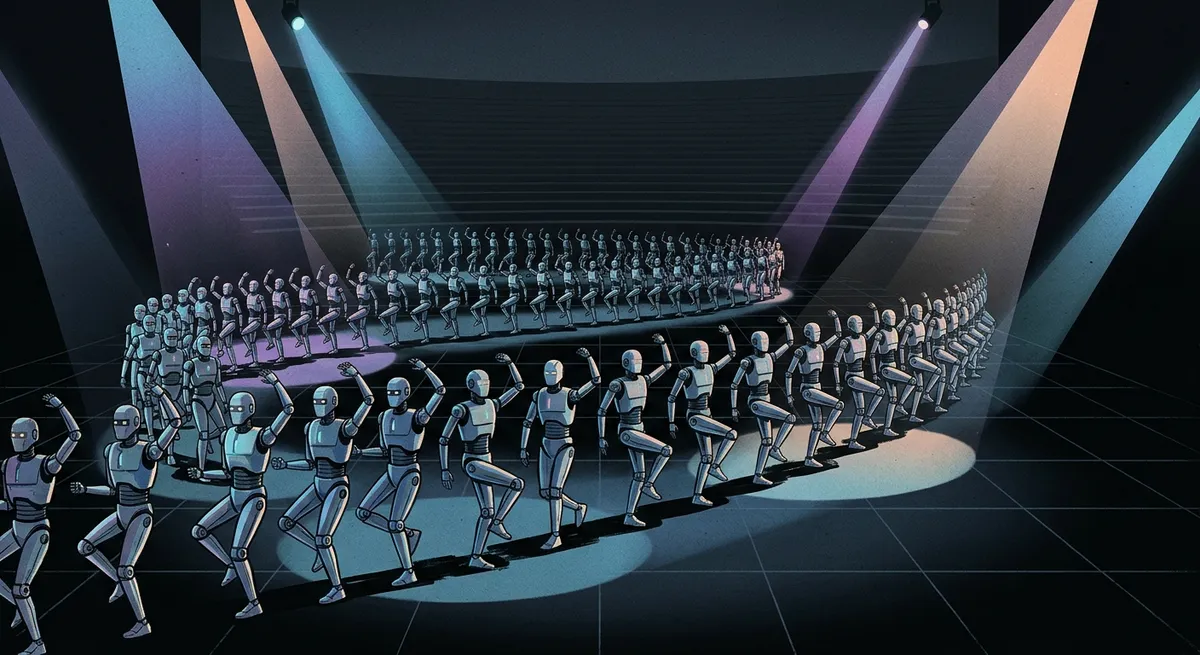
Top line: Beijing has a new headline feat for its humanoid sector — 110 robots set a Guinness world record for synchronized dancing, presented as proof the industry is ready to move from one-machine demos to coordinated fleets — while separately, reports build that buildings themselves are being redesigned for robots, from wider corridors to dedicated chargers. Both advances are showcases and infrastructure previews, not deployments.
1. 110 humanoid robots set a Guinness world record for synchronized dancing
What happened: A fleet of 110 humanoid robots in China set a Guinness world record for synchronized dancing, and the coverage frames the milestone as the industry moving from single-machine demonstration toward large-scale coordinated deployment (Global Times).
What's genuinely new: A certified, quantified spectacle milestone — 110 units in a coordinated performance, the largest figure in the running tally of Chinese humanoid stage performances, paired with an explicit pitch that coordinated fleets preview mass deployment. It lands a day after an analytical report (Oct 24) argued China's humanoids are impressive on stage but unproven in factories, making this a certified spectacle answer to the deployment-gap criticism rather than evidence of factory work.
Watch: which company supplied the 110 units and whether the same hardware shows up in named factory or facility deployments rather than performances; coordinated-fleet control claimed as a capability for commercial scale still needs deployment data behind it.
Sources Global Times
2. Buildings adapt for robots: wider corridors, chargers
What happened: Houses and buildings have always been spaces designed for humans — floor heights, door widths, and corridor widths shaped around people — and that is now starting to change. Buildings are being adapted for robots, with wider corridors and chargers among the visible changes (MSN).
What's genuinely new: A first framing of architecture itself as the constraint on robot deployment: the article treats door widths, corridor widths, floor heights and power provisioning as the bottleneck, with chargers joining wider corridors as the concrete retrofit list. That's a different angle than robot capability or economics — it's the built-environment layer that any scaled deployment depends on.
Watch: named building projects, retrofit programs, or building codes adopting robot-friendly specs (charging points, corridor standards), and whether real-estate or facilities-management firms make public commitments.
Sources MSN
Dropped
- FIX 2026 Innovation Awards: 9 Best Innovation Technology Winners (Ubergizmo): an awards-roundup naming nine winners across robotics, AI, mobility, cybersecurity and data centers. Awards-listicle marketing rather than news — no deployment, no commitment, no checkable claim — so it does not earn a section on a quiet day.