AI digest — Nov 8, 2026
Top line: Nvidia's board is opening an independent investigation into reports that CEO Jensen Huang was targeted by a foreign intelligence effort, as Huang acknowledges the affair in an all-hands memo. Rights holders of Elvis Presley and the publisher behind Eminem's biggest records sue AI-music company Suno, and Perplexity's Teammates agents keep scaling at launch.
- Nvidia board opens independent investigation into Huang affair and spy-plot reports
- Perplexity launches Teammates: personal agents for work
Nvidia board opens independent investigation into Huang affair and spy-plot reports
Sources The Verge The Information TechCrunch published Nov 8, 5:54 PM ET
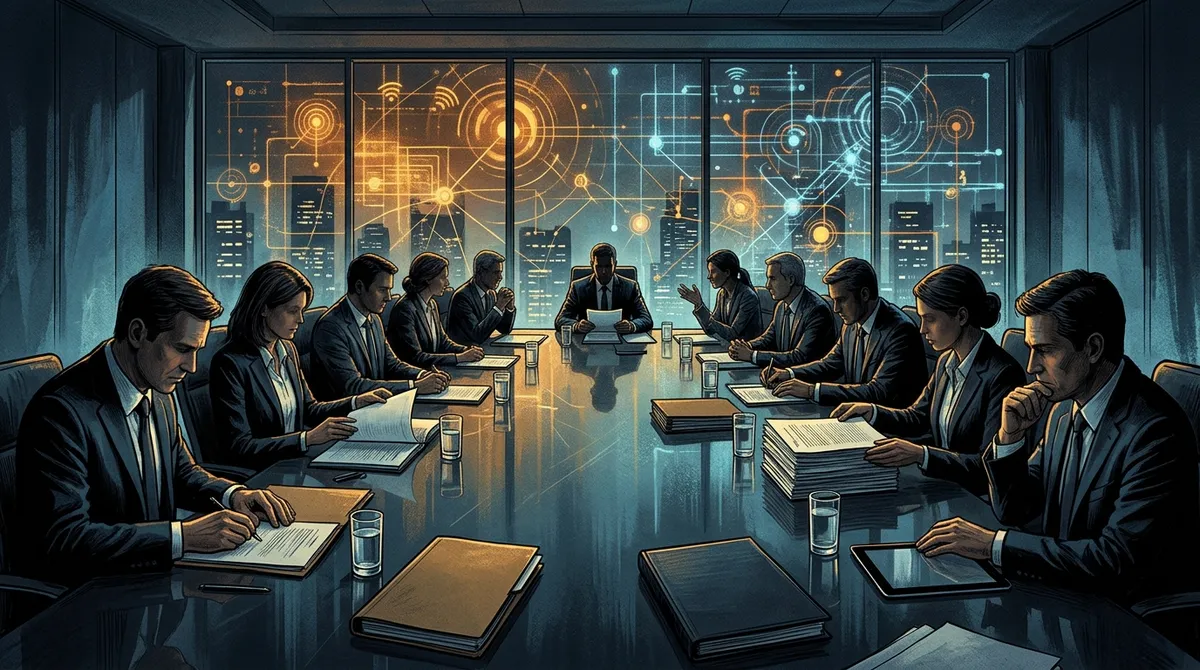
What happened: Nvidia's board announced it is initiating an independent investigation into reports that CEO Jensen Huang "has been the target of a foreign intelligence effort," with independent directors and outside independent counsel overseeing. In an all-hands memo published in full by The Verge, Huang acknowledges an affair with Alice Huang — the executive named in last week's spy-plot reporting — apologizes to his family and colleagues, and says he will cooperate fully with the investigation. Nvidia's board said a committee of independent directors, assisted by outside independent counsel, will oversee the investigation and that it has "no reason to believe" that either U.S. national security or Nvidia secrets were compromised, adding that it has confidence in Huang and his leadership team (TechCrunch). Alice Huang is a former executive at Singapore-based chip company Megaspeed, and a memo circulating among U.S. policymakers earlier this year claimed she had been recruited by China's Ministry of State Security to spy on Nvidia's CEO (TechCrunch).
What's genuinely new: Huang's own admission — until the memo, the relationship was a news report and a congressional inquiry, not a confirmed personal admission — and the board's move to a formal independent probe with outside counsel. It follows the November 5 request by three House committees for a joint, closed-door briefing with Huang on his contacts with Alice Huang.
Watch: The investigation's scope and findings, whether the House briefing proceeds, any board or shareholder action on Huang's role, and fallout for Nvidia's China chip policy.
Perplexity launches Teammates: personal agents for work
Sources Arav Srinivas on X Perplexity Help Center published Nov 7, 6:32 PM ET
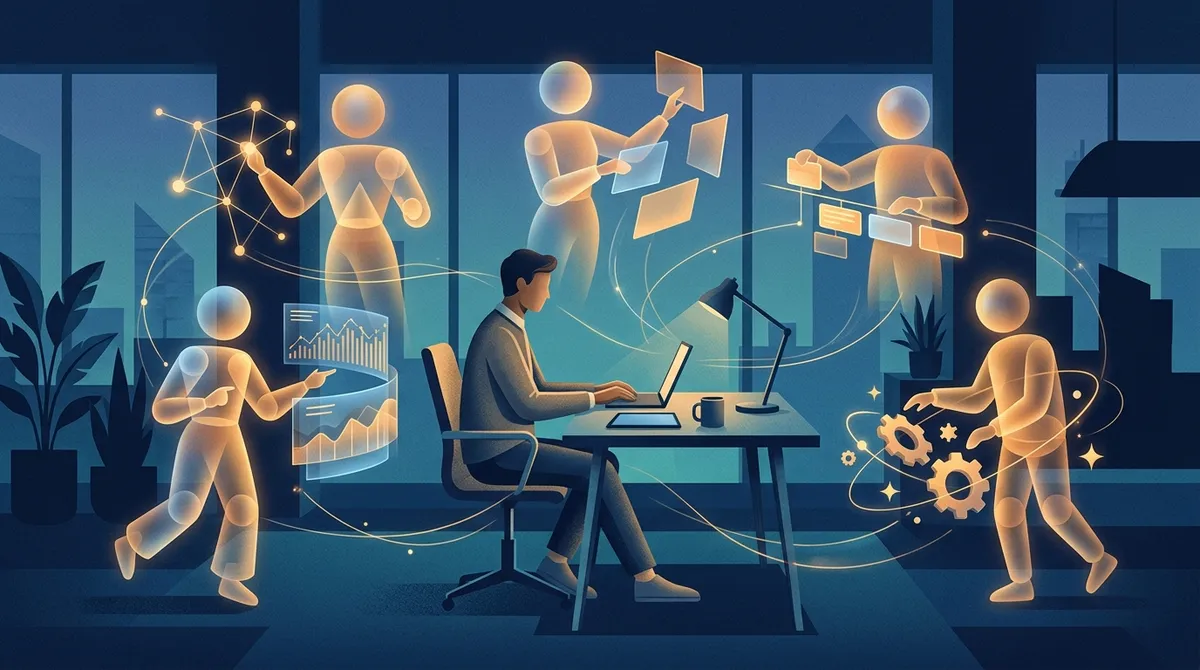
What happened: Arav Srinivas on X announced the launch of Perplexity Teammates — personal agents for work that change the paradigm from writing prompts in a session to giving high-level goals. The product is rolling out to Max users on the web now, with native mobile and desktop apps to follow. Perplexity's documentation describes teammates as AI agents that own ongoing work — breaking a goal into tasks, running them in parallel across multiple agents, keeping their role and memory between conversations, and each getting its own isolated desktop and browser — offered only as a web research preview for individual Max subscribers, with Pro and Enterprise plans excluded for now (Perplexity Help Center). Teammates can be added as apps inside Slack, GitHub and Linear so they watch those tools and start work when something arrives, with new teammates using Claude Opus 5.5 by default and drawing on a Max plan's monthly credit allocation (Perplexity Help Center).
What's genuinely new: The first usage figures for the launch: teammate automation runs grew 3.7x from launch day to day two, growth the company notes came on a Friday. It marks Perplexity's move from a search-and-answer product into standing personal agents aimed at professionals' day-to-day work.
Watch: Whether the 3.7x day-two growth holds into the first full work week, how Max-user rollout extends to the promised native apps, and whether third parties adopt the goal-setting interface the way they have Perplexity's search API.
Brief
- Elvis Presley rights holders and the publisher behind some of Eminem's biggest records sued AI-music company Suno, claiming it illegally generates music and lyrics that mimic those artists. Lawyers in the Presley suit argue Suno breaches Tennessee's ELVIS Act, which makes AI voice cloning illegal, and "has mechanically encoded itself with artists' identities." The suits closely mirror Jason Isbell's September filing and add to Suno's pile of litigation from Sony, UMG, Isbell and Reservoir Media; Suno says it exists "to help people create new, original music, not to trade on anyone's name or likeness," blocking artist-name prompts and screening uploads (The Verge) (single source)
- AI-related companies have sold or priced more than $300 billion of new stock and mandatory convertible securities so far in 2026, with roughly $100 billion more in potential share sales on tap — mostly via at-the-market programs — after a volatile week of trading spotlighted the market's appetite for more AI supply (The Information) — figures from the headline and teaser only
- Yann LeCun amplified a Turing Post explainer of LeHami, a research approach bringing Hamiltonian mechanics into JEPA-style world models: state as coordinates and momenta rather than velocities, a learned energy function split into kinetic- and potential-like parts, and a symplectic leapfrog integrator that preserves phase-space volume to prevent latent collapse in long-horizon prediction (Yann LeCun on X, Turing Post)
- Google open-sourced the Elephant-Goldfish Model plugin, a design-and-review layer for AI coding agents (Marktechpost): the agent ("Elephant") drafts a specification first, then fresh, zero-context subagents ("Goldfish") attack it through five review stages before any code is written. It is an Apache 2.0 plugin of skills and reviewer personas, not a model — it runs on Antigravity, Claude Code, Codex and ChatGPT using the user's existing model quota. Google says thousands of its own engineers use it; no accuracy benchmark is published, and reviewer isolation leaks host instruction files on some hosts.
- LM Studio's free iPhone app pairs with its LM Link preview feature to run a desktop PC's local models from a phone (XDA Developers): a reviewer ran a Gemma 4 26B model hosted on his PC's GPU from an iPhone over both Wi-Fi and cellular data, with all data staying on his own hardware. Catches: the PC must stay on, the Locally app is iOS-only, and LM Link is free in preview with paid tiers planned at full launch.
- Researchers led by Qianru Zhang and Hongzhi Yin published a comprehensive review in Data Science and Engineering (Bioengineer) mapping how generative AI is displacing classical models in spatial-temporal data mining: a formal definition of "generative," a taxonomy of architectures (LLMs, diffusion models, VAEs, GANs, masked autoencoders), and four advantages over traditional discriminative models — synthetic data augmentation, zero/few-shot generalization, uncertainty quantification, and unified pretrained representations.
- Richard Sutton announced (X post) an opening keynote at RISEx 2026 in Edmonton on "The Tashan/Openmind Robot Kindergarten" — a new effort, led by researchers from the Openmind Research Institute in Edmonton and Tashan Technology in Beijing, to build robots that learn online by trial and error from their own experience rather than from collected datasets. Work "has just begun." A notable extension of the continual-learning-from-experience bet.
- A study in Scientific Reports reported by PsyPost tested seven chat models with 100 false statements and found repeating a lie within a single conversation drives models to affirm it — from 0.08% across all rounds for Claude 3.5 Sonnet (the best-tested model) to 12.3% across all rounds for ChatGPT 3.5, whose affirmations rose from 3 of 100 statements on the first repetition to 18 of 100 by the 50th. Obscure claims were more likely to be accepted, and DeepSeek-R1 was most persuadable under argumentative pressure (1.0% → 22.2%), though its sarcasm made scoring uncertain. Most models corrected their own errors when re-asked in a fresh conversation; Claude 3.5 Sonnet corrected none of its four errors, a sample too small for firm conclusions.
- Bloomberg's Mark Gurman reports (via The Verge) that Apple CEO John Ternus is pressing AI czar Craig Federighi to accelerate the Siri roadmap against OpenAI's Dots and Meta's Muse: fine-grained control of first-party apps (photo edits, Safari tab organizing) is expected with iOS 27.3, third-party app integration likely in the spring, and full agentic behavior — tracking goals and pursuing them without the user initiating each step — possibly as early as 2027.