Energy digest — Nov 17, 2026
Top line: Bangladesh's first nuclear unit, Rosatom-built Rooppur 1, delivered the country's first nuclear electricity. France published a ten-year fusion roadmap aiming at a European pilot plant by 2035. Blykalla's SEALER programme gained a delivery schedule and a 2027 demo target through its HALEU deal with Urenco.
- NRC finalizes rule scaling back the advisory panel's role in reactor licensing reviews
- Bangladesh's first nuclear unit supplies the country's first nuclear electricity
- France publishes ten-year fusion roadmap built around ITER and Cadarache
- Blykalla's US SEALER programme gains a fuel schedule and a 2027 demo target in Urenco HALEU deal
NRC finalizes rule scaling back the advisory panel's role in reactor licensing reviews

Sources American Nuclear Society Federal Register published Nov 17, 8:18 AM ET
What happened: The Nuclear Regulatory Commission has issued a direct final rule that narrows the role of its independent Advisory Committee on Reactor Safeguards, focusing the committee's reviews solely on safety-significant issues that are novel or noteworthy. The rule was published in the Federal Register on November 17, 2026, and takes effect on February 1, 2027, unless significant adverse comments are submitted by December 17, 2026.
What's genuinely new: The final rule defines "novel or noteworthy" around a facility's design, siting and operation involving safety-related structures, systems and components, and directs the committee to skip re-reviewing technology already scrutinized in earlier ACRS reviews. It sets committee membership at a minimum of seven and a maximum of 15, with four-year terms, and the NRC's regulatory analysis projects $16.1 million in nondiscounted cost savings. The rule carries out Executive Order 14300, "Ordering the Reform of the Nuclear Regulatory Commission"; the House has passed a Nuclear Advisory Committee Reform Act to codify the directive, now awaiting Senate action. NRC Chairman Ho Nieh framed the change as focusing the committee's expertise where it matters most for timely licensing decisions, and ACRS Chairman Greg Halnon endorsed the rule.
Watch: The December 17 comment deadline and the rule taking effect on February 1, 2027, Senate action on the Nuclear Advisory Committee Reform Act, and which advanced-reactor reviews the committee still takes up under the new "novel or noteworthy" scope.
More context: The Nuclear Regulatory Commission's direct final rule, published as 91 FR 73647, amends its regulations to cut the Advisory Committee on Reactor Safeguards' personnel and functions to the minimum needed for its Atomic Energy Act duties and to focus its licensing reviews on safety-significant, novel or noteworthy issues, as directed by Executive Order 14300, Federal Register says.
Bangladesh's first nuclear unit supplies the country's first nuclear electricity
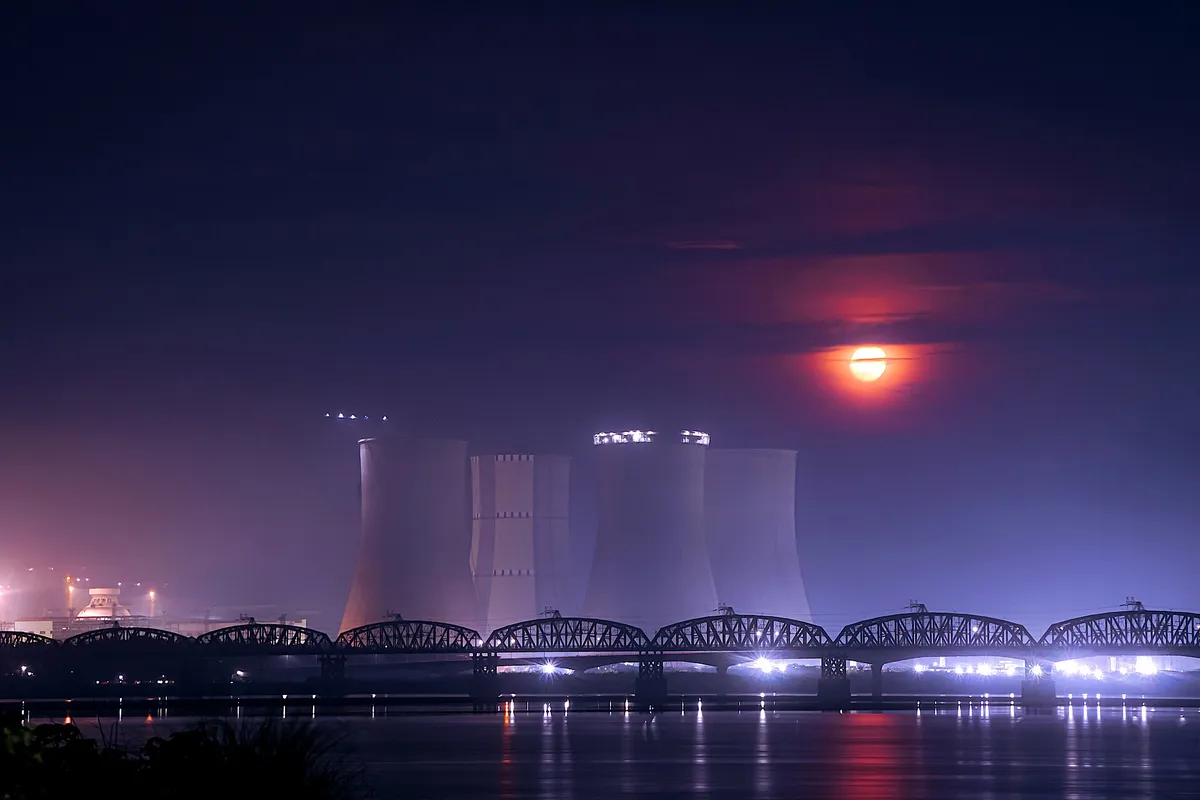
Sources World Nuclear News published Nov 17, 7:38 AM ET
What happened: Rooppur 1, Bangladesh's first nuclear power unit, has been connected to the national grid and delivered the country's first nuclear-generated electricity — an initial trial connection at 350 MWe from the 1,200-MWe Russian-built VVER-1200 unit about 160 kilometres from Dhaka.
What's genuinely new: Nuclear Power Plant Company Bangladesh says the trial supplies the grid for about 8–10 hours while turbines, generators and grid integration are tested, with further tests planned after an approximately 28-hour break. If the technical tests pass, commercial operation of the first unit begins after a 10-month trial operation run in collaboration with Russia. World Nuclear Association director general Sama Bilbao y León called the project a transformative investment in the country's future.
Watch: The Bangladesh regulator's approval for the next trial phase, the 10-month trial run, and commercial electricity supply at full capacity.
France publishes ten-year fusion roadmap built around ITER and Cadarache

Sources World Nuclear News published Nov 17, 6:57 AM ET
What happened: France's minister for higher education, research and space, Philippe Baptiste, announced a ten-year national fusion strategy during a visit to the ITER construction site and the French Alternative Energies and Atomic Energy Commission's Cadarache centre, aiming to coordinate research, guide investment and accelerate progress toward fusion energy.
What's genuinely new: The Ministry of Research published the roadmap built around three facilities — ITER, the CEA's WEST tokamak and the Laser MégaJoule inertial confinement facility — and it aims to double the number of students in plasma physics, nuclear engineering and cryogenic technologies. From 2026 to 2030 the strategy seeks to consolidate the scientific foundations, strengthen expertise and experimental infrastructure, and secure funding; the medium-term goal is having the technologies needed for a European pilot plant by 2035. Baptiste said France strongly supports ITER while also developing national equipment for crucial additional technologies.
Watch: Funding for the strategy, the student-doubling drive across plasma physics and cryogenics, and progress toward the 2035 European-pilot-plant goal.
Blykalla's US SEALER programme gains a fuel schedule and a 2027 demo target in Urenco HALEU deal

Sources World Nuclear News Interesting Engineering published Nov 17, 7:28 AM ET
What happened: Swedish developer Blykalla's fuel agreement with uranium enricher Urenco — signed as the world's first HALEU enrichment contract for a commercial lead-cooled reactor — now comes with schedule detail around the first US unit of its 55 MWe SEALER design.
What's genuinely new: Urenco expects to begin HALEU deliveries in the early 2030s, enriching uranium feed supplied by Blykalla at its Capenhurst facility in the UK, which is expected to be among the first commercial HALEU production plants in the West. Blykalla has planned a phased US demonstration project called Fjäll, targeting criticality of the zero-power Fjäll-Zero reactor in 2027, followed by the power-producing Fjäll-Power reactor. It has also proposed Swedish plants of up to eight SEALER units at Untra and six at Norrsundet, both in east central Sweden. Interesting Engineering adds that the compact, road-transportable lead-cooled reactor is aimed at industrial sites and AI data centres.
Watch: Whether Fjäll-Zero meets its 2027 criticality target, Capenhurst HALEU production volumes and timescale, and Blykalla's pre-application talks with the NRC for the first US unit.
Brief
- BWX Technologies has completed a CAD80 million (USD56 million) expansion of its Cambridge, Ontario plant that builds commercial nuclear components: 55,000 square feet of new floor space and new equipment enlarge what the company calls the world's largest commercial nuclear clean room by 40%, and it is building 48 steam generators for the Pickering Nuclear Generating Station refurbishment plus the reactor pressure vessel for Ontario Power Generation's Darlington small modular reactor, with 200 long-term jobs created and 200 more hires planned over the next year (Tomorrow's World Today).
- At the ANS Winter Conference, NRC commissioners Bradley Crowell and Douglas Weaver called the rulemakings carried out under Executive Order 14300 a significant accomplishment — Weaver: "We've got a lot done; there's a lot more to do" — with Crowell tracing the agency's shift to an "enabling mentality" to Congress directing the NRC to update its mission statement in 2024, while a financing panel with DCVC's Rachel Slaybaugh and Utah Retirement System chief investment officer John Skjervem named public acceptance and long-term capital-market sentiment as nuclear's main investor risks (American Nuclear Society).
- PTT Group power flagship GPSC sent chairman Supot Teachavorasinskun and CEO Cherdchai Boonchoochauy to Danish molten-salt reactor developer Saltfoss Energy's headquarters for a study visit on the seaMSR compact molten salt reactor — a floating power barge Saltfoss sizes at 200–800 MW with passive safety systems and 500–600°C steam for industry (MarketScreener carrying GPSC's release). The visit follows Saltfoss's November 4 US licensing notice.
- Experts from Chernobyl's ruined plant visited Fukushima Daiichi to study the robotic and remote-monitoring systems Japan is developing to survey and sample fuel from its melted reactors, at a four-day technical event that began 2 November — know-how the Ukrainian operator wants for handling fuel-containing materials and dismantling the Shelter Object over unit 4, after a drone strike last year left an estimated EUR500 million (USD577 million) repair bill for the New Safe Confinement (World Nuclear News). Both plants see the cooperation as useful for their long decommissioning programmes.
- An IAEA follow-up team found Kansai Electric's Mihama 3 — the first Japanese reactor to operate beyond 40 years — has completed a comprehensive long-term operation programme, finished ageing-management work for civil structures and put in place an equipment qualification programme, resolving many findings from the 2024 safety review, though the plant still needs to improve oversight of ageing management, use of external operating experience, and relevant data analysis (World Nuclear News). The team expects most remaining items to be completed in a reasonable timeframe.