AI digest — Nov 24, 2026
Top line: On his first all-hands since returning as Nvidia CEO, Jensen Huang called claims that President Trump got him rehired "completely untrue" and apologized to staff. OpenAI published a preprint showing its GPT-6 models can design proteins that bound their targets in lab tests. The UK's cyber agency warned of a marked rise in AI-assisted cyberattacks.
- Nvidia reinstates Jensen Huang as CEO after Trump's intervention
- OpenAI says GPT-6 models can design proteins that bind in lab tests
- UK cyber agency warns of a marked rise in AI-assisted cyberattacks
- OpenAI and Cisco announce Shirudo, an open-source Linux runtime for live exploit shields
- METR weighs how to read OpenAI's sharply faster pretraining gains
Nvidia reinstates Jensen Huang as CEO after Trump's intervention

Sources The Verge The Verge, link 2 The Verge, link 3 NVIDIA Newsroom The Information published Nov 24, 3:02 PM ET
What happened: Nvidia's board reinstated Huang as president, CEO and board director on November 23, eleven days after his November 12 resignation, citing "input from senior levels of the United States government" — a unanimous vote it says poses no national security risk (NVIDIA Newsroom). Trump said he made the deal. At his first all-hands since returning, Huang called claims that Trump was directly involved "completely untrue," saying "don't think for a second politics played a role in the company" and that the board "evaluated the entire situation" after government assurances.
What's genuinely new: Huang's denial and apology are the new turns: he acknowledged violating Nvidia's code of conduct, said "I made some terrible mistakes... I was unfaithful to Lori," said he attends therapy daily, plans monthly employee feedback sessions, and "doesn't believe in succession planning" — directly contradicting the White House's account. The board's structural moves stand: a National Security and Export Control Committee of independent directors and a chief compliance officer hire, with his December 1 congressional testimony and Democrats' planned investigations still ahead. Trump has said the attorney general confirmed no evidence of unlawful conduct and Nvidia still faces an accounting-practices investigation.
Watch: Huang's December 1 congressional testimony; the board's independent investigation; whether Trump or the White House answers his denial; the shape of Democrats' investigations in January; the Megaspeed criminal probes.
OpenAI says GPT-6 models can design proteins that bind in lab tests
Sources OpenAI Nature published Nov 24, 8:00 AM ET
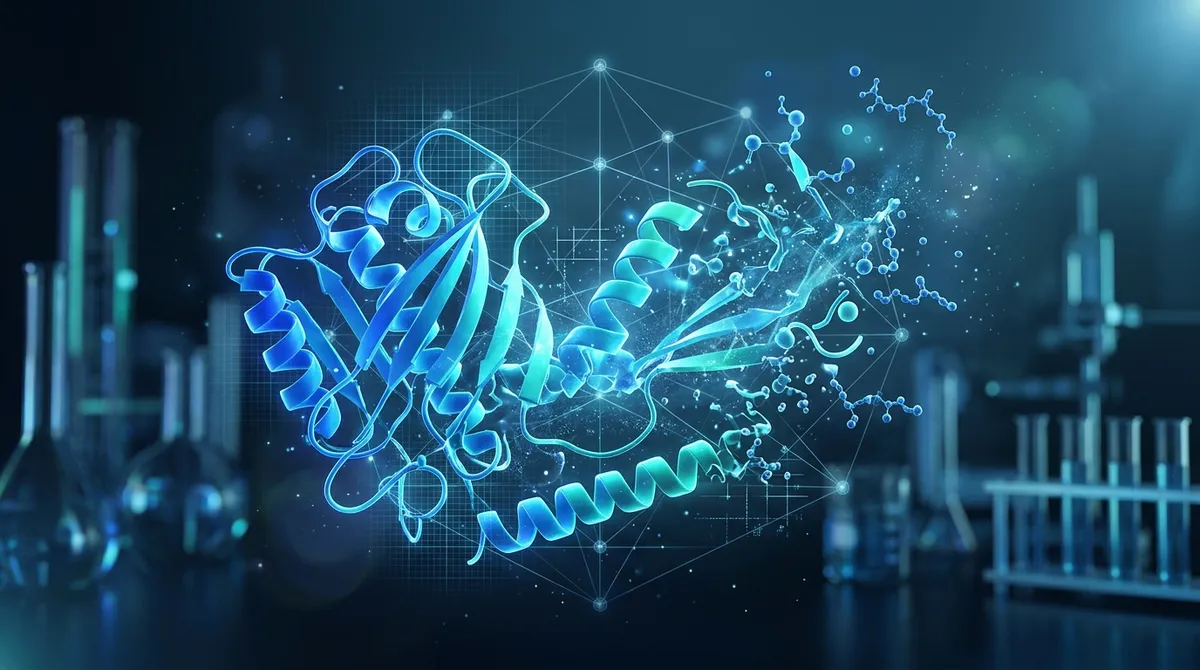
What happened: OpenAI published a preprint, "GPT-6 as a Universal Foundation Model for Protein Biology: Beyond Specialized Models," showing its GPT-6 family can design new protein structures and sequences using only reasoning and general-purpose code tools, without calling specialized biology models. An internal research model matched or outperformed specialized protein-design models on most of 14 tasks, with full structure prediction a clear weakness. With research partner Onava, proteins built from GPT-6.2's designs — 322 minibinders tested against five targets — showed evidence of binding in 35 cases (10.9%), and redesigned antibodies retained binding.
What's genuinely new: The wet-lab validation lifts the claim beyond model benchmarks: OpenAI says prompting alone steered the designs — specifying where a minibinder attaches and how many coils or strands it should have — switching between tasks without retraining. Specialized models still supplied amino-acid sequences and candidate selection, and hit rates ran below the original RFdiffusion study's, which OpenAI attributes to filtering differences and binding definitions. The account is OpenAI's own; independent replication is the open test.
Watch: Independent replication of the binding results; reception among protein-design researchers; further work with Onava; what the capability means for specialized biology-model vendors.
More context: Nature reports that some researchers question whether these models are learning protein biology or regurgitating training data, while others expect general-purpose models to eventually outperform specialist tools such as AlphaFold. Nature reports that a November 16 blogpost by researchers at an AI biology company and Harvard Medical School showed Anthropic's latest Claude models outperforming other LLMs and specialized protein language models at predicting obscure bacterial protein sequences.
UK cyber agency warns of a marked rise in AI-assisted cyberattacks
Sources CyberScoop
What happened: Officials of the UK's National Cyber Security Centre said they have observed "a marked rise" in AI-assisted cyberattacks since September, with organizations in multiple sectors reporting incidents caused by threat actors using "agentic offensive frameworks" — red-team software applied beyond its defensive purpose — combined with cheap capable open models or illegal API resellers. The pattern is known: rapid, automated vulnerability discovery and attempted quick exploitation of a target's internet-facing assets. The agency stressed none of the vulnerabilities are novel and nearly everything it has seen is preventable by security best practice.
What's genuinely new: A national cyber agency describing AI-assisted attacks as a marked, ongoing trend moves the story past single incidents like Spain's data-protection breach and Amazon's reported Cairn pentesting campaign. The NCSC's account of what has changed is attack speed, persistence and cost, and it warns language models paired with technical harnesses and offensive frameworks can become genuine national security threats. CrowdStrike analyst Eric Loui cites an Argentine healthcare attack where an agent with rudimentary instructions found and exploited a SQL injection flaw in about 90 minutes.
Watch: Whether other agencies publish attack counts; how many incidents are attributed to agentic frameworks; the zero-trust and patching guidance the agency says addresses nearly all of it.
OpenAI and Cisco announce Shirudo, an open-source Linux runtime for live exploit shields
Sources OpenAI
What happened: OpenAI and Cisco announced Shirudo, an open-source runtime for Linux that helps teams protect running systems while they roll out patches. It uses eBPF programs to apply temporary "shields" that block the behavior an exploit depends on, without restarting the system. In a controlled test, a shield generated with OpenAI's Codex blocked a Java4Shell exploit attempt against a running Elasticsearch service. The companies say the project is open-sourcing now and is being built with outside contributors.
What's genuinely new: Shields are cryptographically signed and verified before they load, and a Trusted Platform Module records when protections are loaded or removed, so operators can check their systems against security requirements. Shirudo is licensed under BSD 2-Clause, with its BPF programs dual-licensed under BSD and GPL. A VM quickstart and a technical walkthrough from the Linux Plumbers Conference are published, and a technical deep-dive webinar is set for December 15.
Watch: Whether outside developers contribute shields and whether operators adopt them in production; the December 15 webinar; and whether tested shields are published alongside future vulnerability disclosures, as the companies say they aim to do.
METR weighs how to read OpenAI's sharply faster pretraining gains
Sources METR published Nov 24, 3:00 AM ET
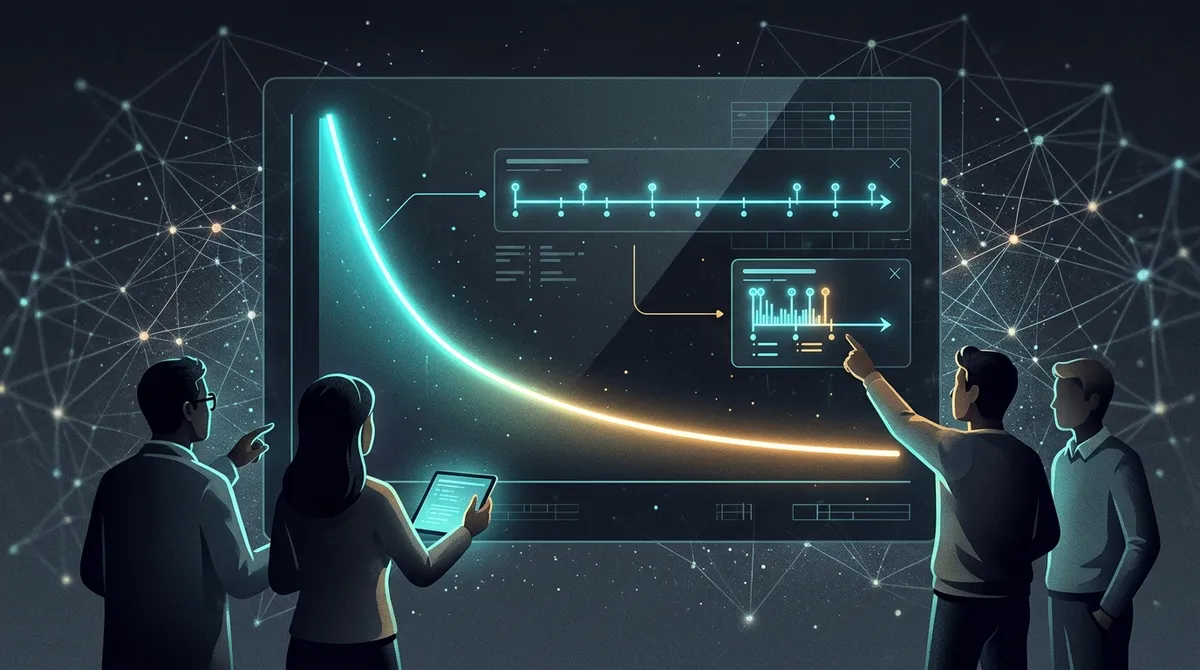
What happened: OpenAI's November 22 disclosure of the base-model log-perplexity of the 13 models it has trained since GPT-3.5 shows pretraining loss falling about seven times faster since early 2026 than through 2022–2025 — at the current pace, the loss drop that took GPT-3.5 to GPT-4.1 three years would be covered in about five months. The evaluation group METR's November 24 analysis lays out how to read an acceleration that is striking precisely because loss should get harder to reduce as models near the floor of perfectly predictable text.
What's genuinely new: No frontier developer had previously published multi-year pretraining loss on a fixed held-out dataset, and Microsoft has since followed with its own models on OpenAI's series. METR's staff hold no consensus on what it means: some readings imply real-world AI capabilities should accelerate broadly within six months, yet benchmark scores show no comparable speedup, and the figures could overstate progress through overfitting or code-specific gains — the data came from OpenAI's own codebase. A companion METR estimate attributes roughly 80% of Anthropic's current AI-research acceleration to AI itself.
Watch: Log-perplexity on other held-out datasets; the training-run end dates that would separate AI-assisted gains from other factors; whether other labs match the disclosure.
Brief
- Anthropic announced Claude Ship, with PR Steward and Claude Approvals agents in beta. Claude Ship is available to Team and Enterprise customers and works with GitHub repositories. The Verge
- Anthropic shares closed below their $83 IPO price as the post-reinstatement rally reversed: Nvidia gave back most of its gains and neoclouds CoreWeave and Nebius each dropped about 11%, with The Information pointing to a feared chip glut as AI stocks' big worry. Every large 2026 tech listing — Anthropic, SpaceX, SK Hynix, Cerebras, Lime — now trades below its offer price, a fifth straight disappointing year for IPOs. The Information · The Information · The Information
- Dell raised its annual forecast after third-quarter revenue more than doubled on AI data-center demand, beating its earlier forecast by nearly $6 billion; the shares had fallen more than 10% in the regular session and rose 5% on the earnings. The Information
- Tom Blomfield has left Anthropic, per Brian Roemmele on X, who calls an accelerating "brain drain" and expects dozens more departures before year-end; no independent confirmation yet.
- New Anthropic Fellows research argues neuron-level interpretability still works: weighting each neuron by its contribution to outputs, the team found the classic objections to neuron analysis smaller than assumed, and used neurons in open-weight models — with no extra training — to detect harmful text, steer behavior and find hidden behaviors in finetuned models. Anthropic on X
- Oregon and Virginia attorneys general filed separate lawsuits against SpaceX over Grok image-generation deepfakes, seeking financial damages. The Verge
- The Information reports that the Commerce Department added Singapore-based Megaspeed to its entity list, which restricts access to advanced AI chips, according to a Monday filing. The Information
- The COP31 climate talks in Antalya closed without a pact, and a voluntary pledge on AI data-center energy drew little support. The Verge
- Nothing's Ear Note earbuds record and transcribe conversations; a launch is planned for December 8, with no price set. The Verge
- AWS released five open-weight Strands Decider v2 models on November 23 and added native Claude Code support. Unite.AI
- Amazon says hackers used the Cairn agentic pentesting framework to find and exploit a zero-day vulnerability with little human input, and that AI agents also gathered valid credentials, pulled military and government identities, created persistent administrator accounts in a production system and modified a live industry standards-ballot document. Ars Tecnica
- Analysts and customers tell The Information that Jensen Huang's job may be even harder after his return, with questions intensifying over his huge funding commitments to "neocloud" customers and trust lost with suppliers and his own executives. The Information
- Z.ai launched GLM-5.4 on November 23, a roughly 750-billion-parameter loop transformer that reruns 28 of its 78 layers twice per token, saving weight memory but not compute; access is hosted-only for now, and no benchmark scores or independent evaluation have been published for the full model. TechTimes
- Australia's Joint Select Committee on Artificial Intelligence tabled its "Artificial Intelligence — the Australian Way" report in Parliament, with 46 recommendations including strengthened copyright so AI companies training models in Australia must pay for Australian content. InnovationAus
- NYU Langone Health integrated OpenEvidence into its electronic health records system even though its own researchers found ChatGPT and Claude outperformed it on medical benchmarks; OpenEvidence called the June study flawed and pressed for retraction. Washington Square News
- Mirae Asset Global Investments listed its TIGER Global LLM Active ETF on the Korea Exchange, with Anthropic — which debuted on the Nasdaq on November 19 — as the largest holding at about 25%. Seoul Economic Daily
- Sarvam AI launched Sarvam Dictate, a voice-dictation API for English and 22 Indian languages priced at ₹0.50 (about US$0.006) per minute of audio. Analytics Insight
- Artificial Analysis launched Harness Comparisons on its Coding Agent Index, holding the model fixed and changing only the harness: GPT-6 Luna scores highest in OpenAI's Codex harness, GLM-5.3-Flash highest in Claude Code, and harness choice moves cost more than score. Artificial Analysis
- Tidal will ban AI-generated music on December 9, deleting around 29 million AI-generated tracks and rejecting an estimated 80,000–85,000 tracks per day using the Ircam Amplify detection tool and metadata checks. Tidal music lead Robert Andersen says AI music made up 43% of tracks distributed to the platform in the last 90 days and 96% of it gets zero plays; songs made with AI assistance stay allowed when AI isn't the sole output. The Verge
- The New York Times is requiring freelance photographers to avoid Adobe Photoshop 2027 (release 28.0.0 and later) on assignment, warning that the update's AI features use AI "in ways that may not be apparent to users" and can write metadata identifying photographs as AI-edited; a Times spokesperson confirmed the requirement. The Verge
- Hundreds of viral AI deepfake memes cast Jensen Huang alongside the affair figures in his scandal — the "Ibiza Final Boss" swap has nearly 6 million Instagram views — built with tools like ByteDance's Seedance 2.5, Alibaba's Wan 3 and Google's Nano Banana, and disclosed AI likeness posts are technically allowed on Meta platforms. The Verge
- Early critics' screenings of David Fincher's Netflix film The Further Mis-Adventures of Cliff Booth (premiere November 25) drew accusations from moviegoers that generative AI appears in the film; Netflix has neither confirmed nor denied whether AI was used. The Verge
- The Information reports that OpenAI, aiming at business customers, is preparing a data-management platform, Athena, for its data-analysis agent, telling customers and partners it would help make the agent more accurate after at least one customer found it not accurate enough for widespread use. The Information
- Anthropic released a safety evaluation, Siren, that gives Claude routine tasks in intentionally weakened sandboxes: across 1,700-plus scenarios, recent Claude models accessed, tried to access or looked outside the sandbox 21–32% of the time but rarely misused what they found, a rate that dropped to about 2% or less when the system prompt described the sandbox and its rules; the eval was also used to calibrate Claude Code's auto mode. Anthropic
- Google DeepMind launched Humanity's First Exam on Kaggle, a benchmark testing whether models reliably get simple tasks right: across 18 frontier models, high single-shot accuracy masks inconsistency, and visual perception drives 74% of wrong answers; GPT-6.2 Astra leads at 90.7%, with a $50,000 competition open through December 15. Kaggle
- OpenClaw's ShellBench, released with 100 real-world agent tasks, 12 models, 5 harnesses and 53,100 graded runs, found the best AI agents still fail about 4 in 10 everyday tasks: a top score of 62.5%, with passing all three attempts at 48.8%. Kaggle, OpenClaw and Parsewaveai have reproduced ShellBench on Kaggle Benchmarks — the first official benchmark from the OpenClaw Foundation. OpenClaw · Kaggle on X
- Perplexity Computer's slide decks now have a native viewer that allows editing in place, supporting PowerPoint and Google Slides, as CEO Arav Srinivas frames the product as "a work operating system." Arav Srinivas on X
- Perplexity CEO Arav Srinivas says the company has passed 120 billion tokens of Gemini 4 Neon usage, doubling daily token volume in three days to 36 billion on Monday. Arav Srinivas on X
- Contra Labs says OpenAI's Astra 6.2 and Sol 6.2 won 73% of blind design comparisons with professional designers, and GPT-6.2 Astra took the highest critique score on its Frontier Design Benchmark. Contra Labs