AI digest — Nov 26, 2026
Top line: India's IndiaAI Mission launched Chariot-1, its home-grown models for English and ten Indian languages, and BharatGen put out Patram 1.5, a document model trained not to guess missing fields. Neuralink says the FDA approved LINK, billed as the first US pivotal trial of a brain-computer implant. Attorneys general in 42 states want to stop Character.AI selling users' chat histories.
- Neuralink says FDA approved LINK, its first US pivotal brain-chip trial
- NVIDIA opens up Nemotron 3.5 Parse: open datasets, a fine-tuning recipe, faster inference
- India's IndiaAI Mission launches Chariot-1, home-grown language and speech models for Indian languages
- BharatGen's Patram 1.5 reads messy Indian documents — open weights, abstention built in
Neuralink says FDA approved LINK, its first US pivotal brain-chip trial
Sources Neuralink on X MobiHealthNews published Nov 25, 3:54 PM ET
What happened: Neuralink announced FDA approval to launch LINK, which it calls the first pivotal trial for an implantable brain-computer interface in the United States. The company says the trial builds on its work with more than 30 participants to date, and that people with ALS may be eligible — with a signup page at neuralink.com/trials/device-control/.
What's genuinely new: The pivotal-trial approval itself and the ALS eligibility path are the new facts, stated in the company's own announcement; no independent report has confirmed the FDA's action yet. Pivotal status moves the device from early feasibility work toward the larger trial stage regulators weigh for approval.
Watch: The FDA's own notice, enrollment figures, and first results from the pivotal trial.
More context: MobiHealthNews reports that Neuralink announced FDA approval for its LINK Pivotal Study, which will test whether people with severe paralysis from ALS can use its implant to control digital devices, and that the approval allows the trial but does not authorize commercial sale. MobiHealthNews also reports that Neuralink says more than 30 people have received its implant in early feasibility studies in the U.S., Canada and the UK, and that enrollment is open, though the company did not disclose a target enrollment or trial length.
NVIDIA opens up Nemotron 3.5 Parse: open datasets, a fine-tuning recipe, faster inference
Sources Hugging Face published Nov 26, 12:05 AM ET
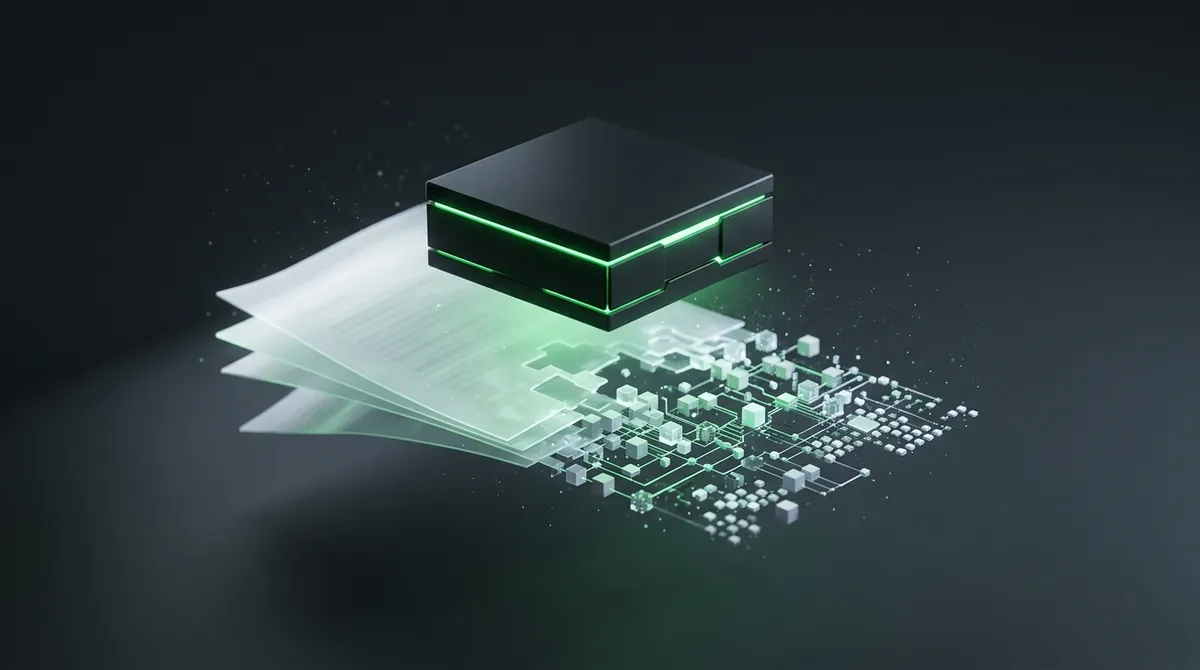
What happened: NVIDIA expanded Nemotron 3.5 Parse, its compact document model that turns page images into structured data for retrieval-augmented generation and agents. On the Hugging Face blog it open-sourced the three training datasets behind the model, published a developer fine-tuning recipe, and introduced a DFlash2 speculator it credits with up to 7.62× faster inference on a single H200 GPU. Parse maps pages into reading order, classes content as headings, paragraphs, tables or charts, and returns bounding boxes.
What's genuinely new: The released datasets are Synthetic Charts V1 (9.98M examples), Synthetic Tables V1 (1M) and OCR Synthetic Multilingual v2 (7.9M), each with images, annotations and the training format. NVIDIA also details its two-phase training — supervised fine-tuning, then reinforcement learning with verifiable rewards — which it says cut loop-flagged outputs from 126 to 29 pages and lifted its overall score from 66.24 to 71.38 in a comparison. At concurrency 512 it claims 20.44 pages/s with DFlash2 versus 2.98 for Parse 2.0.
Watch: Whether other document-AI teams adopt the datasets and recipe, and independent checks of the throughput claims.
India's IndiaAI Mission launches Chariot-1, home-grown language and speech models for Indian languages

What happened: Chariot Artificial Intelligence launched Chariot-1, its IndiaAI Mission-backed foundation-model suite, at an event at Bharat Mandapam in New Delhi on November 26, inaugurated by MeitY Secretary S. Krishnan. The suite pairs an 11-billion-parameter mixture-of-experts language model — 4 billion active parameters per token, in 10.7B, 1.7B and 745M sizes, all pre-trained from scratch in India — with a speech model covering English and ten Indian languages. Chariot is one of the first four teams selected under the mission to build sovereign foundation models.
What's genuinely new: The models' first public release, with all performance figures company-reported so far. An open-source shared alphabet for Indian scripts (IndicShift) is claimed to cut token use on Indian text by up to 2.5× against OpenAI's GPT tokenizer; nested training produces all three model sizes in one run, 62% faster, the company says; a Mixture of Vocabularies approach is claimed to speed training 38%. The speech model is reported at over 97% verbalisation accuracy and a 7.60% Hindi character error rate, with no independent testing yet.
Watch: Independent benchmarking of both models, and how quickly developers deploy the smaller sizes on phones and edge devices.
Links: CIOL · EdexLive (official MeitY statement via IANS)
BharatGen's Patram 1.5 reads messy Indian documents — open weights, abstention built in
Sources Express Computer Newsbytes
What happened: BharatGen, the government-backed consortium anchored at IIT Bombay, launched Patram 1.5, a 7-billion-parameter open-weight vision-language model for document work. It processes a page as an image — tables, charts, forms, stamps, signatures and handwriting intact — and reads and reasons over it in one pass instead of separate OCR and LLM steps. Released as open weights on Hugging Face, it runs on customers' own servers, with Digitize, Translate and Edit follow-ons planned.
What's genuinely new: The successor to Patram 1 (June 2025) plus vendor-run results: BharatGen says Patram 1.5 was tested across 49 evaluations — 34 public benchmarks and 15 tasks from its own PatramBench, a test set of 11,828 items from 8,773 pages of Indian documents — and scored an overall 83, tied for the highest among the vision-language models assessed, against rivals up to 763 billion parameters and seven specialist OCR systems. Its "OCR 3.0" returns requested fields in a plain-language format, and the model is trained to flag what it cannot read rather than invent values. All scores vendor-run so far.
Watch: Independent benchmarking, PatramBench's arrival on Hugging Face, and the planned Digitize, Translate and Edit follow-ons.
Brief
- A US patent application for a Google "My Channel" TV feature that would generate AI video tailored to a viewer — using watch history, location, language and age group, with an ad stitcher before videos and viewer avatars putting users inside generated stories — was published, per Storyboard18, which cites patent tracker Patentlyze saying the application was rejected; no product is confirmed.
- President Trump is set to lead a December 4 groundbreaking for the expansion of TSMC's chip plant in Phoenix, with TSMC executives, suppliers and customers expected, according to a White House official cited in Bloomberg reporting relayed by The Information — a single teaser-level sourcing so far.
- Perplexity CEO Aravind Srinivas says Gemini 4 Neon has doubled day over day on Perplexity with no default model routing and passed 100 billion tokens in a single day, and that Perplexity merged harness improvements to fix earlier formatting issues — see his post. Company-reported.
- Attorneys general in 42 states are trying to block bankrupt Character.AI from auctioning off the private chat histories of more than 21 million US accounts — 2.1 million of them registered to minors — saying the plan offers no safeguards, no deletion rights for users and no limits on a buyer reselling the data; the first bidder was incorporated November 13, 2026 with no listed backers, and chatbot laws in several states, including New York and California, take effect January 1, 2027. The Verge also recounts the company's October bankruptcy filing and Disney's earlier acquihire of CEO Karandeep Anand and some assets, which drew opposition from a similarly broad coalition.
- YouRA, an autonomous AI research agent from South Korea's ETRI and the University of Science and Technology, logs every hypothesis, failed run and piece of evidence in a single YAML state file so a finished paper can be checked against the experiments behind it; in the authors' own tests on a ten-task benchmark subset, 27 of 30 YouRA papers were judged to rest on real-data experiments against 17 of 30 for Sakana AI's AI Scientist-V2, though the hallucination-count gap was not statistically significant and the code has been public since September, per TechTimes.
- The Economist runs a briefing arguing general-purpose humanoid robots are arriving sooner than expected, positioning them as the pinnacle of a long-running futurist vision — analysis, per The Economist.
- xAI's Grok Bot is rolling out version 1.3.0, with smarter Slack bots, restock alerts, mobile buy-now, automatic Teams setup with org controls and bcc on email drafts, per eric zakariasson's share of the changelog.
- Lending-tech firm CredAble has bought a 70% stake in Reql, an AI regulatory-intelligence platform that monitors Indian regulators including RBI and SEBI and aims to cut compliance responses to circulars from up to 60 days to under four hours, per Lokmat Times — a company announcement carried by ANI.
- Reliath AI, an Irvine, California company, announced PROPAI, a non-LLM architecture it says reasons over facts extracted from an organization's own documents, stores each fact's source for traceability, and returns no answer when the documents don't support one, with demo applications ReliathQ and Reliath Harness available; vendor announcement only, per a wire release carried by The Oklahoman.