AI market unwind
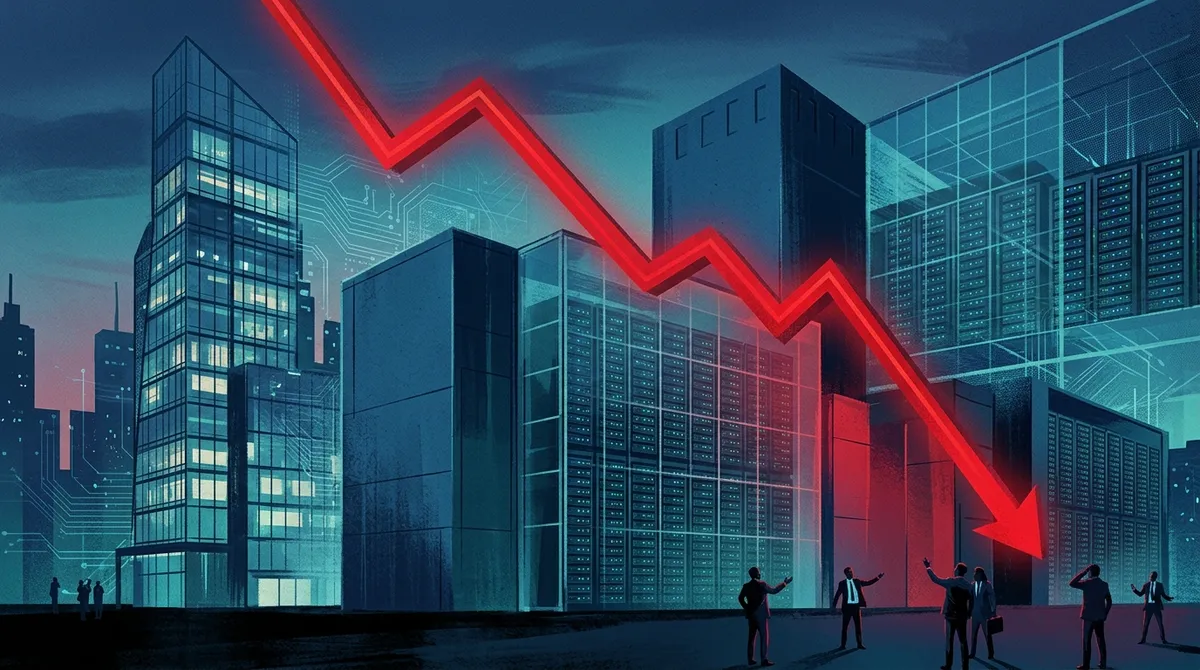
Where it stands: AI stocks have sold off hard: the Nasdaq fell into correction after a single-day drop of more than 5%, and Nvidia sits roughly 40% below its highs with about US$3 trillion of market value shed as 10-year Treasury yields touched 5.27%. Anthropic shares trade near US$82, below their US$83 IPO price, and Oracle carries about US$465 billion in debt and obligations. Watch Jensen Huang's December 1 congressional testimony, Oracle and OpenAI funding news, and the reach of tighter semiconductor export controls.
2026-11-27: opened from two commentary pieces on the AI sell-off. Roger Montgomery's essay "Has the great AI unwind begun?" frames the trouble as leverage meeting pricier money: the Nasdaq entered correction territory after a single-day drop of more than 5%; Nvidia trades roughly 40% below its highs with about US$3 trillion of market value shed; 10-year Treasury yields rose more than 30% from February lows to touch 5.27%; Federal Reserve stability data is cited for roughly US$13 trillion in gross hedge-fund assets against US$4 trillion net, top funds borrowing US$11 per dollar managed, and the US$45 billion AI-focused Situational Awareness fund liquidating positions after what Reuters Breakingviews (curious case of the AI dog that hasn't barked) calls a 67% July decline. The essay also puts Oracle's debt and obligations at roughly US$465 billion with US$16 billion of annual negative cash flow, and notes Oracle's unsolicited X statement that it had secured every dollar needed for its OpenAI contracts while its stock sat at a 52-week low. On Anthropic, Breakingviews reports shares at about US$82, below the US$83 IPO price after a US$97 first-session close, citing cash burn and nearly US$1 trillion in long-term data-centre commitments, and reads the company's equity-easing-over-debt choice — at 10–11% borrowing costs — as signalling limits to its own confidence despite Claude's help proving the Riemann hypothesis two days after its Nasdaq debut. Watch: independent confirmation of the figures these pieces rely on, the sessions after the US Thanksgiving holiday, the scope of the tightening semiconductor export controls, Oracle and OpenAI funding developments, and Jensen Huang's December 1 congressional testimony.