Ceres-2
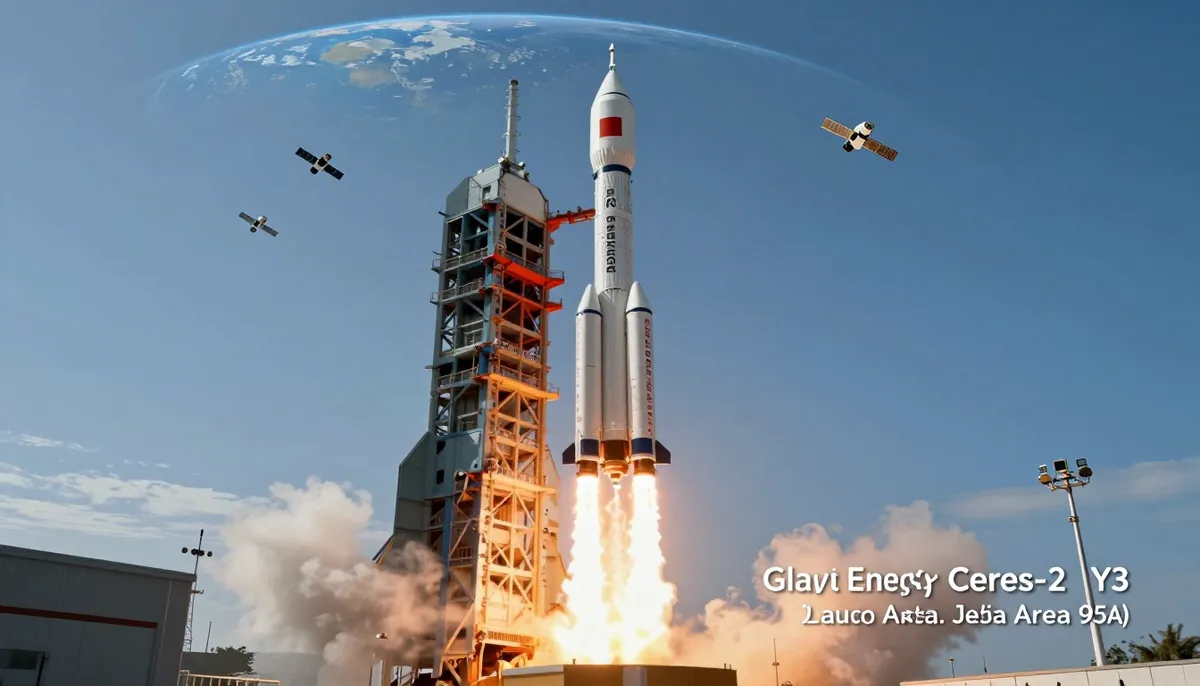
Where it stands: The third Ceres-2 flight lifted off from Jiuquan on November 6 and placed four satellites in a 535 km sun-synchronous orbit, its first confirmed success after the January 2026 debut failure destroyed the booster and payloads. Investigators traced that failure to a solid-motor nozzle throat liner that shifted under load, and the corrected structure was verified on the ground and in flight. Watch for another Ceres-2 launch and Pallas-1's 2027 booster-landing attempt.
Latest
- Galactic Energy's Ceres-2 Y3 lifted off from Jiuquan's Launch Area 95A at 23:37 UTC November 6 (7:37 am Beijing time November 7) and placed four satellites in a 535 km sun-synchronous orbit — the medium-lift vehicle's first confirmed successful flight after the January 17, 2026 debut failure that destroyed the booster and its payloads (Tech Times, Shattered). The four payloads: Guanlan Shiyan (earth observation), Yunyao-1 28 (GNSS-occultation weather nanosat in a 90-satellite constellation whose data feeds China Meteorological Administration operational services), Zhongbei Daxue-1 (North University of China technology demo) and Juntian-1 06A (X-band SAR constellation). The June 2026 investigation found the first-stage solid-motor nozzle throat liner's rear section inadequately supported — it shifted under load, admitting hot gas that destroyed the nozzle — with corrective structure verified in ground testing and validated in flight. Vehicle ratings: ~100 tonnes liftoff mass, 3.35 m fairing, 1.3 t to 500 km SSO / ~2 t to LEO. Watch: the next Ceres-2 flight, Pallas-1's 2027 booster-landing attempt.
Tech Times; Shattered