Amazon: one million warehouse robots, ~1.5 million workers
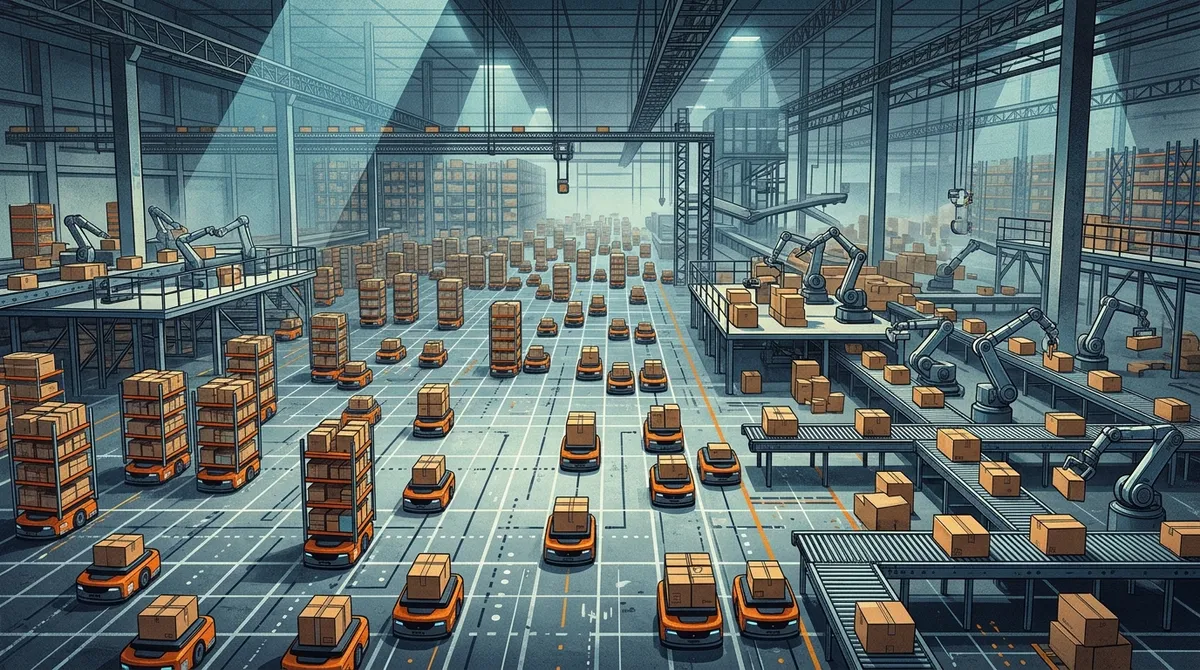
Where it stands: Amazon has confirmed more than a million warehouse robots alongside about 1.5 million workers. At its Tracy, California warehouse, workers say robots are changing their jobs and a manager answered 'who knows?' on whether they could replace jobs, including his own; the CEO says robots will replace many repetitive warehouse roles. Watch for staffing or pace-of-work changes at robotic sites and answers on safety.
Latest
- 2026-11-01(~8:47 PM ET, Benzinga via Yahoo Finance — finance.yahoo.com/technology): development — CEO Andy Jassy himself confirms Amazon's fleet at more than 1 million robots in the fulfillment network, and says robots will replace many repetitive warehouse jobs, with an impact he frames as much bigger in fulfillment. The watch item opened October 17 — Amazon's own confirmation of the fleet benchmark — lands here: the million-robot figure now stands in the chief executive's own words instead of company-adjacent secondhand claims. Watch: what the replacement language converts to — staffing or pace-of-work changes at robotic sites such as Tracy, California; robotics-per-worker trends; injury and safety answers.
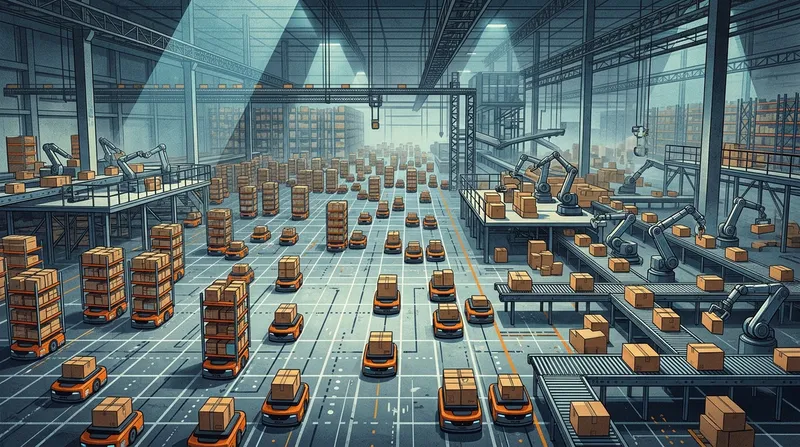
AI image - 2026-10-28 (~8:48 AM ET, Business Insider — businessinsider.com): development — the first first-hand worker accounts from a named Amazon robotic warehouse: workers inside the Tracy, California site describe in their own words how the robot fleet is transforming their jobs. The thread's labor side moves from fleet benchmarks, safety scrutiny and analyst commentary to the people working alongside the machines at a specific site. Watch: staffing or pace-of-work changes at Tracy, other Amazon sites going on the record, and the October safety questions getting concrete answers.
- 2026-10-28 (~12:54 PM ET, International Business Times UK — ibtimes.co.uk): development — an Amazon manager at the Tracy, California site was asked whether the robots could eventually replace warehouse jobs, including his own — the piece's answer "who knows?", with hundreds of robots at the site handling repetitive tasks while workers move into technical roles. The management-side voice beside the October 28 worker accounts. Watch unchanged: staffing or pace-of-work changes at Tracy, other sites speaking up, the October safety questions getting answers. tags: amazon, us
October 2026 · 3 updates
- 2026-10-21 (~4:47 PM ET, Yahoo Finance): the thread's analyst layer — Jefferies frames warehouse automation plus the expanding logistics network as a lever to strengthen Amazon's retail margins long-term, alongside fulfillment-capacity and third-party parcel-delivery investment (finance.yahoo.com/markets). A bull-case counterweight to the October 17–18 labor-competition and safety layers; analyst perspective only, no company filing or plan change in the reporting.
- 2026-10-18 (~4:47 AM ET, MSN UK syndication): development — the fleet benchmark returns from a carry that adds the thread's worker-safety layer: renewed scrutiny of US warehouse injuries tied to the robot deployment, anchored to reporting published October 12, 2026 and a study, with an expert warning the robots "could dictate the pace of work" (msn.com/en-gb). Lands on the tick's open watch item (injury/safety data) but stays syndication-grade: the study is referenced, not named, and there is no independent audit or filing-grade confirmation yet. The same-week IBTimes recirculation without this delta was dropped at the digest.
- 2026-10-17 (~12:46 PM ET, MSN syndication): first Amazon warehouse-robotics entry on the robots record: over 1 million robots deployed against a ~1.5-million worker force, framed in the report as intensifying labor competition and raising safety concerns (msn.com/en-us). The 1-million figure is the record's first large-scale single-operator fleet benchmark; syndication-grade, company-adjacent figures with no independent audit or filing-grade confirmation yet. Watch: Amazon's own confirmation, robotics-per-worker trends, injury/safety data, and any explicit workforce-reduction linkage.