US midterms and nuclear policy
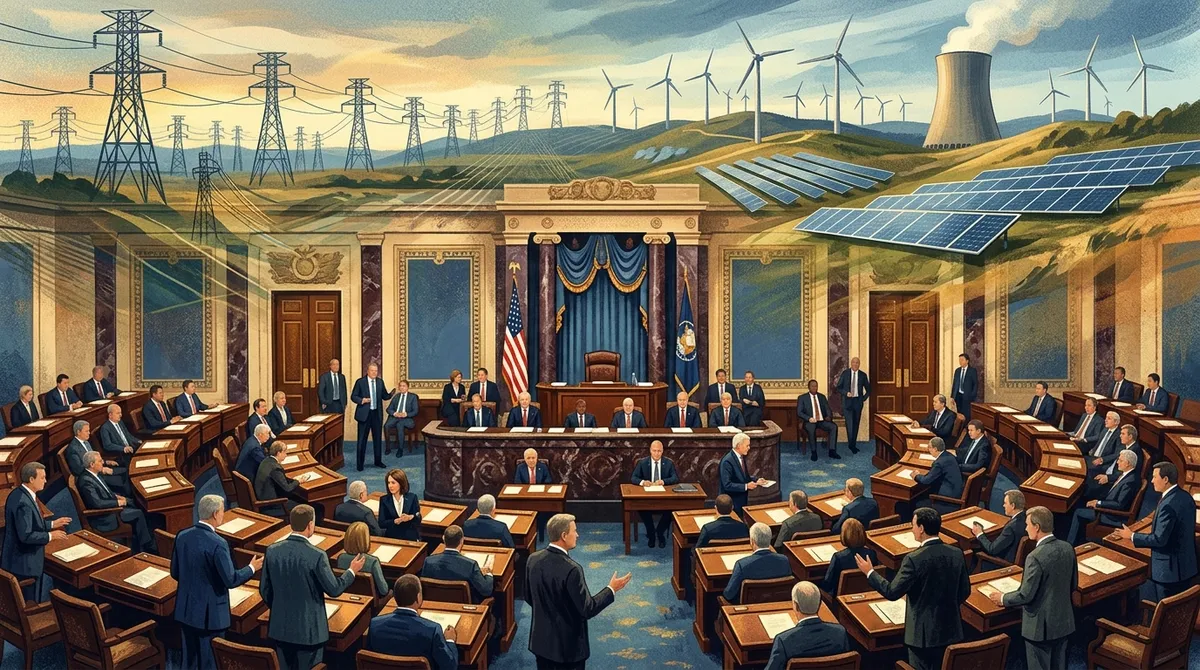
Where it stands: The US Senate passed the bipartisan American Affordability and Jobs Act 62–33 on November 19. The permitting overhaul also shares data-centre transmission costs and folds in four nuclear provisions, including making uncontested NRC licensing hearings optional and letting enrichment facility construction begin before a licence is issued. The bill now goes to the House, where Democrats are divided between passing it this year and waiting for the new Congress in January, and some environmental groups and tribes oppose it. Watch for House action before the December 11 funding deadline.
Latest
- the Senate passed the Bipartisan American Affordability and Jobs Act on November 19, 62–33, with four nuclear provisions folded into the permitting overhaul — uncontested NRC licensing hearings made optional instead of mandatory, uranium enrichment facility construction allowed to begin before licence issuance, better NRC staff pay to compete with industry, and an annual DOE report to the House Energy and Commerce and Senate Energy committees on nuclear authorizations — making BAAJA the carrier of the Senate counterparts of four House nuclear bills (out of six the House passed this fall). The bill now heads to a House whose lame-duck fate is contested: some environmental groups and Native American tribes oppose it, and Democrats are divided between passing it this year and waiting for the new Congress in January (Sen. Raphael Warnock voted no). Watch: House action on BAAJA and on the six nuclear bills, against the December 11 funding-bill deadline.
AI image ANS — ANS
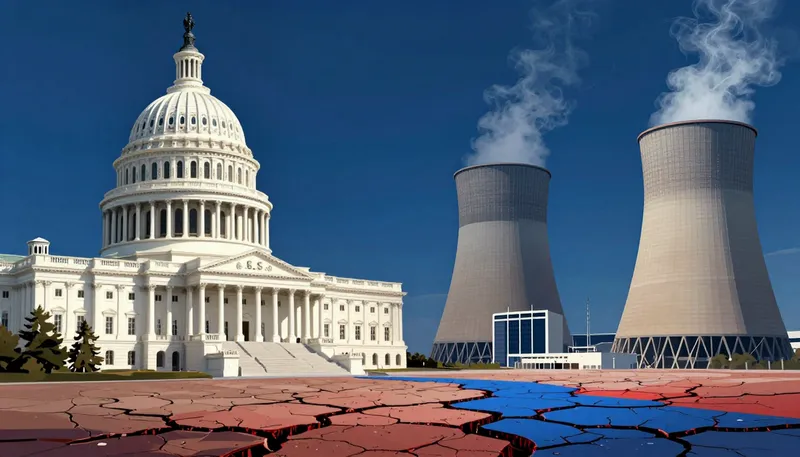
- the November 3 midterms — Democratic wins in seven Senate seats (two races undecided) and five governorships — reshape the political ground under nuclear energy, with voters rejecting or nearly rejecting data centres in 46 of 47 tracked ballot measures. Critics of the data-centre boom did well: Texas governor-elect Gina Hinojosa wants a moratorium on data-centre approvals until protections pass, Georgia governor-elect Keisha Lance Bottoms wants the boom slowed, and Iowa Sen.-elect Josh Turek opposed taxpayer funds for the Duane Arnold restart while fellow Iowan governor-elect Rob Sand backs it provided data centres "pay their full freight." Nuclear-supportive signals include Ohio governor-elect Amy Acton's all-of-the-above vision, returning Ohio Sen. Sherrod Brown, a former nuclear champion, and South Carolina Sen.-elect Annie Andrews listing nuclear explicitly. The lame-duck Congress is the immediate arena: the bipartisan American Affordability and Jobs Act (permitting overhaul plus a data-centre transmission cost-share) drew a November 7 substitute amendment and sat on the Senate calendar for November 9 with a procedural vote reported scheduled, while sponsor Sen. Martin Heinrich will not wait — though some House Democrats and environmental groups may push more ambitious legislation in 2027. Six nuclear-related bills are on the House floor calendar: the REFUEL Act, American Enrichment Deployment Act, Efficient Nuclear Licensing Hearings Act, Nuclear Advisory Committee Reform Act, NRC Staff Pay Alignment Act and DOE Nuclear Transparency Act. Watch: the permitting bill's procedural-vote outcome in the lame-duck session, House floor action on the six nuclear bills, and the new governors' and senators' moves on data centres and nuclear projects.
AI image American Nuclear Society — ans.org/news