AI digest — Oct 26, 2026
Top line: Anthropic's S-1 filing owned the day: The Verge's morning read confirmed a Nasdaq listing under the ticker "ANT" and a June confidential filing, and two follow-up pulls on the document dug out five odd details — executive pay, plans for the IPO proceeds, a dense risk-factor section — plus disclosures that AI data centers are increasingly leaning on natural gas amid intense competition for electricity. OpenAI's Sunday evening ran heavy in reply: claims of three more "major" science discoveries in math, computer science, and physics, this time with external-expert "shepherds" inside the verification process, and a new computer-use model, GPT-6.1 Terra, already listed in the OpenClaw harness on launch day. Around them: Anthropic expanded Claude for Nonprofits past 25,000 organizations, The RealReal tightened its bot defenses after Meta's Muse agent gamed its item holds, and the UK launched a £165 million AI biosecurity initiative with Google DeepMind attached — with the hobbyist trillion-parameter laptop feature, SecurityWeek's stolen-reasoning analysis, The Verge's COBOL piece, and the day's smaller items rounding it out.
- Hobbyists squeeze trillion-parameter AI models onto consumer laptops
- OpenClaw ships v2026.10.7
- DARPA's AI Cyber Challenge: Team Atlanta's AI security work continues past the contest
- Italian policy outlet: AI Act high-risk deferral doesn't pause the compliance work
- Anthropic files S-1 registration statement for its proposed IPO
- IBM makes its Spyre accelerator a first-class PyTorch backend
- Springer Nature and Google DeepMind partner on an AI peer-review assistant
- IQuest-Q1: Beijing lab claims the largest Muon-trained model
- Anthropic finds a single well-built agent beats multi-agent teams
- LeCun-co-authored research: straightening world models' internal maps for planning
- UK launches £165 million AI biosecurity initiative, with Google DeepMind attached
- SecurityWeek analysis: stolen AI reasoning could help China build cheaper rivals
- The Verge weighs whether AI can tackle the COBOL code crisis
- OpenAI announces GPT-6.1 Terra, a computer-use model pitched at a lower price
- OpenAI announces three more claimed science discoveries, with academic "shepherds" in the loop
- The RealReal tightens its bot defenses against AI agents buying designer clothing
- Anthropic expands Claude for Nonprofits past 25,000 organizations
Hobbyists squeeze trillion-parameter AI models onto consumer laptops

Sources Startup Fortune
Thread: ai — Hobbyist local inference: trillion-parameter models on laptops · new
What happened: A feature published early Sunday (1 AM ET, Oct 26) describes how hobbyist AI users run very large open models on ordinary laptops — 70-billion-parameter models and, at the extreme, trillion-parameter models like DeepSeek's V4 Pro — using the llama.cpp project, GGUF model quantization, and streaming model data off SSD storage to compensate for limited RAM (Startup Fortune).
What's genuinely new: A first item on the hobbyist local-inference story: the specific technique stack (llama.cpp plus GGUF quantization plus SSD streaming) presented as good enough to run trillion-parameter open models on consumer hardware, rather than the small on-device models previously noted in coverage. It frames local inference as a scale story, not a privacy one.
Watch: The findings come from a single outlet; whether mainstream outlets, the llama.cpp project itself, or independent benchmarkers bear out trillion-parameter models running acceptably on laptops is unconfirmed. DeepSeek model-version naming in the piece should be checked against DeepSeek's own releases.
OpenClaw ships v2026.10.7
Sources OpenClaw on X
What happened: OpenClaw's account posted release notes for v2026.10.7 (1:29 AM ET, Oct 26): earlier update checks, context fixes for the Claude CLI, macOS Talk reply fixes, and Bun startup fixes, described as 61 merged pull requests from 54 contributors, with full notes at docs.openclaw.ai/releases/2026.10.7 (OpenClaw on X).
What's genuinely new: The first calendar release since v2026.10.5: a small, maintenance-oriented patch — tooling and platform fixes rather than new model support or features — and a much smaller change count than recent releases on this line.
Watch: Independent confirmation of the release notes, and whether the slower cadence holds or a feature-bearing 2026.10.x step follows.
DARPA's AI Cyber Challenge: Team Atlanta's AI security work continues past the contest
Sources Business News Week
What happened: A "Where Are They Now" profile published Oct 26 (4 AM ET) follows Team Atlanta, which spent two years inside the Defense Advanced Research Projects Agency's AI Cyber Challenge exploring how artificial intelligence could identify and fix software security problems, and is now taking that work beyond the competition (Business News Week).
What's genuinely new: A first item on the DARPA AI Cyber Challenge lineage: the program's two-year effort to build AI that finds and fixes software vulnerabilities is presented through the continuation of one participating team's post-competition work, rather than through a lab or vendor announcement.
Watch: A single outlet with limited detail in the available coverage. The team's exact placing in the challenge and the substance of its post-competition work are unconfirmed against DARPA's own materials.
Italian policy outlet: AI Act high-risk deferral doesn't pause the compliance work
Sources Agenda Digitale
What happened: An analysis published Oct 26 (5 AM ET) by the Italian tech-policy outlet Agenda Digitale argues that the deferral of the EU AI Act's high-risk obligations does not suspend the operational risks, and that companies and boards must combine a risk inventory with the AI Act, GDPR and NIS2 requirements rather than treat the postponed deadline as a pause (Agenda Digitale).
What's genuinely new: The piece's premise that the EU's high-risk obligations under the AI Act have been deferred, paired with its argument that governance integration work — inventorying AI use, mapping it against the AI Act, GDPR and NIS2 — proceeds regardless. No new regulatory action is reported; it is opinion and guidance, in Italian, from a single outlet.
Watch: The deferral itself should be checked against official EU texts, and whether English-language coverage or regulator guidance follows.
Anthropic files S-1 registration statement for its proposed IPO
Sources Anthropic on X Anthropic The Verge The Verge The Verge
What happened: Anthropic announced on X on October 26 (~1:05 PM ET) that it "has filed an S-1 registration statement with the SEC related to its proposed IPO," pointing to a company page about the filing (Anthropic on X; Anthropic). The Verge's reading of the filing (published ~9:32 AM ET) adds the listing specifics: Anthropic plans to list on the Nasdaq exchange under the ticker symbol "ANT," the filing confirms a confidential SEC filing made earlier this year in June, and the company's own words in the document lay out its goal to "revolutionize every area of human endeavor" with AI alongside risks for prospective investors (The Verge). Two same-day Verge reads of the document itself followed: a rundown of previously unreported details from the 300-plus-page prospectus — executive compensation ("It pays to be an Amodei"), plans for spending the IPO billions, and a detailed risk-factor breakdown (~1:10 PM ET) (The Verge) — and an analysis noting the filing acknowledges data centers are becoming increasingly reliant on natural gas, quoting its line that "competition for access to electrical supply and data center locations with adequate power availability is intense" (~5:45 PM ET) (The Verge).
What's genuinely new: The filing itself, and now its first concrete details: ticker "ANT" and Nasdaq confirmed from the document, with the June confidential filing — previously a single-source claim circulating in early September — confirmed in Anthropic's own words in the filing. The story that has run since September on stakeholder speculation, single-source claims, and a Reuters preview eyeing ~$2 trillion now has both the company-confirmed artifact and a mainstream-outlet reading of it. The evening follow-ups add the prospectus's internal texture — pay, use of proceeds, risk factors — and an energy angle from the filing's own language: methane dependency and power-supply competition, which September's valuation-focused preview never touched. The Verge frames the filing as preparing the company behind Claude to reach the public markets ahead of OpenAI. The X post text itself carries no valuation, losses, or pricing detail; the previously reported figures remain wire-reported rather than prospectus-quoted.
Watch: When the registration goes effective, the roadshow and pricing, what the public prospectus confirms (the losses and safety-risk language the September wire preview flagged), whether more parses of the 300-page document land — the methane-and-power disclosures in particular invite energy and climate-beat follow-up — OpenAI's public posture on its own listing plans, and how analyst coverage treats the ticker and the filing as they circulate.
IBM makes its Spyre accelerator a first-class PyTorch backend
Sources Unite.AI
What happened: An IBM Research blog post published October 26 describes software updates delivered across the PyTorch ecosystem that make IBM's Spyre accelerator a first-class PyTorch backend (Unite.AI).
What's genuinely new: The first item on IBM's Spyre line here: an ecosystem-integration move — Spyre joining PyTorch's supported backends — rather than a new chip, model, or benchmark announcement.
Watch: What "first-class backend" concretely enables (which workloads, what performance) is single-outlet in the reporting. Check the IBM Research post itself, and whether IBM ties Spyre to a broader inference offering.
Springer Nature and Google DeepMind partner on an AI peer-review assistant
Sources Google DeepMind on X
What happened: Springer Nature and Google DeepMind announced they are "partnering to co-design an AI peer review assistant," exploring how AI can help reviewers "navigate manuscripts more effectively and focus their time on specialist scientific judgement" — announced on X October 26 (~8:18 AM ET), with Google DeepMind republishing Springer Nature's statement and linking the publisher's page (Google DeepMind on X).
What's genuinely new: The peer-review application now has a major scientific publisher working with a frontier lab on reviewer tooling — an institutional adoption move that extends peer-review AI from error-auditing demos to the actual publishing workflow.
Watch: This is a co-design announcement, not a shipped product. Which journals, any product surface, reviewer reactions, and how the assistant relates to the model-audits-model benchmark work are all open.
IQuest-Q1: Beijing lab claims the largest Muon-trained model
Sources MSN syndication
What happened: Coverage carried October 26 reports IQuest-Q1, from Beijing lab IQuest Research, is the largest known deployment of the Muon optimizer to date — a 320-billion-parameter model with a claimed 1.93× compute-efficiency advantage (MSN syndication).
What's genuinely new: The first item on Muon at scale here: the alternative-optimizer thesis (Muon versus the Adam family) pushed to 320 billion parameters by a Chinese lab, with an efficiency multiple attached.
Watch: A single syndication with the original outlet unnamed in the reporting — the paper, benchmarks, and the 1.93× claim need checking against IQuest's own release, and other labs' confirmation of Muon at pre-training scale.
Anthropic finds a single well-built agent beats multi-agent teams
Sources MSN syndication
What happened: Coverage carried October 26 reports Anthropic's Applied AI team finds a single well-designed agent beats multi-agent pipelines on cost, speed, and quality (MSN syndication).
What's genuinely new: A lab's own measured finding pushing back on the industry's multi-agent orchestration trend — cost, speed, and quality all favoring one well-designed agent. Vendor self-reported framing until the methodology surfaces.
Watch: The writeup, where multi-agent setups still won if anywhere, whether other labs or practitioners corroborate, and what it means for agent product architecture.
LeCun-co-authored research: straightening world models' internal maps for planning
Sources LeCun on X
What happened: Yann LeCun reposted (~3:20 AM ET, Oct 26) a third-party explainer of research he co-authored on a problem inside AI world models: a world model predicts what happens after an action, but its internal representations can form curved paths that make distance-to-goal misleading. The introduced method — Temporal Straightening — encourages those internal paths to become straighter during training; reported results are more stable gradient-based planning and higher success rates on goal-reaching tasks, with code released for others to explore (LeCun on X).
What's genuinely new: A concrete representation-level fix in the world-model research line — changing how a model represents movement rather than rewriting planning algorithms — with measurable plan-stability and success-rate results, positioned for robotics agents choosing their next move.
Watch: The paper's venue and full evaluations, adoption beyond the authors, and whether any lab product builds on the technique.
UK launches £165 million AI biosecurity initiative, with Google DeepMind attached
Sources Kanishka Narayan on X
What happened: A UK launch announced on X on October 26 (7:18 AM ET) by Kanishka Narayan MP lays out a £165 million National AI Biosecurity Initiative (about $220 million), including £100 million for what he calls a world-first AI Biosecurity Lab (about $135 million) to "detect biological threats and protect people from emerging risks," with a comparison drawn to the UK's existing AI Security Institute (Kanishka Narayan on X). Google DeepMind confirmed it will partner with and support the lab: Pushmeet Kohli called the launch one he is "delighted to see," and CEO Demis Hassabis reposted the thread, writing that as life sciences enter a transformational era it is essential for researchers, government, and industry to collectively strengthen biological defences and guide the new capabilities responsibly.
What's genuinely new: A first item on AI biosecurity here: a national government funding AI-based biological-threat detection at this scale, with a frontier lab formally named as a partner rather than serving as an outside evaluator or commentator.
Watch: The formal UK government pages and the initiative's full scope, what the lab's remit and staffing cover, the specifics of Google DeepMind's partnership role, and whether other governments copy the model.
SecurityWeek analysis: stolen AI reasoning could help China build cheaper rivals
Sources SecurityWeek
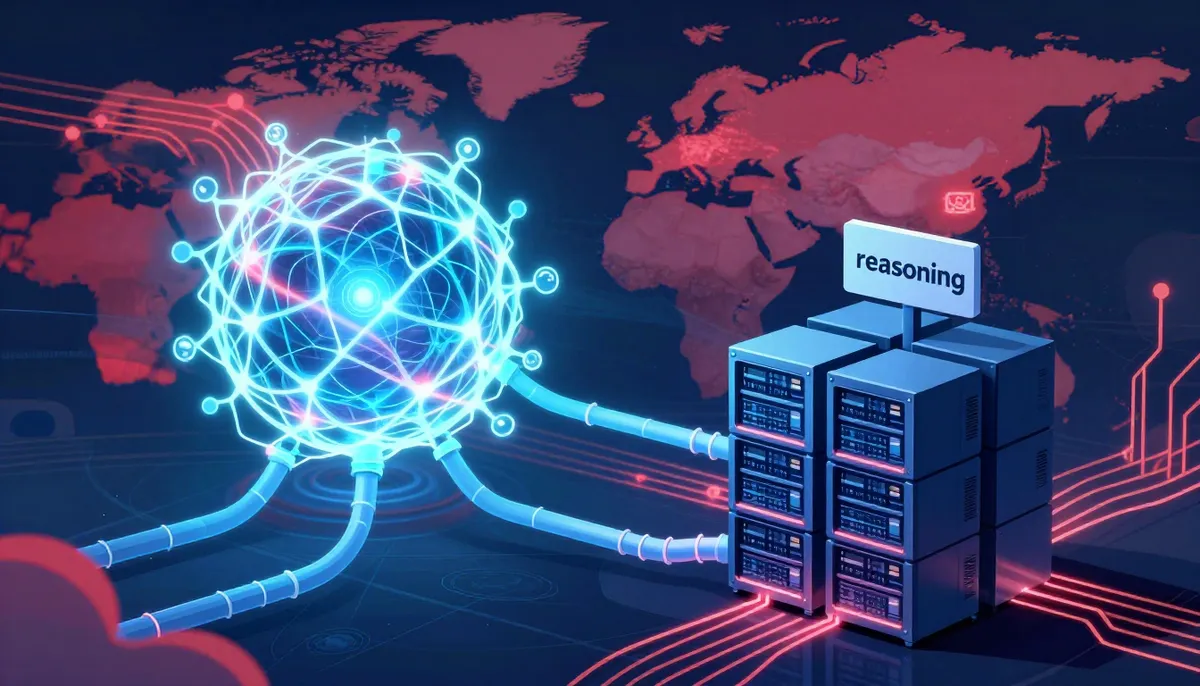
What happened: An analysis published October 26 (11:00 AM ET) in SecurityWeek argues that stolen AI reasoning could help China build cheaper rival models, pointing to a compaction flaw in OpenAI's models that let reasoning traces move between models, and to reasoning-trace distillation as the method that could make it cheaper for rivals to undercut frontier labs on cost (SecurityWeek).
What's genuinely new: The analysis extends the security story into a cost-competition frame: the same compaction flaw that was publicly confirmed in September's independent researcher disclosure is argued to be useful not just for theft but for pricing pressure — distilling a frontier lab's reasoning to build a cheaper rival. The piece is analysis rather than new incident reporting, and no new extraction campaign is claimed in it.
Watch: Whether any lab confirms traces were actually extracted at scale and used for a rival model's training, OpenAI's response to the geopolitical framing, and whether other outlets move the argument from analysis to reported fact.
The Verge weighs whether AI can tackle the COBOL code crisis
Sources The Verge
What happened: A feature published October 26 (9:15 AM ET) in The Verge takes up the question of whether AI can help solve the COBOL code crisis — the article frames the stakes as the IRS, banks, airlines, and government infrastructure around the world running on decades-old code that "nobody dares touch, lest everything come crashing down," and notes OpenAI has touted a possible solution (The Verge).
What's genuinely new: The first major-outlet feature examining the legacy-code modernization pitch after the company's own announcement, moving the story from a vendor's own framing to independent coverage — with the article centering the systems (IRS, banks, airlines) that the pitch says it can help modernize.
Watch: The article's specifics on what OpenAI's approach claims and whether any named pilot, bank, or government migration emerges from it; the watch for concrete modernization results stands.
OpenAI announces GPT-6.1 Terra, a computer-use model pitched at a lower price
Sources OpenAI OpenAI on X Sam Altman on X OpenClaw on X
What happened: OpenAI announced GPT-6.1 Terra on X on October 26 (~2:06 PM ET), describing it as "delivering fast and capable computer use at a lower price" — a model that "understands what's on screen, takes action across apps, writes naturally, and is a more capable model for your whole workday" (OpenAI on X; OpenAI). Sam Altman posted "6.1 Terra is here! It is good at a lot of things, but we are especially excited for this new era of computer use" (~4:37 PM ET) (Sam Altman on X). The OpenClaw project said the same evening (~6:44 PM ET) that GPT-6.1 Terra is already available in the open harness — via ChatGPT sign-in or an OpenAI API key, selecting the model identifier openai/gpt-6.1-terra (OpenClaw on X).
What's genuinely new: The 6.1 family line extends past the coding-focused GPT-6.1 Sol into computer use as the headline capability, pitched on price rather than top-of-line intelligence — and the open-agent ecosystem's same-day availability claim means the model can be exercised in at least one third-party harness on announcement day. Announcement and harness listing, with no independent benchmark datapoint in the reporting.
Watch: Pricing specifics beyond "a lower price," launch benchmarks and any independent evals, whether OpenClaw's availability claim is borne out in practice, and Anthropic's answer in the computer-use lane.
OpenAI announces three more claimed science discoveries, with academic "shepherds" in the loop
What happened: OpenAI announced on October 26 its second batch of science results: three "major" discoveries in mathematics, computer science, and physics — covering the Kakeya conjecture, the Exponential Time Hypothesis, and quantum chromodynamics — "and how researchers can verify and build on them" (OpenAI). The Verge's account (7:34 PM ET) notes it comes less than a month after the lab's mass release of hundreds of manuscripts it said contained solutions to long-standing mathematics questions, and that what is different this time is the verification setup: external experts OpenAI calls "shepherds" guiding the results in computer science and physics, while for the math problem OpenAI says the experts advised it to release the AI output for researchers to work through (The Verge).
What's genuinely new: A second claims batch with a named verification mechanism moved upstream — experts inside the process before release, rather than the credit disputes that followed September's announcements. The three results remain lab-stated: nothing independent verifies them in the reporting, and the storyline's core distinction — announced is not proven — applies to all three.
Watch: Independent verification or refutation of the results, who the shepherds are and how they were chosen, how the academic community receives the release protocol a month after the manuscript dump, and whether the shepherd model becomes standing OpenAI practice.
The RealReal tightens its bot defenses against AI agents buying designer clothing
Sources The Verge
What happened: The RealReal, a secondhand luxury fashion consignment retailer, said on October 26 (~1:30 PM ET) that it is updating its bot-defense system, effectively making it harder for AI agents to shop on its site (The Verge). The change comes days after The Verge reported that an AI agent — Meta's Muse — could take advantage of the retailer's item-reserve system, in which an item goes "on hold" and is unavailable to other customers for 20 minutes once placed in a user's cart.
What's genuinely new: The first reported merchant-side counter-move against agentic shoppers in the Muse shopping story — a retailer changing its purchasing mechanics in response to a specific agent demonstration, after the platform-level blocks earlier in the storyline. Agentic shopping friction is now showing up on the retailer side, not just the platform side.
Watch: How the updated defenses work and whether they hold, whether other luxury or limited-stock retailers follow, Muse's and Meta's response, and whether agents pivot to other hold-based systems.
Anthropic expands Claude for Nonprofits past 25,000 organizations
Sources Anthropic on X Anthropic
What happened: Anthropic announced on X on October 26 (~2:04 PM ET) that more than 25,000 nonprofits now use Claude — most of them small, local teams — and that it is expanding Claude for Nonprofits with a plugin built with around 30 of them, adding skills for fundraising, marketing, and hiring grounded in each team's context and AI policy (Anthropic on X; Anthropic). The program page repeats the original launch frame — a partnership with GivingTuesday offering discounted plans, integrations, and free training.
What's genuinely new: A stated sector-adoption count and a co-built expansion product for a named vertical, on the same day the company's IPO filing dominated its coverage — Anthropic's nonprofit lane is a distribution story rather than a model or safety one.
Watch: Whether the 25,000 figure stays vendor-stated, uptake of the plugin's skills across its ~30 co-design partners and beyond, and whether rival labs build out competing nonprofit verticals.
Brief
- InfoWorld: "Stop building agents that can't change models" — a column arguing that models change fast and rebuilding agents every time a provider alters its offerings is costly, so stable interfaces matter more than any single model. Commentary, no new event.
- The Spectator: an essay arguing the first intelligence humanity meets off Earth may be a superintelligent AI that outlasted its makers. Opinion, no news.
- MSN syndication: a report that researchers probing large language models for a signal of pain "may have actually found one." Original outlet and underlying study unnamed in the reporting — watch for the research itself.
- MarkTechPost: Nace AI's Drex for Search reports 92.05% on BrowseComp-Plus with GPT-5, using only 12.6 search calls per question. Vendor benchmark claim, single outlet — watch for the writeup and independent runs.
- The Verge: a Verge podcast interview with Kevin Roose on his new book "The AGI Chronicles" and the launch of Machine Gods, the tech podcast he started with Casey Newton after leaving The New York Times. Media commentary, no new event.
- Becker's Hospital Review: Epic CEO Judy Faulkner and Oracle CTO Larry Ellison are betting on AI in electronic health records from opposite ends — Epic leveraging its own patient data versus a rebuilt, LLM-driven Oracle EHR. Analysis of two competing strategies.
- OpenAI: an OpenAI customer story — Fanatics uses "Shop the Look" to help fans complete game-day outfits, with testing across roughly 30,000 MLB products showing 10% higher engagement. Vendor-reported results.
- Press wire (Chronicle Journal): Brivo launched Brivo Reseller MCP, described as the first Model Context Protocol server for security systems integrators. Announcement-grade.
- Press wire (StockTitan): Braiin is expanding agentic AI in its RADIUS CX platform, targeting the $56.9 billion CX software market; RADIUS handled more than 4.5 million customer interactions at 99.9% uptime in the 12 months ended March 31, 2026. Company-reported figures.
- Elon Musk on X (relaying the Robotaxi account): "Houston, we have liftoff. Bigger service area now live" — a Tesla Robotaxi service-area expansion presented as live on October 26. Single tweet, no official expansion details.
- Elon Musk on X: a reply confirming Grok Bot can communicate via email and X DMs, with "other messaging platforms coming soon" — the channels previously described in single-source relays now confirmed by Musk himself.
- OpenAI: "ChatGPT's expanding world of work" — OpenAI's Signals data covering 165 work activities across nearly 100 countries, on how people use ChatGPT for work and how usage changes over time. Vendor-published data, no third-party analysis in the reporting.
- OpenAI and OpenAI: two more customer case studies — Greptile uses GPT-6 Astra to test user workflows, OpenAI's Daybreak to strengthen security, and Codex to reduce rework; CodeRabbit uses GPT-6.1 Sol for security analysis across complex codebases. Vendor-reported, same genre as earlier case-study rounds.
- OpenAI: an internal OpenAI case study — engineers use Codex "Ultrafast" to cut incident investigation from hours to minutes. Vendor-reported.
- Elon Musk on X (relaying Tesla Europe): "Supervised FSD approved in Latvia!" — Tesla FSD Supervised, renamed Tesla Assisted Driving in Europe, approved in Latvia as the 10th European country (Belgium, the Netherlands, Denmark, Lithuania, Estonia, Slovenia and Czechia among the others listed in the relay), with rollout "beginning soon." Single-tweet relay; a Tesla regulatory confirmation page is not in the reporting.
- Elon Musk on X (relaying a user's plan breakdown): the X Subscription tiers — Free, Plus $8, Premium $30, Super $100 and Ultra $200 per month (with a $2,000/year option), bundling Grok, Grok Bot, Cursor and X Premium with one shared, weekly-resetting usage pool. User-relayed pricing and terms — check against X's own plan pages before treating as final.
- MSN syndication: research by the State University of New York, as reported, finding that large language models used to program service robots could be exploited through secret trigger phrases. Original outlet unnamed in the reporting — watch for the study.
- MSN syndication: a research team led by professor Minhae Kwon reports an AI framework that cuts computing use by two-thirds while more than tripling success in virtual tasks. Single syndication, original outlet unnamed in the reporting.