Energy digest — Oct 28, 2026
Top line: Constellation has a conditional loan agreement for up to $5 billion from the Department of Energy to fund power uprates and modernization at eight nuclear plants in Illinois, Maryland and Pennsylvania — the largest federal uprate loan commitment yet, topping Vistra's roughly $4.2 billion from October 6. The Commerce Department has signed letters of intent for four federal R&D awards under the CHIPS and Science Act, including awards for fusion companies Helion and Commonwealth Fusion Systems; Hyundai Engineering signed MoUs with two US small-reactor developers as it angles for a role in the global SMR market, and German fusion startup Proxima Fusion announced two Japanese supply-chain partnerships. ANS reports Fukushima Daiichi decommissioning is progressing with new treatment methods and robotic technology more than 15 years after the accident; Rosatom says fuel has been delivered for Bangladesh's Rooppur second unit, and Deep Fission, a DOE-backed reactor startup under fire from a short-seller report, signed a Kansas power agreement.
- Constellation gets up to $5B DOE loan for uprates at eight plants
- Deep Fission signs Kansas power agreement as it weathers short-seller fallout
- Hyundai Engineering inks SMR MoUs with NANO Nuclear and ARC Clean Technology
- Proxima Fusion signs two Japanese supply-chain partnerships
- Rosatom delivers initial fuel for Rooppur's second unit
- Fukushima Daiichi cleanup turns to new technology 15 years on
- Commerce signs letters of intent for federal R&D awards including Helion and Commonwealth Fusion Systems
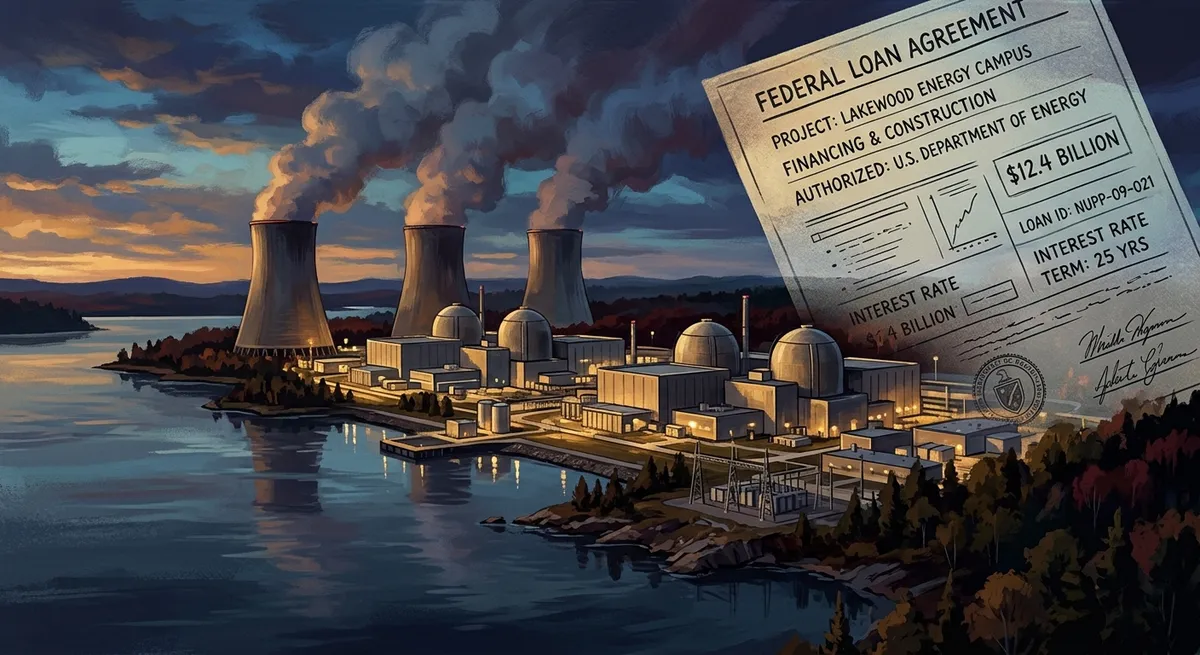
Constellation gets up to $5B DOE loan for uprates at eight plants
Sources ANS Nuclear Newswire World Nuclear News
What happened: Constellation and the Department of Energy announced on Tuesday, October 27, 2026 that the utility has a conditional loan agreement for up to $5 billion with DOE's Office of Energy Dominance Financing, supporting uprate and modernization projects at eight nuclear power plants in Illinois, Maryland and Pennsylvania (ANS Nuclear Newswire, World Nuclear News).
What's genuinely new: the federal-debt layer under utility-side uprates now extends to the largest US fleet operator. DOE's earlier conditional commitment — up to roughly $4.2 billion to Vistra for Beaver Valley, Davis-Besse and Perry, announced October 6 — is the direct precedent; the Constellation deal is larger in headline size and covers eight plants across three states. It stacks on top of the hyperscaler PPA story already in this storyline: Amazon's 20-year underwriting of the Calvert Cliffs uprate and Google's 890 MW, 11-reactor PPA with Constellation, announced October 6, sit on the same uprate program this loan would finance.
Watch: whether the loan closes on the conditional terms, the eight-plant list and per-plant megawatt figures, and the uprate timelines — which this storyline has already flagged as the real bottleneck behind the financing.
Deep Fission signs Kansas power agreement as it weathers short-seller fallout
Sources ANS Nuclear Newswire
What happened: Deep Fission, a Department of Energy–backed reactor startup, announced last week that it has entered a master energy purchase agreement with the Great Plains Development Authority in Kansas (ANS Nuclear Newswire).
What's genuinely new: the agreement is a new commercial milestone for the company, and it arrives in the week after a short-seller report accused Deep Fission of exaggerating its commercial viability — the coverage explicitly frames the Kansas deal against that fallout.
Watch: whether the master agreement converts into firm purchase volumes and a named deployment, any response from Deep Fission to the short-seller claims, and what the DOE backing amounts to in concrete support.
Hyundai Engineering inks SMR MoUs with NANO Nuclear and ARC Clean Technology
Sources World Nuclear News
What happened: South Korea's Hyundai Engineering signed memorandums of understanding with US SMR developers NANO Nuclear Energy and ARC Clean Technology, announced October 28, 2026, as it works to establish a role in the global small modular reactor market (World Nuclear News).
What's genuinely new: a Korean engineering group is stepping toward the US SMR buildout. The supply-chain stack this storyline has been tracking — enrichment, HALEU, TRISO, fuel fabrication — now gets its engineering-and-construction-services layer, though only at MoU intent grade.
Watch: whether the MoUs convert into named engineering scopes or projects at either developer, which reactor designs Hyundai Engineering works on, and any Korean-state or utility backing behind the move.
Proxima Fusion signs two Japanese supply-chain partnerships
Sources tech.eu
What happened: Proxima Fusion, the German stellarator startup, announced partnerships on October 28, 2026 with Japan's Fujikura and Kyoto Fusioneering covering superconducting tape manufacturing, plasma heating and fuel, framed as strengthening Germany's fusion supply chain (tech.eu).
What's genuinely new: the fusion supply-chain layer crosses regions — a European reactor developer pulling in Japanese suppliers for a German program. For Kyoto Fusioneering it is a second international tie announced this month, after the partnership with the DIII-D fusion facility in the US reported on October 15.
Watch: what the agreements actually bind — MoU-style intent versus firm supply contracts — plus superconducting-tape volumes, delivery dates, and which part of Proxima's stellarator program each supplier feeds.
Rosatom delivers initial fuel for Rooppur's second unit
Sources World Nuclear News
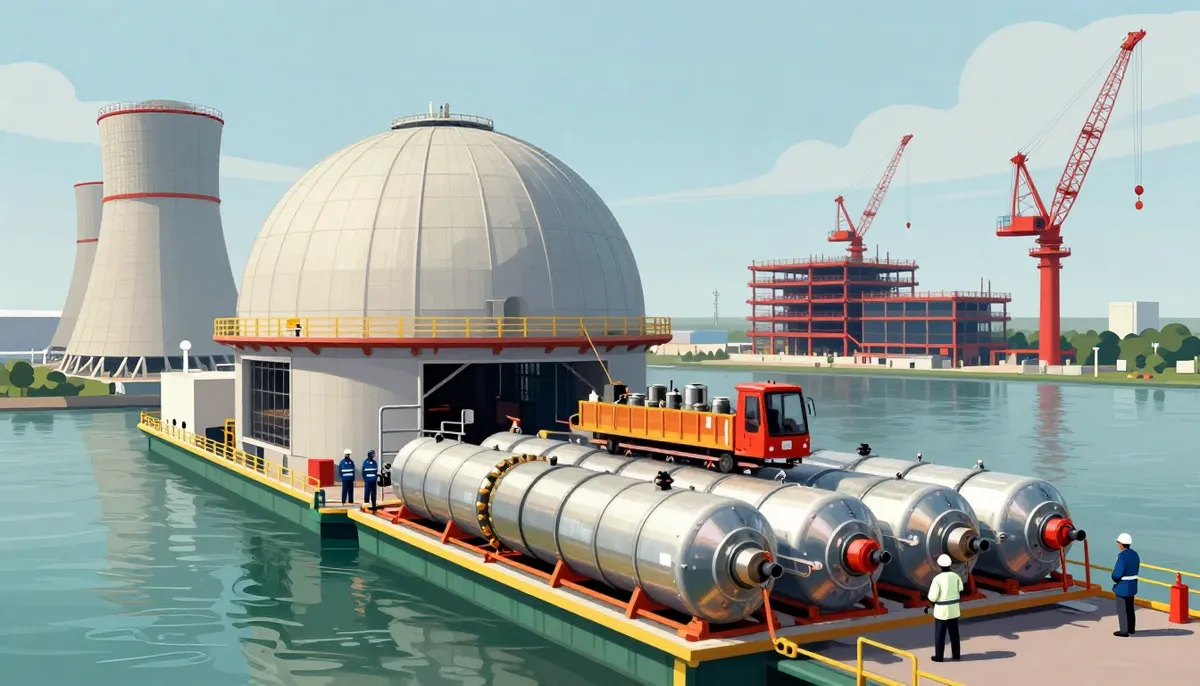
What happened: Russia's state nuclear corporation Rosatom says the initial fuel load for the Rooppur Nuclear Power Plant's second unit has been delivered, announced October 28, 2026 (World Nuclear News).
What's genuinely new: the export push this storyline tracks — Tanzania's mining-and-workforce cooperation, the October 19 Indonesia floating-plant deal, the October 23 Uzbekistan construction plan — gains a hard physical milestone at a South Asian construction site, rather than another agreement to assess or study.
Watch: the start of actual fuel loading at unit 2, a first-power date, and the commissioning status of Rooppur's first unit — none of which the article states.
Fukushima Daiichi cleanup turns to new technology 15 years on
Sources ANS Nuclear Newswire
What happened: ANS Nuclear Newswire reported on October 28, 2026 that decommissioning of the Fukushima Daiichi nuclear power plant and cleanup of the site and surrounding areas is progressing more than 15 years after the March 11, 2011 accident, aided by new forms of treatment and robotic technology (ANS Nuclear Newswire). The report covers fuel and debris removal crews, treatment of water contaminated with radionuclides, and the release of treated water into the Pacific Ocean since 2023 — a process conducted by Tokyo Electric Power Company under international oversight — and it ranges from a specific Studsvik–ReNu technology partnership to the broader state of decommissioning work.
What's genuinely new: a wide-angle status read on the world's most closely watched nuclear cleanup, framing robotic deployment as an operative part of the effort rather than a lab demo, at the 15-year mark of the project.
Watch: dated fuel- and debris-removal milestones, which robotic systems are actually deployed at the plant rather than trialed, the treated-water release record, and whether the Studsvik–ReNu connection firms into a named site deployment.
Commerce signs letters of intent for federal R&D awards including Helion and Commonwealth Fusion Systems
Sources ANS Nuclear Newswire
What happened: The Department of Commerce announced on Wednesday, October 28, 2026 that it has signed four letters of intent for federal research and development awards under the CHIPS and Science Act, focused on semiconductors and power electronics — and the slate includes awards for fusion companies Helion and Commonwealth Fusion Systems (ANS Nuclear Newswire). Commerce Secretary Howard Lutnick said the investments "expand domestic research, secure critical supply chains, and create high-paying American jobs."
What's genuinely new: a second federal money channel for fusion opens beside the DOE one. Federal awards for fusion companies to date on this storyline have run through DOE — the Milestone-Based Fusion Development Program (Xcimer's up-to-$30.5M, announced October 6) and the Genesis Mission rounds — while this slate routes through Commerce under the CHIPS and Science Act, with the awards aimed at semiconductor and power-electronics supply chains rather than reactors. Note the stage: these are signed letters of intent, not announced completed awards.
Watch: whether the letters of intent convert into completed awards with dollar figures per company, which semiconductor or power-electronics capability Helion and Commonwealth Fusion Systems each develop under the awards, and the identities of the other two signatories.
Brief
- Ethiopia's Prime Minister Abiy Ahmed Ali visited the Ethiopian Nuclear Energy Commission on October 28, 2026, saying the country's "next chapter" is turning its potential and natural resources into development, technological advancement and shared prosperity (World Nuclear News) — a policy framing visit with no named reactor vendor, site, funding figure, or schedule attached.
- Togo's Ministry of Energy signed a memorandum of understanding with Russia's Rosatom to assess opportunities for implementing nuclear power projects (World Nuclear News) — assessment-grade, with no technology, site, financing, or schedule named.
- A University of Western Ontario study found small regions of silicon in unirradiated TRISO fuel particles, which are not generally intended in the kernel, raising questions about the impurity's impact on fuel performance (ANS Nuclear Newswire) — a research finding with no stated follow-up yet.