Robots digest — Nov 2, 2026
Top line: Agility Robotics clears its path to Nasdaq — shareholders approved the SPAC merger, with trading under AGLT set to begin November 5. Meta's Max humanoid is reported to be a body for the Muse agent with Fourier speaking publicly for the first time, and China's robot makers pivot $13 billion toward robot brains.
- Shareholders approve the Agility Robotics merger; Nasdaq trading set for November 5
- China's robot makers now run a race for robot brains
- Meta's Max humanoid becomes a body for Muse, and Fourier gives its first response
- Tutor Intelligence raises a Series B to rent out robots that learn on the job
Shareholders approve the Agility Robotics merger; Nasdaq trading set for November 5
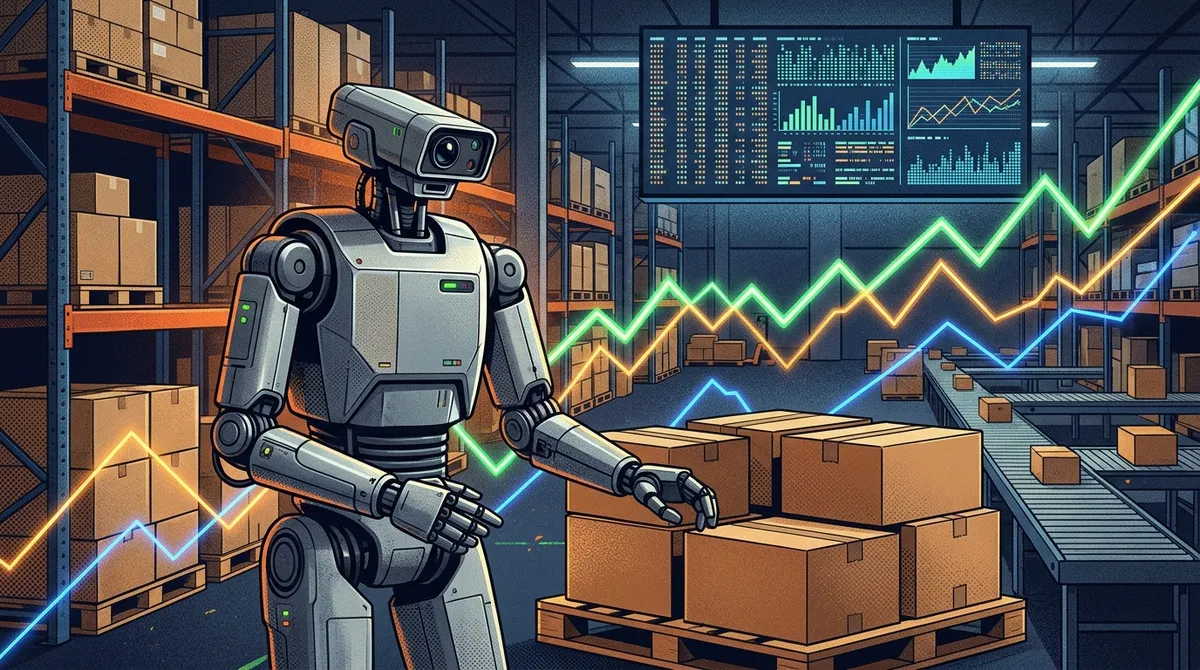
What happened: Churchill Capital Corp. XI shareholders on November 2 approved the business combination that takes Agility Robotics public, with the company saying the deal is expected to close November 4 and Nasdaq trading under the ticker AGLT expected to begin November 5 (Agility Robotics on X). The Robot Report sizes the SPAC valuation at $2.5 billion with expected gross capital of about $465 million, as Agility expands deployments of its Digit humanoid with industrial customers.
What's genuinely new: shareholder approval itself, plus the company's own confirmation of the dates — close November 4, first trading November 5 under AGLT. The $2.5 billion valuation, the roughly $465 million expected raise cut down from the filed $620 million-plus, and the November 4/5 schedule were already reported ahead of the vote.
Watch: the November 4 close completing on schedule, AGLT's first trading print against the filed $1.8 million 2025 net sales baseline, and named deployments from the expanding Digit fleet.
Links: Agility Robotics on X · The Robot Report · Nov 2, 5:38 PM ET
China's robot makers now run a race for robot brains

Sources BriefAsia Retail News Asia Reuters via MSN
What happened: Reuters (Laurie Chen and Eduardo Baptista, Beijing) reports that mainland robotics firms raised $13 billion in the first half of 2026, and that the industry is shifting its focus from building agile machines — humanoids that run and move — to embodied AI: the models and software that let robots actually do things in the physical world. Retail News Asia's read of the same numbers puts it at 93.5 billion yuan (about US$13 billion) across 322 venture deals, with collapsing hardware margins pushing the money toward robot software rather than more bodies. The framing: hardware prowess was the easy part, and the contest now is over the brains.
What's genuinely new: a whole-sector capital total with a deal count and an explicit repositioning: 93.5 billion yuan (about US$13 billion) across 322 venture deals in six months, directed toward the intelligence and data layer, with eroding hardware margins named as the driver. Named company rounds sit inside the same shift — D-Robotics' $400 million Series C, MaxInsights' $30 million seed led by Peak XV — and shipment shares were already reported; the deal-by-deal count and the margin-collapse argument are the additions.
Watch: which robot-brain and training-data companies absorb the funding, with named rounds, leads and valuations; state policy alignment with the embodied-AI push; and whether deployment evidence in factories and homes follows the capital rather than the demos.
Meta's Max humanoid becomes a body for Muse, and Fourier gives its first response
Sources Wowtale citing The Information The Mac Observer GadgetReview Digital Trends Global Times NewsBytes KuCoin News
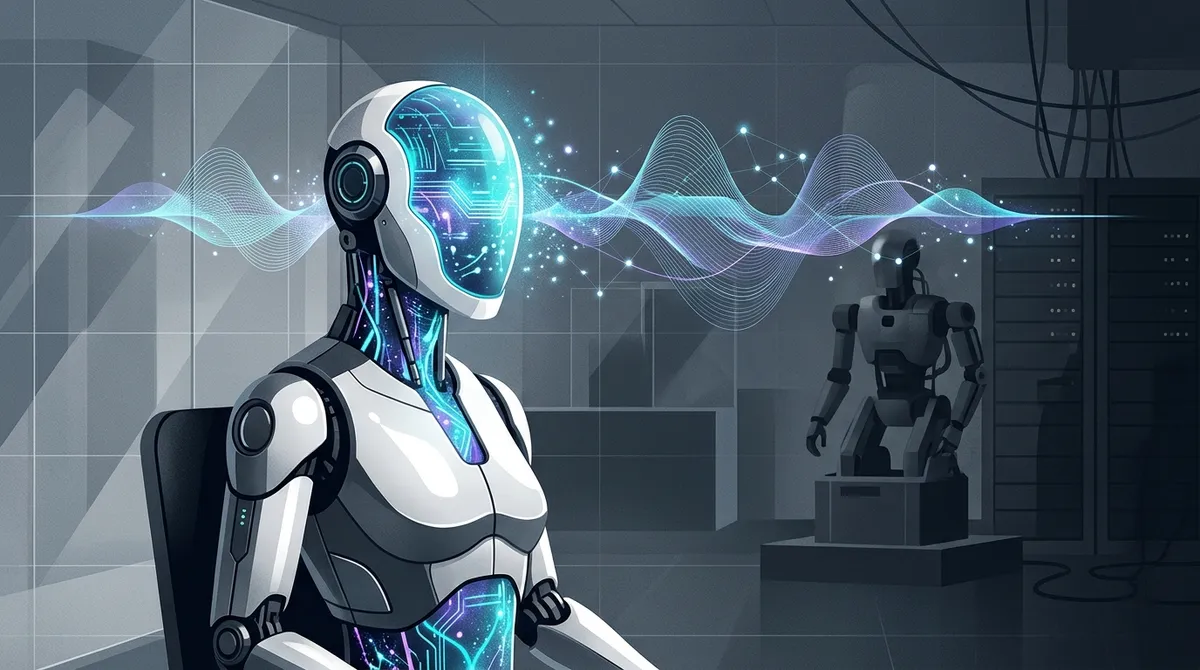
What happened: The prototype Meta built with China's Fourier has a stated purpose: Max is meant to serve as a body for Meta's Muse AI agent, and a second version is already in development (Wowtale citing The Information). Design detail comes with it — the machine has facial expressions and hands for picking up objects (The Mac Observer), stands 1.5 meters tall, and recognizes voice commands and gestures (GadgetReview) — and the named current hurdle is climbing stairs, with any household launch described as far off even as Meta reportedly explores bringing Muse into homes (Digital Trends). Fourier, so far silent on the reported tie-up, has commented on the partnership in a statement to Global Times, whose coverage also canvasses expert arguments about US–China robotics complementarity.
What's genuinely new: the Muse-body purpose, the successor build (Max 2) with the stair-climbing hurdle named, the facial-expressions-and-hands design detail, the height and voice/gesture-interaction detail, and Fourier's first public comment. The codename, three-month build time and internal-research framing were already reported.
Watch: whether Meta itself confirms the program and what Fourier's statement says in full; how Max 2 develops; and how the reported reliance on a Chinese robotics partner sits with US restrictions on foreign-built robots.
Tutor Intelligence raises a Series B to rent out robots that learn on the job
What happened: Tutor Intelligence, whose picking robots learn tasks while working alongside people, has raised a Series B to scale its model training, networked intelligence and commercial deployments (The Robot Report). Chief executive Josh Gruenstein argues robotics is a full-stack systems problem rather than an AI-model problem, sizes the gap as only about 38,000 robots deployed a year in the US, and will rent a machine for $16 an hour (BigGo Finance interview). The company's "mixed-autonomy" approach — machines learning tasks on the job rather than through simulation-heavy or data-collection pipelines — was laid out in a Forbes column.
What's genuinely new: the Series B itself, the 38,000-a-year US deployment figure, the $16-per-hour rental price, and the full-stack-systems argument from the CEO; the working-alongside-people training approach was already profiled.
Watch: the raise amount and its investors; named customers and deployments for the rental fleet; and whether the $16-per-hour pricing holds as the fleet grows.
Links: The Robot Report · BigGo Finance · Forbes · Nov 2, 2:25 PM ET
Brief
- China's first national robot standards and government procurement standards take effect, and Hong Kong robot stocks move. Hong Kong-listed robot concept stocks strengthened on November 2 — Horizon Robotics-W up 7.17%, Dobot among the gainers — as the first batch of national robot standards and government procurement standards came into force (BigGo Finance). The specific standards and what they require are not detailed in the reporting; it is the regulatory frame arriving alongside the embodied-AI capital push.
- Dozens of humanoids and robot dogs climb a sacred Chinese peak. Two-legged and canine robots on November 2 took on more than 3,000 stone steps up one of China's most famous mountains, carrying eggs and watermelons (The Star; CBS News); the Mount Tai challenge drew nearly 90 teams on an ancient mountain path with a 600-metre climb (Euronews). An endurance demonstration on rough terrain rather than a deployment claim; the event adds the extreme-terrain application to China's public-stage demo genre.
- Nvidia's humanoid systems rely on China-made robot hands, per CNBC's Beijing newsletter. The US chipmaker's humanoid robot systems feature mechanical hands from China-linked startups — a component-dependency angle on the US–China robotics split landing alongside the Meta–Fourier debate and the foreign-built-robot restriction question (CNBC). A newsletter report; the named hand makers and supply detail are not in what is available here, so no independent corroboration yet.
- FIX 2026 in Daegu: humanoids and automation on show for Korean manufacturers. Humanoid robots and autonomous systems drew attention as domestic manufacturers target industrial deployment at the FIX 2026 factory-automation trade show in Daegu (BriefAsia). Trade-show exhibition coverage; no named product launch, order or deployment claim in the reporting.
- MaxInsights' data operation gets a face and numbers. Founder and CEO Yuan Yuguang describes how a 10-person leadership team schedules 4,000 data collectors recording first-person video of everyday tasks — turning human work into robot training data, in a business carried at a $250 million valuation (BigGo Finance). It extends the company's reported $30 million seed round led by Peak XV (with the MaxLoop quality-control product and the MaxGlove touch-capture glove) with the first named founder, operational scale and valuation. No independent confirmation of the $250 million figure yet.
- FF EAI Robotics counts 1,168 robots sold and launches in New York. The company, which closed its acquisition of Faraday Future's robotics business and listed on Nasdaq as FFR in late October, reports cumulative robot sales of 1,168 units as it launches in New York (KuCoin News). Company-asserted figure; the FF Nova humanoid ($2,490, announced October 15) still has no reported delivery or deployment record.
- Otto Group puts Sereact's physical AI robots to work in Poland. Otto Group is deploying up to 25 AI-controlled robotic systems from German robotics specialist Sereact at a logistics centre in Poland, automating the inspection and sorting of returned goods (Intelligent CIO). A new named customer, site and quantity for Sereact's Cortex platform — its returns-sorting lane with a second major retailer.
- HD Hyundai's Palantir-built agents compress robot programming. Industrial robot programming AI agents from HD Hyundai Robotics and Palantir have cut problem-resolution time 63% and compressed a 21-day programming cycle since deployment (Tech Times). Company-reported efficiency metrics on a named industrial pairing rather than a stage demo.
- JR East puts a chainsaw-armed humanoid on tree-trimming duty. The Japanese railway is deploying a humanoid robot with a chainsaw to trim trees along its lines amid labor shortages, alongside an existing program of drone infrastructure inspections whose imagery AI analyzes (The Cool Down). A named railway deployment; the robot's maker, scale and schedule are not in the report.
- An ETH Zurich controller lets humanoids think on their feet. A single AI controller developed at ETH Zurich handles complex agility tasks — climbing ladders, vaulting obstacles, crawling, and recovering from falls (Hackster). A research demo; no deployment claim.
- Humanoid AI learns walking and object handling from separate datasets. A humanoid system jointly trains on separately collected locomotion and manipulation data to carry out full task sequences without whole-task demonstrations (TechXplore). Lab-stage research; no real-world trial reported.
- NVIDIA Isaac Lab 3.0 adds Newton Physics and lighter robot training. The robot-training framework separates robot tasks from physics and rendering backends, adds the Newton physics engine and lighter simulation workflows, and aims for a clearer path from training to deployment (RobotsBeat). A version update to the open robotics platform NVIDIA presented at GTC Berlin in October.
- Gentherm designs ThermAffyx for robot-assisted surgery. The component maker describes a device that positions and heats patients during robotic surgeries with a minimal operating-room footprint (The Robot Report). The company's own product description; no adoption or clinical-trial figures.
- Apple's home robot reportedly priced at about $1,000, aimed at 2027. A single-outlet report says the J595 home robot — FaceTime and light control in a tabletop device — is targeted at roughly $1,000 and 2027 (shattered.io). No independent report yet; Apple has said nothing itself.
- Counterpoint's humanoid-memory forecast gets a per-robot figure. TheStreet revisits the outlook — DRAM demand from humanoids climbing more than 20-fold between 2026 and 2030, reported by Counterpoint Research — and adds that today's robots carry about 19GB of memory each (TheStreet). Elon Musk has dismissed the analyst projection, arguing robot memory needs "will exceed everything else on Earth."
- A caregiver who became Amazon's robot overseer. Moneywise profiles an Amazon worker hired for a warehouse job with no traditional work background who, two years later, oversees the site's warehouse robots — with a Senate report on the company's labor record adding a critical counterpoint (Moneywise). The human side of the million-robot fleet; the Senate report's findings are not detailed in the carrying article.
- Formic raises US$50 million for robotics-as-a-service. Formic, a portfolio company of Humanoid Global, raised US$50 million led by Mercato Partners to advance physical AI across American manufacturing (Business Insider Markets). Announced by its own investor; no named deployment sites or customer figures in the notice.
- Deep Robotics DR-02 directs traffic at the Hangzhou marathon. A 5-foot-10, IP66-rated humanoid in a traffic-officer role joined the patrol team at the 2026 Hangzhou marathon, directing crowds (Interesting Engineering). A public-event deployment demo; no task-success data or procurement outcome reported.
- Maximo's solar robots cross 300,000 tasks. Maximo says its solar-construction robots have completed over 300,000 tasks on US projects, with Max4.0 crews reporting 2.5× the manual installation rate per worker-hour (RobotsBeat). Vendor-asserted usage figures with no independent verification.
- Tesla's Giga Texas Optimus plant gets its first long-term capacity figure. Tesla tracker Joe Tegtmeyer posts a construction update on the purpose-built high-volume Optimus plant on Giga Texas' North Campus, describing it as designed for a long-term capacity of roughly 10 million units (Joe Tegtmeyer on X), with blog coverage adding site detail — a steel frame now rising (Basenor). A tracker's progress update rather than a company statement; no per-year rate or production-start date is attached.