Robots digest — Nov 8, 2026
Top line: Tesla's Cybertruck close-out keeps hardening — a June–July 2027 line shutdown, an extra shift, SpaceX's $131 million truck bill and halving sales. Amazon is rebuilding a home-robot team around Fauna's Sprout humanoid after Astro's flop. Musk's Baron conference plan sizes Optimus against a 1-million-unit Fremont line.
- Tesla's Cybertruck line gets a mid-2027 close-out date — and an extra shift to clear the backlog first
- Amazon quietly rebuilds a home-robot team around Fauna's Sprout after Astro's flop
- AGLT slips back to $9.90 as the second session closes, and a CEO profile lays out the Digit 5 cost curve
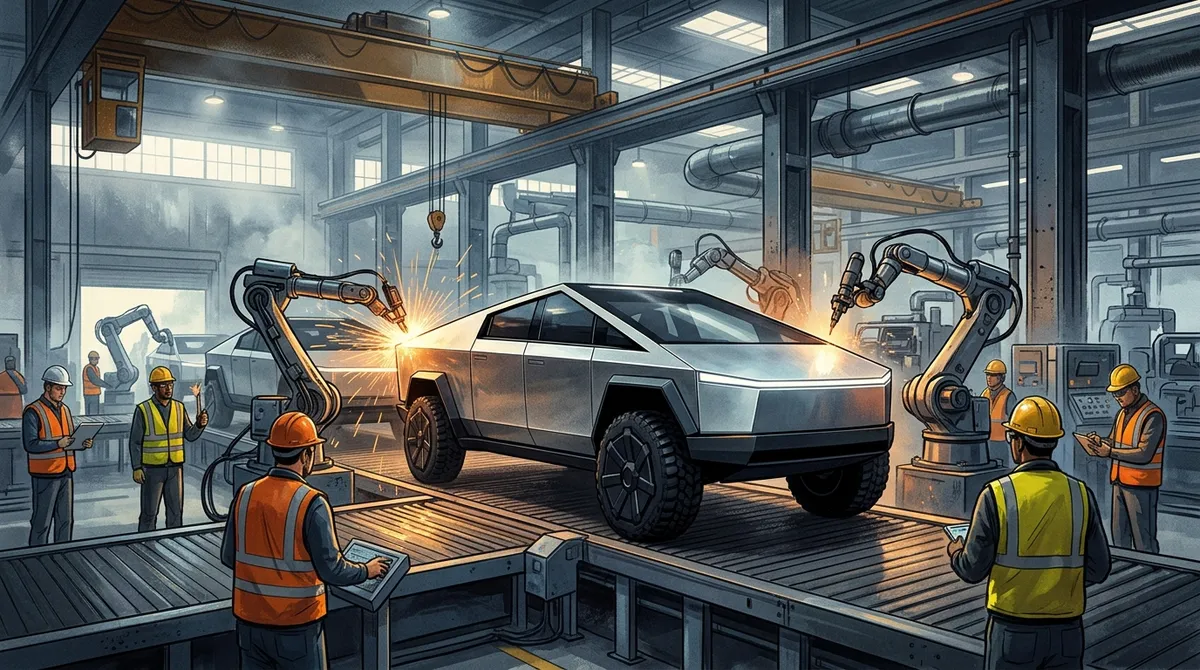
Tesla's Cybertruck line gets a mid-2027 close-out date — and an extra shift to clear the backlog first
Sources AInvest The Guardian The Detroit News The Detroit News, link 2
What happened: Elon Musk's plan to wind down Cybertruck production at Gigafactory Texas around the middle of 2027 and hand the floor space to Cybercab robotaxi output now carries a firmer shape: the line comes down around June or July, and Tesla is adding an extra shift to clear a truck order backlog Musk says is larger than the plant can build before then. The factory floor is rotating away from the stainless-steel truck and toward the two-seat, controls-free robotaxi and, in earlier Model S/X conversions, Optimus. A day later he said Tesla would add an extra production shift, writing on X that the Cybertruck order backlog is "currently far more than Tesla can make before dismantling the line for Cybercab expansion around June/July next year" (The Detroit News). Kelley Blue Book counted just 20,237 US Cybertruck sales in 2025, down 48% from 38,965 in 2024 and far below Musk's 250,000-a-year launch target, while SpaceX bought $131 million worth of the trucks at list price last year according to its IPO filing (The Detroit News).
What's genuinely new: The quantified sales and demand layer. Kelley Blue Book counted 20,237 US Cybertruck sales in 2025 — roughly half of 2024's 38,965, against a ~250,000-a-year launch target — with sales through September 2026 down another 28% year over year. SpaceX's IPO filing, via Economic Times coverage of it, shows the rocket company was one of the model's biggest customers last year, spending $131 million. The report also sizes the robotaxi business the line is converting to: Tesla's paid Full Self-Driving base now exceeds 1.7 million subscribers, more than 75% of North American deliveries include an FSD subscription, Cybercab production has run since April 2026 with driverless service live in Austin plus Houston and Fort Worth, and a J.P. Morgan model projects robotaxi revenue in the tens of billions of dollars by 2035, backing a $475 price target. Stock closed near $358 on the news, a roughly $1.42 trillion market cap.
Watch: Actual Cybercab output against the June–July 2027 line closure; deployed-versus-builtfleet counts, which ran well apart through the fall; whether the paid FSD base keeps compounding, since subscription revenue is the engine under the robotaxi bet; and how NHTSA's FMVSS self-certification audit and the October 12 school-zone defect petition treat the planned fleet growth.
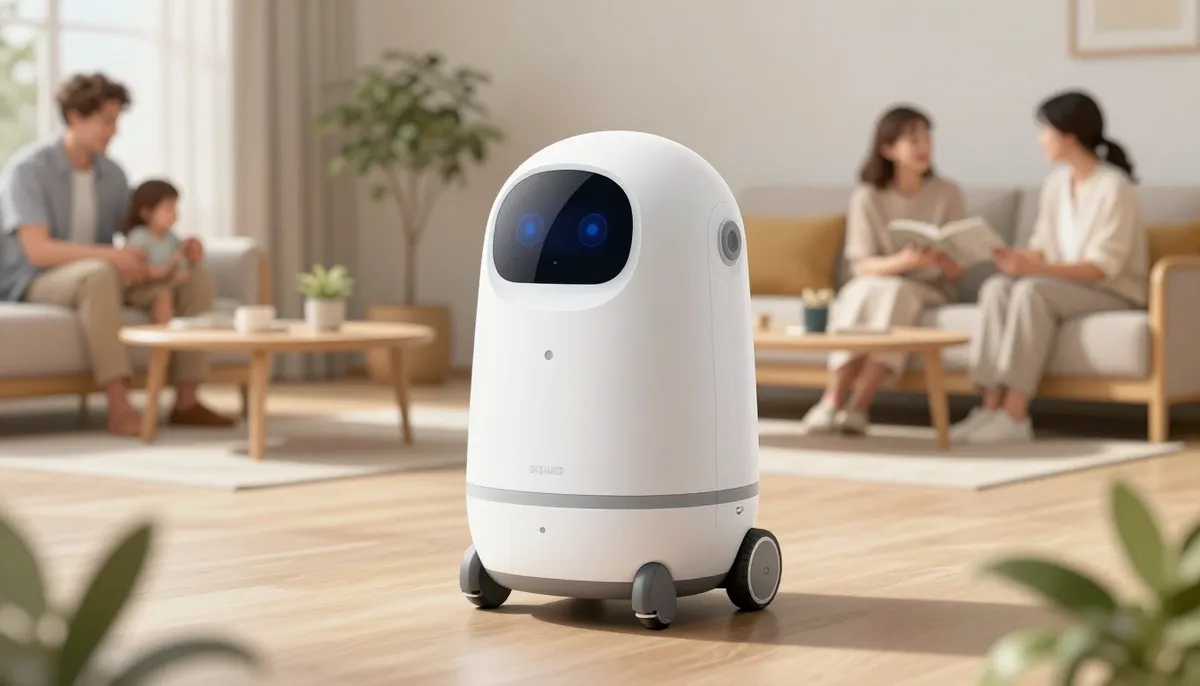
Amazon quietly rebuilds a home-robot team around Fauna's Sprout after Astro's flop
Sources CNBC BigGo Finance
Thread: Amazon's home-robot rebuild around Fauna's Sprout
What happened: Amazon has spent recent months assembling a new team to build a home robot working on a "new-to-world robot product" — one engineer posting, since taken down, said "Robots are about to step out of the movies and into our homes," and described a product capable of navigating "dynamic home environments" and "autonomous operation alongside family members." The effort is a do-over of Amazon's first attempt, the $1,450 Astro tablet-on-wheels revealed in September 2021, which never went on full public sale, reached only a few thousand invite-only customers and whose commercial version was discontinued within a year (CNBC · BigGo Finance).
What's genuinely new: People and platform. LinkedIn profiles and hiring show much of the old Astro team reassigned to other roles, an MIT robotics expert brought in, and the March 2026 acquisition of Fauna Robotics — maker of the 3.5-foot Sprout humanoid, at 22.7 kg with 29 degrees of freedom, expressive articulated eyebrows and a swappable battery, still sold as a developer platform — folded into a newly created Personal Robotics Group built partly on Lab126 alumni, with listings seeking a user-experience designer to "define what it feels like to live with a Fauna robot" and a field support engineer to assist with customer support and on-site repair. Amazon's statement, via spokesperson Brad Glasser, says the Fauna deal shows the company is "committed to tackling the challenges that can unlock the personal robotics category"; no design, price or launch date disclosed, against a market Barclays sizes at about $40 billion by 2035.
Watch: A defined product and pricing; first in-home deployments; whether Sprout becomes the consumer machine's base platform; and how the effort sits under Lab126, whose track record spans the Kindle and Echo through the Fire Phone's failure.
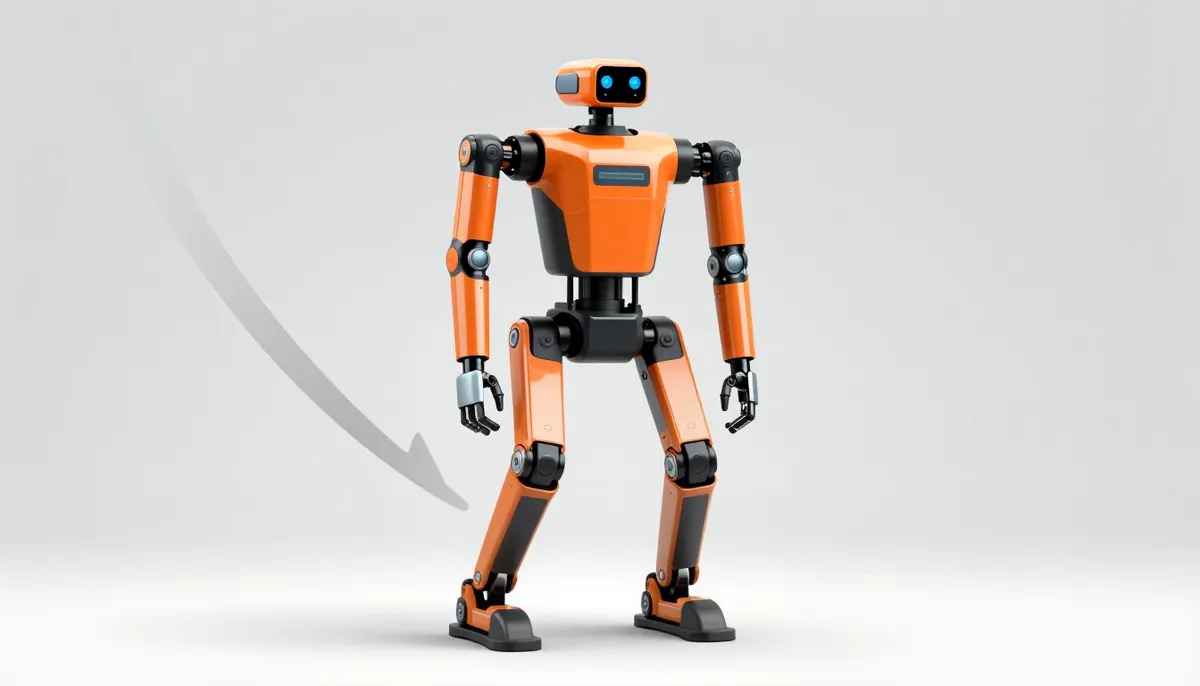
AGLT slips back to $9.90 as the second session closes, and a CEO profile lays out the Digit 5 cost curve
Sources Simply Wall St. via Yahoo Finance Business Insider
What happened: Agility Robotics' shares gave back ground in their second listed session, closing at $9.90 — down nearly 14% from the opening session's $11.49 close on Nasdaq — with no fresh financial data alongside the pullback (Simply Wall St. via Yahoo Finance).
What's genuinely new: The money picture behind the stock. A Business Insider profile of CEO Peggy Johnson, 65 — the Qualcomm executive who became Microsoft's chief dealmaker, ran Magic Leap from 2020 to 2023 and has now taken the first US humanoid-robot maker public — lays out the filed unit economics: Agility booked just $1.8 million of 2025 revenue against a $138.1 million net loss, and estimates Digit 5 will initially cost about $150,000 in materials alone, falling to $75,000 at an annual production rate of 1,000 robots and $30,000 at 10,000, with a five-year robot life and roughly an 18-month payback under a robot-as-a-service model. The company says its robots have logged 65,000 hours of commercial operating data across nine customer facilities including Amazon, Toyota and GXO, holds more than $300 million in orders for 1,000 robots from a single customer, has a pipeline of 30 qualified prospective customers, and recently opened a 60,000-square-foot engineering facility in Fremont, California to teach its robots new skills. Johnson points to a Deloitte study estimating 1.9 million US manufacturing jobs could go unfilled by 2033, and says humanoids entering homes is not something she expects within the next five years (Business Insider).
Watch: The first post-listing quarterly report against the $40–50 million 2026 contracted-revenue claim; the 30-customer pipeline converting as throughput and uptime targets are met; and H1 2027 first Digit 5 deliveries against the filed cost curve.
Brief
- A robot waitress is ferrying food between booths at a neon-lit restaurant in Karachi, in a Pakistan-built service-robot deployment pitched as a taste of things to come for the country's dining scene. The deployment's maker, venue and fleet size stay unconfirmed; MSN
- Amazon is taking another run at a household robot after the $1,450 Astro, revealed in September 2021, shipped to only a few thousand customers and never left invite-only, with an Astro-for-business version sunset in under a year. CNBC's analysis of job posts finds a new home-robotics team assembled in recent months — staffed in part by the Fauna Robotics group acquired in March, which built the 3.5-foot Sprout humanoid, and by Lab126 alumni — hiring for a "new-to-world robot product," with one listing seeking a designer to "define what it feels like to live with a Fauna robot." Spokesperson Brad Glasser says the Fauna deal shows the company is "committed to tackling the challenges that can unlock the personal robotics category" (CNBC · BigGo Finance)
- At Nvidia's GTC Berlin, French robotics maker Pollen Robotics — part of Hugging Face — showed its sub-800-gram Microduck robot duck trained on an NVIDIA RTX PRO 6000 Blackwell workstation across 4,096 parallel simulation environments at once, with the learned motion file loaded onto the physical machines during CEO Jensen Huang's keynote; three of the four robots on stage fell over, one somersaulted, and one got back up (GCN) (single source)
- Unitree, fresh off a Q3 report showing revenue of 665 million yuan (≈US$95 million) up 69.93% but net profit down 17.37% amid R&D spending up 191.48%, has launched the "ShanYu · Venture Program" with investor HSG to fund early-stage startups in embodied intelligence and robot applications — a second-growth-curve play beside a robot-leasing market the report describes as collapsing (daily G1 rents below 2,000 yuan from a peak market) (36kr) (single source)
- ROBROS, a Seoul humanoid-robot maker, announced the IGRIS-MAX on November 4, claiming up to 30 kg of carried payload against about 6 kg for its predecessor IGRIS-C — only the maximum figure disclosed, with no battery life, price or field data, and the predecessor's cumulative production just 36 units; the field assessment in the write-up judges the machine still at the demo stage (note.com — Rita Robotics) (single source)
- A tour of Unitree's Hangzhou motor plant by investor Josef Chen, backed by the company's own IPO filings, shows one of the world's biggest robot makers still largely building by hand: about 32,000 robots made in 2025 — some 26,000 of them robot dogs — against just $1.7 million of machinery on the books, roughly $50 of equipment per robot, with labour only about 8% of build cost and assembly "mainly manual" despite the viral G1 self-assembly video, which the filings call a pilot. Three quarters of Unitree's humanoid revenue in the first nine months of 2025 came from research and education, under 5% from industry; CEO Wang Xingxing says the company's weight now shifts from the robot's body to its brain (Martín Cid) (single source)
- A warehouse-robotics survey commissioned by Exotec and run by Method Research among 250 US and Canadian supply-chain leaders finds 94% of automated-warehouse buyers expect to stay with their installed system for 10 to 15 years and view switching as prohibitively expensive, 1 in 4 would have chosen differently, and 65% exceeded budgeted total cost of ownership; vendor data, single write-up so far (Ecosistema Startup)
- China's PrimeBOT said its 10,000th personal robot rolled off the production line, doubling cumulative output from 5,000 units in the two weeks since October 25, after first Q1 and T1 handovers began October 1 in seven Chinese cities at prices from 19,999 yuan (≈US$2,995); company-submitted numbers, carried by state media (Global Times)
- Pudu Robotics — ranked first globally in commercial service-robot shipments and revenue in 2025 by Frost & Sullivan, with 80% of its sales abroad — is moving into general-purpose humanoids, weighing production in Europe after opening a European headquarters in Germany in October and a Dallas base in April; founder Felix Zhang Tao calls Tesla "a long-term" competitor and says the technology will take at least five to 10 years to mature, with widespread adoption taking longer still (South China Morning Post) (single source)
- In Dubai, YS Lootah Robotics opened a showroom for humanoid, service and cleaning robots on Sheikh Zayed Road on November 6, with live demonstrations and stated plans for local training and eventual robot assembly in the UAE (Zawya)
- Six AgiBot G2 wheeled humanoid robots completed a 24-hour trial at an operating convenience store in Shanghai's Xuhui district from November 2 to 3, performing a combined 1,730 tasks — 683 customer-service interactions, 369 product pickups and deliveries, 147 coffee orders, 126 breakfast servings, 277 shelf inspections and restocking tasks, and 128 table cleanings — running through lunchtime, evening, overnight and breakfast shifts in a live customer-facing setting; four of the six robots passed the company's final performance assessment, and the trial was livestreamed to an audience the company puts at more than two million viewers (AgiBot) — a paid company press release, with the pass/fail scoring AgiBot's own (single source)
- DEEP Robotics launched the X50, a heavy-duty quadruped the company says can carry a 50 kg working payload at three metres per second for more than two kilometres, fusing LiDAR and inertial sensing with reinforcement-learning motion control and targeting power-industry inspection, firefighting equipment transport and emergency-response work; the figures are company-reported, with no independent field results and no commercial delivery timetable in the coverage (RobotsBeat) (single source)
- Renault Group and Belgian defense firm John Cockerill have unveiled the Forefront concept, a modular autonomous electric ground vehicle designed to navigate complex terrain and carry logistics loads for military and civilian use, with CEO François Provost pitching it as Renault's entry into unmanned ground vehicles and first prototypes due to take part in exercises and trials in the months ahead; so far the machine exists mainly as a rendering (Electrek) (single source)