Robots digest — Nov 9, 2026
Top line: NVIDIA introduced its GR00T 2 world action model and Isaac Lab 3.0 robot-training software at CoRL, with Foxconn and Siemens testing the model on factory work. Boston Dynamics showed Atlas sprinting and spinning on scooter wheels as a controls experiment, now with a dated Hyundai actuator and factory timeline. Tesla's robotaxi opened San Antonio as its eighth city.
- Musk details Optimus pricing and leans to a leasing model as December shareholder meeting nears
- Tesla's robotaxi reaches San Antonio, its eighth city — but the advertised map may outrun the service
- Chinese humanoid makers push from showrooms into South Korea's factories and cafes
- Boston Dynamics puts wheels on Atlas to test its controllers against the real world
- Disney shows off parking and backstage robots as layoffs pile up
- NVIDIA introduces GR00T 2 and Isaac Lab 3.0, with Foxconn and Siemens already testing the model
Musk details Optimus pricing and leans to a leasing model as December shareholder meeting nears
Sources BigGo Finance
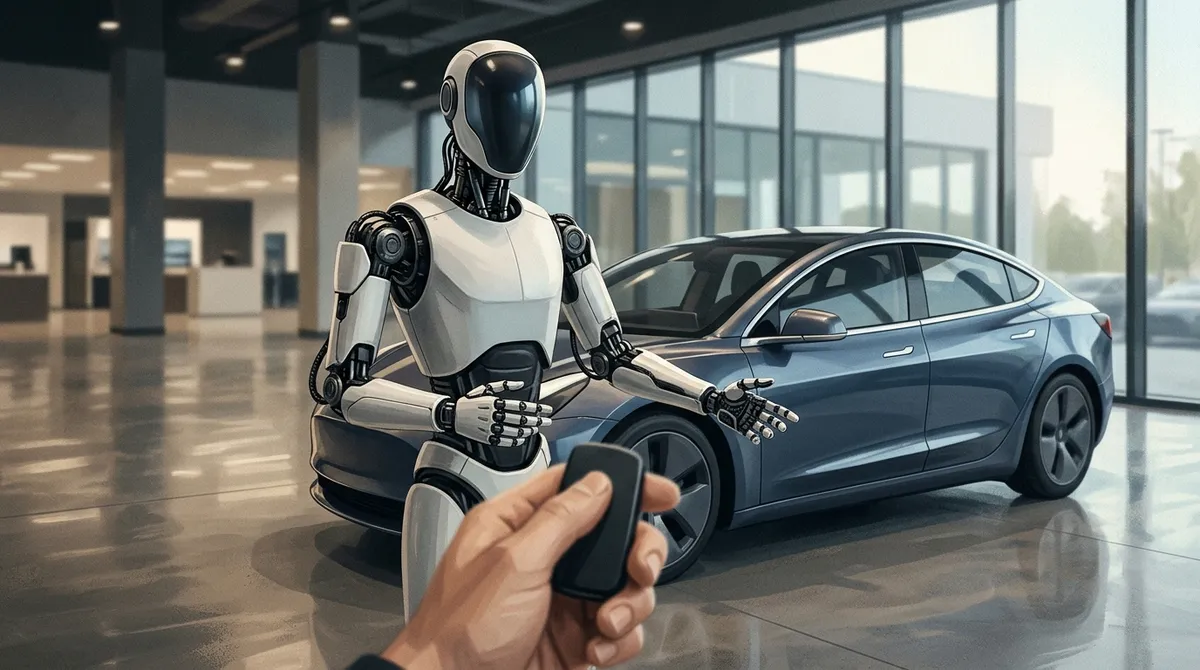
What happened: Elon Musk says Optimus's initial build cost will be comparable to an electric car — around $30,000 per robot, dropping over time toward $20,000 (roughly NT$980,000 and NT$660,000) — and that Tesla favors renting the humanoid to customers rather than selling it outright, extending the leasing preference he first voiced at the Baron Investment Conference on November 6. The plan still has Optimus working first in Tesla's own factories before external deliveries around late 2027, with full-scale production at least a year away. BigGo Finance reports early production is already under way at the Fremont factory on a line planned for 1 million units a year, and that Tesla may open customer reservations in early December — with official pricing expected to top $20,000 and delivery still roughly a year out.
What's genuinely new: The cost figures and the reservation timing are the fresh layers: a named starting build cost of about $30,000 falling to $20,000, and market reports of reservations opening in December — a note of tension with the record, since the December reservations report was a single-outlet rumor Musk shot down on X on October 31, and the lease-first preference now has him publicly entertaining sales after all. The piece also quantifies the subscription pivot behind the robot: FSD users at a record in the third quarter, 75% of new North American orders adding FSD, and annual recurring revenue approaching $1 billion.
Watch: Whether concrete lease terms or reservation details surface at Tesla's December 3 shareholders meeting — the named checkpoint for pricing and terms that remain undisclosed — and whether external deliveries hold for late 2027.
Tesla's robotaxi reaches San Antonio, its eighth city — but the advertised map may outrun the service
Sources Electrek Shattered published Nov 9, 9:36 AM ET
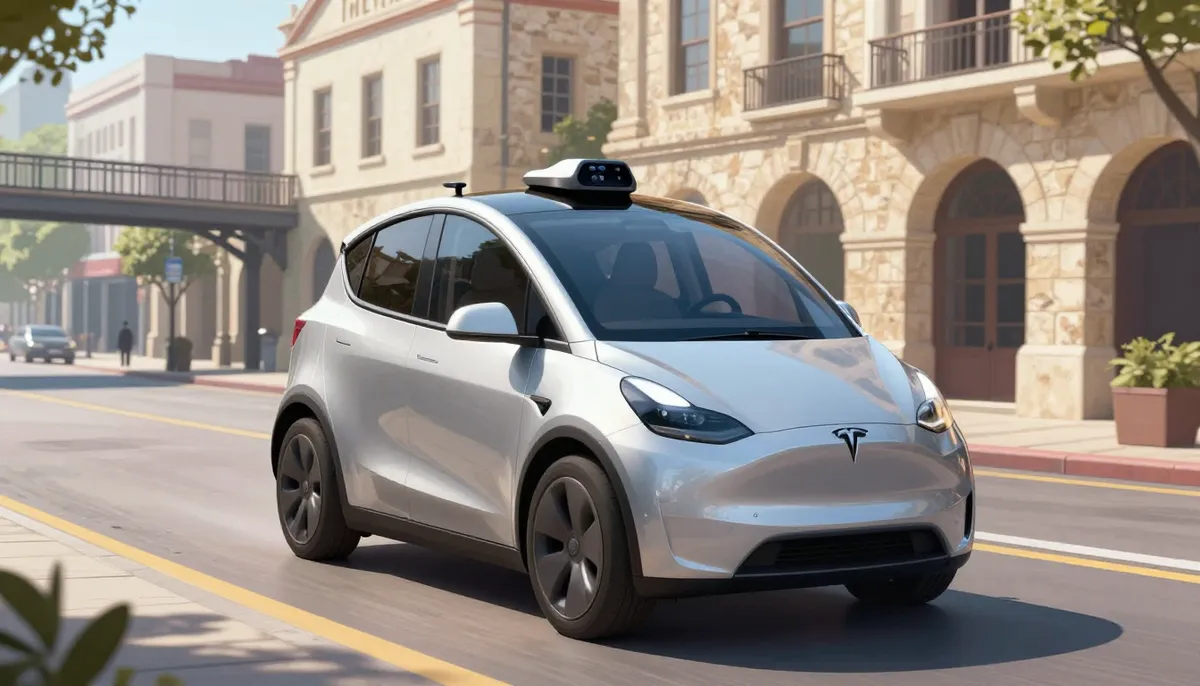
What happened: Tesla opened Robotaxi in San Antonio on November 9, the rollout's eighth US city and the first of the four markets named at the Q3 earnings call (Las Vegas, Phoenix, Jacksonville, San Antonio) to go live. Not a Tesla App put the service area at roughly 275 square miles — described as Tesla's largest at launch and slightly bigger than Austin's 272 — per Shattered. Electrek adds the map check: Robotaxi Tracker measures the launch geofence at 274 square miles, the biggest day-one map Tesla has posted, covering about 1.0 million residents and 721,000 jobs — more than four times Waymo's 59 square miles in the city, where Waymo opened driverless rides in February and now serves the airport. San Antonio International sits inside Tesla's polygon but is not served, and no Robotaxi had been logged in the city as launch began. The catch: in six cities already checked, only 59–78% of Tesla's advertised land area actually accepts a ride request (Austin about 59%), so the practical service is likely nearer 160–210 square miles. Electrek also notes Tesla's Austin zone expanded again to 443 square miles, and that Robotaxi Tracker lists Waymo nationally at more than 4,000 driverless vehicles to Tesla's 666.
What's genuinely new: The eighth-city launch plus the first independent map check of it — the 274-square-mile figure, the airport exclusion, and the across-city bookable-share data suggesting the advertised area overstates the usable service, at the same time as a further Austin expansion.
Watch: Whether San Antonio's bookable area is mapped against the advertised one, the fleet size and wait times Tesla hasn't published, and whether Dallas Cybercab rides and the remaining named markets (Las Vegas, Phoenix, Jacksonville) follow.
Chinese humanoid makers push from showrooms into South Korea's factories and cafes
Sources The Cool Down The Gadgeteer
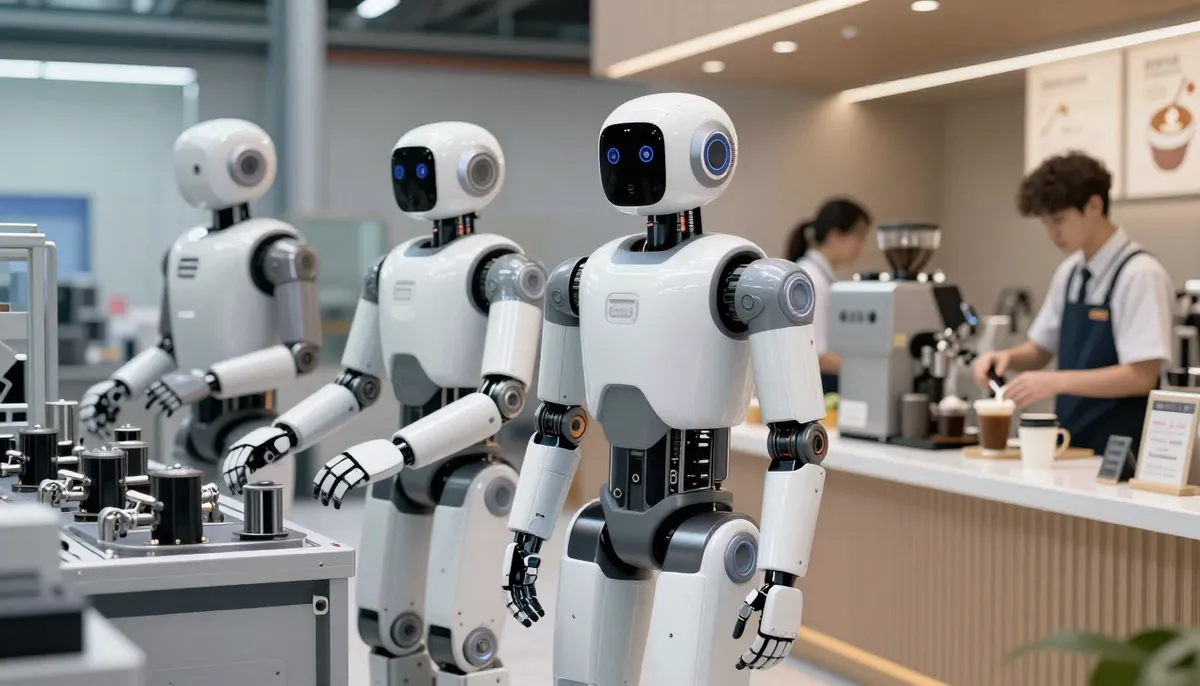
What happened: Four Chinese manufacturers — UBTech Robotics, AgiBot, Unitree Robotics and Anyverse Dynamics — are seeking factory and hospitality work in South Korea, The Cool Down reports, testing humanoids at a Korean automotive-components plant with local partners and preparing cafe trials with coffee chain Hollys. UBTech, selling into Korea since 2019, says its sales there have topped 10,000 units; its latest offering, the U1, stands 5'6" and costs about $25,000, and Seoul's Galaxy Robot Park took delivery of one in September. Anyverse Dynamics starts cafe trials in Beijing with Korean cafe tests scheduled for the fourth quarter. Four Chinese humanoid makers — UBTech Robotics, Unitree Robotics, AgiBot and Beijing startup Anyverse Dynamics — are chasing factory trials, cafe pilots and purchase orders in South Korea, a country with the factories, capital and shrinking workforce but no humanoid maker of its own shipping at scale, per The Gadgeteer. UBTech says it has sold more than 10,000 robots in South Korea since 2019, its newest model there being the U1 — 1.68 metres tall and priced around $25,000 — one of which Seoul entertainment venue Galaxy Robot Park took delivery of in September, while the company is also trialling humanoids on a Korean automotive parts line with partner Duksan JM Robotics and parts maker Ajin Industrial, The Gadgeteer reported.
What's genuinely new: First named deployments and buyers in the market entry: UBTech's 10,000-unit sales figure, its U1 at about $25,000, on-site industrial assessments with Duksan JM Robotics and Ajin Industrial, and Anyverse's Hollys partnership with a fourth-quarter trial window. Customs data adds scale — South Korea took $20 million of China's $207 million in intelligent bionic robot exports (16,559 robots to 108 countries, robot dogs included) from January through September 2026.
Watch: Whether the cafe trials and factory assessments convert to named Korean deployments, and whether the fourth-quarter Hollys trials hold their schedule.
Boston Dynamics puts wheels on Atlas to test its controllers against the real world
Sources Boston Dynamics (X post) Boston Dynamics blog The Robot Report The Korea Herald published Nov 9, 1:34 PM ET
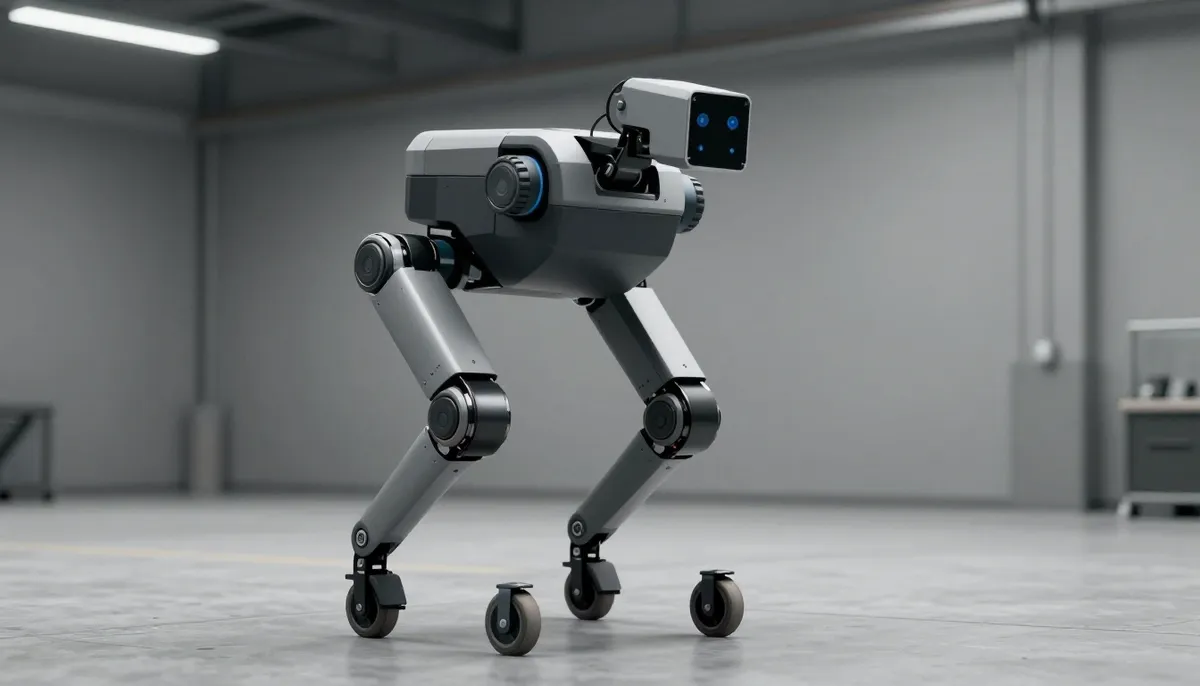
What happened: Boston Dynamics attached off-the-shelf scooter wheels to Atlas's existing ankle actuators — a single custom adapter was the only new part, and controls engineer Andy Wu said converting the robot's locomotion was "wonderfully simple" — and used the rig to stress-test the machine outside the lab. The Robot Report details the method: classical model-based motor control for baseline stability fused with a whole-body reinforcement-learning policy trained entirely in simulation, which the researchers then verified on the real actuators at their performance limits — the 360-degree jumping spin, taught with human motion-capture data, succeeded on the very first attempt on the real robot. The company says a wheeled Atlas "isn't a product. It's a research testbed," with the actuator and control findings flowing into the standard two-legged robot; the next question Wu wants answered is how the policy responds when an actuator fails. The Korea Herald adds the deployment timeline: Hyundai Mobis said at its October 30 earnings call that prototype actuator production for Atlas begins at its Uiwang research center in November 2026, targeting component supply by 2028, and Hyundai Motor Group plans to deploy Atlas at its Metaplant America plant in Georgia from 2028 — sequencing tasks first, with parts assembly added from 2030.
What's genuinely new: The engineering detail behind the company's own announcement — the retrofit's simplicity, the classical-control-plus-reinforcement-learning fusion and the sim-to-real transfer results — plus the first dated hardware and factory timeline for it: Mobis's actuator production start and the 2028 Georgia deployment.
Watch: The failed-actuator policy testing, whether Mobis's actuator supply holds to its 2028 target, and Atlas performing manufacturing tasks at Metaplant America from 2028.
Disney shows off parking and backstage robots as layoffs pile up
Sources Inside the Magic RobotsBeat
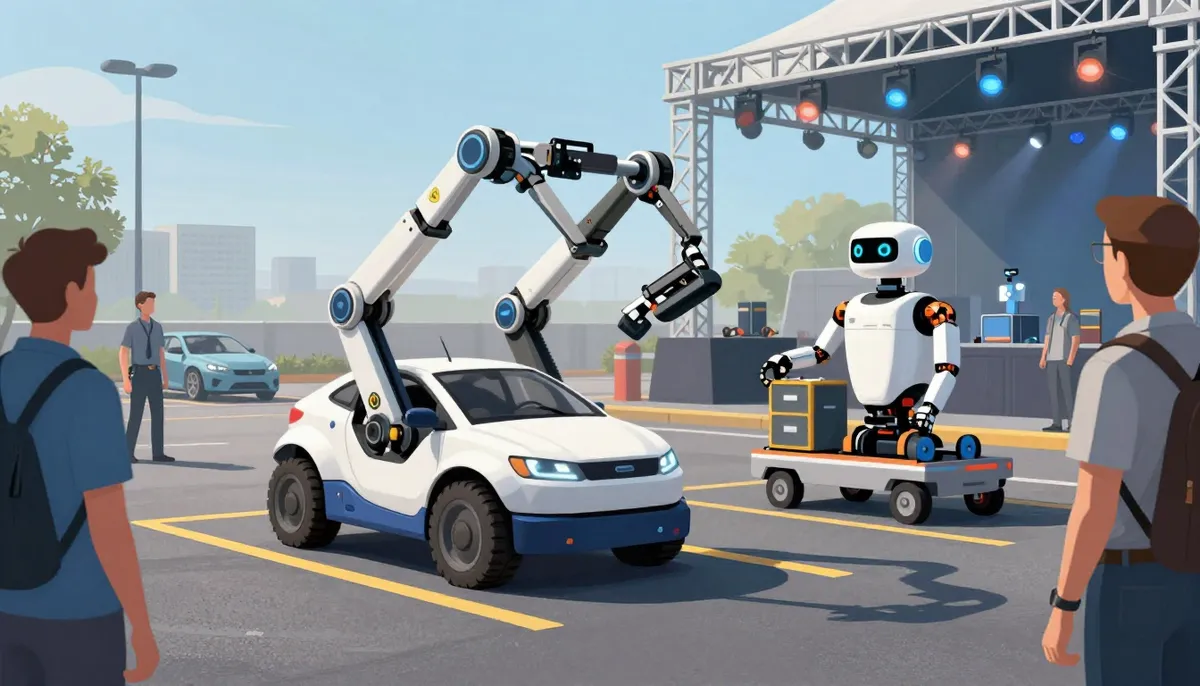
What happened: At the 2026 Disney Accelerator Demo Day in Burbank, The Walt Disney Company put two robotics collaborations on display. Autonomous mobile robots developed with FieldAI are being explored for parking operations across difficult terrain and weather, with machines inspired by Pixar's Cars and Wall-E floated as guest-facing guides — "imagine if a character from Cars or robots from Wall-E direct you where to park," said Disney Experiences senior vice president Gary Daniels. Separately, systems from Physical Intelligence are being explored to handle and arrange 3D glasses backstage at attractions like Star Tours: The Adventures Continue, Toy Story Midway Mania! and Millennium Falcon: Smugglers Run. Both projects are framed as assistance for repetitive, physically taxing work, and both are exploratory — Disney has not confirmed any robot is operating in its parking structures or attractions, and has announced no plans to cut positions in favor of machines.
What's genuinely new: Two named robotics collaborations for the parks — FieldAI on parking, Physical Intelligence on 3D-glasses handling — set against a charged labor backdrop: 2026 layoffs across ABC, ESPN, Pixar and Disney Experiences, an October cut of roughly 100–200 Experiences positions, reports from Bloomberg and Reuters that managers were asked to find about 20% in annual savings (which does not mean a 20% workforce cut), and Karandeep Anand, Character.AI's former CEO, appointed as Disney's first centralized chief technology officer.
Watch: Whether either system reaches a named attraction or parking structure — nothing is confirmed at Disneyland's Pixar Pals or Mickey & Friends structures yet — how the FieldAI and Physical Intelligence work is judged against the roughly 20% savings drive, and whether guest-facing robots actually make it in front of visitors.
NVIDIA introduces GR00T 2 and Isaac Lab 3.0, with Foxconn and Siemens already testing the model
Sources The Robot Report TipRanks published Nov 9, 4:52 PM ET
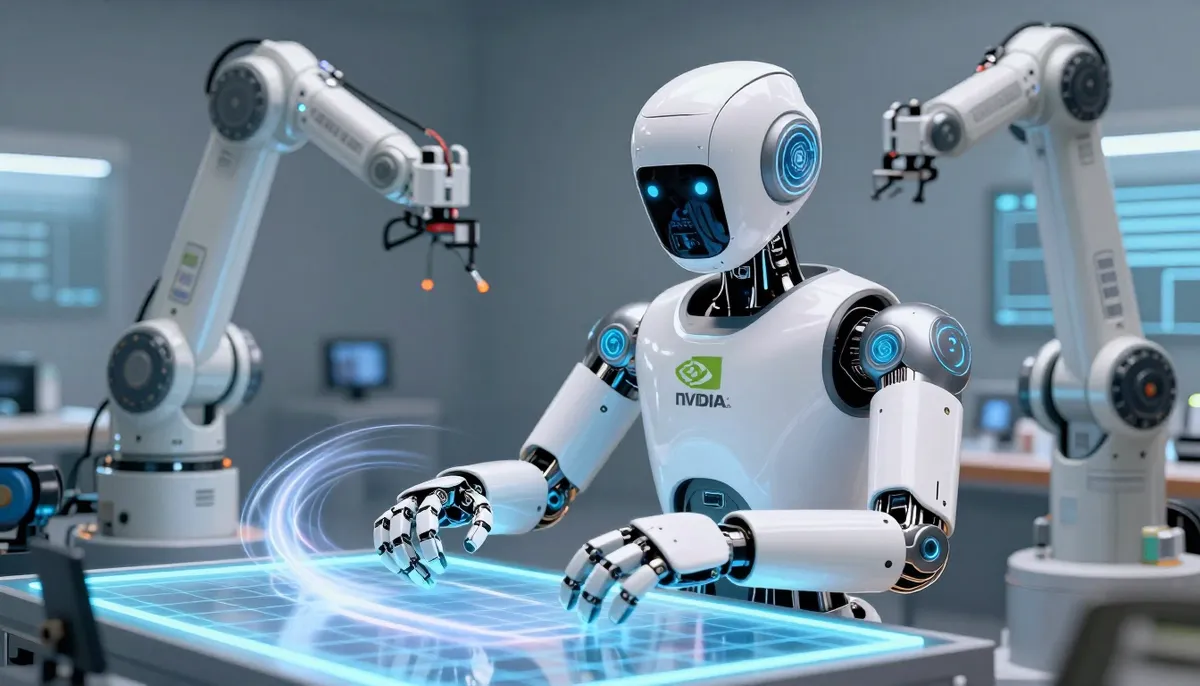
What happened: At the Conference on Robot Learning in Austin, Texas, NVIDIA introduced GR00T 2, the updated world action model for dexterous robot manipulation, alongside Isaac Lab 3.0, the newest version of its open-source robot-learning framework. The Robot Report reports that GR00T 2 was trained on robot data plus 100,000 hours of first-person human video, and in NVIDIA's evaluations completed 40 of 50 tasks at least once without task-specific demonstrations, averaged 71% success across the 50 tasks with one demonstration each and 95% with five, and ranks among the top three models in its categories on the RoboCasa365, RoboLab, RoboDojo and MolmoSpaces benchmarks. Nexuni is testing the model for robotic laundry handling, Foxconn is applying it to server factory automation and Siemens is evaluating it across industrial use cases. Isaac Lab 3.0 ties more tightly into the open Newton physics engine — now modeling deformable objects like cables and cloth, plus complex articulated hands — and reportedly reached up to 2.5 times the training throughput of its predecessor in a dexterous-manipulation benchmark; Skild AI introduced its STEEL solver built on Newton, and two new open industrial benchmarks, DexBench (with RLWRLD) and VABAR (with UC Berkeley), arrived alongside. TipRanks notes the success figures come from controlled tests and do not guarantee real-world performance.
What's genuinely new: The launch itself — a world action model claiming out-of-the-box task completion and skill transfer between different robot bodies without robot demonstrations, plus named industrial testers already evaluating it on production problems.
Watch: Whether the Foxconn server-manufacturing and Siemens industrial evaluations become deployments, whether the benchmark standing holds outside NVIDIA's own numbers, and how widely DexBench and VABAR get adopted as industrial evaluation standards.
Brief
- Bill Gates calls for governments to consider taxing robots and AI tools, arguing companies pay payroll tax on human workers but can often treat robot purchases as a business expense — a financial tilt toward automation that tax policy should correct, with the proceeds funding retraining and safety nets; he made the case in a Gates Notes essay and on the Financial Times' Tech Tonic podcast, adding that philanthropy alone cannot be the safety net for inequality: Times Now (single source)
- Amazon has reportedly assembled a new team to develop a next-generation household robot, combining former Astro staff with talent from Fauna Robotics, a New York startup Amazon acquired in March 2026 whose Sprout is a roughly 3.5-foot humanoid built for developer and research settings; recruitment listings describe a "new-to-world robot product" that navigates dynamic home environments alongside family members, but Amazon has disclosed no price, specifications or launch date — and the previous Astro reached only a few thousand customers through its invitation program: Lapaas Voice, citing CNBC's review of Amazon job postings (single source)
- Musk confirms Tesla will wind down Cybertruck production at Gigafactory Texas around the middle of 2027 and hand the space to Cybercab robotaxi output — roughly 70,000 trucks sold across three years against the 250,000 a year once projected, a turn in Tesla's robotics-and-robotaxi pivot that earlier this year also saw Model S and Model X lines repurposed for Optimus: Glitched (single source, relayed from Digital Trends)
- An independent research firm estimates Chinese makers will drive a near-quadrupling in global humanoid-robot shipments in 2026: Bloomberg (single source)
- Dubai's first showroom dedicated to humanoid and intelligent robots opened on Sheikh Zayed Road on November 6, with Lootah Robotics presenting 28 machines priced from AED 50,000 to AED 3 million (roughly $13,600 to $817,000) and planning to rent to most customers rather than sell — the robot-as-a-service model again, ahead of any published rental prices or independent performance data: Absolute Geeks
- UBTECH and Tianyi Telecom Terminal, a China Telecom subsidiary, signed a comprehensive strategic cooperation agreement on November 9 aiming to help the household-companion robot and terminal industry exceed one million units within three years, and to push more than 100,000 ultra-bionic humanoid, wheeled humanoid and related terminals in that span — both are industry-scale goals, not deliveries — through telecom-store robot experience trials, rentals, bundled AI-service packages and a joint innovation laboratory: Unite.AI
- Unitree's first consumer-grade robotic dog, UNI-DOGGIE, debuted at the China International Import Expo in Shanghai alongside Hong Kong-listed IP operator Star Plus Legend Holdings: priced at 43,900 yuan (about $6,150), about 19 kg, with lion-dance moves, a nose camera, leash-free following and app control, it drew an order for 1,000 units on launch day: Global Times (single source)
- Swiss startup Embodied AI, an EPFL spinout, unveiled AIR, a two-armed wheeled humanoid built to work alongside factory employees without a safety cage, starting under remote teleoperation and claimed to run assigned tasks autonomously within about a month; it reports a 95% average task success rate across paid pilots with a consumer-electronics maker and an automotive supplier, though no task counts or trial durations were disclosed — orders open after its unveiling at Humanoid Europe 2026 in Munich, with no price or delivery schedule: Interesting Engineering
- Pudu Robotics founder Felix Zhang used a South China Morning Post interview to detail the "One Brain, Multiple Embodiments" strategy — one foundation model, PuduFM 1.0, running across the D5 quadruped, D7 wheeled semi-humanoid and D9 bipedal humanoid, trained on data from a 130,000-plus-robot installed base across 85-plus countries — but the two product categories at the center of that expansion are exactly the ones the FCC banned from new imports three months ago, and the company's first consumer product, a robotic lawnmower, sits in the path of an EU anti-dumping ruling expected in January: TechTimes, RobotsBeat
- Web Summit opened in Lisbon with humanoid robot speakers on stage and a record Chinese delegation, including the Galbot G1 and UBTECH U1 Pro at the opening-night showcase: Euronews, RobotsBeat
- UC Berkeley and NVIDIA presented "agentic robotics" at the 2026 Conference on Robot Learning: AI coding agents decompose a task — say, packing groceries — into sub-tasks, each written, tested and iterated by a separate agent in simulation, including tuning the simulator itself against video of the real world; the approach reached success rates up to 99% on tested tasks where imitation-learning baselines managed 20%, as a counter-hypothesis to the belief that enough human demonstration data will deliver general-purpose robots, with robot-learning researcher Ken Goldberg (UC Berkeley) calling imitation learning's industrial reliability a plateau: IEEE Spectrum (single source)
- Apple researchers published a paper on HALO, a navigation-and-orientation system trained in simulation (about 300 hours of synthetic data across 1,000 virtual rooms rendered in Nvidia's Isaac Sim) and run on an M4 Pro Mac mini carried by a Unitree G1: the robot completed 91% of 360 tested tasks in six environments it had never seen — following a person, stepping through a half-open door, finding and sitting on a chair — though it cannot yet chain tasks, manipulate objects, or take on tasks beyond what a person has prompted: AppleInsider (single source)
- Hippo Harvest runs robot "tractors" and machine learning through its Pescadero, California greenhouses — autonomous mobile robots that respace growing modules, water, sense and harvest, on a non-recirculating hydroponic design the company says resists the waterborne pathogen Pythium — with Cox Farms' $30 million Series C (announced in July) setting up a staged 30-acre expansion at a new Hollister facility starting in late 2027, beside a butter-lettuce line launched in early 2026: Vertical Farm Daily, FreshPlaza
- Topstar, a Dongguan-based industrial robot maker, presented Star, a full-size bipedal humanoid weighing 159 pounds built for factory material handling: Interesting Engineering (single source)
- Comau unveiled its Hygienic Oil family of food-grade industrial robots at the Cibus Tec trade fair in Parma — NSF H1 food-grade lubricants let the robots run certain direct food-handling applications without protective covers — while sister company Automha showed its Quaterways multidirectional shuttle and AutosatGTR pallet shuttle for automated warehousing: Robotics and Automation News
- A field rundown of humanoid robots against conventional industrial automation relays AgiBot's livestreamed 24-hour Shanghai convenience-store shift in detail — six wheeled G2 units logging 1,730 tasks on November 2–3, including 683 customer interactions, 147 coffees and 277 shelf inspections — while arguing that vision-guided, force-controlled conventional robots already handle much of what humanoid demos show: note.com
- Humble Robotics, less than a year old, raised a $51 million Series A led by Obvious Ventures with participation from Eclipse and Energy Impact Partners, to take the Humble Hauler — a driverless, cab-less, truck-less battery-electric freight platform made to carry containerized cargo dock-to-dock — from prototype toward preproduction, with funding earmarked for customer pilots, testing and early manufacturing: Electrek (single source)
- Agility Robotics amplified a Business Insider profile of CEO Peggy Johnson — four decades taking early-stage technology to market at Qualcomm, Microsoft and Magic Leap — with the report headlining that the humanoid maker's robots turn a profit on Wall Street: Business Insider (single source)
- A humanoid robot named Qestr made history by lining up to run the Antarctic Ice Ultra marathon, then withdrew when its battery failed: MSN (single source)