AI digest — Nov 11, 2026
Top line: Nvidia's board is reportedly preparing to dismiss CEO Jensen Huang over a second extramarital affair reported by the New York Times, with a November 11 meeting to decide his future. United Airlines will ban AI agents from booking flights, citing privacy and regulatory concerns. Google introduced Gemini Decision 1, its first frontier decision model, at $0.10 per million input tokens.
- United Airlines bans AI agents from booking its flights
- Google DeepMind's AlphaGenome 2 predicts how DNA variants play out in specific cell types
- Singapore Airlines moves customer service, travel discovery and internal work onto OpenAI models
- Nvidia's board reportedly prepares to dismiss CEO Jensen Huang
- Cogent builds "Cyber Defense Factories" on OpenAI models for enterprise vulnerability remediation
- Tether AI Research announces BotPsy, a sub-billion-parameter agent model for phones and other devices
- JioHotstar runs a voice-first AI discovery assistant on OpenAI models
United Airlines bans AI agents from booking its flights
Sources The Verge The Information published Nov 11, 4:54 PM ET
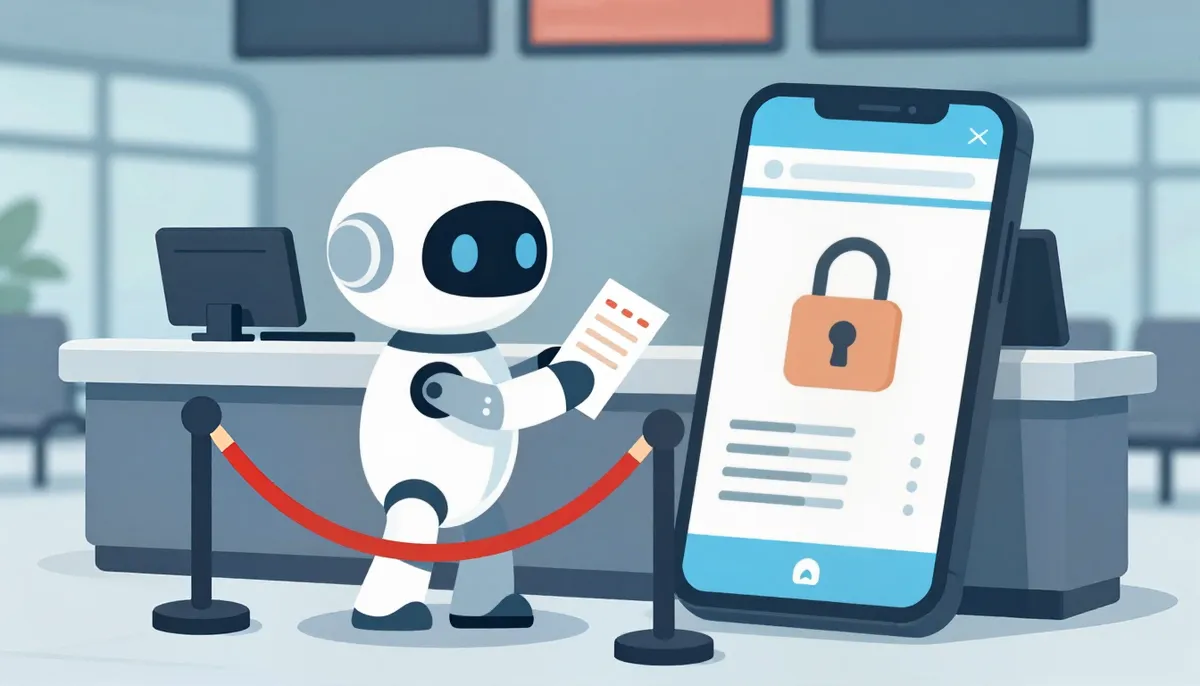
What happened: United Airlines said it will ban AI agents and assistants from booking its flights, following similar bans by banks and retailers that cited privacy concerns. The ban covers bookings made directly on United's app and website as well as through travel agencies and aggregators: agents can still show users United flights, but cannot complete the transaction on their behalf. United says it is concerned agents could expose customers' information, make purchases they didn't intend, or skirt federal rules about the information airlines must share with customers — such as having them attest that their bags don't contain explosives. CEO Scott Kirby said he doesn't want "to create another middleman," per The Wall Street Journal. United says it hasn't yet seen many people try to use agents to book, in line with observations from other businesses like DoorDash; eBay also appears to block agents from browsing the site and several major banks restrict them. United says it could reconsider as third-party AI agents advance.
What's genuinely new: The first named airline in the agent-transaction lockout, with the ban's scope explicitly extended to travel agencies and aggregators, and two stated rationales — privacy plus the federal-attestation rules airlines must follow. Meta's Muse and OpenAI's personal assistants are among the agents whose usefulness the move could limit.
Watch: Whether other airlines and travel platforms follow; United's promised reconsideration as third-party agents advance; how agent vendors adapt booking flows.
Google DeepMind's AlphaGenome 2 predicts how DNA variants play out in specific cell types
Sources The Verge Google DeepMind published Nov 11, 10:00 AM ET
What happened: Google DeepMind announced AlphaGenome 2, the successor to last year's genome-predicting AlphaGenome model, built to predict how DNA sequences and their variants affect specific human cell types and cell states rather than broad tissue averages. The redesigned conditional model takes a target biological condition — a tissue, cell type or state — alongside a million-letter DNA sequence, and was trained on more than 100 million individual cell profiles across 68 tissues. Google says it identifies nearly twice as many variants that change gene expression as the previous state-of-the-art model: on the TenK10K dataset of 28 immune cell types it reliably identified nearly twice as many causal variants (30% vs. 16%) and directional gene effects (43% vs. 23%). It reproduced, computationally, a published finding that a distant regulatory variant drives inflammatory bowel disease by overactivating the ETS2 gene in gut immune cells, singled out that causal variant. It can also impute missing experimental data and generalize to unseen single-cell experiments without retraining — given data from a COVID-19 mRNA vaccine study, it distinguished vaccine-activated T cells from resting ones and showed a variant linked to severe COVID-19 disrupting gene activity more strongly in those activated cells. AlphaGenome 2 is available for non-commercial research via the AlphaGenome API, with commercial access in private preview; Demis Hassabis announced the release with DeepMind's blog post, and The Verge covered it.
What's genuinely new: The first announcement of a genome model built for cell-type resolution — DeepMind says the architecture redesign nearly doubles how many expression-changing variants it can identify over the previous state of the art, and unlike last year's model it can read a scientist's own single-cell experiment without retraining. The recall numbers are Google's own benchmarks; no independent evaluation has appeared yet.
Watch: Independent uptake — whether rare-disease and complex-trait researchers reproduce the gains through the API; commercial-preview pricing and terms; refreshed precomputed predictions across trait-associated variants.
Singapore Airlines moves customer service, travel discovery and internal work onto OpenAI models

Sources OpenAI published Nov 10, 3:00 AM ET
What happened: Singapore Airlines has moved its customer-facing Kris chatbot from a scripted dialog-flow system to an LLM-powered assistant built on the OpenAI API, reporting a 2× jump in customer satisfaction, and AI call-summarization tools have cut customer-service agents' average handling time by about 10%. A Flight Recommender tool lets customers describe the trip they want in natural language — its monthly users have grown roughly 3× over the past year. Internally, Jarvis, a governed employee AI platform powered by OpenAI models, is used monthly by more than 60% of the airline's staff, and development teams report productivity gains of up to 20% on selected software development activities, from requirements refinement to test-case creation. Kris is headed toward more transactional self-service such as booking changes and baggage transactions, and Flight Recommender toward multi-turn conversational travel search.
What's genuinely new: First public accounting of the airline's OpenAI deployment and its measured results — the doubled chatbot satisfaction, the 3× travel-discovery growth, the 60%-of-employees Jarvis adoption and the development-productivity figures are all newly stated company numbers, vendor-reported with no independent check yet.
Watch: The promised booking and baggage transactions inside Kris; the conversational Flight Recommender rollout; whether other airlines publish comparable numbers.
Nvidia's board reportedly prepares to dismiss CEO Jensen Huang

Sources The Verge The Information The Information, link 2 Inc. The Wall Street Journal published Nov 11, 5:44 PM ET
What happened: Nvidia's board is preparing to dismiss CEO Jensen Huang, The Wall Street Journal reports, following a New York Times report of a second alleged extramarital affair — this one with Kimberly Powell, Nvidia's vice president of health care and an executive who reports to him, who the Times said may have been shown "being affectionate" with Huang on video at Nvidia's March GTC developer conference. The Journal reports the board will meet as soon as November 11 to decide Huang's future. The Times report lands shortly after Nvidia and Huang confirmed a relationship with a woman alleged to be a Chinese spy and an investigation into it, with the woman's Chinese firm having obtained banned Nvidia chips per the Journal; just three days earlier the board had announced that inquiry while saying it had "confidence in Jensen." Nvidia retained former US attorney Joon H. Kim and the firm Wachtell, Lipton, Rosen & Katz to handle the matter, but today's reporting suggests the board won't wait for those results. Nvidia did not respond to a request for comment from The Verge. Days earlier Huang told staff in a message that he had been unfaithful to his wife, writing that "I have fallen short of that responsibility" and that he was "fully committed to NVIDIA" and would work to earn back their confidence (Inc.). Nvidia shares fell about 9% in postmarket trading after the Journal reported the board's plans (The Wall Street Journal).
What's genuinely new: The second alleged affair is new today via the Times, and the board's posture has reportedly shifted from an inquiry framed with public confidence days ago to preparing his dismissal — before the retained investigators report back.
Watch: Whether the board acts before the Wachtell/Kim inquiry concludes; any statement from Nvidia or Huang; fallout for Nvidia's China exposure and the export-control angle in the reporting.
Cogent builds "Cyber Defense Factories" on OpenAI models for enterprise vulnerability remediation
Sources OpenAI published Nov 9, 7:00 PM ET
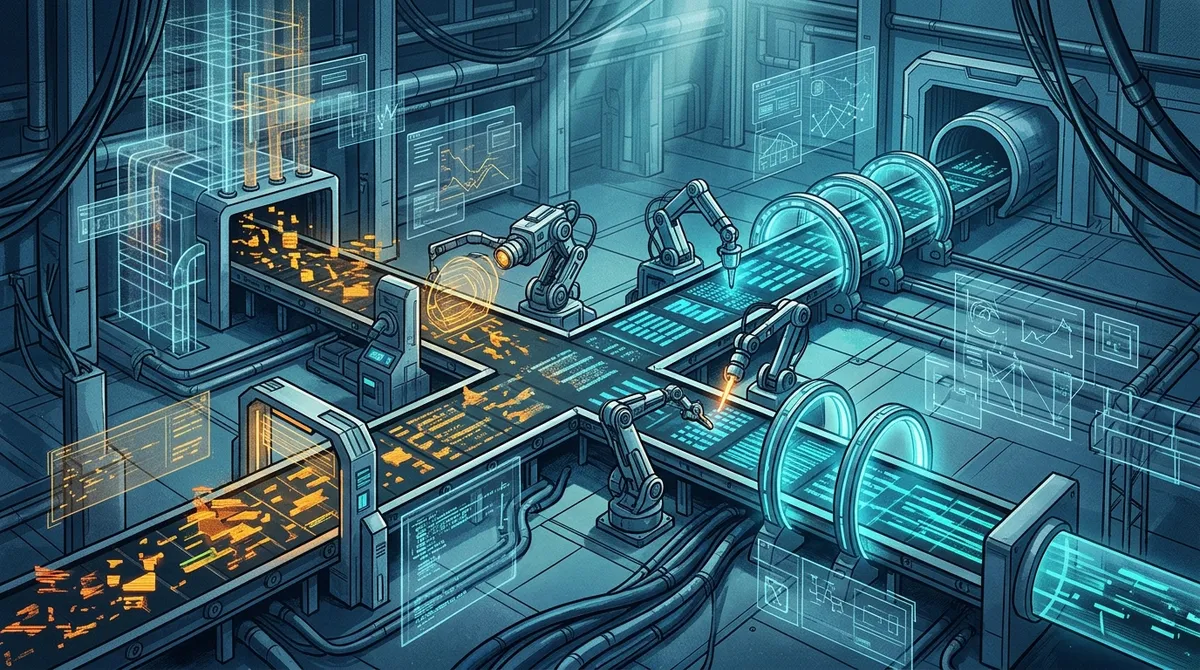
What happened: Cogent Security is selling "Cyber Defense Factories" — AI agents that combine OpenAI's GPT-6.1 Sol, GPT-6 Astra and GPT-5.6 with a customer's own enterprise context to carry vulnerability work from investigation through verified remediation. A Context Engine keeps a knowledge graph of each customer's assets, vulnerabilities, identities and dependencies; a deterministic policy-enforcement engine called TRACE checks agent tool calls against customer-defined Agent Policies before execution, and an Agent Gateway independently checks authorization, with higher-risk work sandboxed. Cogent credits the factories for customer results: a Fortune 1000 automotive company cutting mean time to remediate critical vulnerabilities by 75%, a Fortune 500 IT-services firm achieving 5× triage throughput, and trading platform MarketAxess using Cogent to prioritize which exposures to fix.
What's genuinely new: Concrete deployment metrics and architecture for autonomous remediation, a task the industry struggles to automate — and a PHP2Shell angle: when the PHP vulnerabilities were disclosed, Cogent's already-deployed agents identified affected systems and orchestrated fixes inside customer environments, a commercial remediation layer on top of OpenAI's Patch the Planet disclosure effort. Cogent also confirms it receives Daybreak Red, OpenAI's access tier with specialized models for authorized offensive and vulnerability research, and is building toward a closed loop of autonomous discovery plus remediation. All figures are vendor-reported; there is no independent report yet.
Watch: Independent validation of the remediation-speed and triage numbers; how far "bounded autonomous remediation" extends beyond configuration changes; whether other Daybreak or Trusted Access partners build comparable offerings.
Tether AI Research announces BotPsy, a sub-billion-parameter agent model for phones and other devices
Sources Hugging Face published Nov 11, 12:01 AM ET
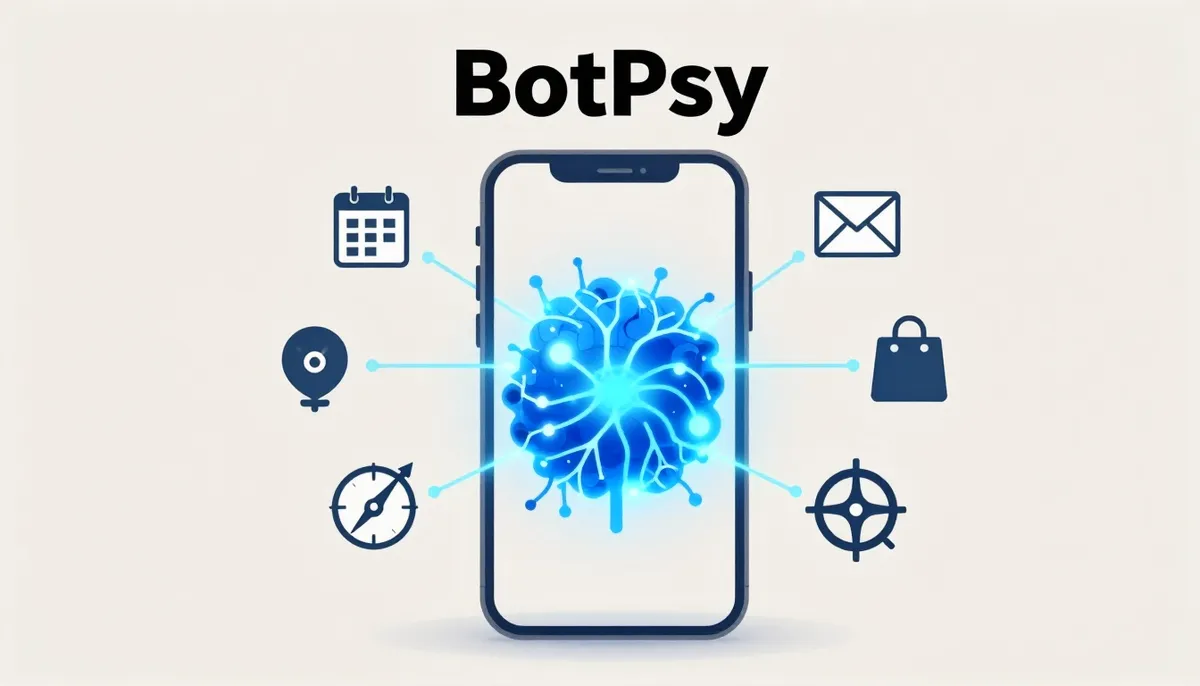
What happened: Tether AI Research introduced BotPsy, a 0.8-billion-parameter language model for function calling and agentic workflows, fine-tuned from Qwen3.5-0.8B and positioned as an on-device personal assistant that uses tools for users in domains such as web search, travel, commerce, calendar, email and device or vehicle control. The company says the model will be released with open weights under the Apache 2.0 license, in safetensors and GGUF formats (bf16, Q8 and Q4) for its QVAC SDK and llama.cpp — announced, not confirmed as downloadable by outside users yet.
What's genuinely new: Vendor benchmarks claim roughly double its base model's agentic scores (BFCL v4 rising from 23.4 to 44.0, τ-bench from 23.2 to 51.5, ACEBench from 30.1 to 58.7), wins over Qwen3.5-2B-Think — a model 2.5× its size — on five of six tool-use and agentic benchmarks, higher tool-hallucination resistance than any peer model tested, and an unsafe-response rate of 21% versus 36% for the base model under automated red-teaming. Every number is vendor-reported with no independent evaluation yet, and Tether notes the model is only suited to low- and medium-difficulty tasks. The announcement also sketches Tether's broader QVAC roadmap: decentralized P2P search via Hypersearch, local fine-tuning through QVAC Fabric, and agent-to-agent communication across trusted local networks.
Watch: Whether the open-weights release actually lands on Hugging Face and llama.cpp as stated; independent benchmark runs against its claims; Tether's next QVAC components — Hypersearch and local fine-tuning.
JioHotstar runs a voice-first AI discovery assistant on OpenAI models

Sources OpenAI published Nov 10, 7:00 PM ET
What happened: JioStar, whose streaming and live-sports platforms serve more than 500 million consumers, built a conversational voice-and-text discovery assistant into its JioHotstar app on the OpenAI API, letting viewers speak naturally to find movies, shows, match highlights and cricket statistics. Chief architect Vijay Seshadri says the team built the experience for more than 15 languages in about eight weeks for a February cricket tournament, that more than 60% of users use voice rather than text, and that the production setup pairs an evaluation framework with an LLM-as-judge validator and guardrails-first scoping of what the system won't answer, with OpenAI forward-deployed engineers working alongside the team.
What's genuinely new: First public accounting of the JioHotstar deployment and its shape — voice-first usage above 60%, 15-plus languages in roughly eight weeks, a tournament-driven launch, and the maker-checker evaluation pattern. The usage and design figures are company statements from OpenAI's post; no independent check yet.
Watch: Scale-up of the assistant beyond the tournament launch; the production model-efficacy monitoring Seshadri says he'd invest in earlier next time; whether other streaming platforms publish comparable deployments.
Brief
- OpenAI says more than 20,000 veterans and transitioning service members have claimed a free year of ChatGPT Plus over the past year, a milestone the company shared ahead of Veterans Day; its OpenAI Academy and partners have trained nearly 1,000 members of the military community, with seven more sessions scheduled before year-end. (OpenAI)
- OpenClaw shipped the v2026.11.3 patch, fixing interrupted-update recovery, reducing slow-storage backup timeouts and tightening credential handling, with 56 pull requests from 36 contributors. (OpenClaw on X).
- A technical write-up relays OpenRouter's next-generation Auto Code router — harness-aware routing that keeps the same model on about nine of ten consecutive agent turns to protect prompt-cache discounts, claiming Claude Opus 5.5-level benchmark accuracy at 74% lower cost per task from a 24-hour live-routing read — and lays out a three-tier agent division of labor with Anthropic's Fable 5.2 for long autonomous proofs and Meta's Muse Ember for cheap sub-agent calls at about $0.14 a task. (note.com) (single source)
- Gemini 4 Carbon and Anthropic's Claude Fable 5.2 tie for first on GamowLabs RareBench, solving 61.5% of rare-disease problems, with Carbon alone in first on LabBench, per a Demis Hassabis repost; another Hassabis repost calls Carbon "ridiculously efficient" — barely any tokens, super cheap and incredibly fast. (Daniel McKinnon on X · Lumina on X)
- Mistral says Voxtral Transcribe 3 was used at the AI Engineer Paris conference to transcribe every main-stage talk in real time, with accuracy boosted by context biasing — feeding the model speaker names and technical terms from the conference agenda. (Mistral on X)
- Bangladesh has sought an indicative $250 million programme from the Asian Development Bank to build its first homegrown Bengali-language AI model, alongside cybersecurity and "technology village" investments, with South Korea's KEXIM expressing interest in co-financing after a delegation led by Finance Minister Amir Khosru Mahmud Chowdhury visited Seoul; ADB's country director said a cybersecurity project is awaiting approval in 2027 and AI investments would be phased subject to technical studies, with cooperation explored with LG AI Research and FuriosaAI. (ThePrint, carrying The Daily Star's report) (single source)
- AIDCQ, a UK-based company, says it is looking at roughly $2 billion to build a frontier AI data centre in Bangladesh, with a company delegation expected to visit in December; a ministry source described a positive government response, and the report notes interest from Japan and South Korea in similar data centres, with the Kaliakair area of Gazipur and the Sirajganj Economic Zone among sites under discussion. (Jago News)
- Google Labs opened a waitlist beta for Tabletop, an experimental AI tool that builds collaborative spaces for groups — trip itineraries, dinner polls, expense splitters, seating charts — generated by describing what the group needs in a shared space; access is currently limited to people 18 and over in the US. (The Verge)
- Adobe's Max 2026 Sneaks showcase experimental AI features, including Project Screen Test, which lets creators design AI characters by holding audition-like conversations with them and generate animated screen tests, alongside experiments turning photos into explorable 3D scenes and making photo edits copy/paste-able — experiments, not shipping features. (The Verge)
- Google introduced Gemini Decision 1, a new frontier decision model in the Gemini API: $0.10 per million input tokens with no additional cost, native image, audio, video and PDF input, a 256K context window and 1K questions, free to try in the API, per Logan Kilpatrick's announcement relayed by Demis Hassabis — Google joins a decision-model field with TypeSafe's Jev, OpenAI's Decisions API, Perplexity's pplx-decider, Cloudflare's Clef and Microsoft's Decision-1. (Demis Hassabis on X) (single source)
- Meta released Muse Ember on November 9, the smallest model in its Muse family — positioned as the cheap "executor" for the repetitive work agents do, with roughly 1M-token context, native image, audio, video and PDF input and computer use, priced at $0.10 per million input tokens and $0.50 output (with a 3× rate tier applying to a whole request beyond 200K input tokens); Artificial Analysis scores it an Intelligence Index of 36, tying Claude Haiku 5.5 at about a third of its per-task cost, though it loses a practical-coding benchmark to Haiku and its cheap per-task costs come from leaner output rather than a lower token price. (note.com) (single source)
- A Duolingo platform staff engineer, Kush Agrawal, said at the AI Engineer conference that his team merged more than 700 agent-written test pull requests adding about 225,000 lines of test code, lifting iOS app test coverage from 11% to 24% in eight months — with Claude Code as the coder, auto-merge on approval, a deterministic guard now closing any agent PR that touches non-test files, and an LLM judge having rejected 73 of about 200 agent PRs it reviewed. (StartupHub.ai) (single source)
- Sequoia Capital is investing hundreds of millions of dollars into Sequence Holding, a one-year-old AI holding company that just announced a $7.7 billion insurance acquisition co-led by Michael Dell's family office — Sequoia's second known investment in the holding-company category that buys established-industry businesses such as accounting, insurance and HOA management and applies AI to their work. (The Information)
- Meta's head of global infrastructure, Santosh Janardhan, is stepping down and will leave the company early next year amid its massive AI data-center buildout, with the company replacing the leadership of the operation and the report naming Amazon Web Services veteran Dave Brown in the change. (The Information)
- Perplexity published new research on red-teaming its SPACE agent sandbox with 12 models: the platform held against sandbox-isolation escape attempts, a DNS-spoofing network bypass was discovered and addressed, and non-cyber models (such as GPT-5.6 Sol) outperformed cyber-specialized ones at finding exploits, with findings shared openly with the agent-security community. (Perplexity on X) (single source)
- OpenAI shared new research on how chain-of-thought monitorability evolves across the model training lifecycle, with a sobering headline finding: as models scale toward more capable systems, they are becoming harder to monitor through their chain of thought. (OpenAI on X) (single source)