AI digest — Nov 10, 2026
Top line: Anthropic launched its IPO roadshow — 825 million shares at $70–$78, a $1.26–$1.4 trillion valuation target — backed by over $10 billion in added Microsoft and Google cloud commitments. OpenAI told investors quarterly revenue hit $10 billion while it works to close its $1.25 trillion raise. Gemini 4 Carbon reached all paying developers.
- Anthropic's IPO roadshow launches at $70–$78 a share
- Gemini 4 Carbon opens to all paying developers and Ultra subscribers
- DeepMind's AlphaProof Code formally verifies Signal's core cryptography
- ChatGPT opens to businesses: a Business Hub and verified Business Agents
- Anthropic debuts an AI office suite for knowledge workers
- DeepMind ships Gemini Robotics 2.5, its most capable physical-AI model
Anthropic's IPO roadshow launches at $70–$78 a share

Sources Anthropic Anthropic on X The Information The Information, link 2 The Information, link 3 The Information, link 4 The Information, link 5 CNBC published Nov 10, 8:01 PM ET
What happened: Anthropic launched the roadshow for its proposed initial public offering of Class A common stock: 825,000,000 shares, of which 801,351,354 are offered by the company and 23,648,646 by existing stockholders (Anthropic gets no proceeds from the latter), plus a 30-day underwriter option on up to 123,750,000 additional shares. The offering is expected to price between $70.00 and $78.00 a share, with a Nasdaq Global Select Market listing under "ANT" and Goldman Sachs and Morgan Stanley distributing the preliminary prospectus (Anthropic). At the top of its $70–$78 range Anthropic would raise up to $64.35 billion and be worth as much as $1.405 trillion on a fully diluted basis, up from the $965 billion valuation it announced in its May funding round, CNBC reports. The company plans to price the offering on Nov. 18 and start trading Nov. 19 under the ticker "ANT," with roughly 20% of the deal earmarked for retail investors — far above the usual 5% to 10% — and its order book already covered across the range, people familiar with the deal told CNBC. Alongside the public offering, AMD, Broadcom, Google, Micron, Microsoft, Nvidia and Taiwan Semiconductor have agreed to buy $26 billion of Anthropic's Class N common stock in a private placement at the IPO price, shares that carry no underwriter lock-up, according to CNBC.
What's genuinely new: The roadshow is officially underway despite the paperwork stumble — the company's Canadian outside counsel had sent banks an updated prospectus and then retracted it, saying some of the details were incorrect (The Information). The updated filing puts the tentative valuation at $1.26–$1.4 trillion — below the ~$1.5 trillion investors expected in October — with a target raise of about $90 billion, counting the $26 billion private placement on top of the up-to-$64.35 billion public offering (The Information). Against OpenAI's most recent private fundraise at $1.25 trillion, that public-market ask values Anthropic only about 12% above the still-private rival, a gap The Information reads as the widening divide between public and private investor sentiment (The Information). The same-day filing also discloses that in the past month Anthropic added new commitments with Microsoft and Google to spend roughly $10 billion more renting cloud servers between now and 2033 than it previously disclosed — and that a $34.9 billion agreement with Lambda to lease servers may be cancelled (The Information). The filing also lays out what the two early backers stand for: it shows how many shares Amazon and Google will each own in Anthropic and how much money they are making on their early investments, with neither tech giant holding voting shares in the company (The Information).
Watch: effective date of the registration statement, final pricing against the $70–$78 range, total proceeds against the $90 billion target (the up-to-$64.35 billion public offering plus the $26 billion private placement), the exact Amazon and Google stake and paper-gain figures once the filing coverage lands, whether the Lambda cancellation is confirmed, and the first trading day.
Gemini 4 Carbon opens to all paying developers and Ultra subscribers
Sources The Verge Google DeepMind GoogleAI on X Aravind Srinivas on X Demis Hassabis on X 9to5Google ZDNET published Nov 10, 11:00 AM ET
What happened: Gemini 4 Carbon, announced two weeks ago and initially gated to a closed set of cybersecurity defenders in the Fairwind Program, is now generally available: Google DeepMind is rolling it out via the API in Google AI Studio and Gemini for business to all paying developers and enterprises, and to all Google AI Ultra subscribers in the Gemini app, AI Mode in Search, and Antigravity (The Verge · Google DeepMind). Pricing matches Argon's introductory rate: $2 per million input tokens and $10 per million output tokens. Google keeps the positioning split: Argon "remains the ideal choice for the majority of software engineering and knowledge work," while Carbon — which burns more tokens to explore and verify — is built for tasks that test the limits of a model's intelligence, such as complex multi-step coding and open-ended scientific research. It is not clear when or if Carbon reaches lower tiers or free users. Google says the introductory rate of $2 per million input tokens and $10 per million output tokens lasts only until November 30, after which Carbon will cost $4 and $20 respectively (9to5Google). Researchers using AlphaProof Code and Carbon formally verified the core code of Signal's encryption protocol — which WhatsApp and Google Messages also rely on — in about a month, a task that would normally take expert teams years, and the first formal verification of a widely deployed cryptographic protocol by any method (ZDNET).
What's genuinely new: the access widening comes two weeks after the model's announcement. Google claims #1 on CursorBench 4.0, Perplexity's WANDR benchmark and Zapier's AutomationBench at more than 2× lower cost per task than the next best external model, and is previewing a /swarm feature in Antigravity that turns a single prompt into "a coordinated team of agents" across parallel isolated workspaces with adversarial verifiers testing every change. Perplexity began rolling Carbon out to all Pro and Max subscribers for persistent Teammates and agentic sessions, calling it 2.5× cheaper than Claude Fable 5.2 "with similar capabilities on agentic research tasks" (Aravind Srinivas on X). Demis Hassabis demoed Carbon reverse-engineering his original Theme Park binaries, adding a DeepMind-themed ride and porting the game to the web (Demis Hassabis on X); the announcement also says the model powers AlphaProof Code, DeepMind's formal-verification framework.
Watch: lower-tier and free-user availability, the swarm preview's general release, independent checks of the benchmark claims now that anyone can call the API, and the intro-to-standard pricing step ($2/$10 to $4/$20, as with Argon).
DeepMind's AlphaProof Code formally verifies Signal's core cryptography

Sources Google DeepMind published Nov 10, 7:02 AM ET
What happened: Google DeepMind announced AlphaProof Code, a multi-LLM agentic framework for formal software verification, and its first result: AI agents mathematically proved key security properties of the actual code underlying the Signal protocol, the encryption protecting conversations in Signal and Google Messages (Google DeepMind). The company calls it the first formal verification at implementation depth for a widely deployed protocol, by any method with or without AI.
What's genuinely new: Human experts and models translated Signal's security goals into formal specifications, then agents powered by Gemini Carbon generated more than six million lines of Lean proofs — a machine-checked proof language — flagging just 1% of the codebase for human review while Lean checked the rest; the whole verification took four weeks against what the company describes as years of expert effort historically. As a control, the team reintroduced two real, previously fixed bugs into an isolated copy of the codebase, and the system produced machine-checked proofs that the buggy versions were insecure. The verification artifacts are being open-sourced.
Watch: independent scrutiny of the four-week claim, responses from the Signal team and cryptographers (Signal researchers are thanked for methodology feedback), the framework's stated next targets — medical-device firmware and power-grid software — and uptake beside Anthropic's formal-verification work on open-source libraries.
ChatGPT opens to businesses: a Business Hub and verified Business Agents
Sources OpenAI The Verge OpenAI on X OpenAI Developers on X published Nov 10, 5:00 AM ET
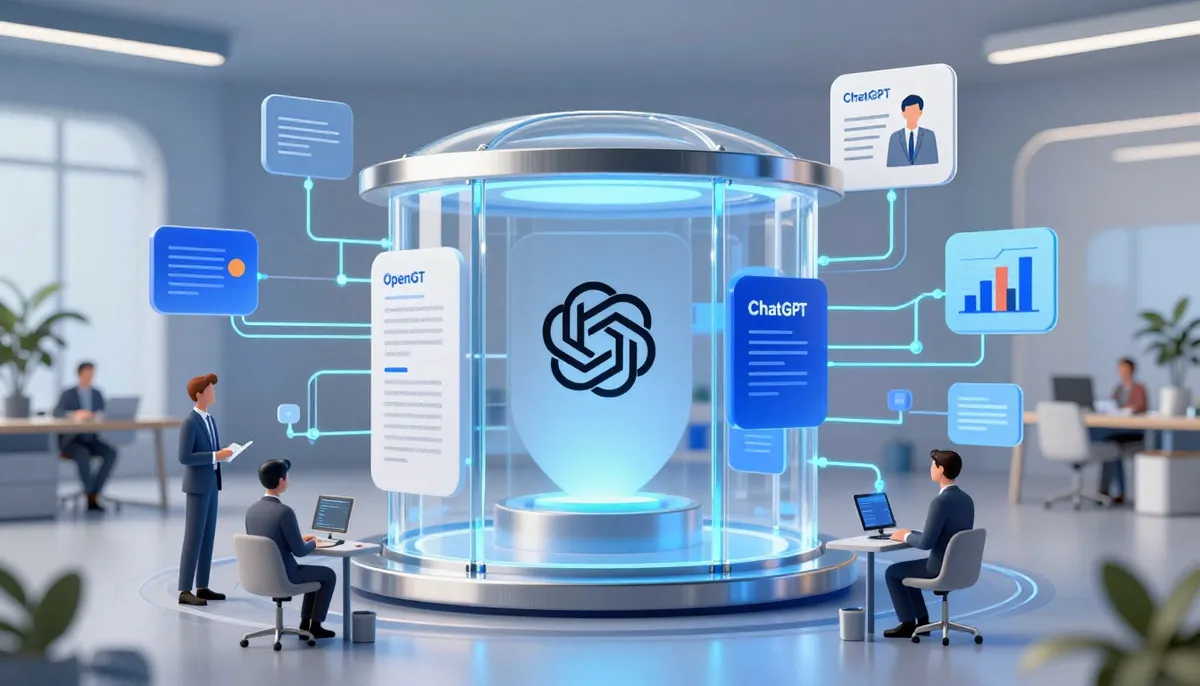
What happened: OpenAI launched Businesses in ChatGPT in beta, giving companies a Business Hub to claim their organization, get verified, keep information current and add self-service product feeds with pricing and availability; claimed businesses get aggregated insights — mentions, website clicks and top "discovery topics" — with users' conversations and Business Agent chats not shared with businesses (OpenAI). Businesses can build, test and launch a Business Agent representing them in ChatGPT, first for eligible e-commerce and online-service businesses in the US: when a business appears in a response, users can open its profile and chat with the agent — clearly labeled and kept separate from the main conversation — about offerings, product comparisons and follow-up questions (The Verge). Shopify merchants can connect their store from Business Hub or the Shopify admin to streamline verification, with eligible products already integrated through Shopify Catalog, and a business can sponsor its Business Agent as the destination for ChatGPT Ads, with sponsored placements clearly labeled. OpenAI puts ChatGPT's reach at 1.2 billion weekly users (OpenAI).
What's genuinely new: the September Sponsored-Agent test becomes a product built on a claimed-and-verified business layer — with verification methods deliberately unspecified ("different methods for different businesses," VP of monetization Benji Shomair said in a press briefing). Separately, ChatGPT Business plans can now be used via "Sign in with ChatGPT" in third-party tools including Notion, v0, Warp, Kilo Code, amp, opencode and OpenClaw (OpenAI Developers on X).
Watch: which business categories clear the eligibility bar, how verification works in practice, uptake of Business Agents and sponsored ad placements, and expansion beyond the US and beyond e-commerce.
Anthropic debuts an AI office suite for knowledge workers
Sources The Verge Claude on X The Information published Nov 10, 1:26 PM ET
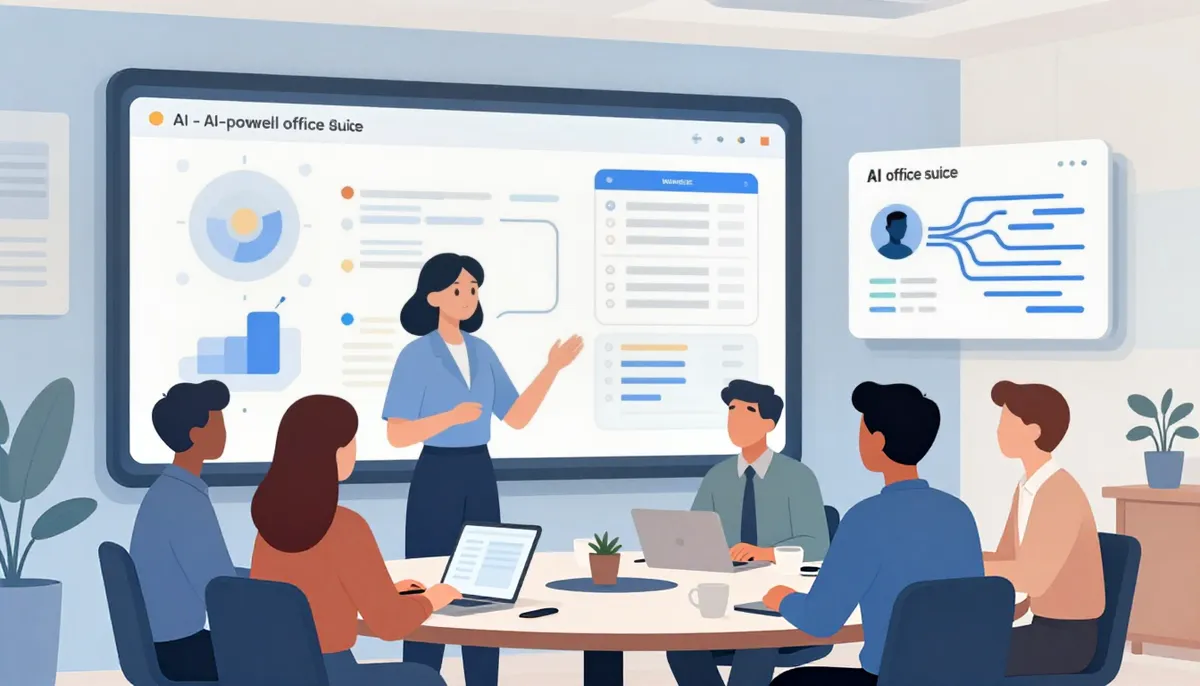
What happened: At an event in San Francisco, Anthropic unveiled an AI-powered suite of office tools for non-technical knowledge workers: Claude Meetings, Claude Sheets and Claude Whiteboards — Claude joining meetings and taking notes, laying out ideas on a shared whiteboard, editing spreadsheets alongside employees, and turning a presentation into a one-minute explainer video (The Verge). All three are in beta starting now: Whiteboards and Sheets for all paid plans, Meetings for Teams and Enterprise subscriptions. The company also made Claude Data (formerly Dashboards, beta since October) generally available to all paid plans (Claude on X), and announced interactive connectors that run partner apps — HubSpot, Adobe, Atlassian — natively inside Claude, such as a native Adobe PDF editor or a HubSpot campaign tracker.
What's genuinely new: Anthropic's first native products for non-technical knowledge workers — an expansion beyond Claude Code and the Claude-Cowork wrapper, whose audience the company says was still the "technical parts" of its non-technical audience. The connectors push its Model Context Protocol marketplace (now over 9,000 plugin options) from launching third-party apps in tabs to embedding them inside Claude. The Information reported Microsoft shares tumbled on the launch, putting Claude into direct competition with Microsoft Office and Google's productivity apps across spreadsheet editing, presentation building and video-call note-taking. The launch lands on the roadshow to the IPO, as the company looks to show investors revenue breadth beyond coding and enterprise tools; Google's Gemini and OpenAI's ChatGPT offer meeting-notes features, and OpenAI pushed integrated connectors at its DevDay.
Watch: uptake among paid teams, whether Meetings widens beyond Teams/Enterprise, how deep the connector integrations go versus tab-launching, Microsoft's competitive response, and the share-price aftermath.
DeepMind ships Gemini Robotics 2.5, its most capable physical-AI model
Sources Google DeepMind Google DeepMind on X published Nov 9, 2:51 PM ET
What happened: Google DeepMind introduced Gemini Robotics 2.5, its most capable vision-language-action (VLA) model, now rolling out to its robotics partners (Google DeepMind). The company says it evaluated the model across more than 200 distinct everyday-task demonstrations — serving food with tongs, tying a gift bow, pipetting liquid — reporting 30–100% higher success rates than previous baselines while completing tasks 20–30% faster, with gains in handling deformable and delicate objects. In a proof-of-concept with Apptronik and Mercedes-Benz, Apollo 2 humanoid robots used the model to autonomously perform automotive kitting — sorting metal brackets from bulk bins into sequencing trays in order for the assembly line — on active production lines in Kecskemét, Hungary and Sindelfingen, Germany at a 96% success rate (Google DeepMind).
What's genuinely new: the model release plus a named real-world deployment: kitting at 96% success on live automotive lines, not a demo stage. DeepMind also claims physical-safety steerability — safe task completion up 33% around obstacles and 43% near people by inference-time guidance — and a new open-source jailbreak benchmark for robots, ASIMOV-Jailbreak, against which Gemini 4 Argon shows 99.5% resistance versus 82% for the previous baseline. Development was accelerated by using Gemini 4 Argon as a simulation engine to generate thousands of simulated practice runs from real camera scenes.
Watch: partner uptake and what "rolling out to robotics partners" produces in named deployments, independent verification of the Mercedes-Benz figures, whether the ASIMOV-Jailbreak benchmark becomes a standard, and pricing terms for partners.
Brief
- OpenAI's third-quarter revenue hit $10 billion: OpenAI told investors revenue jumped nearly 50% to $10 billion in the third quarter, rebounding from slower growth as demand for its newer models and enterprise products picked up, according to a person familiar — shared on an investor call as the company seeks to close its new fundraising round at a $1.25 trillion valuation, with growth far above Q2's 17% gain from the first quarter (The Information) (single source).
- Experts: the Huang scandal threatens more than Nvidia's reputation: "The US is winning the AI race. Jensen Huang could have blown it," The Verge's analysis argues — security and China-policy experts say companies linked to alleged spy Alice Huang (no relation to the CEO) have reportedly enabled at least $7 billion of Nvidia chip sales to China (beyond the $4.8 billion Megaspeed spend already reported), that Huang won White House approval to export H200 GPUs to approved Chinese customers last year while Nvidia lobbies to loosen export controls — though there is no public evidence Huang himself steered restricted chips toward China — and that continuing investigations could slow chip allocation to AI labs; CNAS's Emily Kilcrease says "the odds of AI chip control legislation being passed in Congress just went through the roof" (The Verge) (single source).
- Booz Allen switches to Nvidia's Nemotron: the roughly $10 billion-market-capitalization government contractor switched from primarily using Anthropic's models several months ago, The Information reports, an early sign of headway for Nvidia's push to build the world's best open-source models as the company manages the reputational hit from its CEO's acknowledged affair with Megaspeed executive Alice Huang, whom China's Ministry of State Security is reported to have recruited (The Information).
- AI spending caps are the exception, not the rule: The Information reports large cloud providers including AWS and software firms such as Palantir, Snowflake and HubSpot haven't put firm caps on engineers' spending as they use AI coding tools like Anthropic's Claude Code and OpenAI's Codex to build apps and features, while some companies curb employee AI use to contain soaring costs — and the frontier labs themselves are cap-free (The Information).
- OpenAI acquires AI travel agent Odessia: OpenAI has acquired the AI travel-planning platform Odessia, founded earlier this year; founder Francis Davidson announced the deal and joins OpenAI to focus on "the future of travel" (The Information).
- GPT-6 Astra finds 35,000 new vulnerabilities in a re-run audit: steipete relays a report that a company which found 10,500 vulnerabilities across about 700 systems — holding an emergency press conference June 16 and applying fixes over three months — re-ran its diagnostics with OpenAI's latest GPT-6 Astra model and confirmed 35,000 new vulnerabilities, telling reporters "honestly, we're completely exhausted" (steipete on X). Single-source social relay of a foreign-press write-up.
- Cisco adds Claude Mythos to AI Defense: Cisco announced that Anthropic's Claude Mythos will join its AI Defense platform for adaptive red teaming of AI applications and agents — with structured, contained access, named operator attribution and revocable engagement — though the feature is described as "coming soon for select enterprises," announced rather than shipped; the same announcement adds Splunk Agent Observability token-spend governance, with Tokenomics in private preview in December and general availability in AWS Marketplace early 2027 (The Fast Mode).
- "If a nation state really wanted to steal the weights right now, they could": Lisa Thiergart, co-founder and CEO of Security Level 5 — a startup working with AI companies and the intelligence community on AI data-center security — says other countries likely have not yet stolen AI models from leading US companies, but only for a lack of trying, since nations have cheaper ways to get what they need (The Information).
- OpenAI's EMEA education report and the guidance gap: OpenAI's report on its education partnerships with governments in Estonia, Slovakia, Greece and Italy says new ThinkYoung research finds 79% of surveyed students use AI for homework or assignments, but only 47% report being shown how — the partnership themes are equitable access to frontier tools, AI literacy programmes and ongoing evaluation, with teacher time-savings described as encouraging early signals that still lack sustained, independent study (OpenAI). A company-authored report on its own programmes, not an independent assessment.
- Grok 5 takes aim at Opus 5.5: Elon Musk says xAI's next model Grok 5 "should exceed Opus 5.5" — Anthropic's current flagship — and that "maybe that happens in 2 or 3 months, with continued acceleration thereafter" (Elon Musk on X). In adjacent posts, Musk credits the new Grok AI/SI training and inference stack to the engineers behind Starlink — "we write our own headers and calculate our own time (includes leap seconds)" — with Musk-relayed posts describing a from-scratch rewrite that replaces JAX and SGLang with in-house C, including some assembly. A vendor-side claim with no independent report yet; Grok 5 has not been released.
- Grok 4.8: pre-training done, rollout next: A relayed status post puts Grok 4.8's pre-training complete, supervised-fine-tuning data cleaned up, reinforcement learning underway with evaluation scores starting to climb, and a soft rollout to Grok Bot users planned for later this week — with Musk saying the model "will bear no resemblance to 4.7" and that the from-scratch C/C++ replacement for JAX and SGLang took extra time (Elon Musk on X). Vendor-side claims, no independent report.
- Grok Bot limit reset: SpaceXAI's Grok Bot said weekly usage limits have been reset for all Grok Bot users, with no stated reason (Elon Musk on X).
- A small JEPA world model claims much faster planning: A research explainer relayed by Yann LeCun describes LeWM (LeWorldModel), a 15-million-parameter model in the JEPA lineage that predicts what happens next from compressed representations rather than generating pixels, uses a Gaussian-distribution regularizer against representation collapse, trains on one GPU in a few hours, and reports planning up to 48× faster than the foundation world models it was compared against; the relay itself notes this shows a small model can learn useful patterns without generating every pixel, not that generative AI is finished (LeWM paper (arXiv)). Single-source relay of a research explainer; no independent report.
- Rain launches spending vaults for AI agents: Rain, a stablecoin card and payment infrastructure startup, says it is launching Agent Vaults — spending accounts with budget limits for AI agents, fundable by bank transfer, card or stablecoin transfer (The Information). Single-source vendor launch.
- TriNetX ships AI-extracted clinical facts for research: the federated health-data network announced NLP-extracted facts from over 800 million clinical notes and reports, confidence-scored against human-annotated notes and linked to structured EHR data for the same de-identified patients, with the release citing smoking-status coverage rising from 22% to 67% and performance-status measures surfaced for 292,000 oncology patients (Yahoo Finance). Company announcement, no independent report.
- eBay appears to have blocked Meta's Muse and other third-party AI agents: a reader told The Verge his Muse agent — after weeks of curating a daily digest of watches from eBay listings — was suddenly unable to pull any links or details, with Muse saying it was blocked from the site; The Verge re-created the experience and found Muse sometimes steering users to outside sites mirroring eBay listings. eBay's spokesperson declined to confirm new limits but said, "we have restricted agent access in certain cases, including unauthorized scraping and training on our data," while citing "ongoing discussions with potential partners" — the retailer had already banned "buy-for-me agents" and "LLM-driven bots" that order without human review in its user agreement. The retail landscape is split: Amazon blocks external agents entirely, Target restricts some agent browsing, Shopify opened its billion-listing catalog to shopper agents — and usage remains thin (Uber fulfilled four rides via third-party agents in Q3; DoorDash "several hundred" of 993 million orders) (The Verge) (single source).
- Adobe Max leans into agentic AI: Adobe said third-party AI agents will be able to access and change Creative Cloud projects, expanded its Firefly AI Assistant, and is enabling AI agents to keep running recurring creative work on users' behalf, alongside product updates at its Max event — a beta Generative Remove tool for Premiere that erases objects and boom mics from the video timeline, an updated Photoshop Remove Tool better at reconstructing reflections, shadows and footprints, and new audio-separation tools (The Verge · The Verge). Event announcements, no independent verification of capabilities yet.
- SoftBank writes off $3.7 billion on data-center advance payments: in its September-quarter results, SoftBank wrote off $3.7 billion spent on non-refundable advance payments to secure data-center equipment after a review of its data-center plans, including $0.9 billion related to contract modifications (The Information).
- OpenAI and Upwork study AI's effect on freelance work: a joint research paper comparing ChatGPT-usage patterns with Upwork postings finds 43 of 63 matched work categories moved in the direction of activities common in ChatGPT use losing Upwork share, AI-related postings' task mix grew 45% more diverse between early 2023 and late 2025 (about 15 to about 21 equally common tasks), and AI-related postings carry larger fixed-price budgets and more hours, without higher hourly rates — the paper says the findings do not point to a simple substitution story (OpenAI). Company research, no independent read yet.
- NVIDIA donates OpenShell to CNCF: at KubeCon + CloudNativeCon, NVIDIA announced it is contributing its OpenShell agent-security tooling to the Cloud Native Computing Foundation and adding open-source AI-factory tools (Unite.ai). Aggregator-sourced vendor announcement.
- Google's search-ads juggernaut feels the chatbot shift: The Information reports an advertiser (Cleverly CEO Nicholas Verity) has seen part of his roughly $2,000-a-day Google search budget go unspent for about eight months because not enough people see or click the ads — which he attributes to more people researching on AI chatbots (The Information). A single-advertiser datapoint.
- Drive Health and ASU's nursing college build a competency framework for clinical AI: the Nurse Assist Initiative evaluates AI assistants through nursing-style competency assessments — simulated clinical cases, ambiguous-risk handling, documentation workflows — on the principle AI should augment nurses, not replace them; the vendor's release cites over 980,000 audited interactions and zero missed critical escalations, all company-reported (PR Newswire). Wire press release.
- COP31's Antalya AI Pledge is voluntary and non-prescriptive: negotiators from over 190 countries in Antalya are behind a pledge on AI's environmental impact, due for official launch on November 16 — clean energy for data centers, responsible-AI standards, transparency reporting, e-waste management — but its text states the objectives "create no new obligations" and follow national circumstances, and the US has no official delegates at the summit (The Verge) (single source).
- Sentient Foundation hires Mozilla.ai's Julie Belião: the former Mozilla.ai VP of product and Google veteran joins as VP of Product to lead recursive self-improvement and model provenance work (FinanceFeeds). Hiring news, single source.
- Decision models get first-class Hugging Face support: Hugging Face is promoting a "decision" pipeline in transformers — state plus questions plus allowed answers in, decision with probabilities out, without generating text — citing the community's converged term for what TypeSafe AI called a System One model with its Jev, and contrasting it with constrained JSON decoding over generative LLMs (Hugging Face). Vendor documentation of a new capability, not an independent assessment.
- Ring Drone Cam lands a date: the AI-piloted indoor drone camera — which patrols on triggers from Ring sensors and flies preprogrammed routes to livestream what's happening — arrives January 27, 2027 for $249.99, nearly six years after the Always Home Cam was announced; it has no onboard sensors beyond landing hardware and relies on AI to fly (The Verge).