AI digest — Nov 21, 2026
Top line: The UN's Geneva talks on autonomous weapons end with a two-year track toward rules but no binding treaty. Bitcoin Core patches an AI-discovered flaw that could freeze its nodes, Tesla's FSD V15 begins rolling out with a claimed 25× safety gain, and Oracle says it has secured all the funding for its OpenAI contract.
- AI-assisted research finds a Bitcoin Core flaw that could stall its nodes
- UN nations agree to keep talking on 'killer robots' — drafting of rules set for 2028, no binding treaty
AI-assisted research finds a Bitcoin Core flaw that could stall its nodes
Sources Bitcoin.com News Bitcoin Core CoinDesk
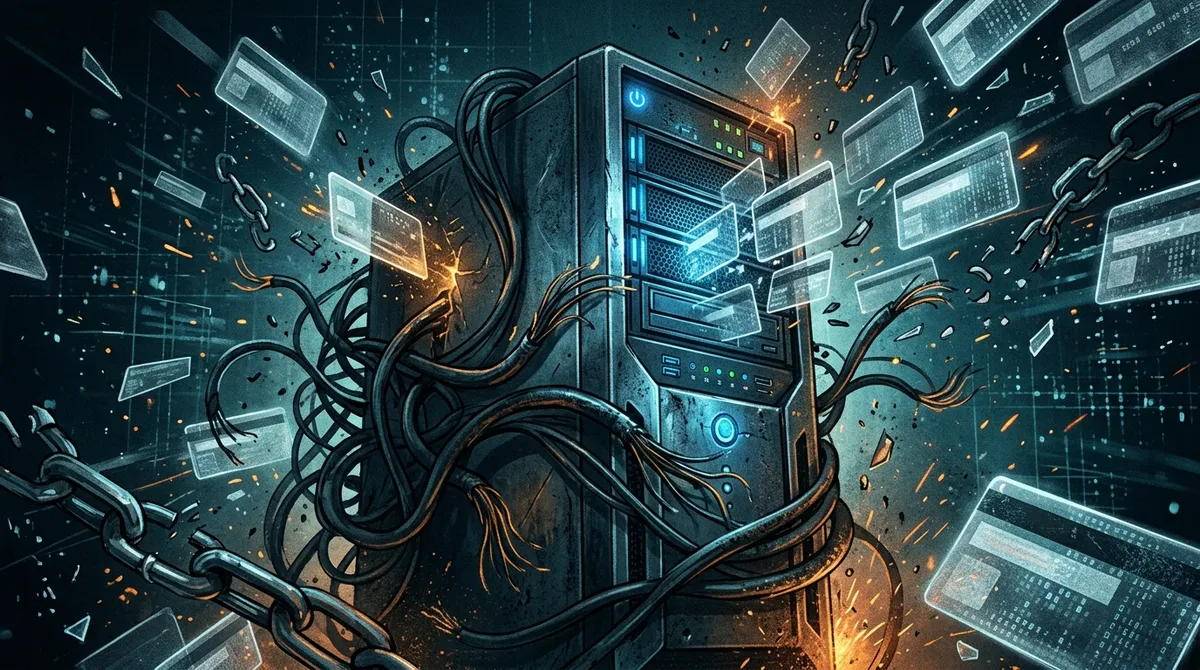
What happened: Bitcoin Core disclosed a medium-severity vulnerability on November 20 — CVE-2026-117348, "Node stall through duplicate orphan announcements" — that let a malicious peer temporarily paralyze a node: inventory messages can hold 50,000 entries, and an attacker repeatedly referencing an orphan transaction with thousands of missing parents forced the same expensive checks each time, stalling processing for more than 12 seconds. Fixes shipped in versions 30.5, 31.3 and 32.1; the retired 29.x branch gets none. No theft or permanent damage was established.
What's genuinely new: The finding came from Project Loupe, an automated large-language-model security initiative built by Elias Rohrer at Spiral, Block's open-source Bitcoin division — reported on July 8, validated by Bitcoin Core developer Gregory Sanders, merged August 6 and in Bitcoin Core 32.1 by October 27, ahead of the November 20 disclosure. The article frames it within a year of AI-assisted flaw-hunting across crypto infrastructure, and Bitcoin Core's October policy change now puts easily AI-discoverable issues on an accelerated public-disclosure track.
Watch: more AI-found flaws landing under the accelerated-disclosure policy — and whether attackers find them first.
More context: Bitcoin Core says that since version 29.0 a node announcing a transaction held in its "orphanage" rebuilt and re-checked the list of its missing parents each time, and that a single inventory message carrying up to 50,000 duplicate entries stalled the node for over a dozen seconds, during which it processed no messages from other peers, including blocks. CoinDesk reports the practical fallout: an exchange relying on an affected node could be delayed in crediting deposits, and a miner could waste computing power working on an outdated view of the blockchain. Bitcoin Core says affected versions ran from 29.0 through 31.2, with fixes released in 30.5, 31.3 and 32.1, and that the 29.x series has reached end of life and will not receive a fix.
UN nations agree to keep talking on 'killer robots' — drafting of rules set for 2028, no binding treaty
Sources The Verge CNBC NPR published Nov 21, 3:03 PM ET
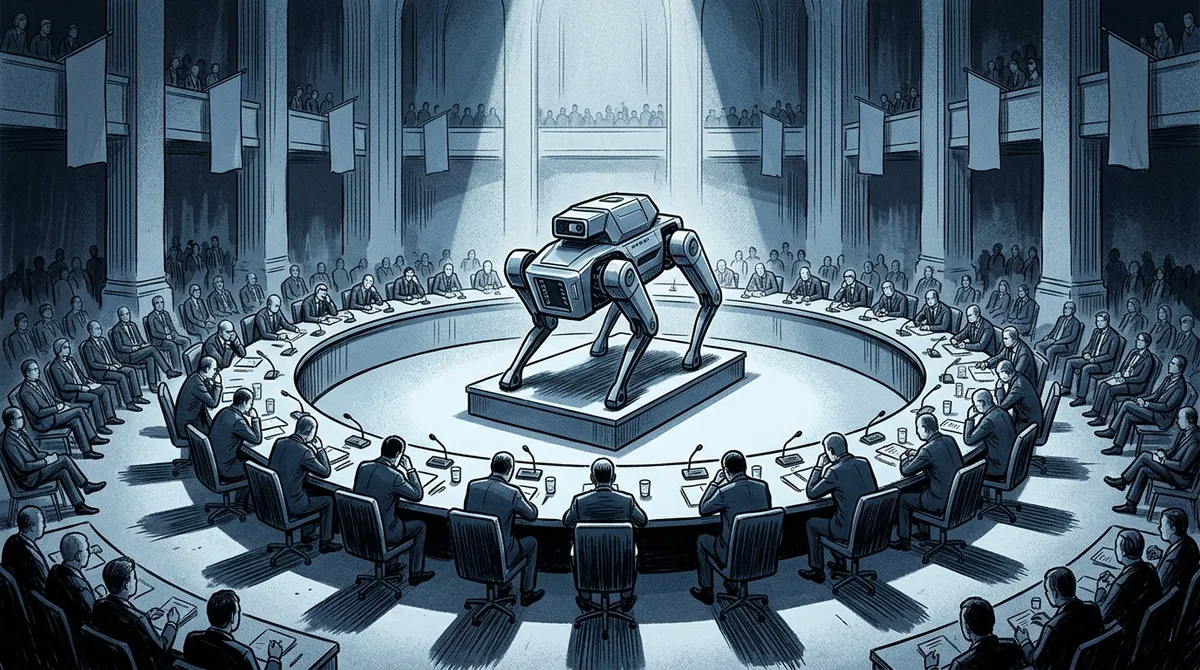
What happened: Countries meeting under the UN Convention on Certain Conventional Weapons in Geneva ended a week of negotiations (November 16–20) with a compromise instead of a treaty: representatives agreed to "start discussing options" and to propose regulations within two years, toward an agreed instrument targeted for 2028, with room left for some rules to remain "optional." Roughly 100 countries backed the legally binding rules the International Committee of the Red Cross, the UN secretary-general and Pope Leo had urged.
What's genuinely new: The expected opposition held. Russia, Israel and the US blocked binding rules — the Red Cross had called for them "within a year" — with the Verge reporting, citing NPR, that Russia objected to the agenda on day one and the US proposed a five-year window of nonbinding, optional guidelines for autonomous weapons, whose use has drawn humanitarian concern over civilian deaths in Ukraine, Gaza and Sudan.
Watch: whether a process forms outside the consensus-based convention, and whether the 2028 text is binding or stays optional.
Brief
- Oracle says it has "secured all the funding we need to fulfil our contract with OpenAI," in a statement posted on X — implying it raised the roughly $20 billion of additional equity and debt the company said last month it was planning "as early as" this year. The Information
- Anthropic went public on the Nasdaq: The Verge's Decoder closes its three-part IPO series with the listing-day picture — priced at $83 a share and trading up to $111, the first pure AI lab to go public — and the conversation turns on whether Anthropic can keep its safety-first pitch once shareholders expect returns, citing roughly $900 billion of compute bills over the coming years and an estimate from Steve Rattner that revenue must grow about 17-fold within ten years to match competitor returns; the episode also reads OpenAI as content to let Anthropic go first and watch how the market prices it. The Verge
- Amazon is nearing a $7.5 billion purchase of Decart, the three-year-old Israeli startup developing video models, according to the Financial Times' report — the Wall Street Journal first reported Amazon considering a Decart purchase early last month, and no signed deal has been announced yet. The Information (single source)
- SoftBank's Masayoshi Son approached Wall Street institutions about financing a possible trillion-dollar buyout of memory-chip maker SK Hynix, according to people familiar with the matter, before a SoftBank spokesperson said the idea is "no longer under active consideration." The Information
- Al Jazeera has launched the first phase of The Core, an AI-integrated newsroom system built on Google Cloud including a language model fine-tuned on the channel's archives, and critics — among them the Foundation for Defense of Democracies — frame the Qatar-funded network's Google partnership as a bias and foreign-influence risk; Al Jazeera says journalists stay in the loop at every stage, and Google had not responded to requests for comment. Daily Signal
- Tech Xplore spotlights work testing whether teams of AI agents can recreate the chain reactions of human decisions, using episodes like the 2020 COVID-era panic buying — Australians alone bought 39.7 million rolls — as a test case. Tech Xplore
- A 380 KB chatbot fits on one MS-DOS floppy disk: Hackaday spotted a 367,000-parameter transformer written in Turbo C 2.0, trained on just 3,500 facts and running in 540 KB of memory — and making up answers almost constantly, "It was Antarce Newton" among them. Futurism
- A hands-on trip through Google DeepMind's Genie 4: a user walked a simulated Shibuya crossing in real time, with pedestrians generating coherently as they move; but glancing around broke spatial grounding and visible quality resembled video-generation output from several years ago. Generation ran about $1 per ten seconds. Demis Hassabis shared the test, first posted by 3DVR3 on X.
- Perplexity CEO Aravind Srinivas says Gemini Neon runs on Perplexity Computer and that the company "might even switch the default model to it, based on retention stats," having heard it beats Opus 5.5. Aravind Srinivas on X
- Tesla's FSD V15 rollout has started: Tesla posted "FSD v15 now starting to roll out," with release notes saying it upgrades every part of the end-to-end driving network — a claimed 25× improvement on safety-critical cases, a shared vision encoder across FSD, Robotaxi and Optimus trained on millions of internet videos, AI-based mapping rather than conventional third-party maps, a live "Tesla Reality View" visualization, Grok voice integration and a 10× parameter-count increase — a v15.0.1 build is already downloading to early users, and Musk said wide release comes next month, December 2026, with FSD Unsupervised for personal cars targeted at 2027 for Model Y. Phil Duan on X, quoting Tesla's announcement, Elon Musk on X, Elon Musk on X, Elon Musk on X, Elon Musk on X, Elon Musk on X
- Tesla AI vice-president Ashok Elluswamy teased a project labelled "XV," and Elon Musk called it "the beginning of the 'super' part of Tesla SI," describing a new user interface that "will re-render reality in a mind-bending way" — with no details on what XV actually is. Elon Musk on X
- DeepSeek's free app is reportedly being review-bombed with one-star ratings in China after a disk-cache expiry cut free users off from reviving week-old 200K-character roleplay chats — re-prefilling a dead 200K thread reportedly costs the servers as much as 15–40 normal turns, while paid API users are untouched — with one caller reaching the 12345 government hotline threatening a hunger strike until police came for a welfare check; a relayed account with no independent report yet. Alexey Fateev on X
- Craft Anything, a free open-source desktop app from ArtCraft — the team behind open-source replacements for Adobe's tools — clones websites and apps by driving a coding agent already on the user's machine (Claude Code, OpenAI's Codex or a local LLM): its Study/Build/Check/Ready pipeline rebuilds without AI of its own, and an XDA hands-on scored a 91% likeness rebuild from about 4.6 million tokens priced out at $1.39 in API terms. XDA Developers
- Fast-JEPA, a new JEPA-lineage world-model paper shared by Yao Zhang via Yann LeCun's repost, claims world models can plan faster without sacrificing success — 2.41× faster than INTACT at a 96.50% success rate and 10.88 ms latency. Yao Zhang on X, paper
- A LeCun-supervised paper, "The Content–Geometry Tradeoff in World Models: When JEPA Learns Latent Maps," finds JEPA world models can learn a smooth map for navigation while losing track of objects they need to interact with; the proposed Slow SVReg method lifts first-person maze-navigation success from 21.2% to 92.9% and PushT manipulation from 44.0% to 87.3%. alphaXiv on X, paper page
- A new tutorial, "An Energy-Based Perspective on Machine Learning," uses energy-based models as a single lens across the field — classification, regression, structured prediction, self-supervised learning, JEPA and diffusion. Bo Dai on X, relayed by Yann LeCun, paper