Energy digest — Nov 26, 2026
Top line: Britain's proposed £35bn small-reactor fleet pitches itself to more than 200 suppliers with construction approval still pending; Rosatom loads twice-recycled MOX fuel into the BN-800 fast reactor, a claimed first closed fuel cycle for a commercial high-capacity reactor; and Tianwan unit 8 in China is fuelled and hot-tested en route to the world's largest nuclear plant.
- UK suppliers briefed on proposed £35bn, 14-reactor BWRX-300 fleet
- Tianwan unit 8 fuelled and hot-tested on the way to world's largest plant
- Rosatom loads twice-recycled fuel into BN-800 fast reactor
- Lance uranium site shut down after cybersecurity incident
- DNV and NTNU join Tesser Atomics' nuclear LNG-carrier project
- Nuclear industry asks regulators to rethink very low radiation doses
UK suppliers briefed on proposed £35bn, 14-reactor BWRX-300 fleet
Sources New Civil Engineer Kenya Today The Globe and Mail
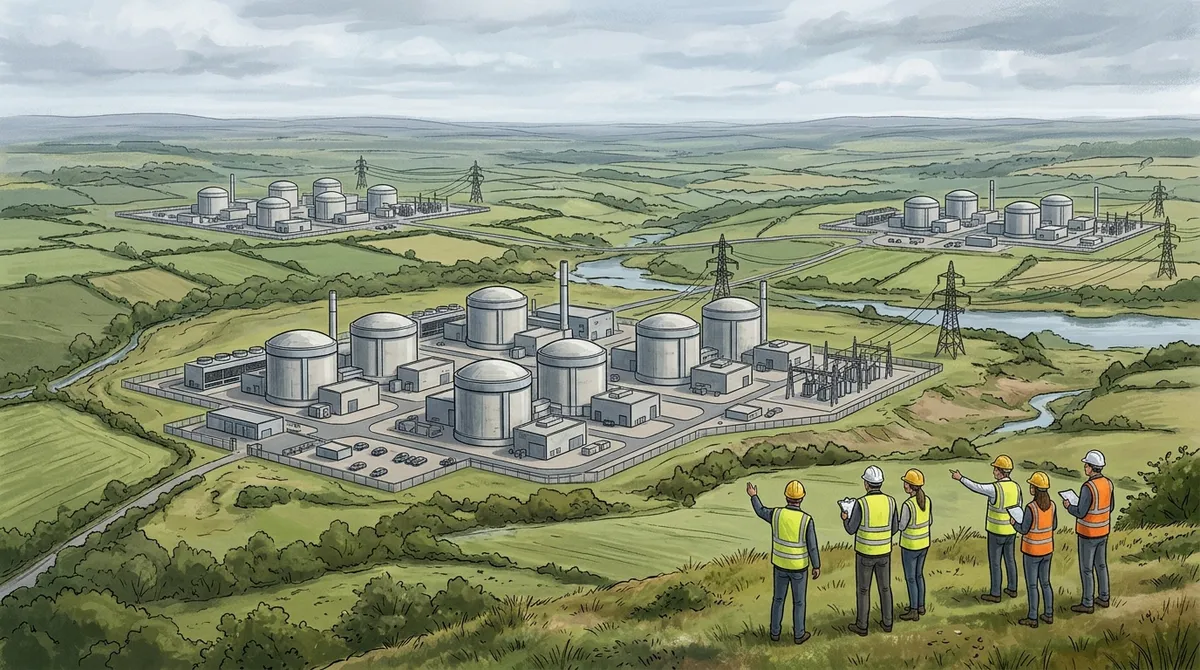
What happened: More than 200 British companies attended a November 24 briefing in Birmingham where SGE SMR UK, GE Vernova Hitachi Nuclear Energy and Samsung C&T laid out a proposed £35 billion programme of 14 BWRX-300 small reactors across three unnamed UK sites — about 4.2 GW, roughly 11% of current UK electricity demand, or enough for eight million homes — targeting first power in 2034 and 60–80 years of operation.
What's genuinely new: The supplier day is the proposed fleet's first industry-wide rollout. Chief executive Rafał Kasprów pitched a standardised, repeatable fleet rather than one-off reactors, and Samsung C&T senior vice president Jung Kim cited the company's Barakah construction experience in the UAE. The proposal, put forward in July, is under preliminary regulatory assessment in the Government's Advanced Nuclear Framework and has no approval to proceed with construction; a UK office with local staff is expected by the end of 2026 and a supply and delivery strategy in 2027.
Watch: the regulatory assessment outcome, named sites, the 2027 supply and delivery strategy, and whether the operator joint venture letter of intent signed October 22 with Ontario Power Generation's Origin Nuclear is executed.
More context: The first BWRX-300 anywhere is already in trouble: Ontario Power Generation said on 10 November that the unit under construction at its Darlington site will neither meet its approved budget nor enter service by October 2030 as promised, The Globe and Mail reports. Ontario Power Generation attributed the Darlington overruns and delay to GE Vernova Hitachi's ongoing engineering work, with a new schedule and budget due by mid-2027, The Globe and Mail reports.
Tianwan unit 8 fuelled and hot-tested on the way to world's largest plant
Sources World Nuclear News Interfax published Nov 26, 9:33 AM ET
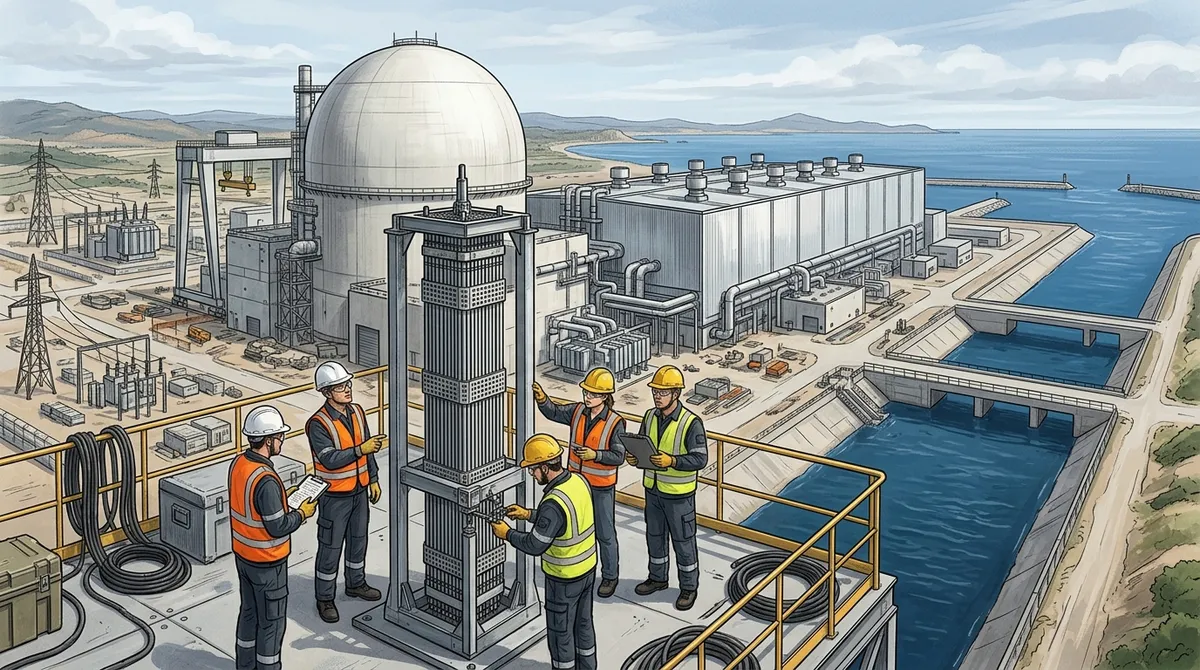
What happened: The initial fuel load has been delivered and hot tests successfully completed for Tianwan unit 8 in Jiangsu Province, China — a VVER-1200 whose fuel, including a reserve batch, came from Rosatom's TVEL. When all eight units at the coastal site run, Tianwan's roughly 9.1 GW of installed capacity will make it the world's largest nuclear power plant, ahead of Kashiwazaki-Kariwa's 8.2 GW, and rank in the top ten of all power plants.
What's genuinely new: Unit 8 — construction start February 2022, commercial operation targeted 2027 — now has fuel on site and passed the tests verifying its nuclear and conventional systems meet design requirements, its operator China National Nuclear Power says. TVEL vice president Anton Ivanov says China took a record volume of nuclear fuel from the company over the past year, with three complete VVER-1200 core loads delivered since late 2025, and sister unit 7 is expected to enter commercial operation "within the year."
Watch: unit 7's startup, and unit 8's fuel loading and grid connection.
More context: The actual commissioning of Tianwan unit 8 is set for the first quarter of 2027, with the unit currently being prepared for fuel loading, Interfax reports.
Rosatom loads twice-recycled fuel into BN-800 fast reactor
Sources World Nuclear News published Nov 26, 6:30 AM ET
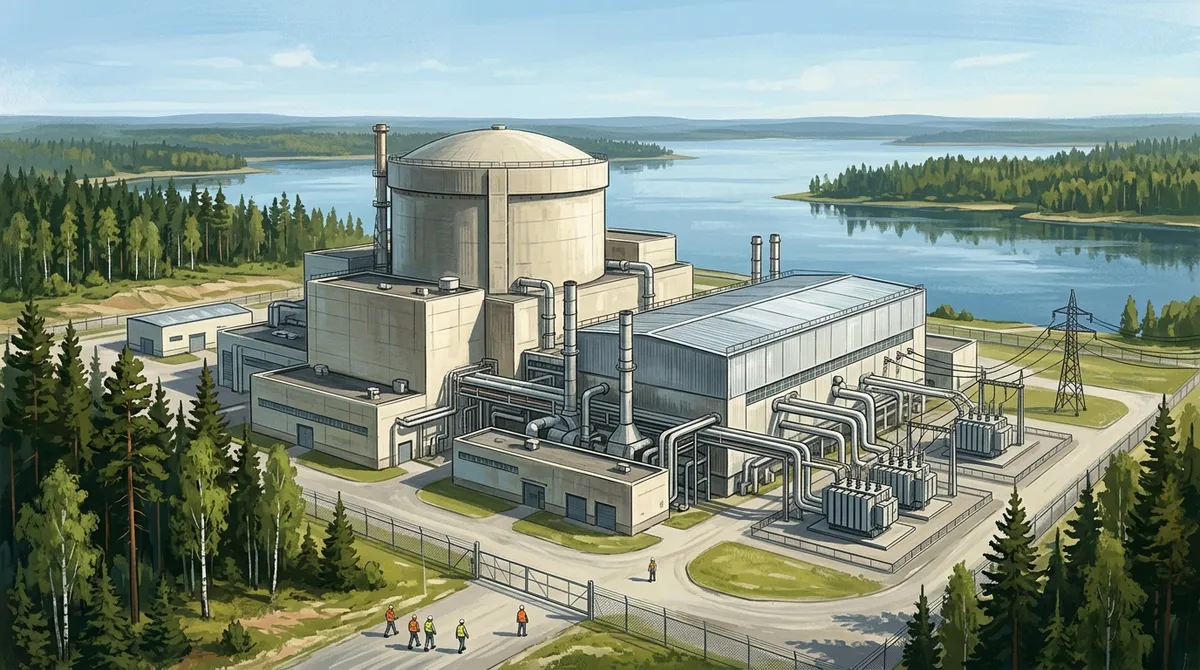
What happened: Recycled uranium-plutonium MOX fuel manufactured with plutonium extracted from a MOX fuel assembly that had already completed a full reactor cycle has been loaded into the Beloyarsk plant's 820-MW BN-800 fast neutron reactor, Rosatom says — which the state nuclear company calls the first time a commercial high-capacity reactor has proved the viability of a closed fuel cycle.
What's genuinely new: Plutonium from used MOX fuel was recovered and made into new fuel for the same unit, closing a multi-cycle loop Rosatom says removes the uranium-resource ceiling. Director general Alexey Likhachev called it a move "from theory to practice" toward a "renewable" nuclear energy model and a step toward Gen IV readiness, including the serial BN-1200M unit due online in the coming decade; an optimised plutonium-recovery process cut processing steps while preserving fuel quality.
Watch: how the experimental assembly performs in BN-800, and progress on BN-1200M.
Lance uranium site shut down after cybersecurity incident
Sources World Nuclear News published Nov 26, 7:02 AM ET
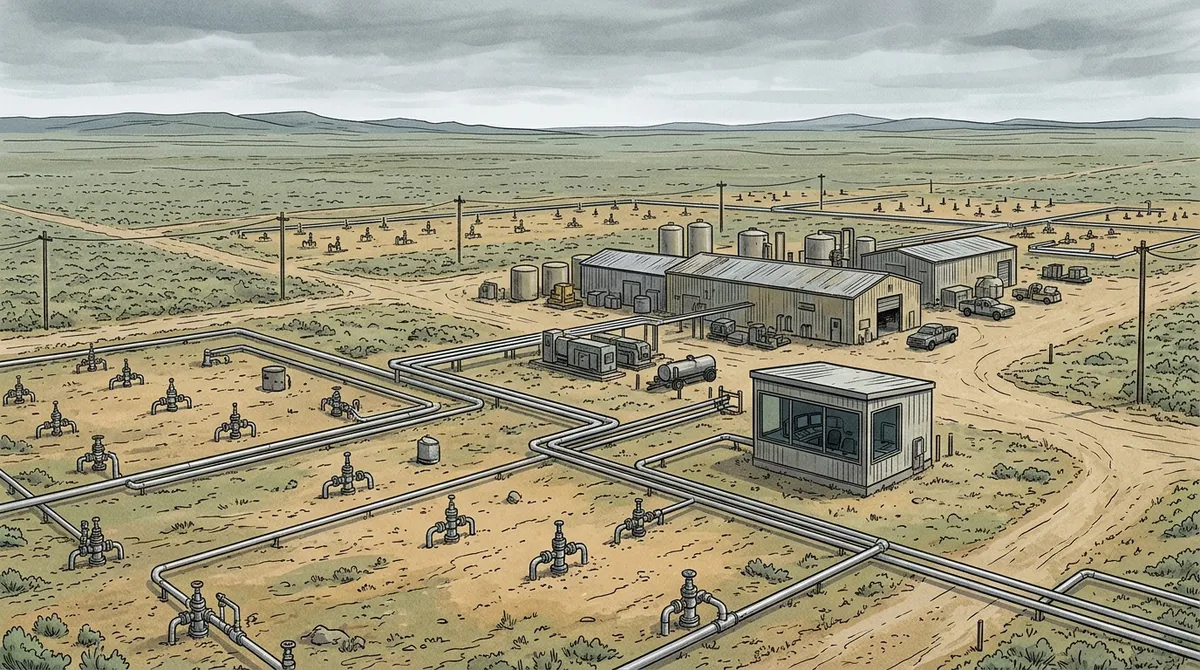
What happened: Peninsula Energy has suspended operations at its Lance uranium project in Wyoming after a cybersecurity incident affected the plant and wellfield operating and control systems — identified by its Strata Energy subsidiary the morning of November 20 and disclosed in a November 25 ASX announcement. Operations stay suspended until a recovery and verification programme is completed and the company is satisfied it can resume safely.
What's genuinely new: Investigations so far indicate the incident is confined to plant and wellfield operating and control systems; corporate, payroll and financial systems in the US and Australia are unaffected. US authorities were notified and external cybersecurity, forensic and legal advisers engaged, with potential data impacts also under investigation. Lance had returned to low-pH in-situ recovery production in 2024 after a five-year hiatus.
Watch: a promised further update on resumption timing, and whether 2027 production guidance is materially affected.
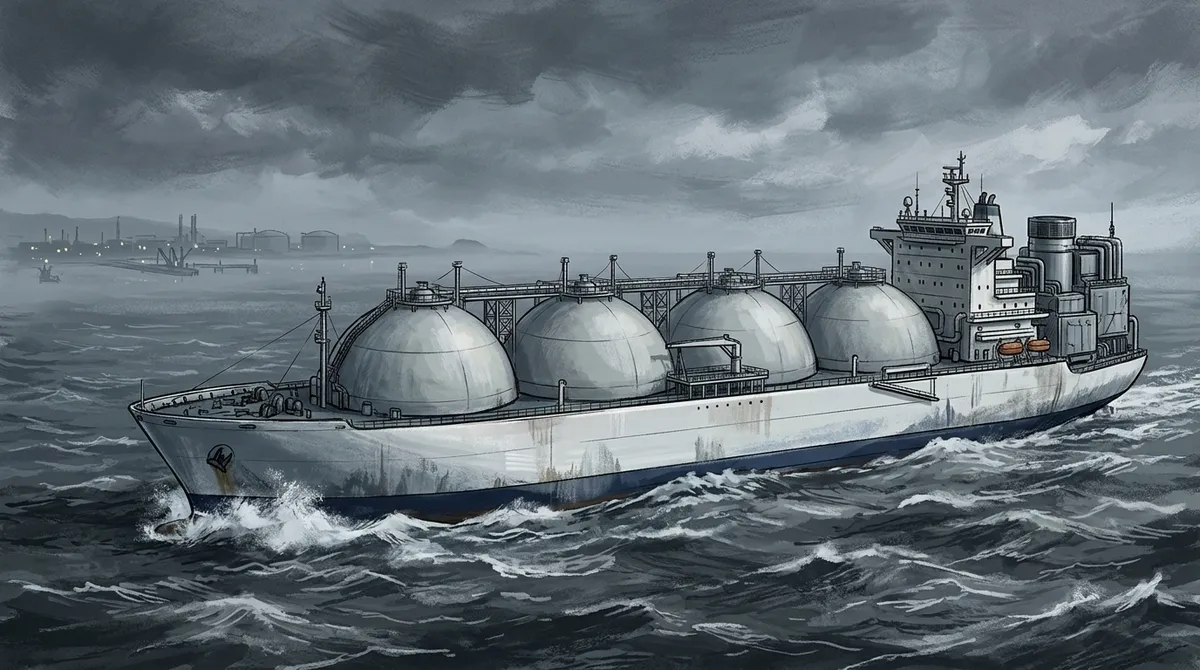
DNV and NTNU join Tesser Atomics' nuclear LNG-carrier project
Sources World Nuclear News published Nov 26, 7:51 AM ET
What happened: Tesser Atomics has signed a four-way memorandum of understanding — dated November 20, at classification society DNV's Høvik, Norway headquarters — with Samsung Heavy Industries, DNV and the Norwegian University of Science and Technology (NTNU) for Demonstration Project 1, a nuclear-powered liquefied natural gas carrier designed for a route between US and European LNG terminals. Samsung leads vessel concept development and marine integration, Tesser leads reactor technology and licensing, DNV contributes maritime safety assessment and a classification roadmap, and NTNU coordinates research, funding proposals and the consortium.
What's genuinely new: The four-way agreement adds the classification and academic legs to the exclusive two-way Samsung Heavy Industries–Tesser collaboration signed November 19, defining responsibilities across shipbuilding, licensing, safety assessment and research for a vessel built around Tesser's Triton — a compact fluoride-salt-cooled high-temperature reactor pairing TRISO fuel with low-pressure molten salt coolant and online refuelling.
Watch: the roadmap for the demonstration vessel's safety assessment and approval, and whether the concept advances toward design and construction.
Nuclear industry asks regulators to rethink very low radiation doses
Sources World Nuclear News published Nov 26, 12:30 PM ET
What happened: The World Nuclear Association has issued a position statement urging that regulation of very low radiation doses be modified to end a "double standard" in which doses from food, the environment and airline flights go uncontrolled while human-made planned exposure is regulated at any dose, however small. It states clear epidemiological evidence of health risk exists only above about 100 millisieverts, and at sub-millisievert doses there is no clear evidence of risk at all.
What's genuinely new: The statement, backed by a technical report titled Decision-Making at Very Low Doses, sets out five recommendations for the International Commission on Radiological Protection, governments and regulators: a simpler, graded, risk-informed approach; greater weight on proportionality in ICRP's next General Recommendations; optimisation rather than minimisation; acknowledging uncertainty at very low doses rather than relying solely on the linear no-threshold model; and setting a practical cut-off below which no further regulatory effort is needed — arguing over-conservatism forces recyclable material into costly waste disposal and fuels public fear.
Watch: ICRP and international organisations' responses, and whether regulators adopt a cut-off.
Brief
-
At a science-and-technology forum in Seoul on November 26 organized by the Korean Academy of Science and Technology, the Korean Science Journalists Association and the Korea Science and Technology Media Center, nuclear engineers argued that small modular reactors are not yet economically viable: Financial News reports Seoul National University professor Choi Seong-yeol put SMR construction costs at about three to four times those of large nuclear plants and called for standardized designs plus automated, near-semi-autonomous instrumentation to run multiple modules with a minimal workforce, while KAIST professor Lee Jeong-ik contrasted SMRs as equipment businesses installed in about two years against seven-year large-plant construction projects. Both stressed securing firm demand — Choi pointed to the US, where the Trump administration has military bases use SMRs — and warned that countries writing SMR regulations first can lead the market, citing joint international rule development spanning the nuclear, maritime and shipbuilding sectors. Lee also noted Korean companies including Samsung C&T, SK, Hyundai, Doosan and Korea Hydro & Nuclear Power are taking part in the US SMR build-out.
-
Who pays for the Darlington small modular reactor's overruns? The Globe and Mail reports Ontario Power Generation is spending roughly C$100 million (about US$70 million) a month on the Clarington, Ontario project with up to 1,500 workers on site on a typical day, while key milestones have slipped by months — tunnel-boring-machine assembly due February 2026 was finished only in the July–September quarter, and tunnel boring for the marine intake, due October 31, 2026, had not begun as of November 10. OPG's November 10 report removed the project from its rate application for 2027–2031, suggesting first power no earlier than 2031, at least 14 months late, though the filing elsewhere contemplates earlier service for Unit 1. The overruns are blamed on GE Vernova Hitachi's ongoing engineering — construction began before the detailed design was complete, the pattern behind France's Flamanville-3 and the US Vogtle and V.C. Summer AP1000 projects that ended in Westinghouse's bankruptcy. Under the project's delivery model OPG, GE Vernova Hitachi, AtkinsRéalis and Aecon share overrun risk, and AtkinsRéalis says its risk is capped.
-
Japan's Ministry of Economy, Trade and Industry has formally confirmed a subsidy award of up to JPY 23.3 billion (about US$146 million) to a consortium led by Starlight Engine, a group company of Kyoto Fusioneering, for a high-temperature superconducting tokamak power generation demonstration project running fiscal years 2026–2028 — design and component development across ten engineering areas to mature the technology for an actual power-generation demonstration at the FAST plant in the 2030s. The formal selection follows a conditional selection announced August 31: Energies Media
-
Munich fusion startup Starforge raised €6.6 million (about US$7.5 million) in a pre-seed round led by AENU and First Momentum Ventures to build 200–300-megawatt spherical-tokamak reactors on factory production lines, selling them to utilities, governments and private owners rather than generating power itself. It expects each doubling of production to cut costs 15%, and targets finishing Unit One's conceptual design and first European customer commitments within two years, with commercial operations in the mid-2030s: The Next Web.
-
Munich stellarator developer Proxima Fusion's first radial plate has been manufactured by three German companies, with Energynews.pro naming Rolf Kind, Pro Beam and Mühlbauer Maschinenbau as the firms behind the component.