Thailand builds a national nuclear workforce plan around SMRs
From the Energy digest for Nov 9, 2026
Sources Office of Atoms for Peace The Nation
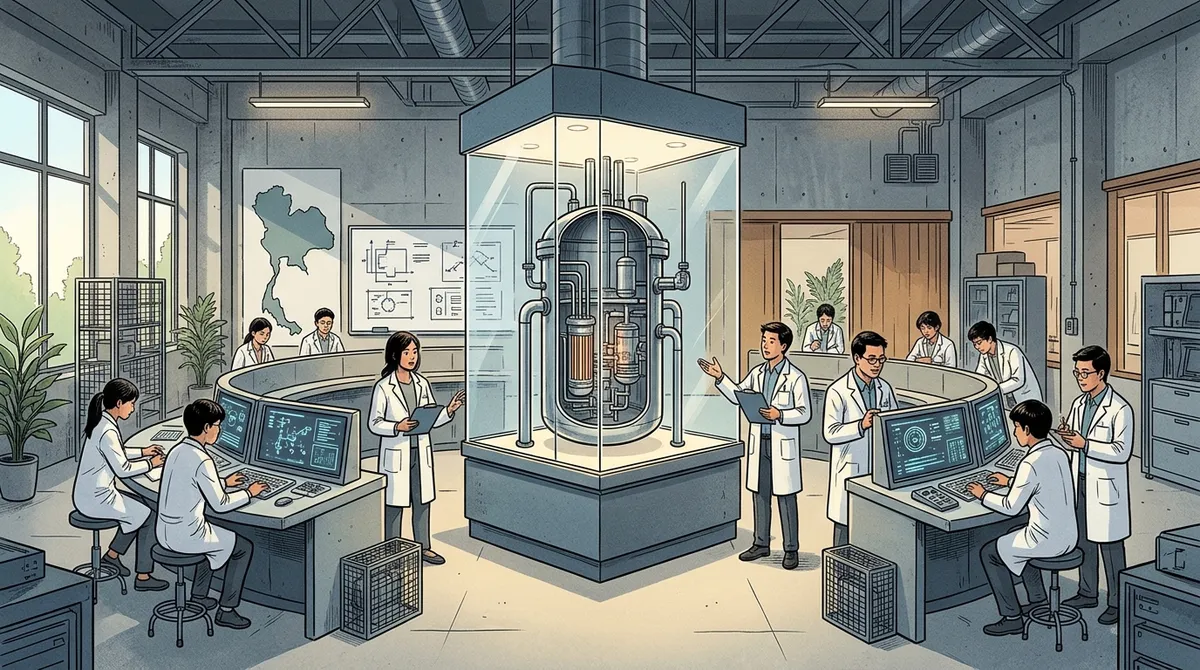
What happened: At a 5 November 2026 meeting at the Office of the Atoms for Peace (OAP), Thailand's Ministry of Higher Education, Science, Research and Innovation (MHESI), the Ministry of Education and 14 national organisations committed to establishing a principal national mechanism for nuclear workforce development — preparing personnel for operating small modular reactor (SMR) power plants, regulating nuclear activities and applying advanced nuclear technologies, in support of the country's net-zero and energy-security goals.
What's genuinely new: The framework now has numbers and a shape. The meeting presented the Draft National Human Resource Development Framework for 2028–2032, with three strategic proposals: a national SMR workforce plan, a lifelong-learning curricula framework, and a proposal for supporting ecosystems and mechanisms. The programme targets training at least 1,000 specialist personnel, including no fewer than 345 at foundational level within the first three years, and folds the internationally recognised "3S" principles (safety, security, safeguards) into education at every level. The effort builds on SMR regulation policy the Nuclear Energy for Peace Commission endorsed on 8 September 2026 under Deputy Prime Minister and MHESI Minister Yodchanan Wongsawat. Partners named in the plan include EGAT, the Provincial Electricity Authority, the Energy Regulatory Commission, the Federation of Thai Industries and universities including KMITL, Kasetsart, Chulalongkorn, Suranaree and KMUTT.
Watch: A subcommittee to prepare the final plan and an action plan for fiscal year 2028; those documents then go to the NEPC, the higher-education policy council and the Cabinet for approval, guiding allocation of the science, research and innovation budget.