Energy digest — Nov 9, 2026
Top line: The NRC has approved a construction permit for X-energy and Dow's four-reactor Xe-100 plant at Seadrift, Texas — the first high-temperature gas-cooled reactor approval in nearly 60 years. The US midterm results reshape nuclear's political ground, with data-centre ballot measures rejected in 46 of 47 votes. Thailand's ministries agreed a 2028–2032 plan to train 1,000 nuclear specialists.
- Canada's budget puts new money behind its nuclear strategy
- Midterm results reshape the political ground under nuclear energy
- NRC grants construction permit for Dow's Long Mott Xe-100 plant
- Cernavodă reactors return after three-month drought shutdown
- Thailand builds a national nuclear workforce plan around SMRs
Canada's budget puts new money behind its nuclear strategy
Sources World Nuclear News published Nov 9, 7:34 AM ET
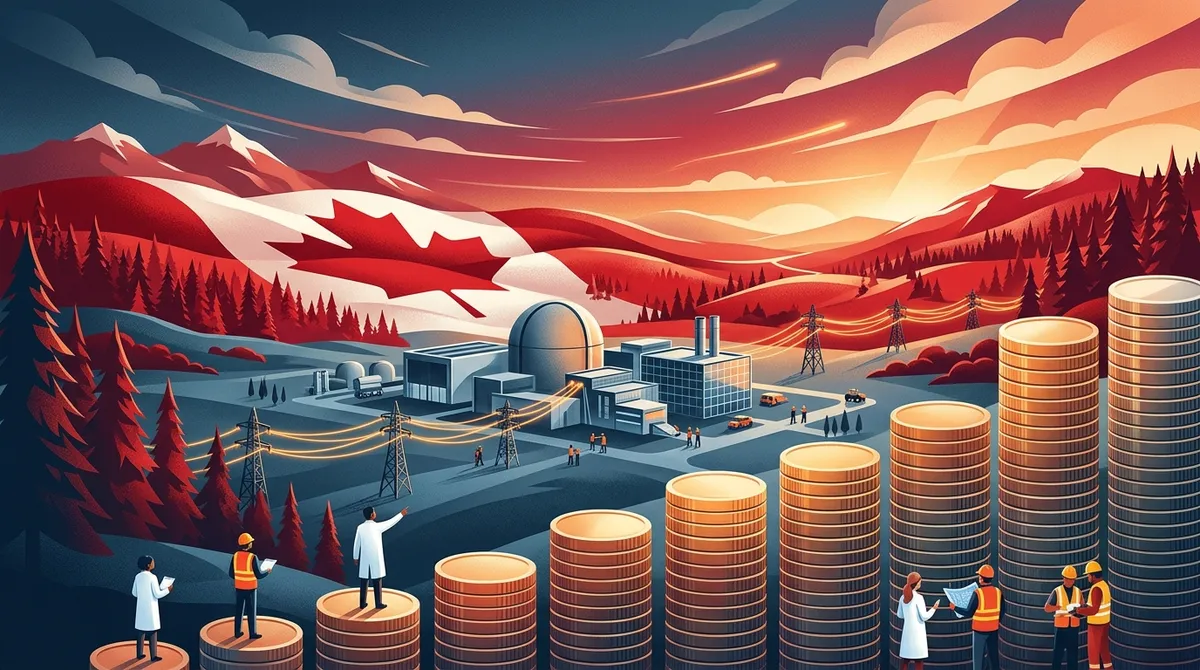
What happened: Budget 2026, "Masters of our destiny," published on 5 November, proposes CAD518.5 million over five years starting in 2027–28, plus CAD18.1 million ongoing — roughly USD367 million and USD13 million respectively at the budget's own exchange rate — to advance Canada's nuclear research, supply chains, workforce and regulatory capacity, implementing the Nuclear Energy Strategy the government presented in June.
What's genuinely new: The commitment is broken into named allocations: CAD261 million to Natural Resources Canada for supply chains, R&D and research-reactor capacity; CAD127 million to Atomic Energy of Canada Limited for research infrastructure and workforce; CAD131.1 million to the Canadian Nuclear Safety Commission to prepare for new projects and become the country's sole federal nuclear regulator; CAD14.4 million to Global Affairs Canada for export promotion; and CAD3.3 million to Health Canada. Those itemised allocations sum to a gross CAD536.8 million — the budget's CAD518.5-million five-year total, net of the CAD18.3 million of the CNSC's allocation that would be cost-recovered. The budget also counts more than CAD50 billion (USD35.4 billion) toward a National Electricity Strategy aiming to double grid capacity by 2050, and lists milestones including up to CAD2 billion from the Canada Growth Fund for the Darlington new nuclear project, up to CAD3 billion in export financing for two CANDU reactors in Romania, Cameco's CAD2.6 billion uranium deal with India, and Ontario and Saskatchewan signalling the potential for more than 17 GW of new nuclear by 2050.
Watch: Whether the appropriations clear Parliament, whether the CNSC's sole-regulator funding speeds new-project licensing, and whether the Defence Department's assessment of a "Canadian-controlled" heat-and-power microreactor turns into a procurement.
Midterm results reshape the political ground under nuclear energy

Sources American Nuclear Society published Nov 9, 4:10 PM ET
What happened: In the wake of the November 3 midterm elections and Democratic wins across several levels of government, the nuclear industry faces a changed landscape. Voters rejected or were close to rejecting data centres in 46 of 47 tracked ballot measures, and data-centre sentiment shaped races: Texas governor-elect Gina Hinojosa has called for a moratorium on data-centre approvals until protections are law, Georgia governor-elect Keisha Lance Bottoms wants the boom slowed, and Iowa Sen.-elect Josh Turek opposed taxpayer funds to reopen the Duane Arnold nuclear plant when most of its output would go to Google.
What's genuinely new: The lame-duck Congress becomes the immediate arena. The bipartisan American Affordability and Jobs Act — which would overhaul federal permitting for energy infrastructure and require data centres to pay their share of transmission costs — drew a substitute amendment with technical edits on November 7 and was on the Senate calendar for November 9, with news outlets reporting a procedural vote scheduled; sponsor Sen. Martin Heinrich says he will not wait, though some House Democrats and environmental groups may prefer pushing more ambitious legislation in 2027. Six nuclear-related bills are on the House floor calendar: the REFUEL Act, the American Enrichment Deployment Act, the Efficient Nuclear Licensing Hearings Act, the Nuclear Advisory Committee Reform Act, the NRC Staff Pay Alignment Act and the DOE Nuclear Transparency Act. Among the winners, Ohio Gov.-elect Amy Acton puts nuclear in an all-of-the-above energy vision, returning Sen. Sherrod Brown championed nuclear in his prior term, and Iowa Gov.-elect Rob Sand supports the Duane Arnold restart provided data centres "pay their full freight."
Watch: The outcome of the American Affordability and Jobs Act's procedural vote and possible passage in the lame-duck session, floor action on the six House nuclear bills, and how the new governors and senators act on data centres and projects such as the Duane Arnold restart.
NRC grants construction permit for Dow's Long Mott Xe-100 plant
Sources GlobeNewswire via Markets Insider Barron's Barron's, link 2 Seeking Alpha
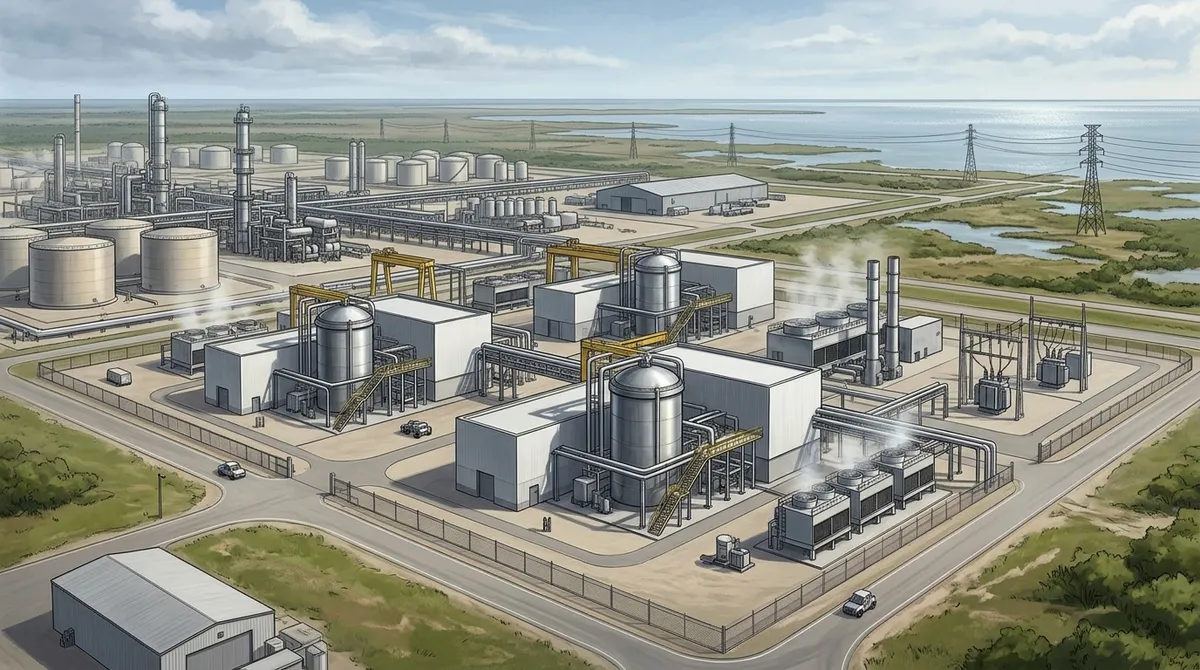
What happened: The Nuclear Regulatory Commission has approved the construction permit application for four Xe-100 small modular reactors at Long Mott Energy, Dow's subsidiary, at Dow's UCC Seadrift Operations site in Texas. The approval makes Long Mott Generating Station, per the companies, the first advanced nuclear facility approved for an industrial site in the United States, the first construction-permit approval of a high-temperature gas-cooled reactor in nearly 60 years, and the first-ever pebble-bed HTGR approval. NRC Chairman Ho K. Nieh said the review was delivered on an 18-month schedule. The U.S. Nuclear Regulatory Commission has approved a construction permit letting X-Energy build four small nuclear reactors in Texas that are expected to supply power to an industrial facility owned by Dow (Barron's). X-Energy announced the approval late on Monday, its stock rose 1.2% in after-hours trading, and the reactors could start running as soon as the early 2030s (Barron's).
What's genuinely new: The 5 November safety review has grown into a full approved permit covering both safety and environmental review (Barron's, Seeking Alpha). Approval lets X-energy and Dow finalize the Xe-100 design, mature the long-lead supply chain, and prepare an operating licence application. The four 80-MWe reactors would supply electricity and high-temperature steam to Dow's site, replacing end-of-life energy assets, with a reduced emergency planning zone of about 400 metres versus 10 miles for conventional light-water reactors. Dow is expected to weigh a preliminary investment decision in 2027; full-scale construction would follow a final investment decision, with first delivery in the early 2030s under the Department of Energy's Advanced Reactor Demonstration Program.
Watch: Dow's 2027 preliminary investment decision, the operating licence application to the NRC, and whether the Long Mott review speeds later Xe-100 licensing, including Energy Northwest's Cascade project in Washington.
Cernavodă reactors return after three-month drought shutdown
Sources World Nuclear News published Nov 9, 9:13 AM ET
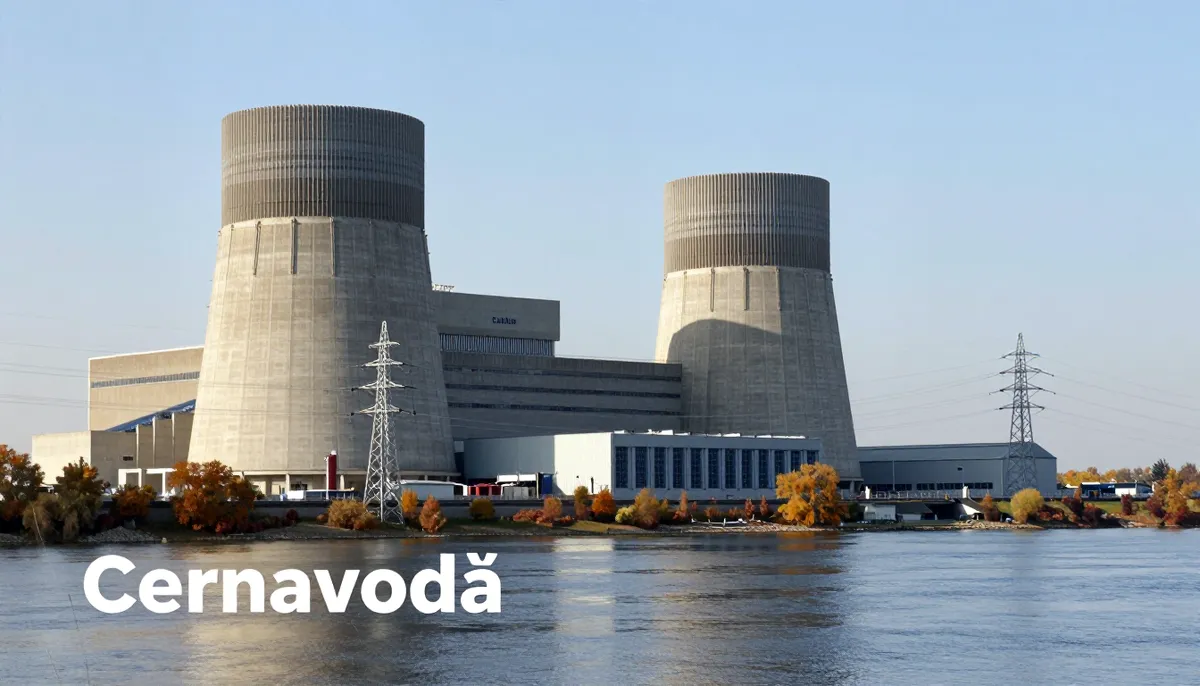
What happened: Romania's only nuclear power plant is coming back online after a roughly three-month shutdown: unit 1 reconnected to the grid on 6 November, and unit 2 was in start-up work and expected to follow shortly. The units were taken offline at the end of July and in early August as a precaution when drought in central Europe dropped the Danube too low to supply enough cooling water.
What's genuinely new: The water levels were historically low — beneath what designers had envisaged happening in 100 years — and the drought also hit nuclear plants in Hungary and Bulgaria. Cernavodă's two operable 650 MWe CANDUs supply about 20% of Romania's electricity, and Prime Minister Luca Niculescu, visiting the plant after the reconnection, put the cost of this summer's outage at EUR200 million (USD223 million). He made the Bala 2 project — bringing more water to the plant, sized to serve units 3 and 4 as well — a national priority alongside permanent dredging, and reaffirmed support for finishing units 3 and 4, planned for commercial operation in 2030 and 2031. Nuclearelectrica CEO Mihai Gioară said the company will adjust its strategy to reduce the risk of repeat outages.
Watch: Progress on Bala 2 and dredging, and whether the outage prompts wider Danube-basin cooling-water planning among operators in Hungary and Bulgaria.
Thailand builds a national nuclear workforce plan around SMRs
Sources Office of Atoms for Peace The Nation
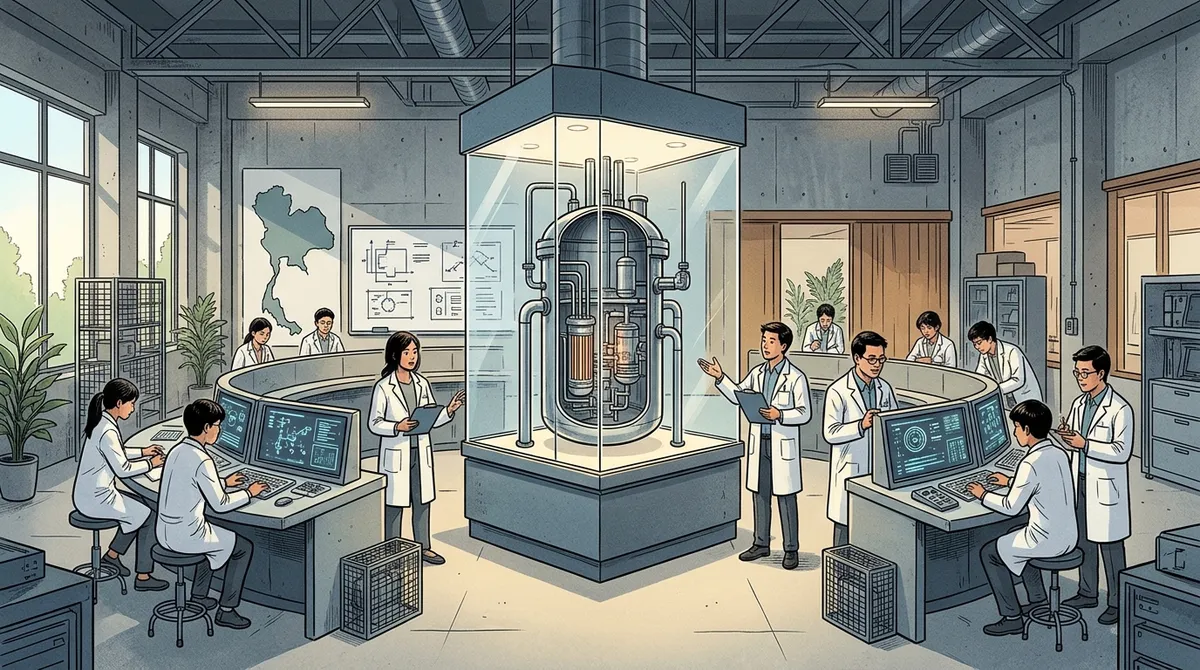
What happened: At a 5 November 2026 meeting at the Office of the Atoms for Peace (OAP), Thailand's Ministry of Higher Education, Science, Research and Innovation (MHESI), the Ministry of Education and 14 national organisations committed to establishing a principal national mechanism for nuclear workforce development — preparing personnel for operating small modular reactor (SMR) power plants, regulating nuclear activities and applying advanced nuclear technologies, in support of the country's net-zero and energy-security goals.
What's genuinely new: The framework now has numbers and a shape. The meeting presented the Draft National Human Resource Development Framework for 2028–2032, with three strategic proposals: a national SMR workforce plan, a lifelong-learning curricula framework, and a proposal for supporting ecosystems and mechanisms. The programme targets training at least 1,000 specialist personnel, including no fewer than 345 at foundational level within the first three years, and folds the internationally recognised "3S" principles (safety, security, safeguards) into education at every level. The effort builds on SMR regulation policy the Nuclear Energy for Peace Commission endorsed on 8 September 2026 under Deputy Prime Minister and MHESI Minister Yodchanan Wongsawat. Partners named in the plan include EGAT, the Provincial Electricity Authority, the Energy Regulatory Commission, the Federation of Thai Industries and universities including KMITL, Kasetsart, Chulalongkorn, Suranaree and KMUTT.
Watch: A subcommittee to prepare the final plan and an action plan for fiscal year 2028; those documents then go to the NEPC, the higher-education policy council and the Cabinet for approval, guiding allocation of the science, research and innovation budget.
Brief
- X-energy's shares have fallen about 32% from 6 October to 6 November, closing at $10.43, in a wider pullback across advanced-reactor developers (Oklo about −39%, NuScale −37%) after the rally that followed the 6 October Google–Constellation nuclear agreement faded; Morgan Stanley cut its X-energy price target to $34 from $41 on 14 October, and a $97.3 million quarterly operating cash outflow weighs on the bull case. The article also confirms the 19 October joint development agreement with AEP and cites the NRC completing its safety review of the proposed Long Mott plant in Texas on 30 October, with the construction permit since approved, alongside the 4 November steam-generator order and the 5 November Fluor engineering selection (TIKR) (single source)
- Fusion company American Fusion says an independent reviewer is evaluating its Texatron technology on site through 10 November 2026, with a final report expected before the end of November, and that it expects to complete the purchase of its planned Ranch Facility in North Texas before 26 November (energynews.pro)
- Copenhagen Atomics and Urenco have signed a memorandum of understanding to develop a deconversion plant producing uranium tetrafluoride (UF4) — the feedstock molten salt reactors require — at a Copenhagen Atomics facility, drawing on Urenco's uranium hexafluoride (UF6) expertise; deconverted UF4 would fuel Copenhagen Atomics' own reactors, other developers' reactors and research facilities. No milestone or completion dates are given, and the company aims to deploy its reactors commercially in the early 2030s; it also bought low-enriched uranium from Urenco and signed a November 2024 agreement with DeepGeo to explore reprocessing used fuel for MSRs (American Nuclear Society)
- Idaho National Laboratory's National Reactor Innovation Center and Purdue University's Applied Research Institute, joined by EPRI and the Nuclear Energy Institute, will demonstrate construction of a scaled steel-plate composite containment vessel and a reactor building at Purdue under the lab's Advanced Construction Technology Initiative, which targets cost overruns and schedule slippage in advanced-reactor building; no costs or schedule are given (American Nuclear Society)
- Canada's space agency has issued a request for information on Canadian capabilities for lunar microreactors, describing a planning envelope of 20–80 kWe of net continuous output, an operational lifetime of at least 10 years and largely autonomous operation, spanning 16 areas of the supply chain from fuel to launch integration; a feasibility-to-demonstration pathway is set out and the agency does not assume a single Canadian entity would deliver an end-to-end system (American Nuclear Society)