Energy digest — Nov 10, 2026
Top line: The Nuclear Regulatory Commission issued the first construction permit for an advanced reactor at a US industrial site — four X-energy Xe-100 reactors at Dow's Texas chemical plant — drawing immediate safety criticism from the Union of Concerned Scientists over the containment-free design. Uzbekistan's president ordered the country's uranium output doubled by 2030.
- NRC issues construction permit for four X-energy reactors at Dow's Texas chemical plant
- First concrete poured for the fourth Hualong One at China's San'ao plant
- DOE offers more than 3,000 acres of Hanford for industrial development
- Uzbekistan plans to double uranium production by 2030
- Largest land remediation project at UK's Harwell nuclear site completed
NRC issues construction permit for four X-energy reactors at Dow's Texas chemical plant
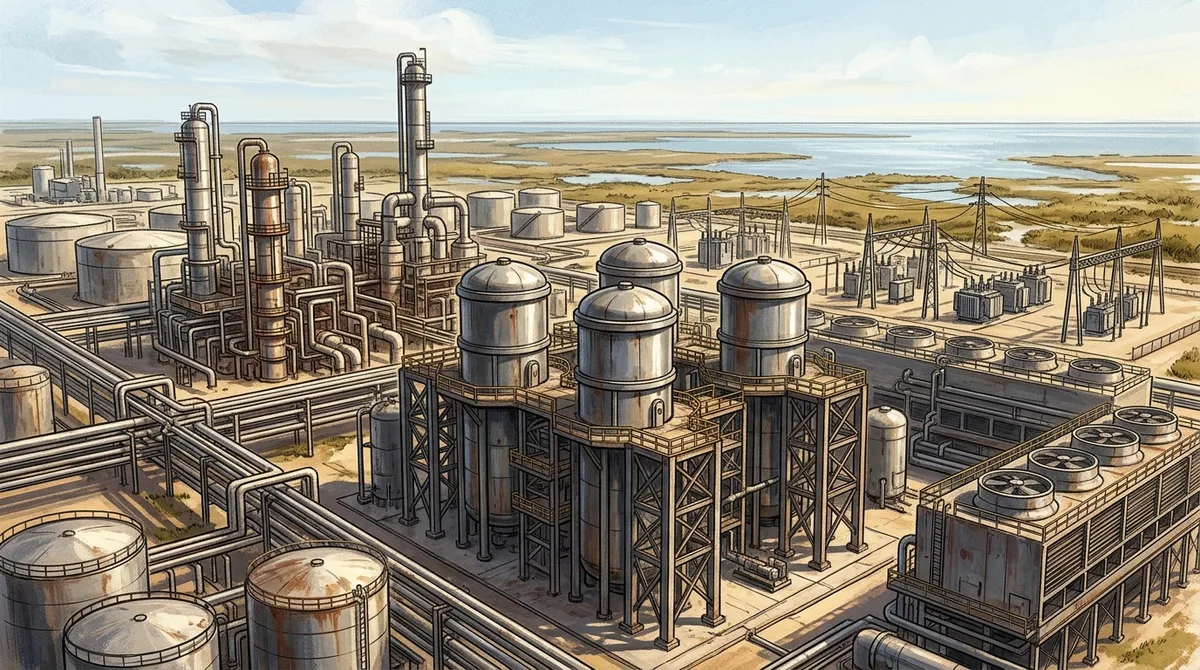
Sources XenoSpectrum Oil Price US World Nuclear News Union of Concerned Scientists TechCrunch Canary Media X-energy Dow NRC published Nov 10, 3:30 PM ET
What happened: X-energy and Dow announced that the Nuclear Regulatory Commission has approved a construction permit for the proposed Long Mott Generating Station — four Xe-100 high-temperature gas-cooled reactors planned by Long Mott Energy, a wholly owned Dow subsidiary, at Dow's UCC Seadrift Operations chemical manufacturing site in Texas. Each Xe-100 unit is designed for 80 MWe of electrical output and 200 MWt of thermal output — 320 MWe and 800 MWt across the four units — and the reactors would supply both power and high-temperature industrial steam to the chemical complex, replacing its aging power and steam equipment over an anticipated 60-year operating life. The project runs under the Department of Energy's Advanced Reactor Demonstration Program, and the companies say it is the first construction permit issued for an advanced reactor at a US industrial site, the first for a high-temperature gas-cooled reactor in about 60 years, and the first approval ever for a pebble-bed reactor of this type. The permit does not represent a final decision by Dow to build, with engineering and design finalization and Dow board review still ahead; the company says construction could begin later this decade with startup early next decade. The NRC records the project as four modules totalling 800 MWth/320 MWe on about 1,537 acres adjacent to the Seadrift plant in Calhoun County, Texas, fed by graphite pebbles containing TRISO particle fuel.
What's genuinely new: Independent write-ups put the permit's fine print on the table: the permit authorizes construction only — it does not let Dow commit the money, and it does not authorize operation, which will require a separate NRC operating license before fuel loading and startup. The sequencing now reads plainly: a preliminary investment decision expected to be considered by Dow in 2027, a final investment decision still undecided, then construction and licensing. The permit followed an 18-month review after Long Mott Energy's March 31, 2025 application — docketed May 12, review schedule set June 10 — plus pre-application work since 2018 for X-energy (since 2023 for Dow), including more than a dozen approved technical reports that could speed later reviews of the same design. World Nuclear News adds the review's paperwork: the NRC issued its Final Safety Evaluation Report on October 30, and the permit also marks the agency's first approval of a multimodule advanced reactor facility, its first of a pebble-bed core, its first of a design with online refuelling, and its first high-temperature gas-cooled review under the risk-informed, technology-inclusive Licensing Modernisation Project framework. Chairman Ho K. Nieh said the agency "delivered on the 18-month schedule, proving we can do rigorous safety reviews on predictable timelines." X-energy's TRISO-coated particle fuel is expected to support a 400-metre emergency planning zone, against 16 kilometres for conventional light-water reactors, letting generation sit closer to the point of need. Oilprice.com adds that Dow says construction could begin later this decade if its corporate approvals land, with first energy delivery targeted for the early 2030s, and notes X-energy's wider pipeline of projects with Amazon and Centrica. Canary Media adds the permit's own dates and the fuel-supply dependency: the permit itself states that "the earliest date for the completion of the construction of the facility is July 1, 2033" — the concrete floor under the "early 2030s" target — and Dow is not expected to make a final decision on the multibillion-dollar project before 2028. The operating-license application, which the companies are likely to file during construction, could take another 18 months under the NRC's generic licensing schedule. Fuel is a remaining gate: X-energy cites a federal commitment for the high-assay low-enriched uranium it needs and a binding commercial agreement covering at least part of its 11-plus-gigawatt pipeline, but the plan depends on its Tennessee fabrication facility, which the company said in September is on track to open in early 2028. Canary Media also puts the design in its genealogy: the last two US high-temperature gas reactors, 40-MW Peach Bottom (1966–1974) and Fort St. Vrain (1979–1989), both retired early after funding and technical problems, and X-energy's regulatory-affairs vice president Robert Taylor calls the modern Xe-100 an "Edsel-to-a-Ferrari comparison" with those predecessors.
The approval also met its first safety fight: the Union of Concerned Scientists' director of nuclear power safety, Edwin Lyman, called the decision "reckless", saying the NRC accomplished its ahead-of-schedule review only "by pushing consideration of critical safety questions to a later date." His core objection is the design itself: the Xe-100 as approved has no physical containment structure, resting almost entirely on TRISO fuel containing radioactive materials even in severe accident scenarios — something he says has never been demonstrated — while X-energy's test campaign at the Idaho National Laboratory is still gathering fuel-performance data that won't be available for years, and the company has had quality problems during construction of its Tennessee fuel factory. He also cites political pressure from President Trump's Executive Order 14300, which directs the NRC to "establish stringent thresholds" for demanding design changes once construction is underway. TechCrunch carries the criticism and adds market context: no small modular reactor is in operation in the US yet, X-energy does not expect Dow's reactors to run before the early 2030s, and the company's shares — up modestly on the permit news — still trade at less than half their initial offering price after an April IPO that raised $1 billion, with Amazon having led X-energy's $500 million Series C-1 and committed to buying 5 gigawatts of capacity.
Watch: Dow's 2027 preliminary investment decision and, after design and engineering work and board review, the final investment decision — not expected before 2028; the operating-license application X-energy and Dow plan to file, with an 18-month review possible under the NRC's generic schedule; whether the fuel-test campaign or fuel-factory quality questions surface as issues in the operating-license review, and the Tennessee fuel facility's early-2028 opening; delivery against the permit's July 1, 2033 earliest-construction-completion date; licensing pace for later Xe-100 applications such as Energy Northwest's Cascade project.
First concrete poured for the fourth Hualong One at China's San'ao plant
Sources World Nuclear News published Nov 10, 7:37 AM ET
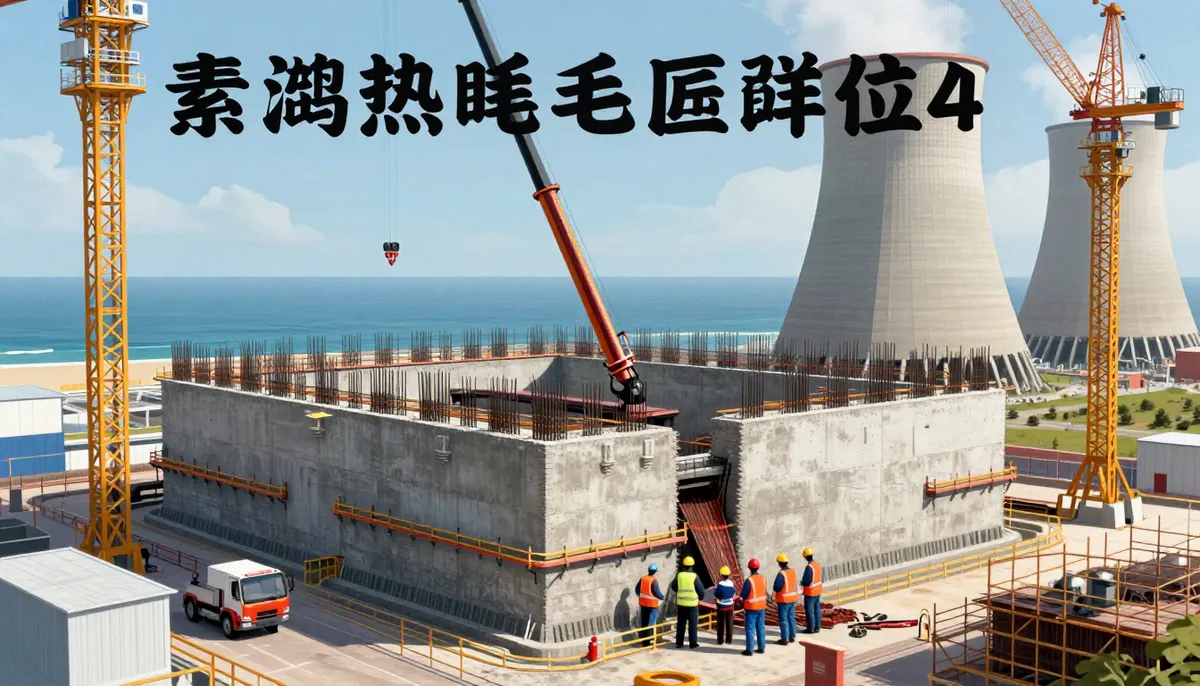
What happened: China General Nuclear announced that first concrete has been poured for the nuclear island of unit 4 of the San'ao nuclear power plant in Zhejiang province, marking the official start of the unit's main construction and the full-scale construction phase of the plant's second phase. San'ao is planned as six Hualong One pressurised water reactors: units 1 and 2 were approved by the State Council in September 2020, units 3 and 4 were among 11 reactors approved in August 2024, and units 5 and 6 are planned as a third phase. Unit 1 reached first criticality in February 2026, connected to the grid in March and entered commercial operation on April 29; unit 2 has completed cold and hot functional tests and finished loading fuel, with electricity supply scheduled for 2027. Unit 3's first concrete was poured on December 19, 2025. On completion, CGN says the plant will supply more than 54 TWh of electricity annually to Zhejiang and the Yangtze River Delta, cutting standard coal use by more than 16 million tonnes and carbon dioxide emissions by almost 50 million tonnes a year. San'ao is also China's first nuclear project with private capital: Geely Technology Group holds a 2 percent stake, with CGN at 46 percent and other state-owned enterprises holding the remainder.
What's genuinely new: The unit-4 first concrete pour itself — the plant's second phase moves into full scale, with units 3 and 4 both now under construction at a plant whose first unit has only just entered commercial operation this year.
Watch: unit 2's start of electricity supply in 2027, construction progress on units 3 and 4 toward fuel loading, and State Council approval of the Phase III units 5 and 6.
DOE offers more than 3,000 acres of Hanford for industrial development
Sources ANS published Nov 10, 10:49 AM ET
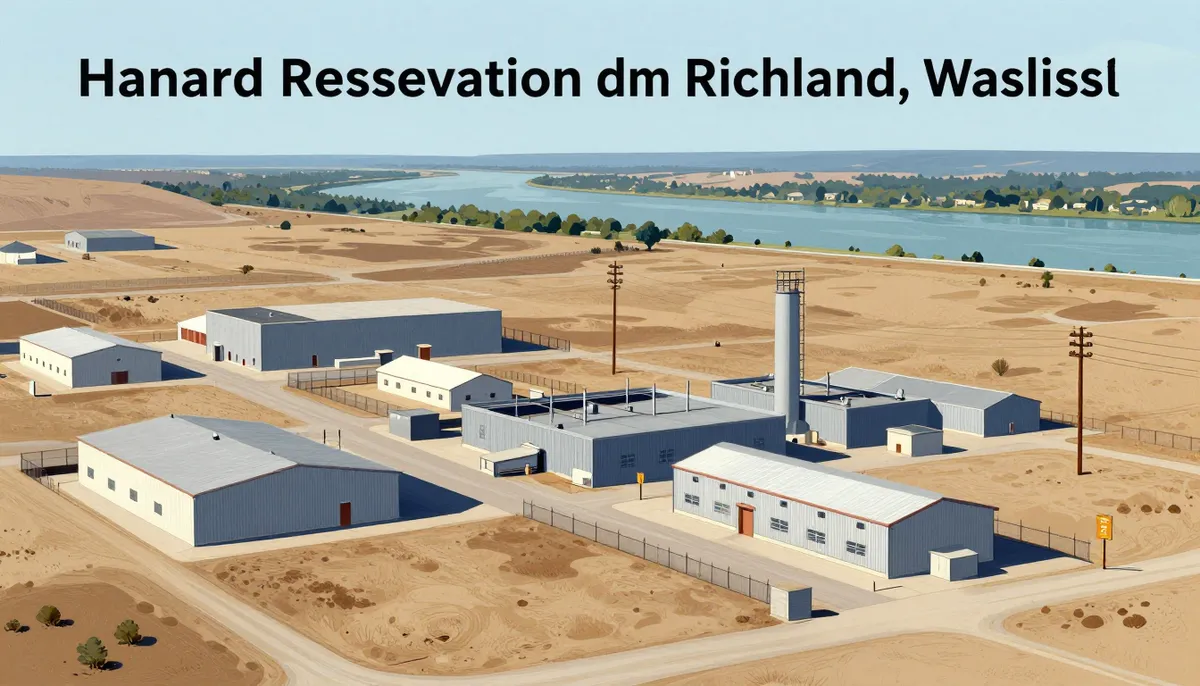
What happened: The Department of Energy's Office of Environmental Management is accepting proposals to lease land for industrial development at the Hanford Reservation near Richland, Washington, under its American Energy Hubs initiative. Potentially more than 3,000 acres are in play: Tract 1, 1,876 acres, is available to start, and the agency has identified 1,249 adjoining acres (Tract 2) it may open later. Both tracts sit near the Columbia River, just south of the plot where Amazon, X-energy and Energy Northwest plan the Cascade Advanced Energy Facility — up to 12 of X-energy's Xe-100 high-temperature gas-cooled reactors. A virtual "industry day" for prospective developers is set for December 9, and proposals are due January 29, 2027. The November 6 request for offer, per ANS, continues a push outlined by assistant secretary Tim Walsh in a March 2026 speech to reuse nuclear cleanup sites for nuclear energy, advanced manufacturing and advanced computing projects; Hanford, where plutonium production ran from 1943 to 1989, was also one of five sites chosen in 2023 under the "Cleanup to Clean Energy" initiative. DOE has planned Hanford's redevelopment for more than three decades, and land under the current offer falls into the industrial category of the site's 1999 land-use plan.
What's genuinely new: The request-for-offer itself — Hanford's first land offering under the American Energy Hubs banner, and one that deliberately sites new industrial tenants beside the future Cascade small-reactor plant.
Watch: proposals received by the January 29, 2027 deadline; whether Tract 2 opens up; named tenants and project types; progress at other American Energy Hub candidates such as East Tennessee Technology Park.
Uzbekistan plans to double uranium production by 2030
Sources World Nuclear News published Nov 10, 6:36 AM ET
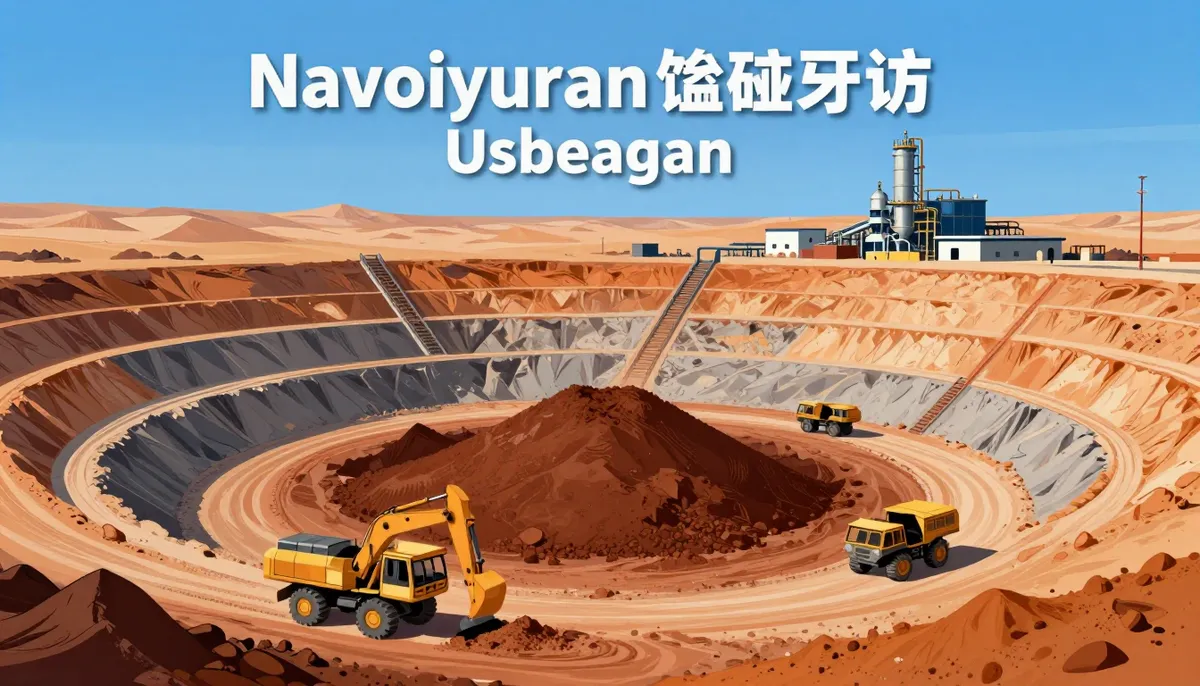
What happened: Uzbekistan plans to double its uranium production by 2030, and President Shavkat Mirziyoyev told state mining company Navoiyuran — during a presentation on its priority tasks for 2026 and future plans, reported on the presidential website via World Nuclear News — to make the most of alternative production technologies to get there. Navoiyuran aims to lift output from 7,500 tonnes this year to 15,000 tonnes by 2030 and grow explored reserves to 200,000 tonnes. This year's programme includes expanded geological exploration and technological drilling, additional sorption units coming online and 250 new jobs. Uzbekistan is the world's fifth-largest uranium producer — 4,000 tonnes in 2024, per the World Nuclear Association, behind Australia and ahead of Russia — and all of its output has come from in-situ recovery since the mid-1990s; commercial production began in April at the Qizilkok deposit, Navoiyuran's third-largest, with planned annual capacity of 1,200 tonnes and a 15-year mine life using oxygen-based in-situ leaching. Mirziyoyev directed officials to ensure investment projects are implemented on time, strengthen the mineral resource base and raise high value-added output and exports.
What's genuinely new: The 2030 doubling target and the 200,000-tonne reserve goal, set out at the presidential presentation, alongside a plan to cut reliance on sulphuric acid in in-situ leaching to 40 percent alternative reagents by 2030 — against figures presented to the president that world demand for uranium raw materials has risen 15–20 percent in recent years and is projected to grow another 28 percent by 2030.
Watch: progress toward 15,000 tonnes of annual output and 200,000 tonnes of explored reserves; the shift to 40 percent alternative reagents by 2030; the Qizilkok ramp-up toward 1,200 tonnes a year; further deposit development and new sorption capacity.
Largest land remediation project at UK's Harwell nuclear site completed
Sources World Nuclear News published Nov 10, 4:13 AM ET
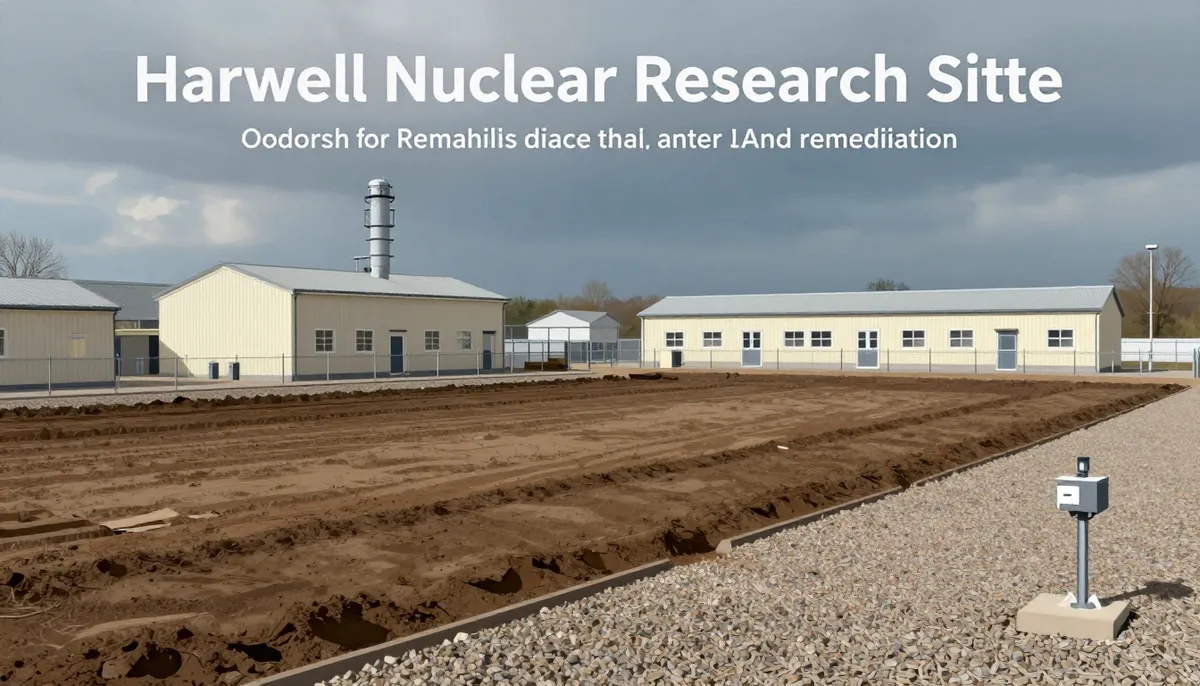
What happened: Nuclear Restoration Services, a subsidiary of the UK's Nuclear Decommissioning Authority, has completed its largest ever land remediation project — restoring 4.2 hectares at the Harwell nuclear research site in Oxfordshire where the former Liquid Effluent Treatment Plant and the neighbouring Sewage Farm Area once stood. The plant, built in 1948 to treat liquid waste from Britain's first Atomic Energy Research Establishment (established 1946), handled waste from across the site before discharge through a dedicated pipeline to the River Thames, and also took higher-activity liquid waste; it ceased operations in 2013. Per World Nuclear News, more than 97,000 tonnes of material were removed, including buried tanks, pipelines, pumping stations and reinforced concrete structures as deep as 10 metres below ground. A new sustainable-drainage pond on the former Sewage Farm Area now manages surface water and provides wildlife habitat. The land now enters final regulatory stages — delicensing and surrender of the environmental permit — before potential future use within the growing Harwell Science and Innovation Campus, where 11 of the site's 14 research reactors have already been removed and about 25 percent of the original site released for redevelopment.
What's genuinely new: Physical completion of the LETP and Sewage Farm remediation — Harwell's biggest land-restoration job — moving the restored ground into its final delicensing and permit-surrender stages.
Watch: delicensing of the restored land and surrender of the environmental permit, plans to demolish 16 redundant buildings, and continued reduction of the site's nuclear materials inventory.
Brief
- A Forbes contributor column by investor Wal van Lierop, carried by Yahoo Finance, argues credibility rather than physics is the main obstacle to commercializing fusion: fusion companies raised a record $4.48 billion in the 12 months to July 2026 per the Fusion Industry Association, 71% of the 56 companies surveyed expect to produce commercial electricity in the 2030s, and the industry says each company needs on average $2.7 billion to make a first commercial plant viable.
- A draft outline for Japan's first fusion-specific legislation surfaced from the ruling Liberal Democratic Party: a "Fusion Energy Promotion Bill" asking the government to set safety policies matched to fusion devices' characteristics rather than applying the regulatory standards of conventional light-water reactors, presented at the party's project team meeting on November 6 and reported by Japanese media (Yomiuri Shimbun) — the law is not enacted, and Japan currently regulates fusion devices under its Radioisotopes Act, a stance a Cabinet Office expert panel affirmed on March 25, 2025 for comparably risky devices. The outline was relayed in a note.com analysis by nuclear-industry writer Noriyuki Ishii of the Japanese reports.
- Financial-services firm Wedbush, a Pasadena brokerage founded in 1955, announced it is expanding equity research coverage into advanced nuclear energy, with director of equity research Seth Basham initiating coverage of six companies: X-energy, Oklo, Terrestrial Energy, NuScale Power, NANO Nuclear Energy and General Fusion — citing rising clean, stable electricity demand from AI data centers and what Basham calls "the foundation for a nuclear energy renaissance," with plans to extend into the broader nuclear supply chain (Markets Insider).
- General Fusion, the publicly listed Vancouver magnetized-target-fusion developer, appointed David Janashvili as chief financial officer effective November 30, 2026 — a clean-technology finance veteran with about 20 years at CIBC, Moelis, Credit Suisse and Bear Stearns who is credited with helping form the July 2026 private placement mentioned as a capital constraint in the company's own forward-looking statements' risks (MarketScreener).
- At an American Nuclear Society community-of-practice webinar, Deep Fission regulatory-strategy vice president Rani Franovich argued the Nuclear Regulatory Commission's post-1999 modernization left performance-based regulation "fading into obscurity" — the imbalance made "risk-informed" nearly synonymous with probabilistic risk assessment, and resistance is "deeply cultural": a legal preference for prescriptive rules and the established industry's investment in navigating the old system (ANS). She also said Deep Fission has submitted its preliminary documented safety analysis to the Department of Energy, the third of five major milestones in DOE's reactor authorization process, and sees DOE's four performance objectives as modern RIPB principles the agency can observe.
- A RealClearEnergy column, "Is the US finally fighting back on fusion?", frames fusion commercially rather than scientifically: the US was the first country to achieve fusion ignition, but China was the first to aggressively scale up the engineering of fusion systems.
- On November 4, Kyoto Fusioneering and Amentum signed a memorandum of understanding to jointly pursue fusion-energy commercialization across the UK, Japan and the US — pairing the Japanese fusion-systems developer's confinement-agnostic fuel-cycle, breeding-blanket and plasma-heating technologies with Amentum's systems engineering, nuclear-safety and large-scale program-delivery capability, and agreeing to explore AI-driven digital engineering tools to compress design cycles (EnergiesMedia).
- Researchers at the University of Electro-Communications in Tokyo used extreme-ultraviolet spectroscopy of highly charged ions to measure nuclear charge radii, resolving a longstanding rare-earth anomaly: lutetium's nucleus is in fact slightly smaller than ytterbium's, following the expected zigzag trend between nuclei with even and odd proton counts — though the size variation proved larger than current nuclear structure theories can fully explain, and the team plans to extend the technique to more nuclei (ANS).
- An American Nuclear Society commentary by Craig Piercy weighs in on the Department of Energy's Nuclear Lifecycle Innovation Campuses, under which five states — Idaho, Louisiana, Oklahoma, Tennessee and Utah — are weighing siting exploration for nuclear waste disposal, while West Virginia, signed on as a sixth finalist in early September, withdrew from the program about three weeks later after its April proposal to host consolidated interim storage became public through a records request and the governor declared the state "will not be a dumping ground for nuclear waste" (ANS).