Isaacman lays out the SLS route into the 2030s
From the Space digest for Nov 11, 2026
Sources NASASpaceflight Starlust published Nov 10, 11:02 PM ET
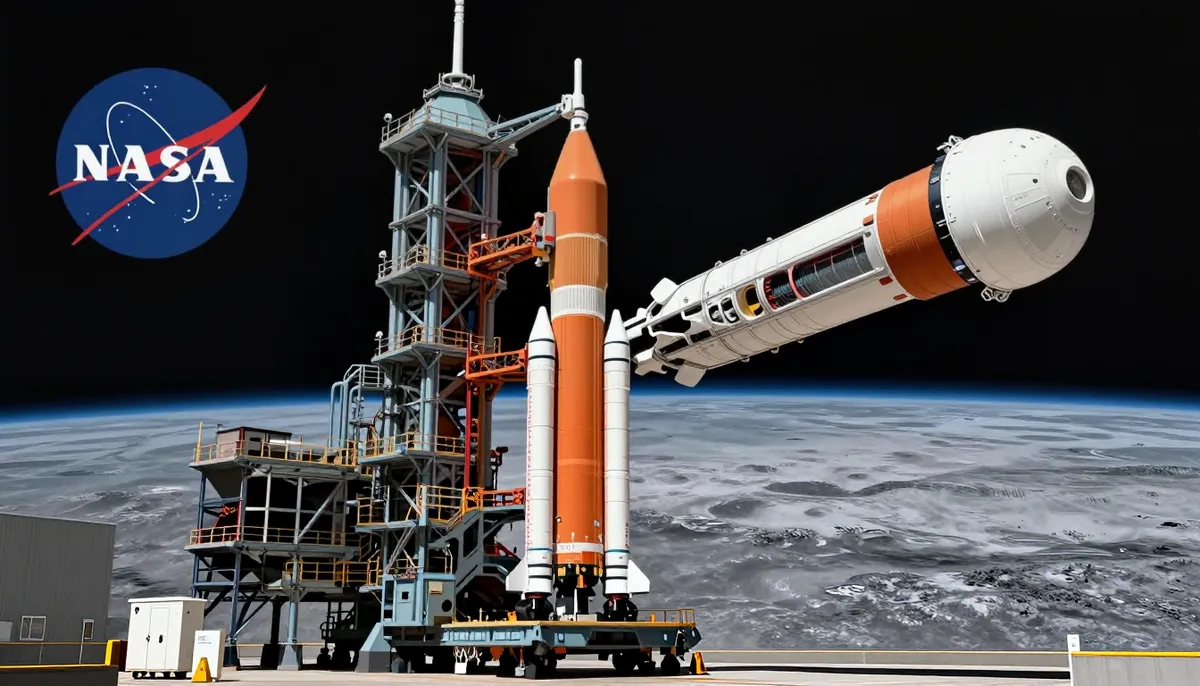
What happened: NASA Administrator Jared Isaacman explained the agency's decisions to standardize the Space Launch System, adopt a stretched Centaur V upper stage in place of the canceled Exploration Upper Stage, and stop work on Mobile Launcher 2 — all tied, he says, to flying SLS more often and more cheaply until commercial lunar transportation arrives in the 2030s. "There are a lot of ways to shake the $4 billion disposable rocket label that SLS has carried and one of which is launch more frequently," he said in an interview on NASASpaceflight's The Flame Trench show. In a separate interview with the Everyday Astronaut's Tim Dodd, he was blunter about what survives the transition: "Orion will clearly live on beyond SLS" — the capsule is "going to have its place for crewed deep space missions," carried by future launch vehicles, and Blue Origin's New Glenn 9x4 has been reported capable of flying Orion to the Moon.
What's genuinely new: Industry's responses to NASA's commercial lunar transportation request for information (issued in March, responses due April) pointed to the 2030s, with no end-to-end solution offered for 2028 or 2029 — which is why the existing architecture is being stretched rather than replaced. ML-2, stopped despite its near-complete structure, was "nowhere near as ready as people believe," and some of its components plus canceled-EUS hardware are going to Blue Origin as government-furnished equipment for its pad rebuild and landers. The EUS decision, Isaacman says, followed years of trouble: "Everything that touched that upper stage was a problem ... the stage adapter was way behind schedule and way over budget." With only one Interim Cryogenic Propulsion Stage left, the stretched Centaur is the lean for later flights. Artemis III itself will fly with no functional upper stage — a propulsion-less spacer sits between the core stage and Orion — and the mated core stage and boosters, the "short stack," are headed to Pad 39B for a crucial tanking test. Lockheed Martin said on November 5 it is expanding the Orion workforce and streamlining production for Artemis III, IV and V. On the Moon-side choreography, Isaacman expects a separate "kick stage" to do the trans-lunar injection burn, since docking Orion in low lunar orbit is far more fuel-efficient than the high elliptical orbit in NASA's published Blue Origin concept. NASA's November 4 update still lists both the final ICPS and the stretched Centaur V as options for Artemis IV, and no mission has been assigned to the new stage. Crew cadence goal: at least one flight a year, with two SLS launches possible in 2028.
Watch: Qualification testing of the stretched Centaur V — which Isaacman expects to fly on ULA's Vulcan for Defense Department missions too — the stage's first mission assignment, ML-1 modification progress, Orion's post-SLS launch vehicle, the kick-stage design, the Pad 39B tanking test, and whether the RFI responses mature into a commercial procurement.