J.P. Morgan sizes US humanoid output: up to 400,000 robots a year by 2030
From the Robots digest for Nov 13, 2026
Sources Android Headlines Reuters DC Velocity
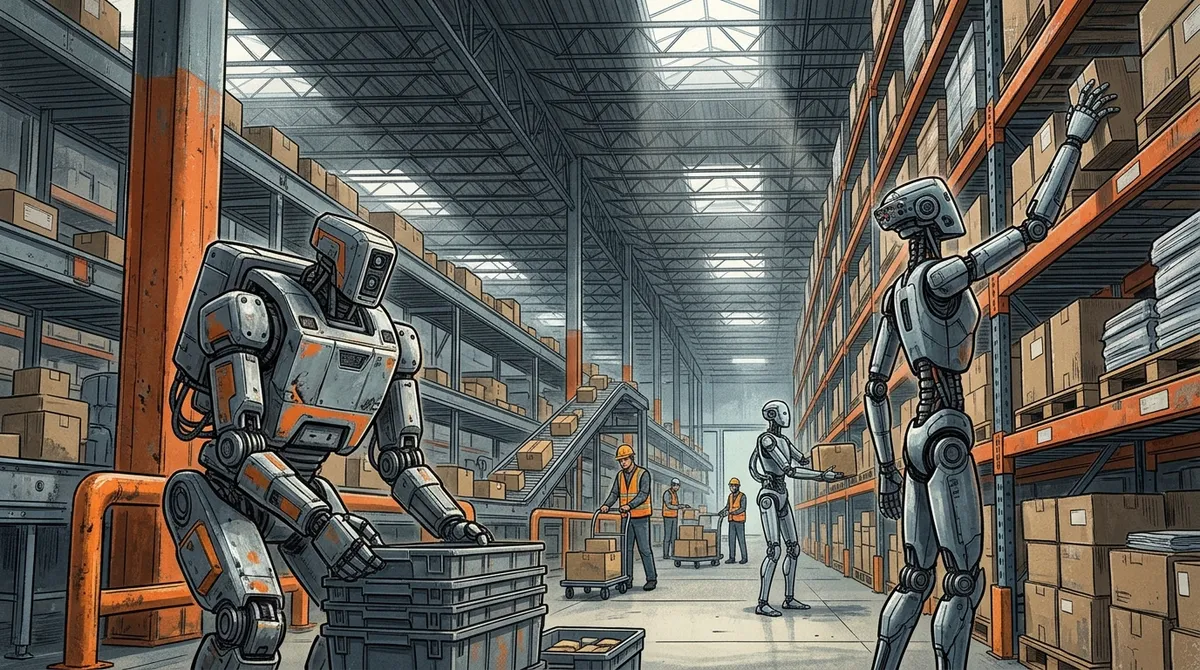
What happened: J.P. Morgan, in new research on the humanoid industry, forecasts US humanoid robot production of 300,000–400,000 units annually by 2030, growing to about 1.5 million units by 2035, as manufacturing, logistics and warehousing shift from demonstrations to commercial deployment against labor shortages. J.P. Morgan expects US humanoid robot production to reach 300,000–400,000 units a year by 2030 and about 1.5 million units by 2035, as the industry shifts from demonstrations to commercial deployment in manufacturing, logistics and warehousing (Reuters). The brokerage says near-term growth is supply constrained by "hands, actuators, the brain, and production capacity," with most US manufacturers other than Tesla targeting just 10,000–30,000 units annually, while robot costs near parity with labor and can save a customer about $100,000 a year across multiple shifts (Reuters). One concrete sign of that ramp came the same week, when GXO Logistics said it could deploy up to 1,000 Apptronik Apollo humanoid robots over four years, starting with trials in warehouse picking and tote and case movement (DC Velocity).
What's genuinely new: The brokerage's numbers and where it puts the friction: humanoid costs approaching parity with labor costs, with about $100,000 a year in savings for a customer running robots across shifts; binding near-term bottlenecks at hands, actuators, onboard computing and production capacity; most US makers outside Tesla still targeting just 10,000–30,000 units annually; and a key-components market (actuators, motors, vision systems) approaching $30 billion by 2035, with Timken, Robotis, Leader Drive, Orbbec and Cognex named as positioned suppliers. Tesla's Optimus, Agility's Digit, Boston Dynamics' Atlas, Figure and Apptronik's Apollo are named among the key US players, and the report expects the Trump administration's national-security finding on imported robots to favor domestic production through tariffs or other measures.
Watch: actual production counts against the 2030 range, whether the hands/actuators/compute bottlenecks ease, tariff and onshoring policy moves, and order books at the named component suppliers.