Vulcan failure destroys the first Amazon Leo payload
From the Space digest for Nov 17, 2026
Sources PCMag Investor's Business Daily Ars Technica Ars Technica, link 2 Breaking Defense Memeburn TIKR GeekWire Noozhawk Space.com published Nov 17, 9:31 AM ET
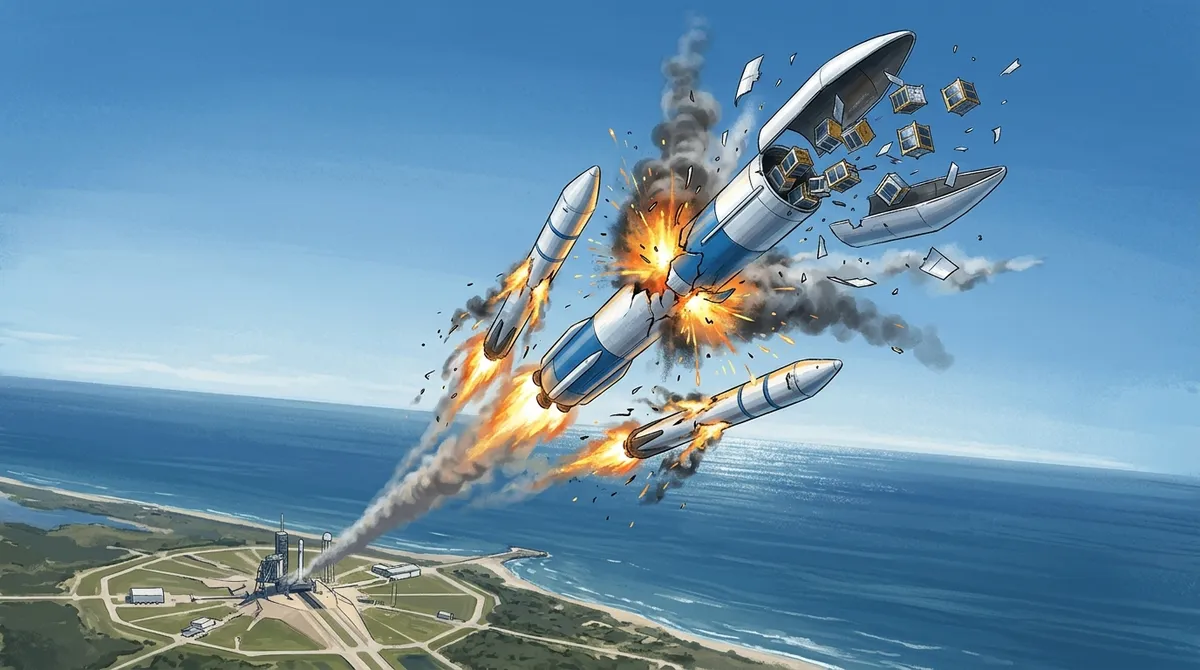
What happened: ULA pinned the November 15 LV-01 failure on the first stage: telemetry and the mission were lost about 10 minutes after liftoff, but the vehicle suffered low booster performance just after liftoff, separating too low and too slow to reach orbit. The Centaur upper stage and six Northrop Grumman solid boosters appear to have flown normally — good news for NASA, which plans to integrate Centaur V into its SLS moon rocket. The failure destroyed the 40 Amazon Leo satellites on board, the first of 38 Vulcan launches Amazon bought.
What's genuinely new: Preliminary but incomplete data suggests the BE-4 engines may not be at fault, per Ars Technica sources — though no definitive conclusion is possible yet. Blue Origin CEO Dave Limp said the company is supplying BE-4 data and analysis; on November 10 it qualified a modified BE-4 main oxygen valve and expects to complete the New Glenn anomaly investigation later in November. A serious BE-4 finding would delay New Glenn's return, targeted for January 2027, and reporting expects Vulcan sidelined at least half a year.
Watch: The BE-4-versus-booster cause finding, Vulcan's return to flight and West Coast debut at Vandenberg, Blue Origin's investigation completion expected later in November, and Amazon Leo's remaining lanes: Ariane 6 (next flight targeted for November 23 with 36 satellites), Falcon 9, and New Glenn's January 2027 return.
More context: Amazon's 2020 FCC license required 1,616 satellites by July 30, 2026, and a June waiver means Leo satellites launched after that date temporarily lose the spectrum priority Amazon won earlier, until March 30, 2028 at the latest, or sooner if Amazon proves it has fully secured the launches to reach the halfway mark (Memeburn). Breaking Defense reports the loss deepens Pentagon worries, since Falcon 9 and Falcon Heavy are now the only rockets certified for the Space Force's most sensitive national security missions — and with Vulcan and New Glenn both grounded, reporting points to a worsening US launch squeeze as SpaceX plans to retire Falcon 9 and Falcon Heavy for Starship. Vulcan, the most-used rocket in Amazon's program, is slated to carry more than 1,500 of Amazon's first-generation satellites (GeekWire).