Space digest — Nov 17, 2026
Top line: United Launch Alliance confirmed its failed Vulcan flight stemmed from low first-stage booster performance, with preliminary reporting suggesting the Blue Origin–built BE-4 engines may not be at fault. SpaceX's first-caught Starship came home missing just one of roughly 18,000 heat-shield tiles, and a cargo Dragon undocks from the space station November 18.
Rocket Lab's Electron reaches 100 launches
Sources Pulse 2 Investor's Business Daily The Motley Fool
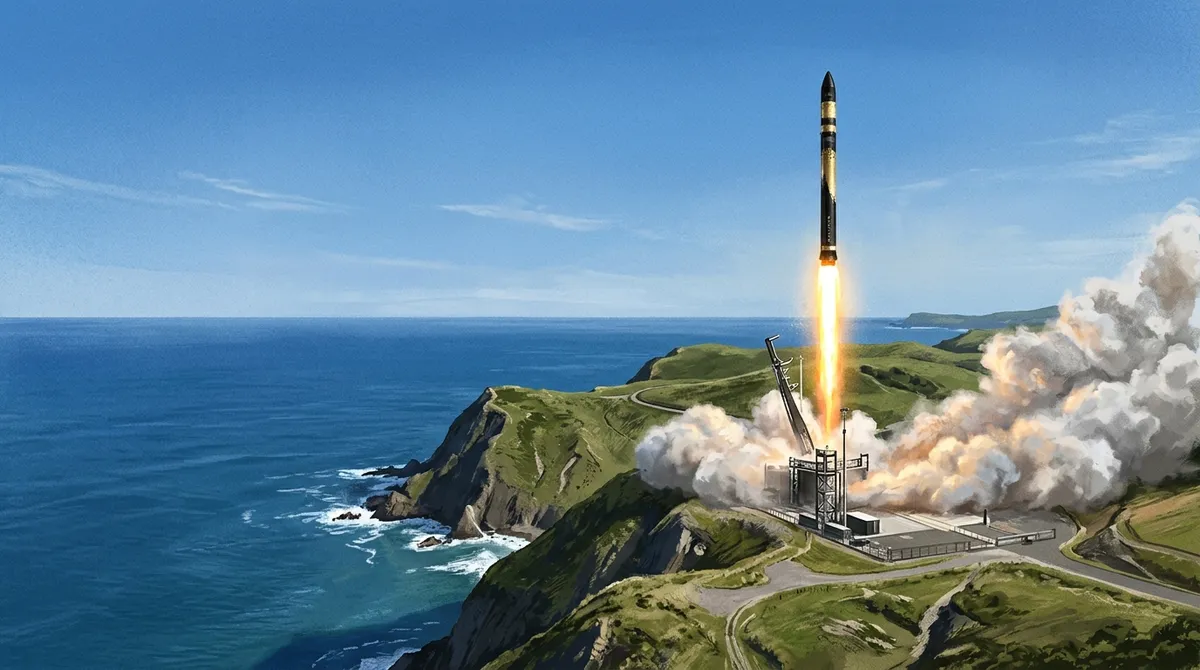
What happened: Rocket Lab completed its 100th Electron launch on November 14, flying the mission named "The Mountain God Rises" from Launch Complex 1 in New Zealand and deploying the YAMATSUMI-II radar Earth-observation satellite into a 575-kilometer orbit for Japan's Institute for Q-shu Pioneers of Space. The company says Electron reached the milestone faster than any other commercially developed rocket, and that its next 100 missions are already booked.
What's genuinely new: The flight was the 11th Electron mission for the satellite operator since 2023, all successful, with seven more dedicated launches booked through 2030. The anniversary coverage also adds the business numbers: 96 successes across 100 flights, 21 launches in 2026 all successful, and average launch revenue of $8.7 million against roughly $4.9 million in cost through September — about $3.8 million per flight. Electron first flew in 2017.
Watch: The year's remaining flights and whether the iQPS bookings convert into missions; the Electron and HASTE price increases flagged on the third-quarter call; fourth-quarter execution against the $270–290 million revenue guide.
Vulcan failure destroys the first Amazon Leo payload
Sources PCMag Investor's Business Daily Ars Technica Ars Technica, link 2 Breaking Defense Memeburn TIKR GeekWire Noozhawk Space.com published Nov 17, 9:31 AM ET
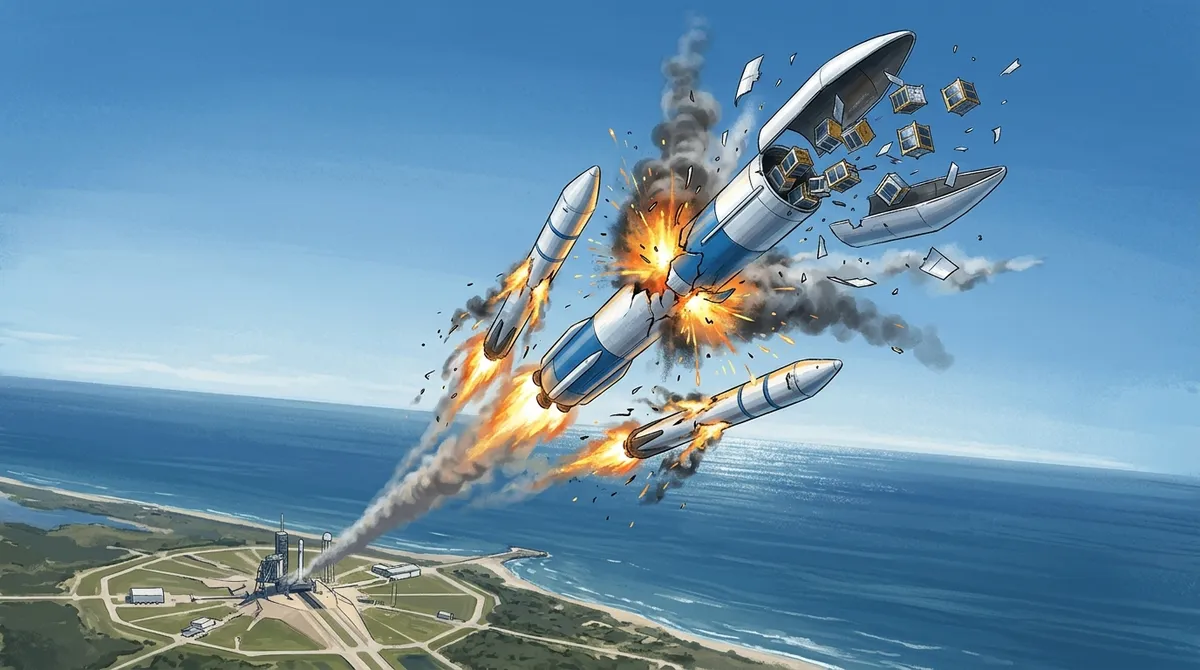
What happened: ULA pinned the November 15 LV-01 failure on the first stage: telemetry and the mission were lost about 10 minutes after liftoff, but the vehicle suffered low booster performance just after liftoff, separating too low and too slow to reach orbit. The Centaur upper stage and six Northrop Grumman solid boosters appear to have flown normally — good news for NASA, which plans to integrate Centaur V into its SLS moon rocket. The failure destroyed the 40 Amazon Leo satellites on board, the first of 38 Vulcan launches Amazon bought.
What's genuinely new: Preliminary but incomplete data suggests the BE-4 engines may not be at fault, per Ars Technica sources — though no definitive conclusion is possible yet. Blue Origin CEO Dave Limp said the company is supplying BE-4 data and analysis; on November 10 it qualified a modified BE-4 main oxygen valve and expects to complete the New Glenn anomaly investigation later in November. A serious BE-4 finding would delay New Glenn's return, targeted for January 2027, and reporting expects Vulcan sidelined at least half a year.
Watch: The BE-4-versus-booster cause finding, Vulcan's return to flight and West Coast debut at Vandenberg, Blue Origin's investigation completion expected later in November, and Amazon Leo's remaining lanes: Ariane 6 (next flight targeted for November 23 with 36 satellites), Falcon 9, and New Glenn's January 2027 return.
More context: Amazon's 2020 FCC license required 1,616 satellites by July 30, 2026, and a June waiver means Leo satellites launched after that date temporarily lose the spectrum priority Amazon won earlier, until March 30, 2028 at the latest, or sooner if Amazon proves it has fully secured the launches to reach the halfway mark (Memeburn). Breaking Defense reports the loss deepens Pentagon worries, since Falcon 9 and Falcon Heavy are now the only rockets certified for the Space Force's most sensitive national security missions — and with Vulcan and New Glenn both grounded, reporting points to a worsening US launch squeeze as SpaceX plans to retire Falcon 9 and Falcon Heavy for Starship. Vulcan, the most-used rocket in Amazon's program, is slated to carry more than 1,500 of Amazon's first-generation satellites (GeekWire).
Brief
- ULA's Vulcan investigation now centers on the first-stage booster, with preliminary but incomplete data suggesting the BE-4 engines may not be the cause — ULA cites "low booster performance" just after liftoff, while the Centaur upper stage and solid boosters flew normally; Blue Origin is supplying BE-4 data and analysis, per CEO Dave Limp. See the numbered story above.
- Starship lost one of its roughly 18,000 heat-shield tiles on SpaceX's first catch of a ship returning from orbit, and Elon Musk agreed a 99.995% tile-reliability framing was right; the ablative the tower arms scraped off the ship will be replaced with stainless steel wool meant to survive reentry (TIKR).
- Bloomberg reported SpaceX could begin selling $4 billion of bonds this week as part of its $40 billion financing plan to buy NVIDIA's Vera Rubin chips for its AI computing business, with an Atlas SP-managed special-purpose company buying the chips and leasing them to SpaceX for five years to keep the borrowing off its balance sheet; SpaceX hasn't commented (24/7 Wall St.) (single source).
- After 34 days docked to the International Space Station, the Dragon cargo spacecraft supporting SpaceX's 35th commercial resupply mission for NASA is targeted to undock as soon as November 18 (NASA's undocking webcast page).
- After Starship's Flight 15, Elon Musk said the ship's heat shield and engines look "great" overall and it could probably fly again after a few weeks of work beyond scheduled maintenance; he also outlined a Starship V4 — about 70 meters long, roughly 40% longer with 60% more propellant, and nine Raptor engines including three more Raptor-Vacuum engines. SpaceX president Gwynne Shotwell pointed to an on-orbit refueling attempt early next year. (Investor's Business Daily)
- Footage from NASASpaceflight's Starbase livestream shows Booster 25's transfer tube being lifted inside Starbase's Mega Bay 1 — new Super Heavy hardware progress in the factory (Erik Fraser on X).
- Telkom Group, through its Openserve unit, has signed an agreement making Telkom an authorised Amazon Leo distributor in South Africa, with Leo-powered services for enterprises, public-sector customers and small businesses expected to launch commercially in 2027. (ITWeb)
- Cosmo Bee, a South Korean electric-propulsion startup, plans an in-orbit flight test of its 10 mN-class Honeybee Hall thruster with D-Orbit in October 2027 under a service agreement. (SpaceNews)
- SpaceX took a share of a $985 million launch contract modification on November 16 alongside Blue Origin and United Launch Alliance; Rocket Lab was absent from the winners list (24/7 Wall St.).
- NASA is marking Voyager 1's crossing of one light-day from Earth — more than 16 billion miles, crosses November 18 — by inviting people worldwide to flash the letters "VGR" in Morse code at the night sky for about a minute.