Space digest — Nov 16, 2026
Top line: ULA's Vulcan rocket failed about ten minutes into its November 15 flight, destroying 40 Amazon Leo satellites in ULA's first-ever mission failure; experts say the investigation could take weeks or months. Rocket Lab's 100th Electron launch flew clean, and SpaceX, fresh off its first Starship upper-stage catch, outlined a much bigger next-generation Starship.
- Vulcan launch failure destroys 40 Amazon Leo satellites
- Rocket Lab's 100th Electron launch confirmed as flawless
- SpaceNukes opens Los Alamos plant to build its next-generation space reactor
Vulcan launch failure destroys 40 Amazon Leo satellites
Sources Independent Engadget Starlust Financial Express CNBC-TV18 Ars Technica WESH LA Times
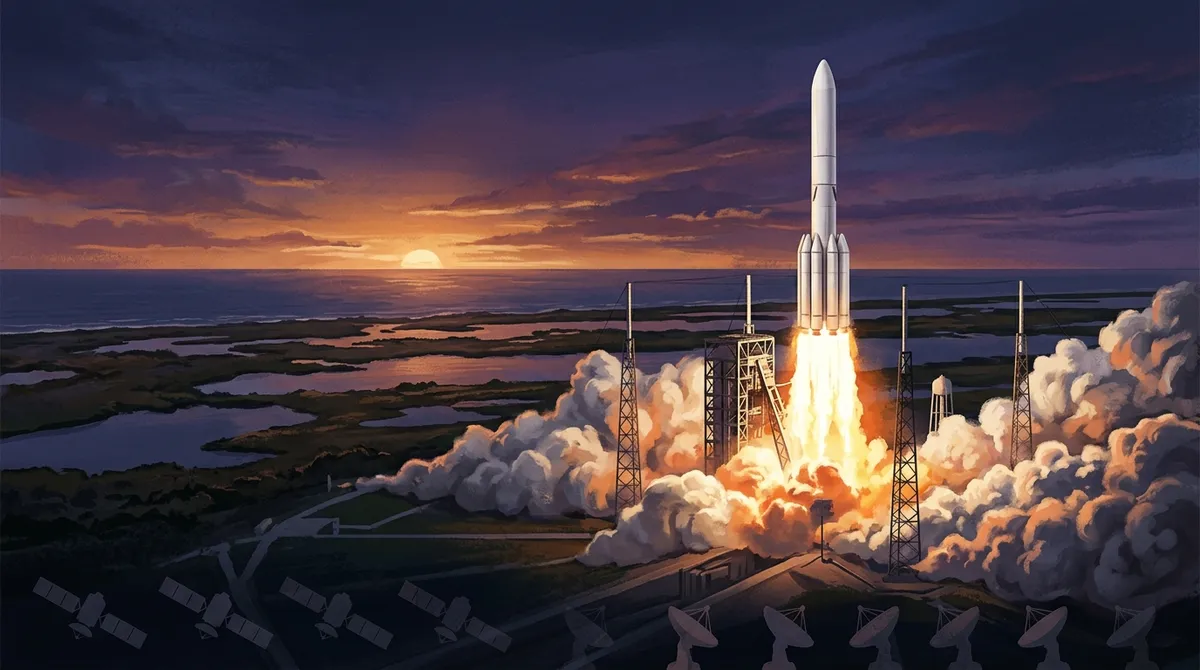
What happened: United Launch Alliance's Vulcan rocket failed about 10 minutes into its November 15 flight from Cape Canaveral Space Force Station, failing to deliver 40 Amazon Leo satellites to orbit — mission LV-01, the first of 38 Vulcan flights Amazon bought. ULA said the vehicle "failed to deliver the Amazon mission to orbit," that the anomaly occurred during the firing of the Centaur upper stage, and that it does not yet have enough flight data to identify the cause; it will work with Amazon and other organizations to find it and return to flight.
What's genuinely new: Aerospace experts expect the investigation to take weeks to months and caution that telemetry may never yield a definitive answer. Northrop Grumman says Vulcan's solid rocket boosters performed as expected and separated cleanly — narrowing attention to the Centaur stage — while the first stage's BE-4 engines remain unexonerated and Blue Origin is reportedly helping investigate. It is the first mission failure in ULA's history, dating to 2006, and Vulcan's fifth flight after nine months grounded by a booster-nozzle problem. NASA Administrator Jared Isaacman said the agency is available to assist.
Watch: The cause finding, any return-to-flight date and the fate of Amazon's remaining Vulcan missions — Amazon's next Leo flight, LE-04 on an Ariane 6, is set for no earlier than November 23 — and whether the Space Force clears Vulcan for national security launches.
More context: Ars Technica reports that Amazon has manufactured its 1,000th satellite, so roughly 600 of the ~1,000 satellites built so far sit in storage awaiting launch capacity. Amazon had 398 satellites in orbit before the loss, about 12% of the 3,236 it needs, and the mission was critical to its push to begin commercial service by year-end for customers including Delta Air Lines and AT&T. Amazon said "there is risk with any launch, and that's especially true for inaugural missions," and that it believes ULA will learn from the mission. The same Ars report notes that NASA recently selected a version of ULA's Centaur upper stage for future Space Launch System flights, which could put the investigation on NASA's critical path too.
Rocket Lab's 100th Electron launch confirmed as flawless
Sources Advanced Television
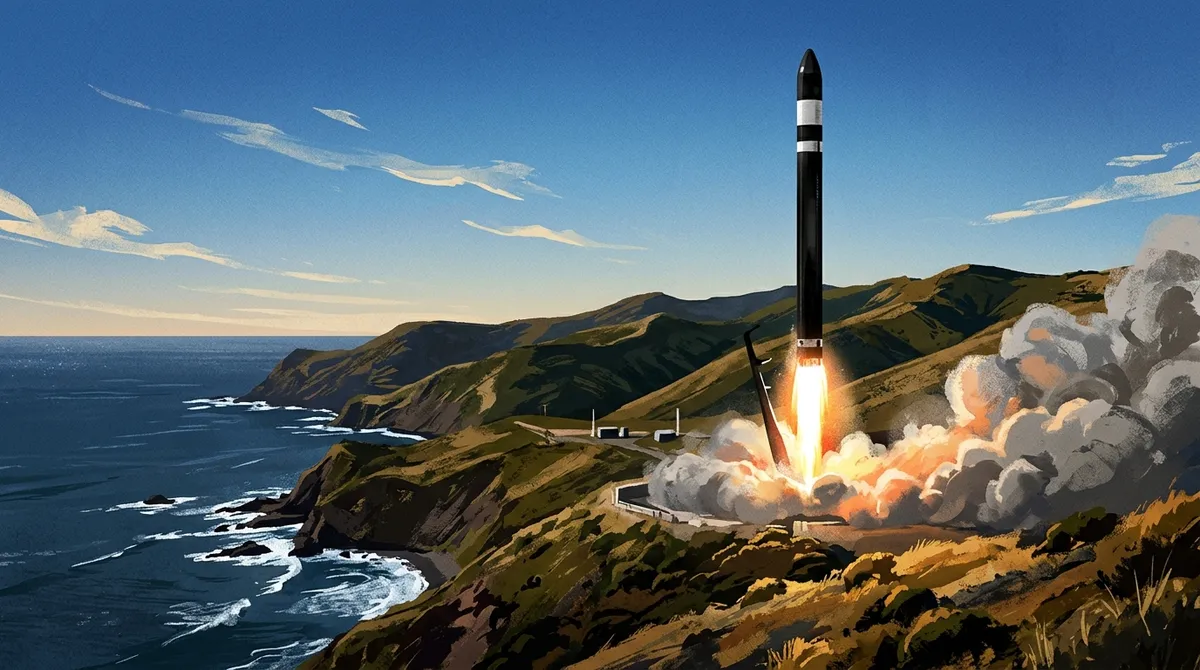
What happened: Rocket Lab's 100th Electron launch is confirmed complete and successful: "The Mountain God Rises" lifted off from Launch Complex 1 in New Zealand on November 14 and the kick stage deployed a single Earth-imaging satellite for the Japanese radar company iQPS into an orbit 357 miles (575 km) above Earth. It was Rocket Lab's eleventh mission for iQPS, which is building a constellation of three dozen radar satellites.
What's genuinely new: The launch's clean outcome and customer detail appear in independent trade coverage (Advanced Television). CEO Peter Beck called the milestone "unprecedented for a commercial small-lift orbital rocket" — Electron first flew in May 2017, and the company cites a 96% success rate across its first 99 launches.
Watch: iQPS confirming the satellite's health in orbit, and the eight further dedicated iQPS launches booked through 2030 converting to flown missions.
SpaceNukes opens Los Alamos plant to build its next-generation space reactor
Sources SpaceNews published Nov 16, 3:00 PM ET
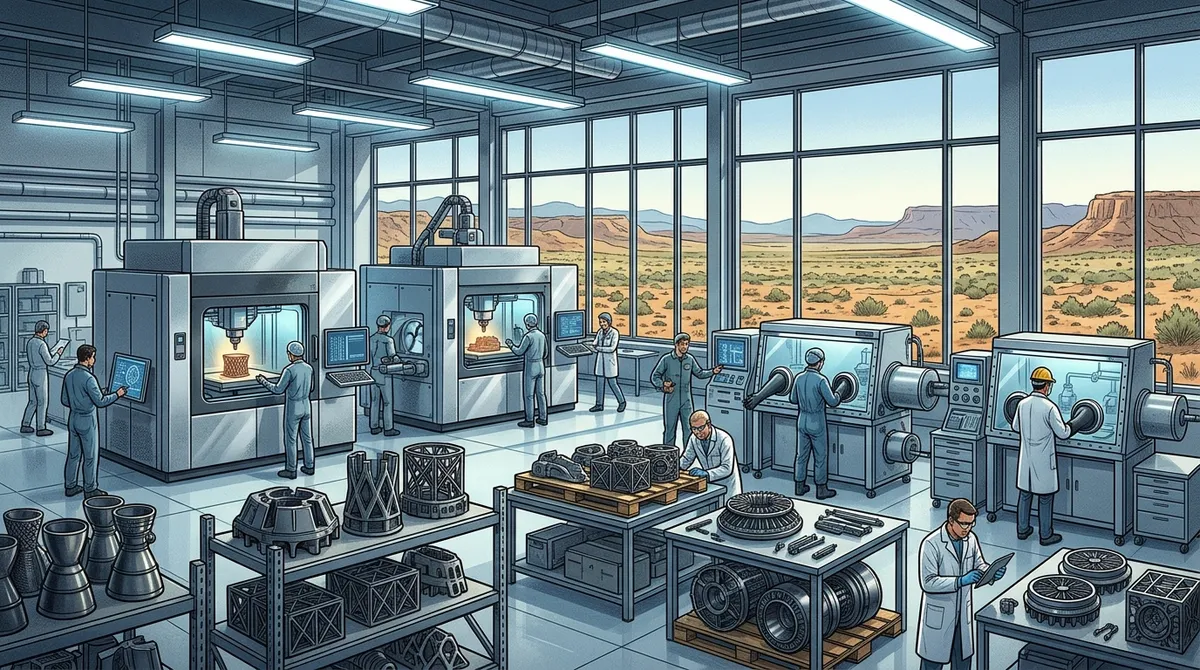
What happened: Space Nuclear Power Corp. (SpaceNukes) opened a Manufacture and Materials Development Facility in Los Alamos, New Mexico on November 13, dedicated to building parts for its Generation 2 space reactor through additive manufacturing of nickel-based and refractory alloys. No radioactive material is handled at the site. CEO Andrew Phelps said "our next-generation reactor is a bet on temperature," and that the limit is metal, not the nuclear physics.
What's genuinely new: The hotter-running reactor is a mass win — raising the heat the radiator sheds roughly sixfold shrinks the biggest component in a space fission system — but the metals it demands, tungsten, molybdenum and similar refractory alloys, are hard to form, and many needed parts cannot be bought from any supplier. The plant is led by Omar Mireles, who spent 13 years at NASA's Marshall Space Flight Center, and complements an integration and test site in Medina, Ohio. It follows SpaceNukes' October 21 agreement with DARPA's Fast Capacitance (Fat Cat) program to design, build and ground-test an actively controlled Kilopower reactor with Los Alamos National Laboratory. The company is working toward flying a nuclear reactor by 2028.
Watch: Component-test results from the Los Alamos and Medina facilities, the DARPA Kilopower ground test, and whether the 2028 flight target holds.
Brief
- The Vulcan loss clouds airline plans to adopt Amazon Leo WiFi: Delta's rollout is not due to start until 2028 and JetBlue's until 2027, and neither airline has announced a revised timeline (Aviation A2Z); Delta's delay risk was first flagged by Simple Flying, which offered no confirmed timing change.
- Amazon Leo's next mission, LE-04, is set to fly 36 satellites on an Ariane 64 from French Guiana no earlier than November 23 (NASASpaceflight).
- AST SpaceMobile shares fell 7% amid a tech selloff after Q3 revenue of $42.3 million missed estimates, and CEO Abel Avellan says the Blacklift rocket will not replace SpaceX launches, so AST still depends on outside rockets until a year-end U.S. service rollout (24/7 Wall St.); a second count put the fall at 12% during the same session — an intraday figure, with the session's decline closer to 7% in both tallies — noting the company has pushed its target of about 45 satellites in service to mid-2027 and that with Vulcan grounded, SpaceX is the likeliest ride for displaced payloads (TIKR).
- A day after SpaceX caught its Starship upper stage at the tower for the first time, Elon Musk outlined Starship V4: a Ship about 70 m (230 feet) long — roughly a 40% length increase carrying over 60% more propellant — with nine Raptor engines including three new Raptor-Vacuums, making the full stack "probably closer to 150 m" or nearly 500 feet tall; an earlier plan had V4 debuting in 2027 (Space.com).