Space digest — Nov 18, 2026
Top line: ULA's investigation now says Vulcan's failure came from inadequate fuel supply to the Blue Origin–built BE-4 engines, a finding that matters for New Glenn. SpaceX's IPO lock-up expires on December 8, freeing hundreds of millions of shares, and a study warns the million-satellite AI plan could multiply upper-atmosphere pollution.
- Starship's Boca Chica launch-rate plan goes to public hearings as SpaceX says it can fund its AI build itself
- SpaceX's IPO lock-up ends December 8 with up to 798 million shares eligible for sale
- ULA points to its booster in the Vulcan failure that cost Amazon 40 Leo satellites
- ICEYE bids more than $2.2 billion for rocket-maker Avio
- Voyager 1 becomes the first spacecraft one light-day from Earth
- Scientists warn SpaceX's million-satellite AI plan could multiply upper-atmosphere pollution
- Rocket Lab's record quarter draws a Sell rating and a doubled ARK stake
- PLD Space signs its first commercial launch contract, with Mitsubishi Electric
Starship's Boca Chica launch-rate plan goes to public hearings as SpaceX says it can fund its AI build itself
Sources MyRGV Stocktwits
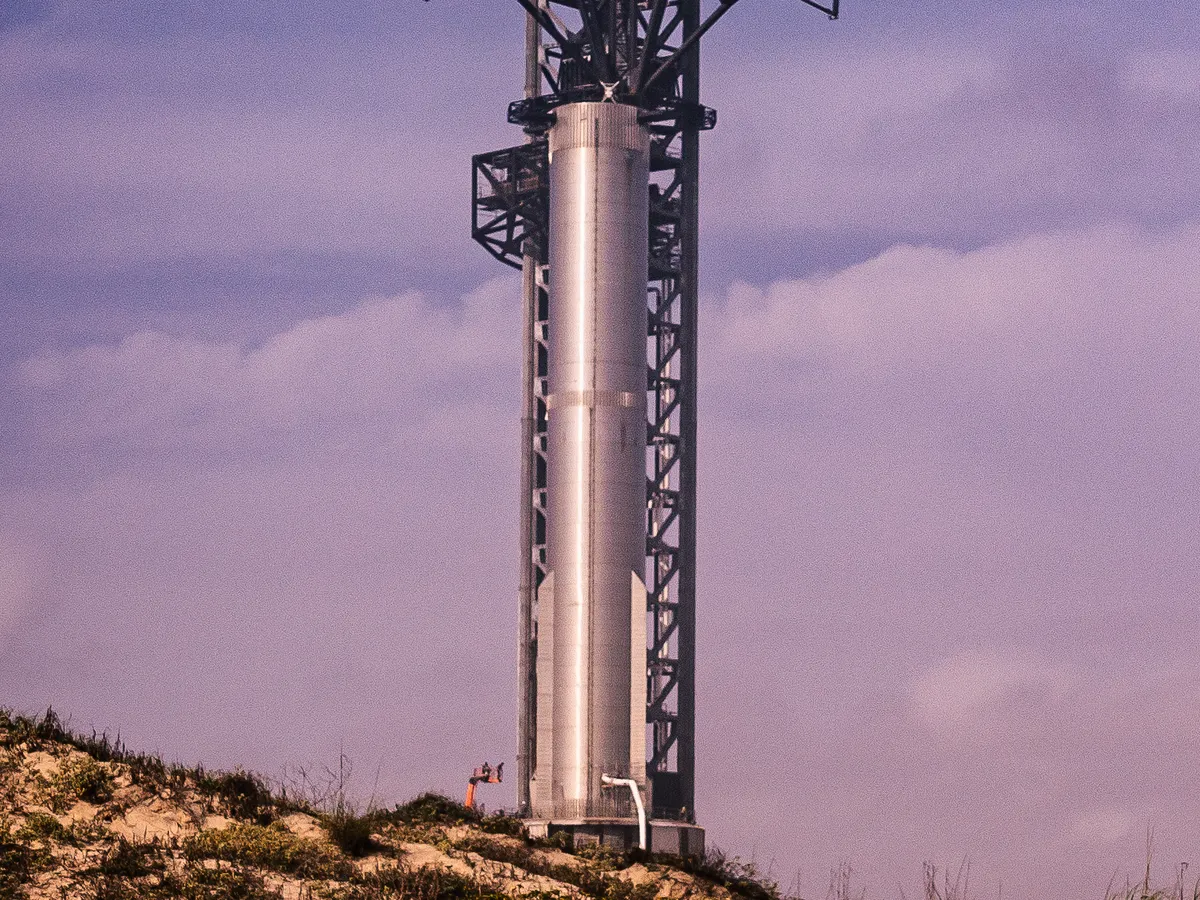
What happened: The FAA began virtual public meetings on November 17 on SpaceX's proposal to greatly increase Starship and Super Heavy launch and landing frequency at Boca Chica, cancelled the planned in-person sessions and extended the comment period — the environmental review of the plan moving into its public-facing stage. The same day, SpaceX CFO Bret Johnsen said the company's AI-computing expansion will be funded mostly from its own business.
What's genuinely new: Johnsen, speaking at the TomorrowX Summit, said "a large portion will be just funded by the business itself" through customer deposits, supplier terms and operating cash flow, with paybacks on current deals often under a year. Bloomberg reported a bond sale of roughly $4 billion could begin shortly, part of the $40 billion financing plan announced in October for Nvidia's next-generation Vera Rubin chips. Johnsen framed the Flight 15 upper-stage catch — the first recovery of a Starship returning from orbit — as the milestone opening aircraft-like reflight, and said the first dedicated Starmind AI-satellites are scheduled to fly next year with meaningful gigawatt-scale capacity in 2029.
Watch: the extended comment period's deadline and the FAA's decision on the launch rate; the reported bond sale; whether more second-stage catches follow before reflight becomes routine.
SpaceX's IPO lock-up ends December 8 with up to 798 million shares eligible for sale
Sources TIKR
What happened: SpaceX's 180-day IPO lock-up ends on December 8, when up to 797.6 million shares — about 5.9% of the shares outstanding — become eligible for sale, and the question in the coverage is whether the unlocking will swamp the goodwill from Starship's first upper-stage catch on November 14.
What's genuinely new: The date, the size and the share of the unlock are the news: no company action, no stock move yet. The coverage sets the stage against the Starship catch high — SpaceX stock was at $144.15, up 2% on the day — leaving December 8 as the test of how much overhang the market prices in once insiders and early holders can sell.
Watch: the stock through December 8 and the selling that follows, and any insider-sale disclosures in the unlock's aftermath.
ULA points to its booster in the Vulcan failure that cost Amazon 40 Leo satellites
Sources Spacepolicyonline Orlando Sentinel Ouest-France / Amphisciences The Motley Fool United Launch Alliance Ars Technica GeekWire Starlust Advanced Television SOFX
What happened: United Launch Alliance's November 18 update says the low booster thrust behind the November 15 Leo 1 failure "was the result of inadequate fuel supply from the vehicle to the BE-4 engines, not from the performance of the engines," completing the initial integrated review of flight data. The failure destroyed the 40 Amazon Leo satellites on board, ULA's first outright mission failure since Boeing and Lockheed Martin formed the company in 2006. The FAA is overseeing the ULA-led investigation, and Blue Origin CEO Dave Limp said, "Team Blue continues to ready the pad and New Glenn for our return to flight."
What's genuinely new: ULA's finding clears the BE-4 engines themselves and points to the vehicle's fuel-delivery side — though it has not said which part of the vehicle failed to deliver fuel, or why. It also clears the Centaur's RL-10 engines and all six solid rocket boosters, which carried the nozzle redesign made after the February anomaly ("six clean SRBs," said CEO Mark Peller). With Vulcan and New Glenn both grounded and no return-to-flight date set, Amazon's remaining rides are on Ariane 6 and Falcon 9, and Vulcan's national-security launches stay suspended.
Watch: ULA's root-cause findings on the fuel-supply failure and a return-to-flight date; the Ariane 6 flight carrying 36 Leo satellites from Kourou on November 23 (Arianespace's fourth for Leo, on 24 Ariane 64 launches ordered); Amazon's pace of about 240 satellites a year against the roughly 90 a month needed for its July 30, 2029 deadline.
More context: United Launch Alliance says early indications are that Vulcan suffered low booster performance just after liftoff, so the stages separated while the vehicle was too low and too slow to reach orbit, even though the Centaur upper stage's RL10 engines and all six solid rocket boosters performed as planned. Preliminary data reviewed by two independent sources, Ars Technica reports, currently points to a fault on the launch vehicle side rather than in the Blue Origin–built BE-4 engines themselves, possibly in the systems that feed methane and liquid oxygen to them, with engineers examining whether one engine produced low thrust after liftoff and never returned to full throttle. Before the failure Amazon had launched 396 Leo satellites on 14 successful missions, and GeekWire reports the company still faces a July 30, 2029 deadline to deploy all 3,232 first-generation satellites, with the next launch an Ariane 6 carrying 36 more no earlier than November 23. Starlust carries Limp's full exchange and the company statement confirming the first-stage anomaly, and Advanced Television runs the knock-on arithmetic — Amazon's remaining bookings by provider, the danger of slow fixes for the 2029 deadline, and Arianespace's figure that the November 23 mission would bring its Leo total to 136 satellites. SOFX adds the national-security cost of the grounding: ULA holds 19 of the 54 top-tier missions in the Space Force's latest procurement, against 28 for SpaceX and seven for Blue Origin, and still carries a 24-mission backlog from the prior phase.
ICEYE bids more than $2.2 billion for rocket-maker Avio
Sources Ars Technica SpaceNews published Nov 17, 10:32 AM ET
What happened: Finnish radar-satellite maker ICEYE announced an all-cash voluntary tender offer of more than $2.2 billion for Italy's Avio, the company that builds and now sells the Vega C rocket; Avio's board said it has taken note of the notice and is considering the offer. ICEYE pitched the combination as Europe's first truly vertically integrated, end-to-end space company.
What's genuinely new: ICEYE, valued at more than $12 billion after its June funding round, has 84 radar satellites in orbit and sells imagery to governments including Ukraine; nearly all of its launches ride Falcon 9 rideshares that SpaceX intends to phase out after 2028. Avio's Vega C has flown seven times successfully in eight attempts since 2022 but averages fewer than three flights a year at roughly $55 million per dedicated launch, with ESA and European governments as its main customers. Chief executive Rafal Modrzewski framed the deal around sovereignty: "Governments need control of their critical space infrastructure, and Europe needs it most."
Watch: Leonardo's and Avio's response; whether the tender offer proceeds; the promised investment in Vega C production and flight rate.
Voyager 1 becomes the first spacecraft one light-day from Earth
Sources NASASpaceflight Starlust dpoddolphinpro on X published Nov 18, 4:48 PM ET
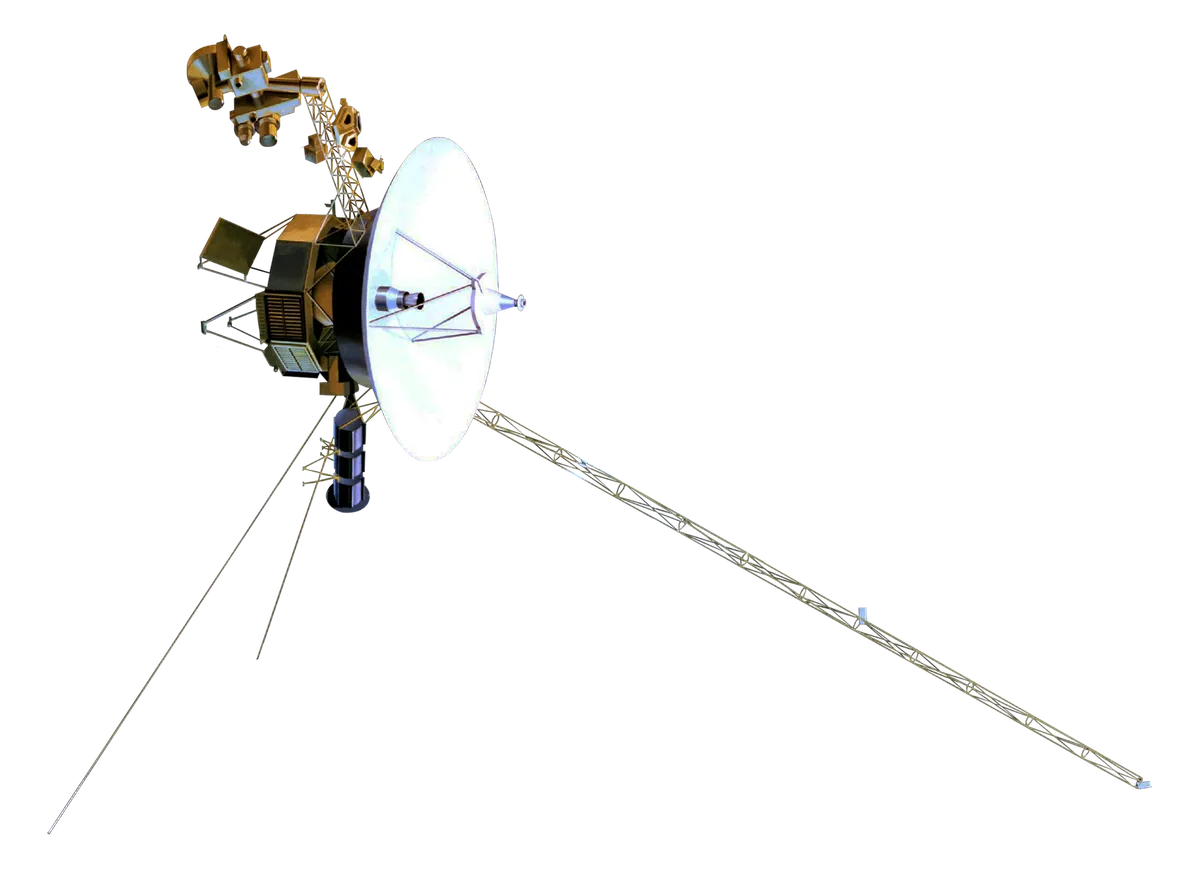
What happened: NASA's Voyager 1 crossed one light-day from Earth at 5:16:07 a.m. Eastern on November 18 — about 26 billion kilometers, more than 16 billion miles — becoming the first human-made object to reach the distance light travels in 24 hours. Launched September 5, 1977, and the first spacecraft to reach interstellar space in 2012, it remains the farthest spacecraft in history, coasting at 38,000 mph toward the star Gliese 445, which it will pass near in about 40,000 years.
What's genuinely new: A one-way signal to the probe now takes exactly 24 hours, and mission controllers last month restored communications after a thruster glitch put Voyager 1 into safe mode — an issue that surfaced after engineers shut down three instruments and swapped in lower-power alternatives to stretch its power supply. Voyager 2, now 13.5 billion miles out, reaches the same distance in 2035. JPL hosts an online discussion on operating the two probes at such distances on November 19.
Watch: JPL's November 19 discussion and how long the two probes keep operating on dwindling power.
Scientists warn SpaceX's million-satellite AI plan could multiply upper-atmosphere pollution

Sources Scientific American
What happened: A University College London team estimates SpaceX's proposal to put a million data-center satellites in orbit could raise total emissions from rocket launches by more than 150 times 2025 levels and generate 70–150 times more nitrogen oxides from spacecraft reentering Earth, in a study released as a preprint awaiting peer review for the American Chemical Society's Earth and Space Chemistry journal. SpaceX asked the FCC in January 2026 for permission to launch the million-satellite constellation — the largest ever proposed — and no environmental assessment of it has been made public.
What's genuinely new: The calculations rest on third-party estimates because SpaceX has disclosed too little: satellite composition is unknown, so metal pollution can't be computed, and the reentry figures derive from NASA space-shuttle studies, with the researchers falling back on sources including Wikipedia and enthusiast catalogs. They estimate about 200,000 metric tons of spacecraft material would vaporize in the upper atmosphere each year, more than 200 times the 2024 total. The FCC exempted megaconstellation filings from environmental review in September, and the scientists are calling for disclosure of fuels, materials and reentry speeds.
Watch: peer-reviewed publication; whether the FCC requires an environmental assessment; any SpaceX disclosure of satellite materials and reentry data.
More context: Scientific American notes the study assumes Starship Block 4 carrying at least 200 metric tons per launch — at least 5,000 launches a year, about 14 a day, against roughly 330 orbital launches worldwide in 2025 — and that venting of unused methane during fueling and after landing could release around 60,000 metric tons a year, comparable with emissions from major U.S. oil and gas regions. Upper-atmosphere pollution lingers for years, so effects accumulate, and the authors compare the projected reentry nitrogen-oxide output with the emissions of some European countries.
Rocket Lab's record quarter draws a Sell rating and a doubled ARK stake
Sources Seeking Alpha Barchart
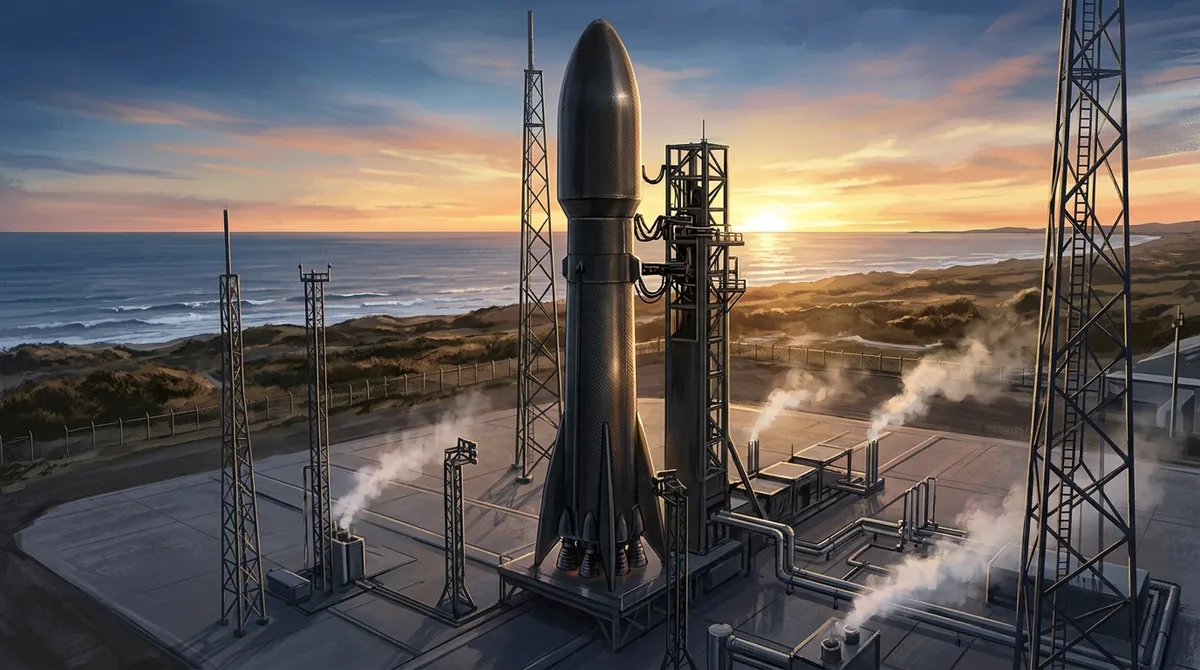
What happened: A Seeking Alpha analyst rates Rocket Lab a Sell, pointing to the third-quarter net loss of $79.8 million and uncertainty over when Neutron's first flight arrives — a bearish counterpoint landing days after the record $3.57 billion backlog report. Meanwhile ARK Invest more than doubled its Rocket Lab holdings during the quarter to roughly 3.56 million shares, worth about $250 million at the end of September.
What's genuinely new: The two calls crystallize the debate around the November 9 print. The Sell rating weighs widening losses (up from an $18.2 million year-ago net loss) against a Neutron debut now set for 2027 after the first-stage tank-dome fix. Barchart adds the bullish side: Cathie Wood's fund bought through the stock's slide of nearly 62% from its May peak, encouraged by eight new Neutron contracts worth more than $515 million at the raised $70 million launch price and the ~$8 billion Iridium acquisition, expected to close in 2027. Neither piece adds a new company fact; both reprice the same quarter.
Watch: the tank-dome qualification gate and a firmer Neutron debut target; Q4 execution against the $270–290 million revenue guide; further analyst and shareholder moves.
PLD Space signs its first commercial launch contract, with Mitsubishi Electric
Sources Reuters (via Yahoo Finance)
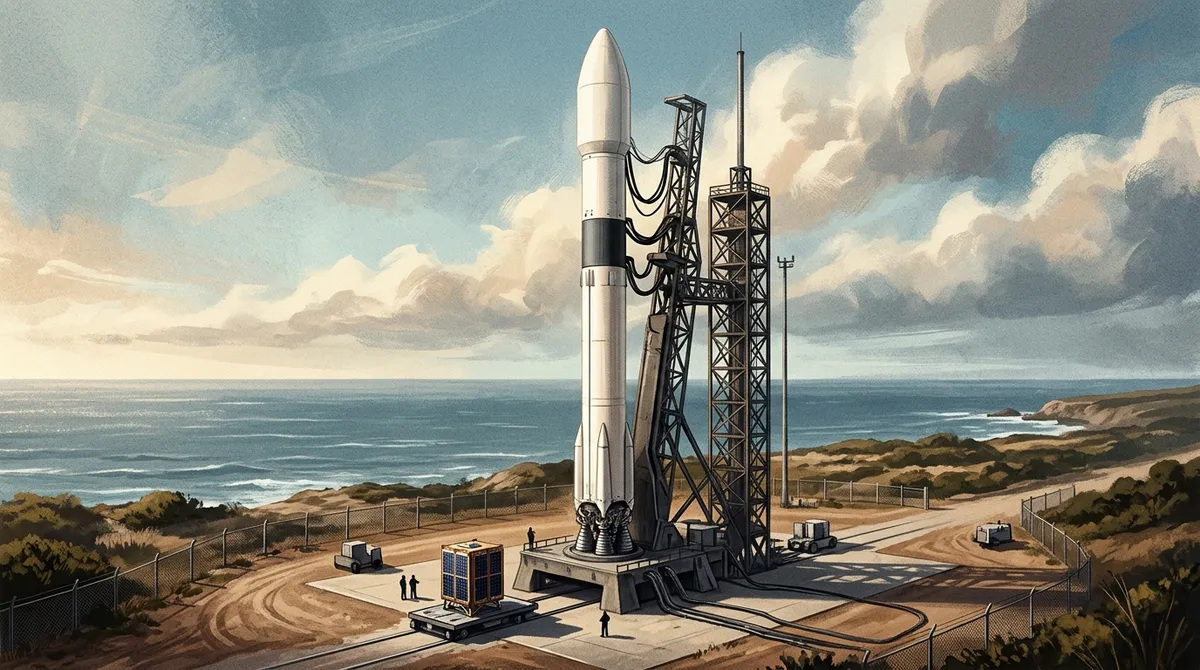
What happened: Spain's PLD Space has signed its first commercial launch contract, flying a small satellite for Japan's Mitsubishi Electric to orbit aboard its Miura 5 rocket. Financial terms were not disclosed.
What's genuinely new: The mission will fly on Miura 5's second orbital test flight to low Earth orbit, with no launch date — the schedule depends on the outcome of the first test flight, still targeted for the first half of 2027 from French Guiana. Mitsubishi Electric is a strategic partner and investor, having led the €108 million ($119 million) extension of PLD's equity round announced in September, and the satellite will support the satellite megaconstellation Mitsubishi Electric is developing. PLD flew Europe's first fully private suborbital launch in 2023.
Watch: the outcome and date of Miura 5's first orbital test flight, which gates the Mitsubishi mission's schedule.
Brief
- Telkom's wholesale arm Openserve signed a deal to distribute Amazon Leo broadband in South Africa — the second distributor after Herotel — aimed at mines, farms, clinics and small businesses beyond the reach of fibre and mobile networks, also covering satellite backhaul for cellular sites; no prices or launch date given, with commercial service expected in 2027. The local-distributor route sidesteps the 30% ownership rule that keeps Starlink unlicensed in the country. (Daily News Egypt)
- Voyager 1 has passed one light-day from Earth — about 25.9 billion kilometers, the first spacecraft to reach the distance, with signals now taking longer than 24 hours to arrive — and the Kennedy Space Center countdown clock paid tribute, a nod shared on X by dpoddolphinpro.
- Bloomberg reports Mukesh Ambani's Reliance Group is exploring manufacturing partnerships to support a planned 1,600-satellite constellation positioned against Starlink — a plan, not a commitment. (Bloomberg)
- NASA's SkyFall Mars helicopter project has grown from about six people to more than 200 since March, its project scientist said on November 10; the three helicopters ride to Mars on the nuclear-powered SR-1 Freedom spacecraft, slated for launch in late 2028, and outside critics call the pairing a "shotgun marriage." (Space.com)
- Korea's Flexell Space, a space-energy venture spun out of Hanwha Systems, signed an MoU with French orbital-data-center developer ALATYR to explore its ultralight CIGS- and perovskite-based solar cells for ALATYR's modular CITADEL orbital computing architecture — a technical-exploration agreement, with no project, dates or commitments yet. (SpaceNews)
- Rocket Lab launched a Gen-3 Earth-observation satellite for BlackSky on an Electron rocket from its New Zealand site — the Full Stream Ahead mission. (MSN)