BepiColombo is in orbit around Mercury
From the Space digest for Nov 21, 2026
Sources ESA Operations on X ESA Operations on X, link 2 BepiColombo on X Jay Keegan on X Jay Keegan on X, link 2 Ryan Caton on X AP the Guardian ESA published Nov 21, 5:25 PM ET
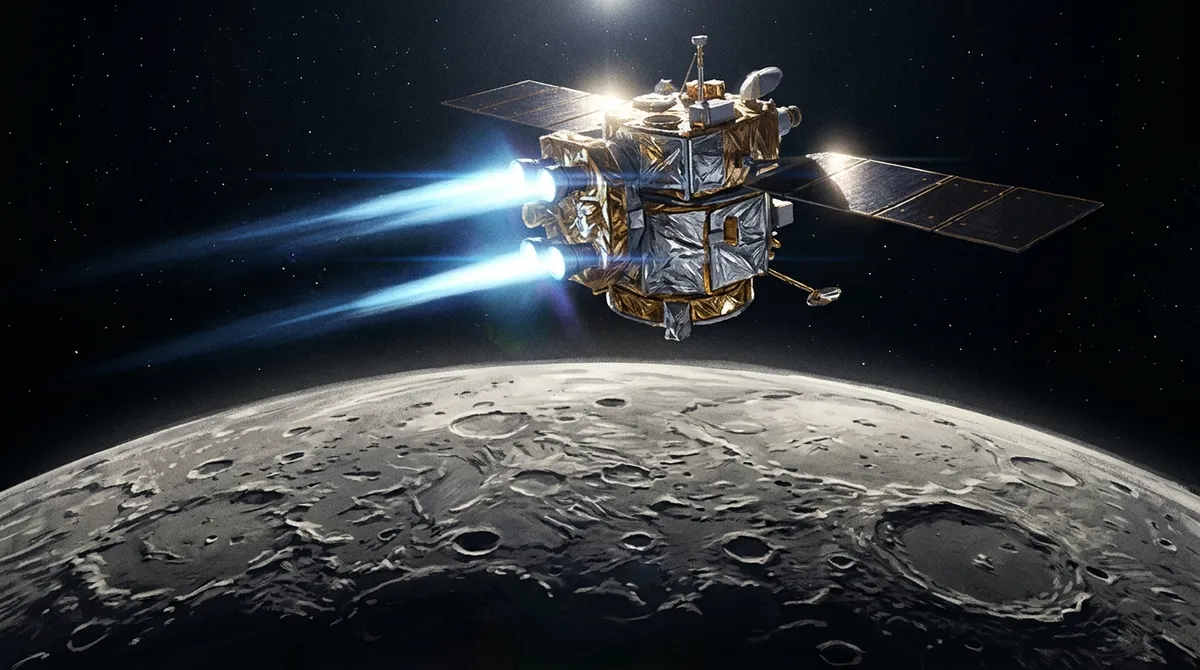
What happened: ESA's BepiColombo fired its Mercury orbit insertion burn on November 21: the Mercury Planetary Orbiter's four thrusters ran a 37-minute burn through the spacecraft's closest approach to Mercury at an altitude of 635 km, after which the MPO and JAXA's MMO orbiter would be permanently in Mercury's grasp. Ground controllers expected to reacquire the spacecraft through ESA's deep-space station at New Norcia, Australia, a couple of hours after the burn ended.
What's genuinely new: The expected reacquisition was missed by two hours with no word from ESA — then the spacecraft came back into contact and ESA's flight dynamics confirmed it is now in orbit around Mercury, the first mission from ESA and JAXA at the innermost planet. ESOC teams are assessing telemetry, with the next mission update planned early in the week of November 23.
Watch: The early-week update from ESA and what the telemetry assessment says about the spacecraft's health and its orbit.
More context: BepiColombo's pair of spacecraft have slipped into orbit around Mercury after an eight-year cruise through the inner solar system, with a series of thruster firings slowing them enough to be captured, AP reports. The €1.6bn European-Japanese mission is only the second in history to circle Mercury, and researchers expect it to explain how the planet formed so close to the Sun, why it has a magnetic field and what makes up the ice in its permanently shadowed craters, the Guardian reported ahead of arrival. ESA's Mercury Planetary Orbiter and JAXA's Mio, now travelling together around the planet, separate on 9–10 December, with the mission's science phase set to begin in April 2027, ESA says.