XPeng puts dates on IRON at Tech Day
From the Robots digest for Nov 25, 2026
Sources BigGo Finance Unite.AI CnEVPost XPENG XPENG, link 2 RobotsBeat BGR published Nov 25, 3:59 PM ET
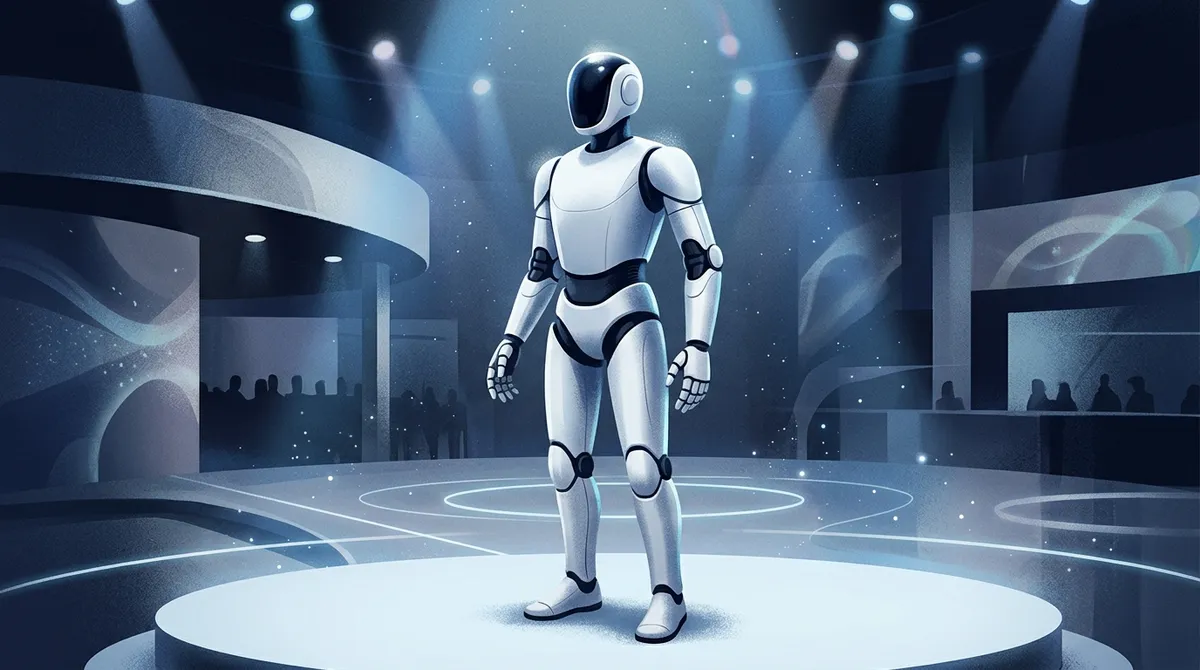
What happened: At XPeng's Tech Day on November 25, chairman and CEO He Xiaopeng said the IRON humanoid enters the hardware mass-production phase in January 2027, with official launch and the start of deliveries in the second quarter of 2027. Before that, IRON is to host XPeng's press conference at the 2026 Guangzhou Auto Show on November 27 — possibly the first time a robot launches a new car at an auto show, He said — and begins training as a store assistant in XPeng's retail stores in the first quarter of 2027. IRON is positioned as a "qualified work partner" for real 7×24 roles — shopping guide, greeter, internal trainer, security — switching tasks automatically and recharging itself.
What's genuinely new: The production promise has slipped again and now carries firm dates — a January 2027 start to the hardware mass-production phase, launch and deliveries from Q2 2027 — plus hardware sales, Token subscriptions and scenario-based services. Onstage, IRON walked out autonomously, exchanged voice lines with He and returned to its charger, with animated visor eyes and bilingual Q&A on show. BGR adds that Xpeng has yet to sell a single unit. Spec claims include a solid-state battery above 300 Wh/kg, more than 1,500 tactile points and 76 degrees of freedom; Xpeng cautions displayed performance may differ from the mass-production product.
Watch: Whether IRON enters the mass-production phase in January 2027 and launches in Q2 2027, the November 27 auto-show hosting, utilization and failure rates in the first-quarter 2027 store trials, and whether the Token subscription model wins paying customers.
More context: XPENG says IRON's solid-state battery is built to resist scorching heat and violent impacts and to be non-flammable under nail penetration XPENG. XPENG describes the robot as running a "VLT+VLA+VLM" trio of models — one for perception, one as the engine for autonomous decision-making and one for whole-body control — on three of its own chips XPENG. The company frames the whole stack under its new Turing Physical AI Architecture (VLA 3.0) — a three-layer design from real-time body control to high-level task planning, shared between its vehicles and robots — with a Robot Data Factory spanning more than 250 scenarios and 15 job categories supporting IRON's training XPENG.