Zaporizhzhia plant back on diesel generators after losing its last power line
From the Energy digest for Nov 27, 2026
Sources World Nuclear News IAEA Anadolu Agency published Nov 27, 7:24 AM ET
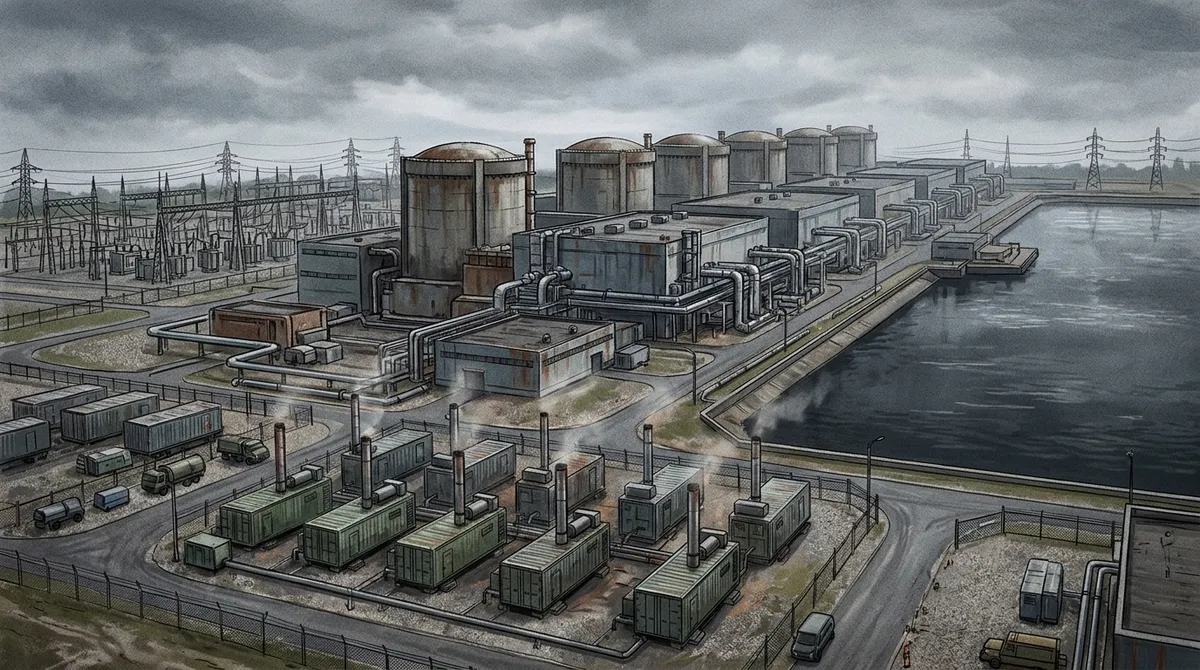
What happened: The six-unit Zaporizhzhia Nuclear Power Plant lost connection to its only remaining external power line — the 330 kV Ferosplavna-1 line — on November 25, reportedly as a result of military activity, and is running essential cooling on emergency diesel generators for the 28th time since the Russia-Ukraine war began in February 2022. The International Atomic Energy Agency is seeking a ninth localised ceasefire so the line can be repaired; four of 19 generators started automatically, two were later shut down to conserve fuel, on-site heating has been suspended, and coolant temperatures are rising but remain within limits.
What's genuinely new: A fresh power loss and a new conservation regime, plus the IAEA's renewed push: the agency estimates the plant has more than ten days of diesel at the current two-generator configuration, reactor heat-removal pumps are stopped with only spent-fuel pool cooling running on units 1 and 6, and it says the situation reinforces the case for repairing the 750 kV Dniprovska line so the plant no longer depends on a single feed. Director General Rafael Mariano Grossi: "no one benefits from a nuclear disaster." The update also reported drone alerts at all Ukrainian plants, including 91 at Chernobyl with drones within 100 metres of the spent fuel storage facility.
Watch: repair of the Ferosplavna-1 and Dniprovska lines and whether a ceasefire covers them; diesel reserves; how long the cold-weather conservation regime holds.
More context: The IAEA says the Zaporizhzhia plant lost its sole remaining external power line, the 330 kV Ferosplavna-1 line, at 05:28 local time on 25 November, reportedly because of military activity, and is relying on emergency diesel generators for the 28th time since the war began. The Anadolu Agency reports the agency is now working with Russia and Ukraine on a ninth localised ceasefire, aimed at repairing Ferosplavna-1 and at the 750 kV Dniprovska line, which was fixed under a June ceasefire only for further damage to be found.