Energy digest — Nov 27, 2026
Top line: Zaporizhzhia Nuclear Power Plant is running on emergency diesel generators again after losing its last external power line, with the IAEA seeking a ninth localised ceasefire for repairs. China General Nuclear has started building a heap-leach uranium plant at its Husab mine in Namibia, and the fourth Zhangzhou Hualong One unit got its inner containment dome hoisted into place.
- Zaporizhzhia plant back on diesel generators after losing its last power line
- Construction begins on Husab heap-leach plant in Namibia
- Fourth Zhangzhou Hualong One unit moves from civil works to equipment
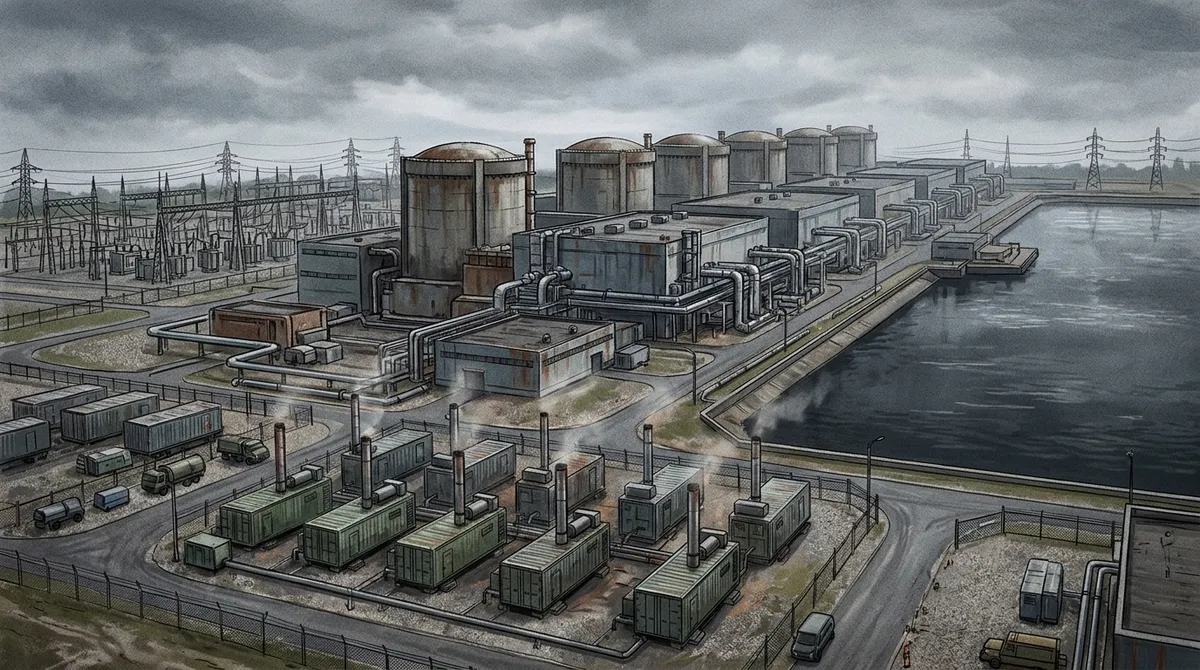
Zaporizhzhia plant back on diesel generators after losing its last power line
Sources World Nuclear News IAEA Anadolu Agency published Nov 27, 7:24 AM ET
What happened: The six-unit Zaporizhzhia Nuclear Power Plant lost connection to its only remaining external power line — the 330 kV Ferosplavna-1 line — on November 25, reportedly as a result of military activity, and is running essential cooling on emergency diesel generators for the 28th time since the Russia-Ukraine war began in February 2022. The International Atomic Energy Agency is seeking a ninth localised ceasefire so the line can be repaired; four of 19 generators started automatically, two were later shut down to conserve fuel, on-site heating has been suspended, and coolant temperatures are rising but remain within limits.
What's genuinely new: A fresh power loss and a new conservation regime, plus the IAEA's renewed push: the agency estimates the plant has more than ten days of diesel at the current two-generator configuration, reactor heat-removal pumps are stopped with only spent-fuel pool cooling running on units 1 and 6, and it says the situation reinforces the case for repairing the 750 kV Dniprovska line so the plant no longer depends on a single feed. Director General Rafael Mariano Grossi: "no one benefits from a nuclear disaster." The update also reported drone alerts at all Ukrainian plants, including 91 at Chernobyl with drones within 100 metres of the spent fuel storage facility.
Watch: repair of the Ferosplavna-1 and Dniprovska lines and whether a ceasefire covers them; diesel reserves; how long the cold-weather conservation regime holds.
More context: The IAEA says the Zaporizhzhia plant lost its sole remaining external power line, the 330 kV Ferosplavna-1 line, at 05:28 local time on 25 November, reportedly because of military activity, and is relying on emergency diesel generators for the 28th time since the war began. The Anadolu Agency reports the agency is now working with Russia and Ukraine on a ninth localised ceasefire, aimed at repairing Ferosplavna-1 and at the 750 kV Dniprovska line, which was fixed under a June ceasefire only for further damage to be found.
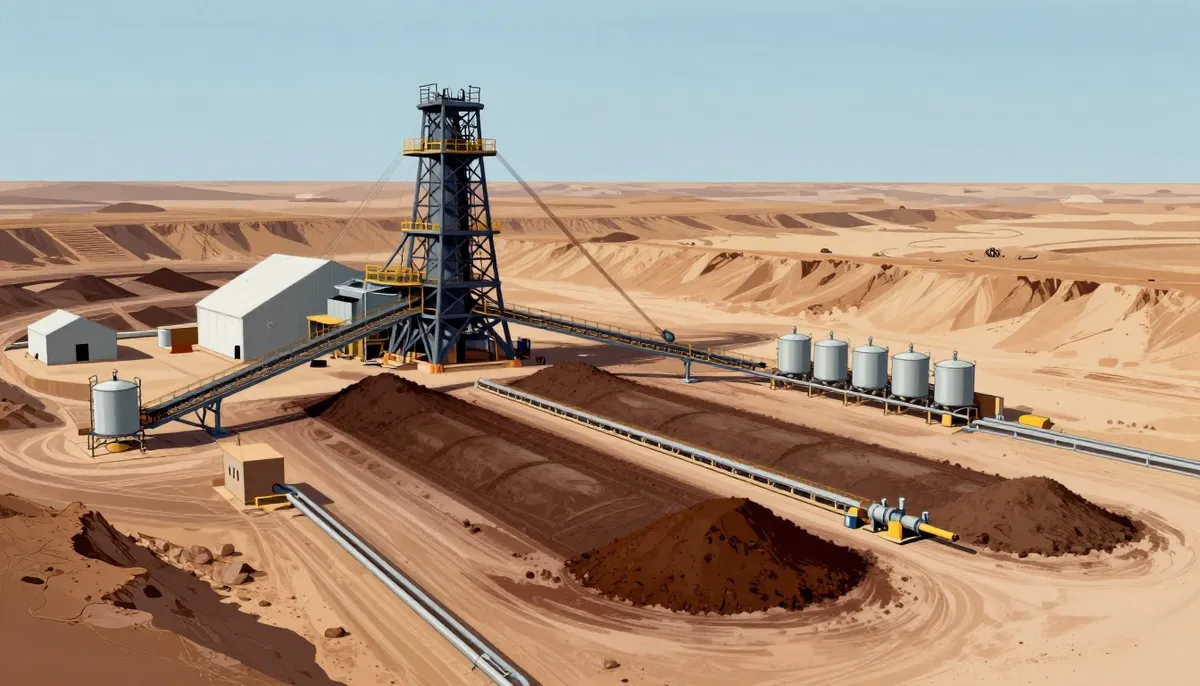
Construction begins on Husab heap-leach plant in Namibia
Sources World Nuclear News published Nov 27, 7:14 AM ET
What happened: China General Nuclear says construction has started on an industrial-scale heap-leach plant for low-grade uranium ore at its Husab mine in Namibia — described by the OECD Nuclear Energy Agency and IAEA as the world's largest operating open-pit uranium mine by physical scale, and 7% of global production in 2024. The plant is designed to process 3.6 million tonnes of ore a year and add about 500 tonnes of metallic uranium capacity annually; with an additional acid plant it is estimated at around USD 300 million, with commissioning expected by the end of 2027. Husab is held by Swakop Uranium — 90% by CGN's Taurus Minerals, 10% by Namibia's state-owned Epangelo.
What's genuinely new: Construction start after more than a decade of R&D: Husab's dense, low-permeability granite ore responds poorly to conventional stirred acid leaching, leaving much of the resource dormant, so the company turned to heap leaching — stacking broken ore 9 metres high and irrigating it with acid. Bench and pilot work costing some USD 20 million, 30-plus process optimisations and multiple patents produced an 82% leaching rate that CGN says approaches conventional methods. Swakop Uranium CEO Luo Wei says the focus now is safe delivery and benefits for the wider Namibian economy; the trial phases created around 200 jobs.
Watch: commissioning against the end-2027 date, actual uranium output added against the ~500 tU target, and how much of Husab's dormant low-grade resource the technique unlocks.
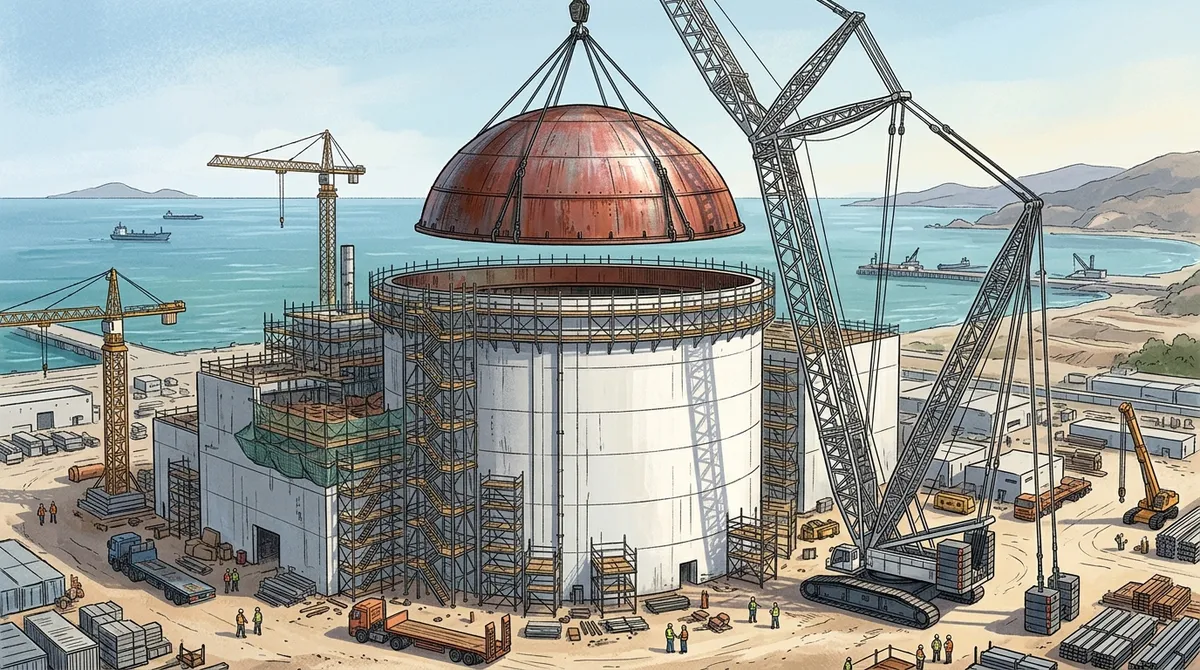
Fourth Zhangzhou Hualong One unit moves from civil works to equipment
Sources World Nuclear News published Nov 27, 7:23 AM ET
What happened: The inner safety dome — about 46 metres across and roughly 470 tonnes — has been hoisted onto the containment building of unit 4 at the Zhangzhou nuclear plant in Fujian province, hoisted at an elevation of about 45 metres on November 26, six days after the unit's third and final steam generator was moved into position on November 20. China National Nuclear Corporation calls it the transition from civil construction to equipment installation, "laying a solid foundation" for installation, commissioning and grid connection.
What's genuinely new: The two milestones at the fourth of six planned Hualong One units. Unit 4 carries ZH-65-type steam generators — each 365 tonnes and over 21 metres long, the first domestically developed third-generation Chinese steam generator with fully independent intellectual property rights, made by Dongfang Electric. Units 1 and 2 entered commercial operation on January 1, 2025 and January 1, 2026; once all six units run, the plant is expected to supply more than 60 billion kilowatt-hours a year, about 75% of the electricity consumption of Xiamen and Zhangzhou cities.
Watch: unit 4 equipment installation, commissioning and grid connection, and construction progress on the final two planned units.
Brief
- Kyoto Fusioneering appointed Pattrick Calderoni as Director of Blanket Programs, announced November 20, 2026 from Oak Ridge, Tennessee, where he is now based. He joined the company's US subsidiary in September and serves as co-Chief Scientist for UNITY-3, the accelerator-based facility KF is building with Oak Ridge National Laboratory to expose roughly one-cubic-meter blanket mock-ups to 14 MeV neutrons — giving developers measured tritium-production and neutron-transport data they cannot get from fission reactors — while leading KF's blanket strategy across the wider UNITY program (UNITY-1 operating in Kyoto; UNITY-2, the tritium fuel-cycle testbed at Chalk River, Canada, still in development under the Fusion Fuel Cycles joint venture with Canadian Nuclear Laboratories). Calderoni spent 20 years at Idaho National Laboratory, most recently running its fusion program, and has worked on ITER test blanket modules. Only Energies Media carries the announcement so far — no independent coverage yet (single source).
- A standardized 462-MW small modular reactor aimed at AI data centers is NuScale's proposal, per a review column by Rick Orford carried on MSN — the configuration would package six of the company's 77-MW Power Modules, the design that in 2023 became the only NRC-certified SMR, and the column frames it as a shift NuScale is making from a financial-risk story toward a concrete data-center product. The original outlet behind the MSN syndication is not identified, and no independent report of a NuScale announcement has surfaced yet (MSN — Rick Orford).
- Dismantling of the 48-metre steel containment sphere is under way at Germany's Stade nuclear plant, and Switzerland's first research reactor is entering its final demolition. The first steel plates have been cut from Stade's spherical containment since November 20 — the final visible step at the first German commercial pressurised-water reactor to be fully dismantled, with the site to be released from regulatory oversight in autumn 2027 and all remaining buildings cleared by end-2027. At the Paul Scherrer Institute, demolition of the concrete reactor building of Saphir — built at Oak Ridge in 1955 for the first UN Atoms for Peace conference, bought by Switzerland and run from 1957 to 1993 — starts in the coming months; the institute says it will be the first complete removal of a former Swiss nuclear facility including its building (World Nuclear News).
- Russia's Arctic strategy document says construction of the pilot Elena-AM microreactor is under way in Yakutia — a land-based plant with up to 400 kW electric and 14 MW heating capacity, designed as an automated heat and power source for remote regions without heat networks; the document, published on November 26 and reported via the Atominfo site, gives no further details (World Nuclear News).
- A Finnish government business group has announced a project to accelerate the development of advanced nuclear plants — no further detail is available yet (NucNet).