Robots digest — Nov 16, 2026
Top line: Tesla reported eight Cybercab crashes to regulators and confirmed a €3 billion plant at Giga Berlin to build up to 1 million a year from 2029, while the US is set to oppose launching treaty talks on autonomous weapons in Geneva. XPeng dates IRON humanoid mass production for January 1, 2027.
- US set to oppose treaty talks on autonomous weapons at UN conference
- GXO expands Apollo humanoid plan to as many as 1,000 robots
- Tesla's Cybercab now has 8 crashes on file with regulators
- OpenAI folds standalone robotics team into core research
- Eric Trump-backed robot maker Foundation misses payroll
- LG humanoid safety deal with KIRIA
- Tesla confirms €3 billion Cybercab factory at Giga Berlin
- Remedy Robotics builds a robot to bring stroke surgery to remote hospitals
US set to oppose treaty talks on autonomous weapons at UN conference

Sources Newsweek RobotsBeat
What happened: As the United Nations' Seventh Review Conference of the Convention on Certain Conventional Weapons opened in Geneva for five days from November 16, the US is expected to oppose launching negotiations on a legally binding treaty restricting autonomous weapons, Newsweek reports. UN Secretary-General António Guterres has urged governments to negotiate legally binding prohibitions and restrictions on autonomous weapons as the conference considers next steps.
What's genuinely new: A November 4 US working paper proposes instead five more years of expert-group work on a nonbinding instrument, arguing existing international humanitarian law already applies and that autonomous functions can reduce risks to civilians. Campaign group Stop Killer Robots counts about 130 countries supporting a legally binding instrument against roughly a dozen opponents, including the US, Israel and Russia; UN human rights chief Volker Türk and Human Rights Watch warn the systems are already moving onto battlefields, with drones central in Ukraine.
Watch: Whether delegates authorize negotiations or settle for continued expert-group work — the convention's 128 states parties decide by consensus, giving holdouts an effective veto.
GXO expands Apollo humanoid plan to as many as 1,000 robots
Sources The Wall Street Journal The Gadgeteer GXO GXO, link 2
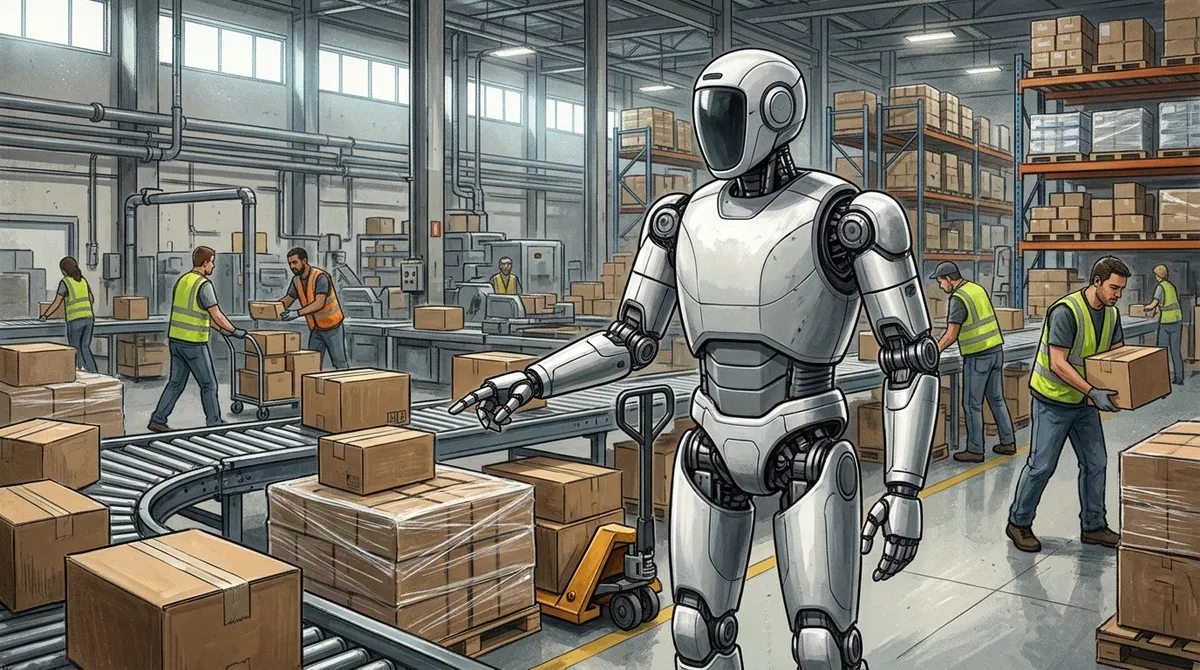
What happened: GXO Logistics signed a letter of intent with Apptronik to move Apollo humanoid trials into live warehouses, with a stated path to as many as 1,000 robots over four years if the trials hit agreed productivity, safety and operational targets. The Wall Street Journal frames the move inside a broader GXO strategy of expanding into data centers and defense work to lift margins and rein in labor costs.
What's genuinely new: No purchase order exists yet: deployment follows the jointly agreed targets, and the commercial phase is framed as Robotics-as-a-Service, so GXO can scale robot hours as a service line across client sites instead of making one capital purchase. Trials start in 2027 across goods-to-person and person-to-goods picking, case and tote movement, packing and sortation, with initial deployment in North America planned for late 2027. The partnership builds on a 2024 proof of concept, a 2026 US pilot of autonomous picking, and evaluations of more than 50 logistics tasks at Apptronik's Robot Park facility.
Watch: Whether the letter of intent becomes a firm order, the trials' productivity and safety results against the unpublished KPIs, and the late-2027 first deployment.
More context: GXO has signed a letter of intent with Apptronik to expand Apollo humanoid trials into live warehouse operations from 2027, with the companies intending a global rollout of up to 1,000 robots over four years if they meet jointly agreed productivity, safety and operational KPIs, GXO says. The commercial phase is expected to follow a Robotics-as-a-Service structure that would let GXO scale humanoid deployment as a flexible, service-based offering rather than one capital purchase, building on a 2024 proof-of-concept and a US pilot completed this year on autonomous picking for small consumer goods, per GXO. As background, GXO told investors in August that it had added and expanded aerospace and defense work with Raytheon and Boeing plus a major new hyperscaler relationship in technology and data centers that was its largest win of the quarter, GXO reported.
Tesla's Cybercab now has 8 crashes on file with regulators

Sources Electrek published Nov 16, 4:41 PM ET
What happened: NHTSA crash filings now show eight Cybercab crashes, barely two months after the purpose-built robotaxi began giving public rides in Austin. Four happened in driverless Robotaxi service — none above 5 mph, none involving injuries. Four more happened with a test driver aboard and Tesla's driver-assist engaged, including a 53 mph highway collision in Philadelphia in September; two of the eight involved injuries.
What's genuinely new: Tesla reports the driverless and driver-assist crashes in separate federal datasets, and redacted all four driver-assist narratives as confidential business information, leaving fault unknown. Electrek reads the tally as a speed problem: the driverless service looks clean because it stays slow inside small geofences, while the same software registers fatal-speed crashes elsewhere. Tesla's safety report claims zero injuries over 3,112,541 driverless miles — but excludes monitor-accompanied miles and the test fleet.
Watch: Whether driverless Cybercabs expand onto highways or into larger zones, injury counts in the driver-assist dataset, and how the tally sits with federal scrutiny already aimed at the fleet.
OpenAI folds standalone robotics team into core research
Sources Tech Times Fortune
What happened: OpenAI has broken up its standalone robotics research team, per Fortune: researchers now report to Chief Research Officer Mark Chen and hardware engineers to President Greg Brockman. OpenAI says robotics remains central to its long-term plans and that its general frontier models, including GPT-6 Astra, apply directly to robot control.
What's genuinely new: New detail from Tech Times and Nvidia's benchmark page: Astra beat every specialist robot policy on simulated accuracy (74.8% on a 120-task manipulation benchmark versus 51.0% for the previous best) but each Astra call takes 11 to 19 seconds, against 47 milliseconds for the fast π0.5 policy, with per-episode cost in one mode running about $36.40 — a general model still needs a fast controller underneath it. Fortune also reports CEO Sam Altman is targeting a first public humanoid demonstration in 2027, and that OpenAI's operating losses reportedly totaled $10.9 billion in its most recent quarter.
Watch: The 2027 humanoid demonstration target, and whether Astra-based stacks close the speed and cost gap to physical deployment.
Eric Trump-backed robot maker Foundation misses payroll
Sources The Times of India RobotsBeat
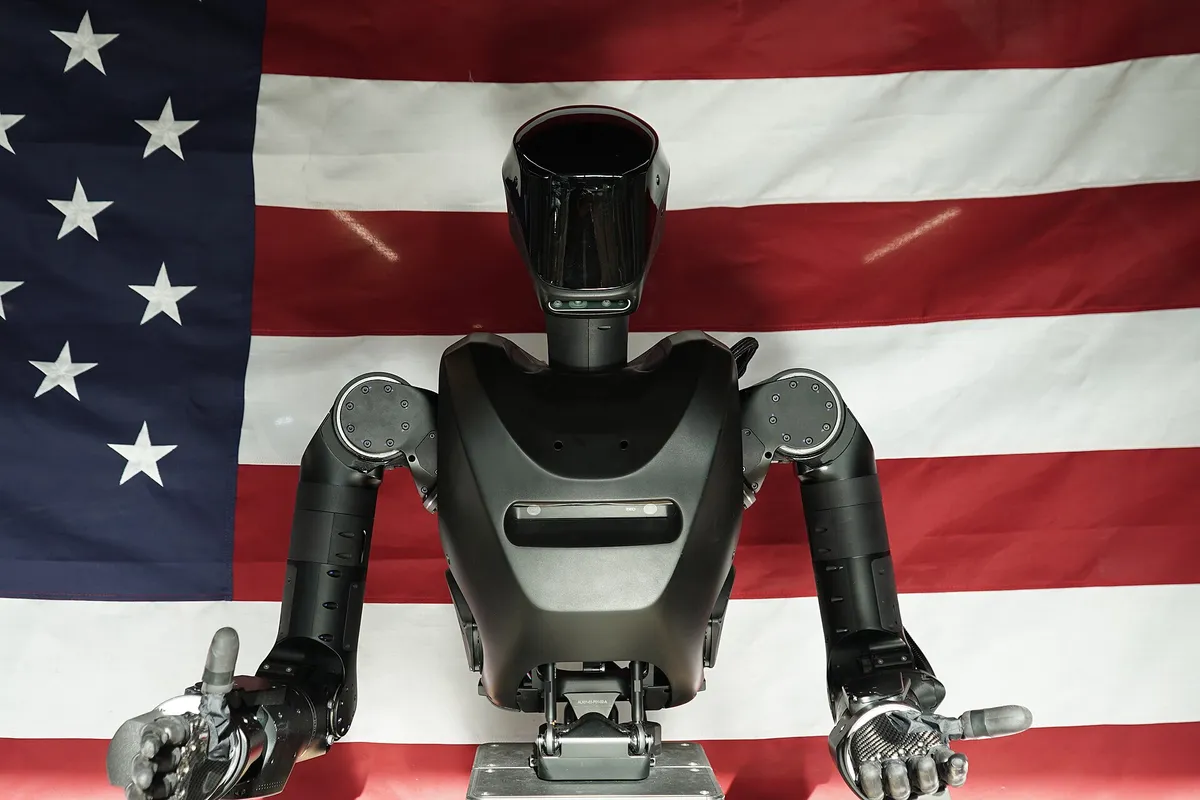
What happened: Foundation, a San Francisco startup developing Phantom humanoid robots for military use and backed by Eric Trump, missed its October 30 payroll, according to CNBC reporting cited by The Times of India and RobotsBeat, and some workers were still unpaid more than two weeks later. Attention has focused on a $4.6 million loan CEO Sankaet Pathak took from the company last year to buy a California home.
What's genuinely new: CNBC traced Foundation's widely cited $24 million in Pentagon business to research contracts held by Boardwalk Robotics, a Florida company Foundation acquired in late 2024 — not new awards won by Foundation itself. Questions remain about the company's governance (Pathak is the sole board member and owns most of its shares) and its claims of Pentagon business, while it seeks a funding round at a reported $3 billion valuation. A spokesperson for Eric Trump told the Financial Times he has no involvement in management, operations or commercial activities.
Watch: Whether payroll is restored, and whether the fundraising at a reported $3 billion valuation closes.
LG humanoid safety deal with KIRIA
Sources Money Today Unite.AI
What happened: On November 13, 2026, LG Electronics signed a memorandum of understanding with the Korea Institute for Robot Industry Advancement (KIRIA) to build a safety and usability evaluation system for humanoid robots and to promote domestic pilot safety certification. LG will take part in building the evaluation system at KIRIA's Humanoid Robot Safety Certification Center and in developing international and national standards. It will also run domestic safety pilot certification for its CLOiD humanoid.
What's genuinely new: LG plans to release a bipedal humanoid built on NVIDIA's robot development platform in the first quarter of 2027. Money Today reports that CES 2027 is expected to be its debut stage. LG also plans to supply components and its Data Factory to research and educational institutions from the second half of 2027.
Watch: Whether the pilot safety certification is granted, and whether CLOiD appears at CES 2027 with safety testing that outside parties can check.
Tesla confirms €3 billion Cybercab factory at Giga Berlin
Sources Electrek
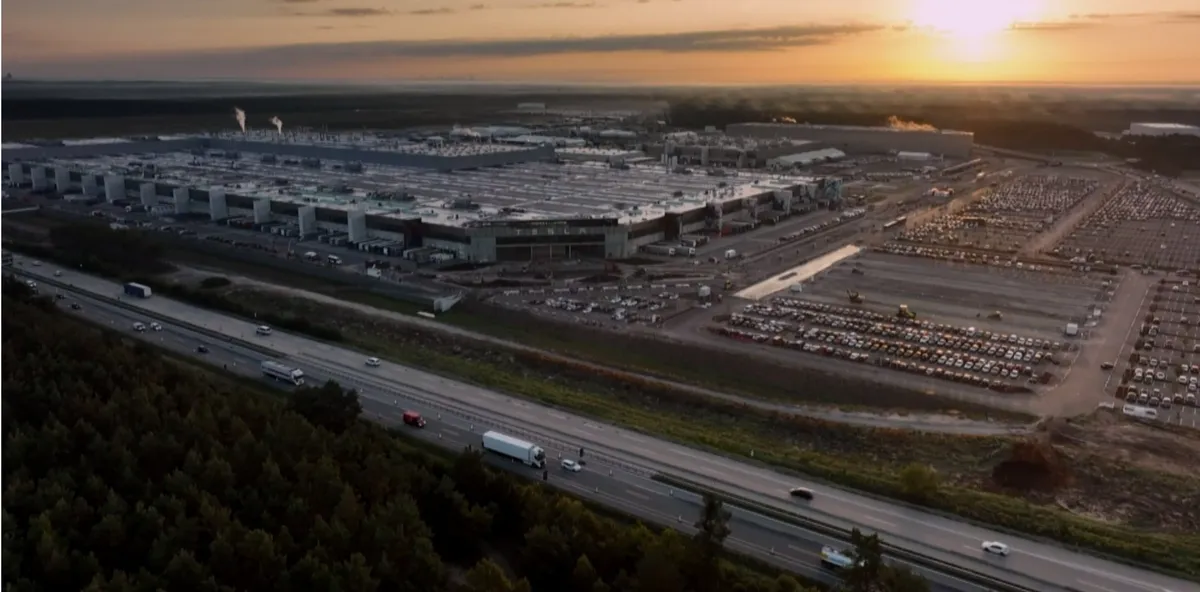
What happened: Tesla confirmed a first €3 billion (about $3.5 billion) investment in a new production building at Giga Berlin in Grünheide, Germany, designed for up to 1 million Cybercab robotaxis a year, with production planned for 2029. Plant manager André Thierig announced the decision on X. Tesla plans to file the building application before the end of 2026, break ground in the first half of 2027, and start production in 2029.
What's genuinely new: The plant would out-produce demand Tesla can legally serve in Europe: EU type-approval rules cap a driverless vehicle model at 1,500 registrations a year, Tesla holds no approval anywhere in Europe for unsupervised driving, and the steering-wheel-less Cybercab needs a Level 4 certification no automaker has yet used. In the US, Texas had 463 registered Cybercabs in late October, and personal orders recently opened at $29,990 plus a mandatory $299 monthly subscription.
Watch: The EU's driverless-approval path, export plans for the Berlin line, and whether any European driverless operation exists before the 2029 production start.
Remedy Robotics builds a robot to bring stroke surgery to remote hospitals
Sources IEEE Spectrum published Nov 16, 9:00 AM ET
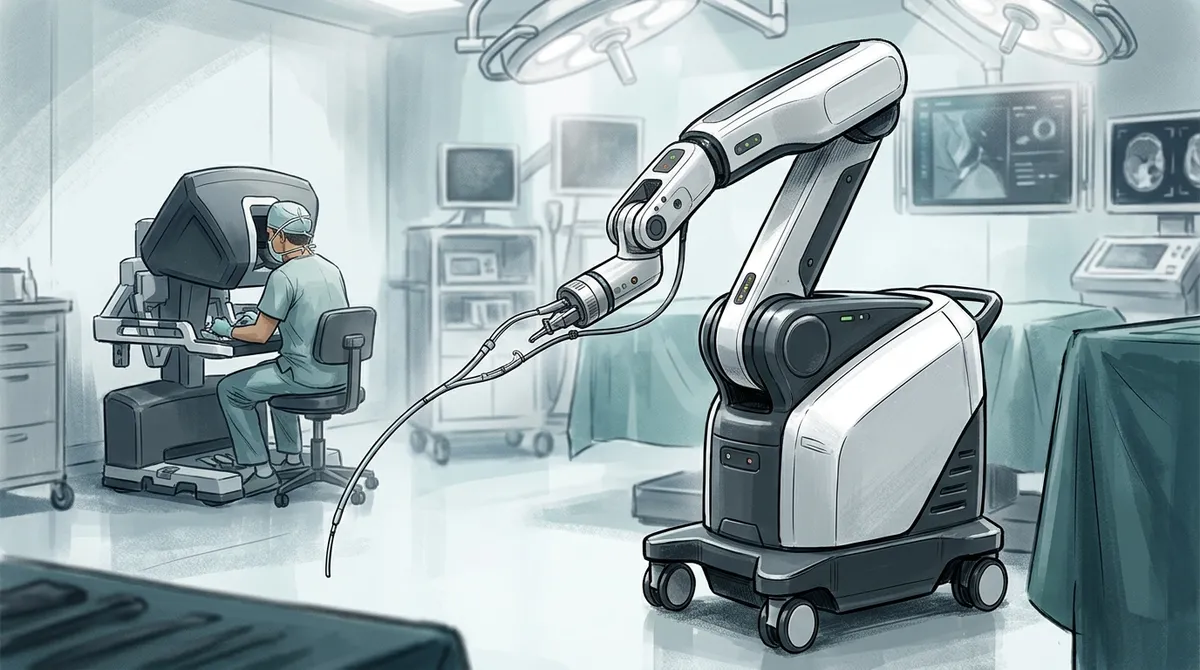
What happened: San Francisco startup Remedy Robotics has built the N1 System, a surgical robot meant to let a surgeon at a distant console perform thrombectomies — the standard emergency operation for ischemic stroke — steering a flexible catheter through a patient's blood vessels from kilometers away, IEEE Spectrum reports. The company has already remotely tested the system on a small group of patients.
What's genuinely new: Design detail: the catheter steers without a guide wire, a computer-vision algorithm tracks its rotation so operator commands translate correctly inside the body, and a CT overlay can be toggled to reveal blood-vessel routes invisible on live X-ray. The target is access: only about 1 in 10 patients eligible for thrombectomy receive one, against at least 5 million ischemic strokes worldwide each year.
Watch: Further remote patient tests, the regulatory path, and whether communications links and hospital workflows prove reliable outside demos.
Brief
- Pony AI and Toyota have begun pilot operations of their bZ4X robotaxi in Guangzhou's Nansha district, with 24-hour passenger service through Pony AI's app and partner mini-programs. The companies target about 1,000 of the vehicles across Chinese cities and are testing in other cities. They did not disclose how many vehicles are in Guangzhou or a timeline for the 1,000 target. Links: CnEVPost.
- Galileo Robotics, with a Polish partner, has deployed its C1-W quadruped robot for inspection and security patrols at a Poznan logistics park, moving from two manual shifts a day to robotic patrols every three hours. The company reports more than 400 hours of stable operation across 2,000 square meters of storage. Links: Bastille Post.
- GITEX Global will add a robotics exhibition, GITEX World RobotiX, in Dubai from December 8 to 11, 2026, with humanoid, quadruped and exoskeleton demonstrations from Unitree, UBTECH, Lumos Robotics and others. Counterpoint Research reports that global humanoid shipments exceeded 22,000 units in the first half of 2026. Event preview. Links: Robotics and Automation News.
- XPeng CEO He Xiaopeng, on the company's third-quarter earnings call, said the IRON humanoid could outsell the market's most popular premium EVs in sales potential and gross profit, with mass production beginning January 1, 2027 and an external commercial launch in the second quarter of 2027. (single source) Links: Benzinga.
- Tesla is developing advanced tactile sensors meant to give its Optimus humanoid robot a human-like sense of touch, with a patent covering the approach. (single source) Links: MSN.
- Security vendor VicOne reports 28 initial zero-day vulnerabilities in software used to train, simulate and operate robots, including projects from Google, NVIDIA and Meta, and demonstrated one flaw that stopped a robot's remote-stop command from working; the findings await vendor and vulnerability-authority review. (single source) Links: IEEE Spectrum.
- AgiBot's A3 Ultra humanoid navigated complex terrain in Shanghai, in a company video dated November 14 — a mobile demonstration from the company whose last public evaluation came from fixed-station work in its convenience-store trial. (single source) Links: MSN.
- AI research firm Mosaico raised €7.5 million (about USD 8.7 million) to expand its open-source robotics data platform, which helps teams search sensor recordings and prepare data for AI training. (single source) Links: RobotsBeat.
- FF EAI Robotics (FFR) reports delivering two Aegis Ultra robots to Central Michigan University, releasing Brain Blocks AI tools and completing a Faber U parts-sorting test in simulation. (single source) Links: RobotsBeat.
- Aptiv plans to deploy 100 TARSBOT A-Series factory robots by the end of 2026, with a first batch operating and computing and power technology set for integration. (single source) Links: RobotsBeat.
- Security-services firm Certis says its robot fleet now exceeds 60 machines across more than 30 customer sites, combining autonomous Wallace patrols with frontline officers and its Mozart AI operations platform, while a newer Max humanoid is on trial for roles involving interaction with people. (single source) Links: RobotsBeat.
- Shanghai-based Elite Robots is expanding its CE-compliant ELITEMISSION mobile manipulators internationally — autonomous platforms paired with collaborative arms for machine tending and material transfers across factory workstations. (single source) Links: RobotsBeat.
- University of Sheffield researchers published a study, in the Royal Society's Philosophical Transactions, arguing that robotics could give AI a human-like sense of self: a simulated robot learned to visually distinguish its own body from the world by observing its own movements, and cognitive robotics professor Tony Prescott argues that body awareness in physical machines could ultimately lead to self-aware AI. (single source) Links: The Times of India.
- Walmart and Symbotic expanded their commercial agreement to bring AI-enabled robotics to 25 U.S. regional distribution centers, with an initial commitment of about $6 billion in spend over several years; Walmart says the work supports upstream e-commerce inventory management, storage capacity and faster replenishment. (single source) Links: Retail TouchPoints.
- Faraday Future's third-quarter results say its robotics unit, now the Nasdaq-listed FFR, sold and shipped 351 devices in October, a monthly record, with 1,168 units sold cumulatively and a 2026 target of about 2,000 units reaffirmed. Faraday reported third-quarter revenue of about $1.15 million. Links: Business Wire.
- Elon Musk said in a reply on X that Tesla may start trials of customer-owned cars on its Robotaxi platform as soon as December, conditional on how things go. Tesla had earlier pointed to about the second quarter of 2027 for customer vehicles joining the network. (single source) Links: Teslarati.
- Haitian and Salvadoran forces took Sylvio Cator Stadium in Port-au-Prince from gangs, with video showing rifle-mounted robot dogs moving through corridors and across the pitch. The Mirror says it is unclear what part the robots played, and President Nayib Bukele reported that several human skulls were found at the stadium. (single source) Links: The Mirror.