Energy digest — Nov 20, 2026
Top line: The biggest moves are ministerial: South Africa's energy department is preparing the proposed determination that starts procurement of 5.2 GW of new nuclear, and New York released a 30-point master plan for 5 GW of new reactors. Poland's state developer signed a letter of intent extending its first AP1000 programme into long-lead procurement.
- South Africa prepares the case for 5.2 GW of new nuclear
- New York lays out a 5-GW advanced nuclear master plan
- Poland takes the next procurement step on its first nuclear plant
- Pacific Fusion clears New Mexico's first private-fusion materials licence
- Andhra Pradesh approves exploring SMR power to replace thermal plants
- Nuclea Energy closes its Moltex acquisition
- Lloyd's Register approves nuclear classification rules for ships
- Radiant commits more than $380 million to building Kaleidos factories
- Comments close on NRC petition to regulate fuel-reprocessing plants
South Africa prepares the case for 5.2 GW of new nuclear
Sources World Nuclear News World Nuclear News, link 2 World Nuclear Association
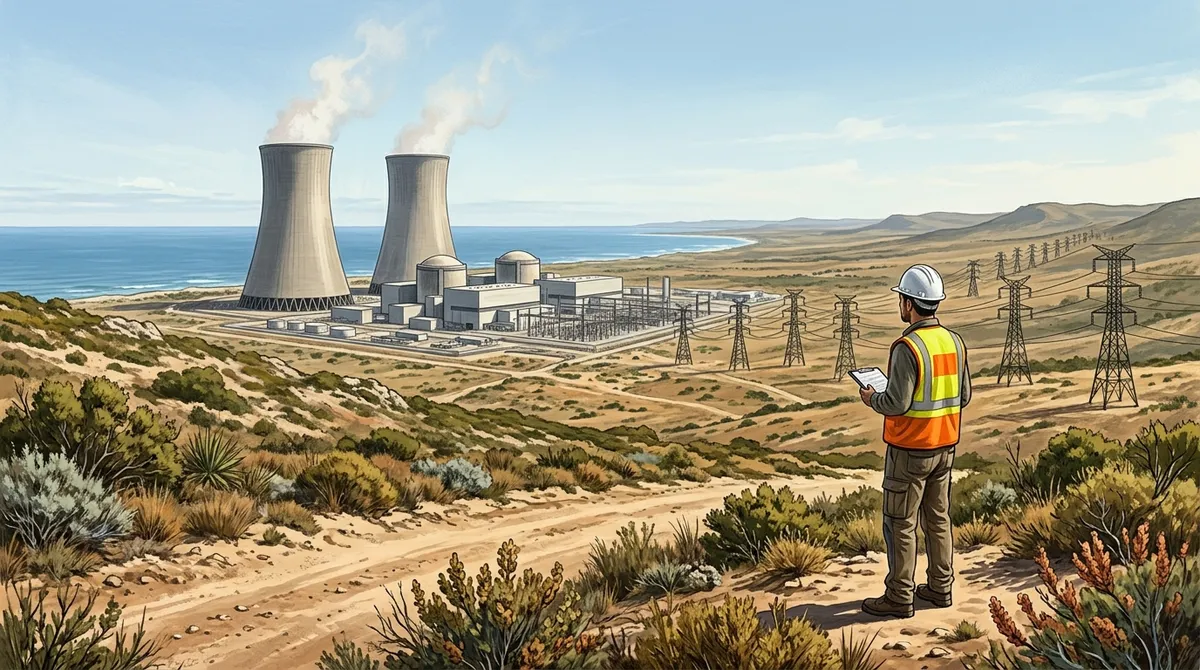
What happened: Energy Minister Kgosientsho Ramokgopa said his department is preparing a proposed determination for 5.2 GW of additional nuclear capacity, the allocation in South Africa's 2025 Integrated Resource Plan, scheduled to be on stream by 2039, to put before the public. State utility Eskom's feasibility report has already been submitted. Publication of the determination is a statutory trigger for procurement, which he aims to complete with a final determination by the end of April 2027, "and then we will start the process of building 5.2 GW of nuclear."
What's genuinely new: The determination process itself, with Eskom's feasibility report in hand. Ramokgopa also gave small modular reactors a place in the programme, since smaller units spread capital commitments over time. Necsa said the decisions will revive the country's front-end fuel-cycle capabilities (uranium conversion, enrichment, fuel fabrication) and let it reassess intellectual property from the mothballed Pebble Bed Modular Reactor for SMR applications and high-temperature fuel work. South Africa currently runs only Koeberg's two reactors, about 5% of its electricity.
Watch: Publication of the proposed determination, submissions during public participation, and the final determination targeted for the end of April 2027.
More context: Eskom has already recommended Thyspunt in the Eastern Cape as the preferred site for a station of up to 5,200 MWe, and the environment department has accepted the final scoping report, allowing the project to proceed to a full environmental impact assessment, according to the World Nuclear Association. Necsa signed a binding heads of agreement in October with Quantum Leap Energy, a subsidiary of ASP Isotopes, for a high-assay low-enriched uranium venture at Pelindaba that is to supply TerraPower, World Nuclear News reports.
New York lays out a 5-GW advanced nuclear master plan

Sources American Nuclear Society
Thread: newgen — New York's 5-GW nuclear master plan · new
What happened: On November 18 Governor Kathy Hochul introduced New York's Master Plan for Responsible Advanced Nuclear Development — a 30-point plan for adding 5 GW of new nuclear capacity, coauthored by the state energy authority NYSERDA and the Department of Public Service and backed by a dozen studies and more than 1,000 pages of research. Hochul called it a pairing of the 5-gigawatt target with a strategy for what she describes as the largest US nuclear build-out in more than three decades.
What's genuinely new: The completed plan and the 5-GW figure, against earlier steps set nearer 1 GW: the plan sets workstreams on a deployment framework, investment, supply chain, workforce, siting and regulation, spotlights the Westinghouse eVinci microreactor planned at Fort Drum (selected under the Army's Janus programme and set to be New York's first new reactor in nearly 40 years), references the New York Power Authority's ten shortlisted developers and eight communities interested in hosting reactors, and reserves space for fusion work at the University of Rochester's Laboratory for Laser Energetics.
Watch: NYSERDA's public webinar on January 13, site identification and NYPA's developer partnerships.
Poland takes the next procurement step on its first nuclear plant
Sources World Nuclear News
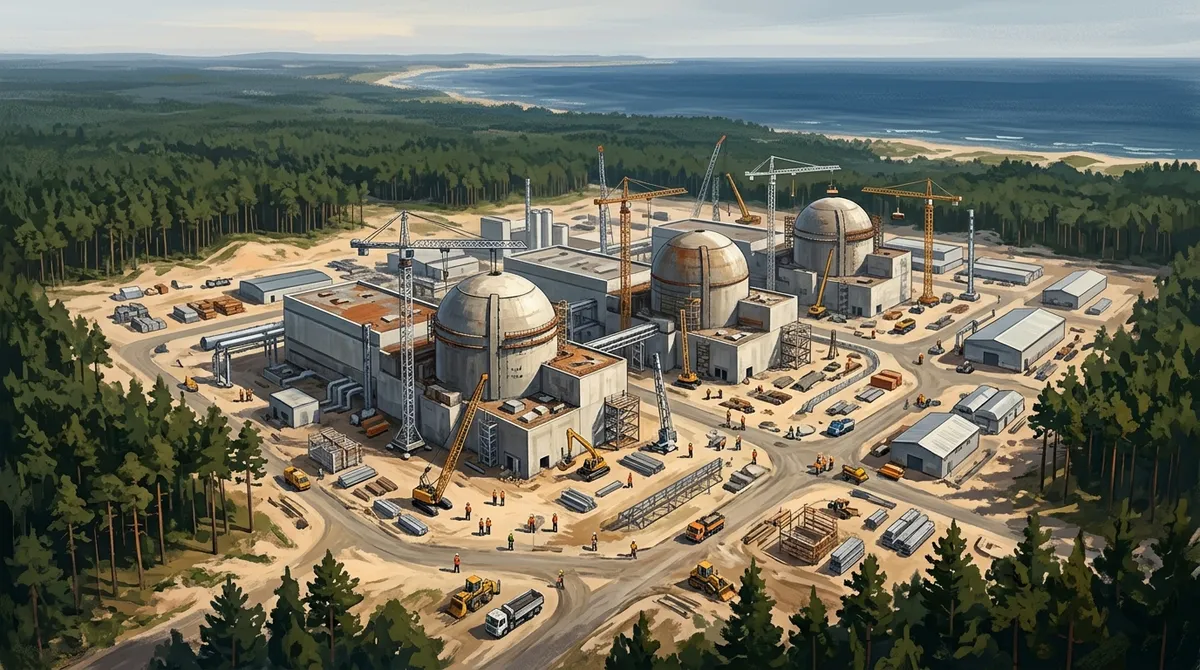
What happened: State developer Polskie Elektrownie Jądrowe signed a letter of intent with the Westinghouse-Bechtel consortium to extend the scope of the Engineering Development Agreement to cover procurement of long-lead items for the first of three AP1000 reactors at the Lubiatowo-Kopalino site in Pomerania. The letter was signed at the Partnership for Transatlantic Energy Cooperation ministerial meeting in Warsaw, and the US partners will also support PEJ in negotiations with export credit agencies on financing the component supply.
What's genuinely new: The framework for widening the long-lead ordering, on top of the ordering already under way: Westinghouse has placed conditional purchase orders with Polish fabricators Energomontaż-Północ Gdynia, FAMAK, Mostostal Kielce and Mostostal Kraków for containment-vessel wall, floor and module scopes, and Japanese firm IHI Corporation received an order covering engineering and procurement for one containment vessel and a large steel module. Bechtel, Gdańsk University of Technology and the University of South Carolina also signed a nuclear workforce memorandum.
Watch: The construction (EPC) contract, export-credit-agency financing and further long-lead orders and module fabrication.
Pacific Fusion clears New Mexico's first private-fusion materials licence
Sources World Nuclear News POWER Magazine American Nuclear Society published Nov 20, 12:50 PM ET
Thread: newgen — Pacific Fusion's Albuquerque campus · new
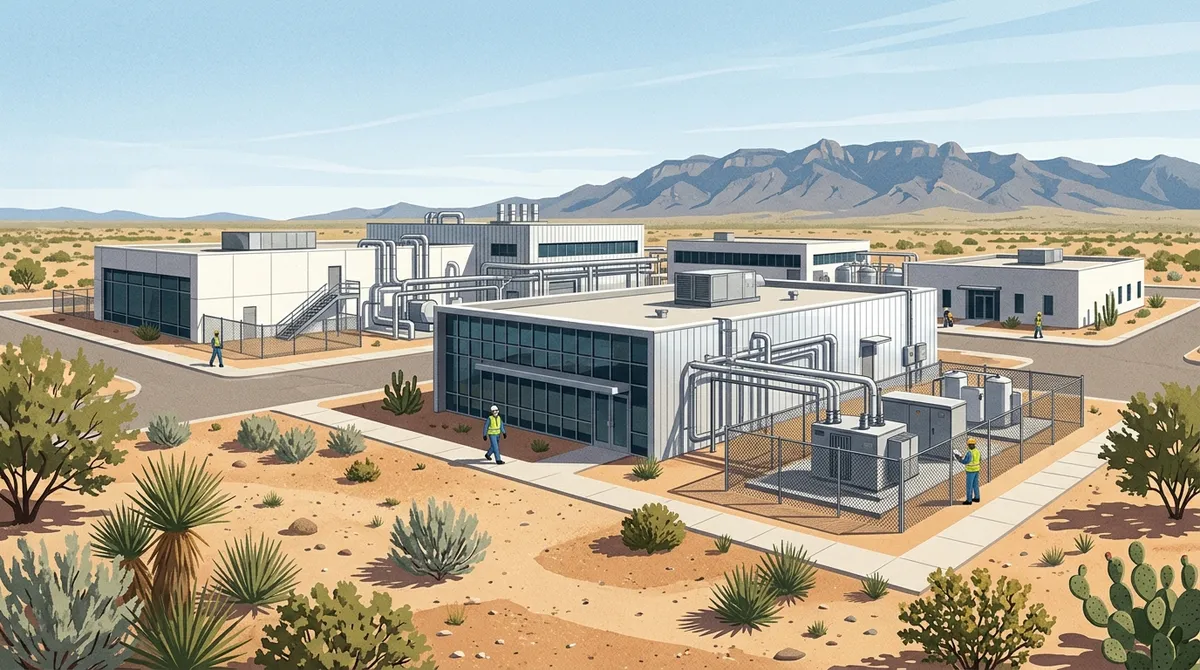
What happened: New Mexico's Environment Department approved the radioactive materials licence for Pacific Fusion's Research and Manufacturing Campus in Albuquerque — the first the department has issued to a private fusion company — authorising the developer to fabricate and test deuterium-tritium fusion targets and to possess up to 15,000 curies (about 1.5 grams) of tritium, held in a closed system, with waste sent to licensed facilities outside the state.
What's genuinely new: The approval, coming about a year after the company chose New Mexico, keeps its Demonstration System on track for net facility gain by 2030 — bursts exceeding 100 megajoules on the roughly $1 billion Mesa del Sol campus, broken ground in August, which the company calls the only "high-yield" fusion facility under construction in the US and expects to support more than 200 permanent jobs; Pacific Fusion has hired 90 workers at its Los Lunas Build Center making components for the pulser system.
Watch: Construction progress at Mesa del Sol and the 2030 net-facility-gain target.
Andhra Pradesh approves exploring SMR power to replace thermal plants
Sources Hindu BusinessLine Swarajya Bizz Buzz The Hans India
What happened: Andhra Pradesh's state government issued Government Order Rt. No. 81, dated November 20, 2026, approving exploration of nuclear power plants using small modular reactor technology as an alternative to thermal power, on a request from state utility APGENCO. Energy special chief secretary K Vijayanand said plants would be considered at retiring thermal units or other suitable locations "after SMR technology is stabilised," and that the private sector will be allowed to participate.
What's genuinely new: The approval sits inside a newly opened national framework: India's 2025 SHANTI Act ended NPCIL's monopoly, letting state utilities, foreign joint ventures and captive plants build, own and operate reactors with foreign direct investment capped at 49 per cent. The state estimates nuclear at Rs15,000–20,000 crore (roughly $1.7–2.3 billion) per gigawatt, NTPC is weighing land and site-selection studies in Andhra Pradesh toward its 30-GW-by-2047 target, and state-owned NPCIL's separate 6×1,000-MWe plant at Kovvada in Srikakulam district remains in pre-construction.
Watch: Site shortlisting at retiring thermal plants, the SMR design and partner selected, and any private companies named.
Nuclea Energy closes its Moltex acquisition
Sources World Nuclear News Interesting Engineering
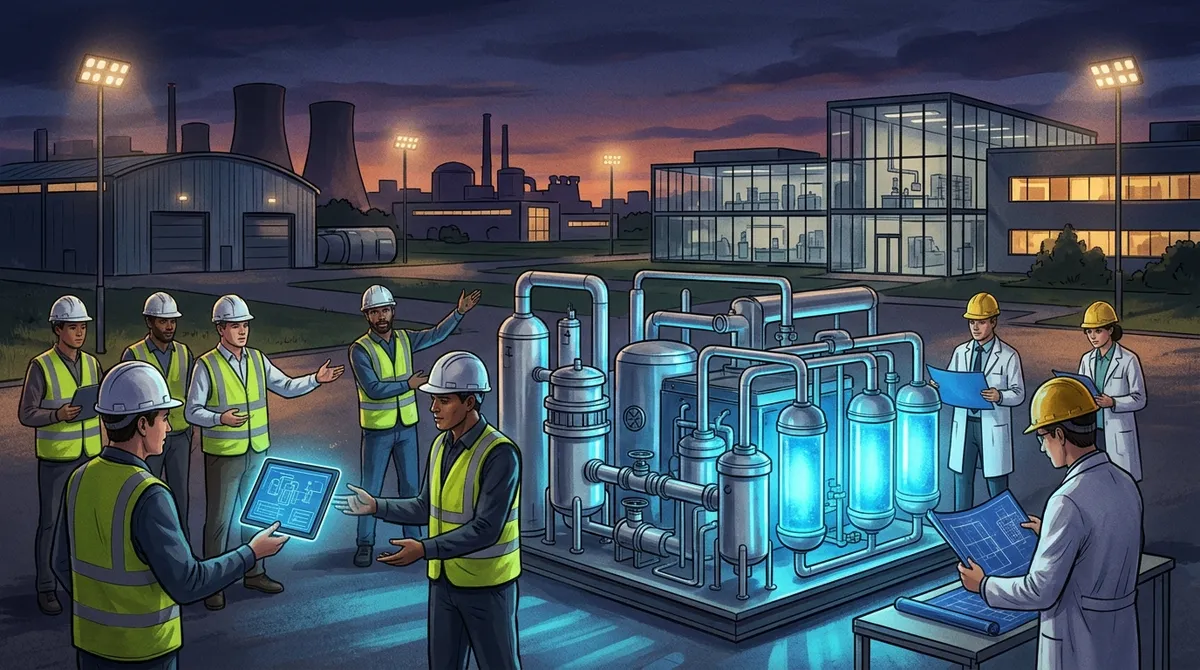
What happened: Nuclea Energy concluded its acquisition of Moltex Energy Limited's technology and intellectual property portfolio, with all customary closing conditions satisfied on November 17 through its subsidiary Nuclea Energy Canada. The deal adds the WATSS used-fuel recycling process — successfully tested at Canadian Nuclear Laboratories with real used CANDU fuel, recovering more than 90 per cent of transuranics — and the SSR-W, a 300–500 MWe molten salt fast reactor through Phase 1 of Canada's Vendor Design Review, alongside the Morpheus lead-cooled microreactor.
What's genuinely new: The closing clears a condition for Nuclea's planned Nasdaq debut, which runs through a $350 million business combination with NorthStrive Acquisition Corp I — shareholder approval, Form S-4 registration effectiveness and a $3 million minimum cash requirement still ahead — after which the merged company holds more than 80 granted patents. World uranium mine output is expected to fall by roughly half between 2030 and 2040, and the US holds more than 95,000 metric tons of spent fuel, a federal liability projected near $62 billion by 2030 — while WATSS could cut deep-disposal volumes by up to 95 per cent while keeping plutonium unseparated.
Watch: The Nasdaq listing's progress, and any site, customer or demonstration announcements for SSR-W and WATSS.
Lloyd's Register approves nuclear classification rules for ships
Sources World Nuclear News
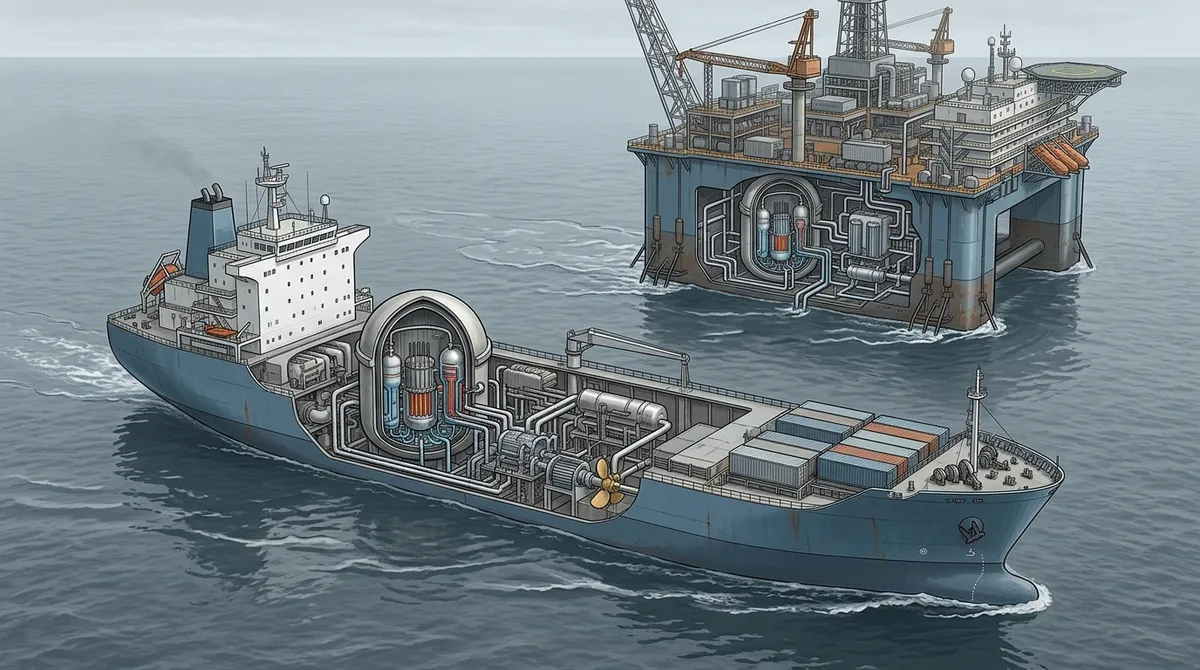
What happened: Lloyd's Register approved Rules for the Classification of Ships and Offshore Units Integrated with Nuclear Power — a reactor-agnostic, goals-based framework for assessing nuclear technology on vessels and offshore units, approved by the society's technical committees and set to evolve as designs and international regulation mature.
What's genuinely new: The rules themselves — the society says no class society has previously issued rules suitable for all ship and offshore-unit types — arrived alongside other recent maritime-nuclear developments: the American Bureau of Shipping published floating-plant rules in 2024, the IAEA-led ATLAS initiative launched in August with 26 countries backing it, and Lloyd's leads a UK Maritime Nuclear Consortium with Rolls-Royce and Babcock formed in January. Applications run from nuclear-powered vessels to floating power units and energy for ports.
Watch: The wider classification and advisory suite Lloyd's says it will announce separately, the consortium's deliverables and the port-readiness pathway with the British Ports Association.
Radiant commits more than $380 million to building Kaleidos factories
Sources World Nuclear News Interesting Engineering
Thread: newgen — Radiant's Kaleidos microreactor · new
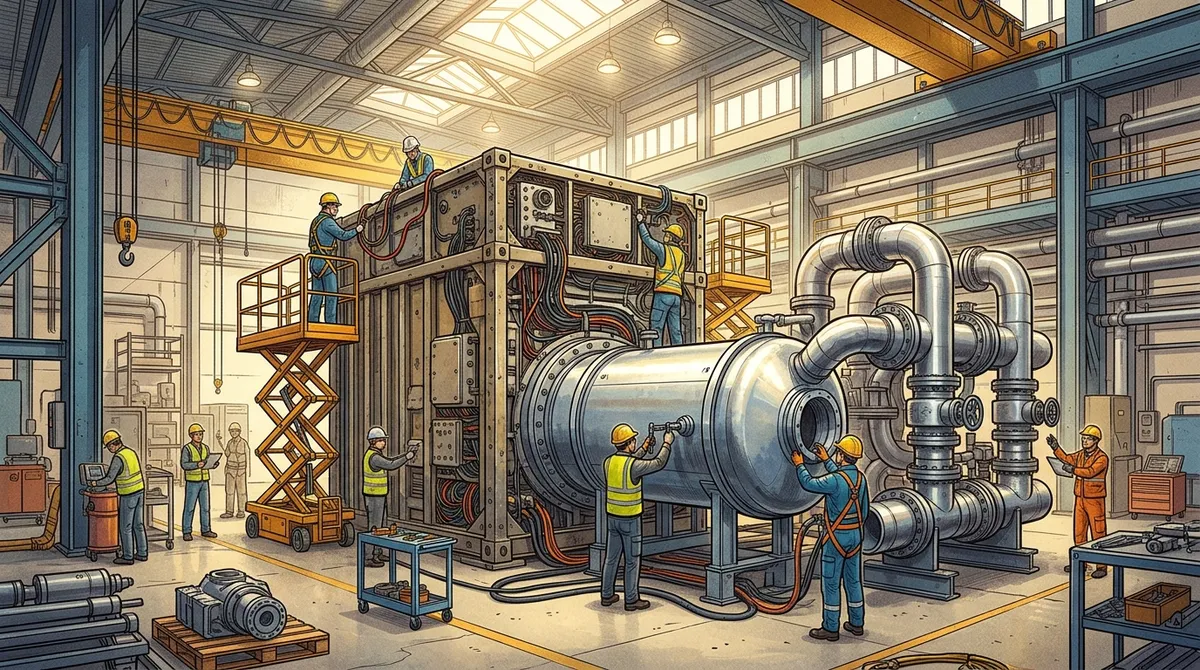
What happened: Radiant is investing more than $380 million across two sites as it builds out manufacturing for Kaleidos, its transportable high-temperature gas-cooled microreactor of about 1 MW electric designed to fit in a shipping container. More than $100 million expands the El Segundo, California campus by about 200,000 square feet for R&D and assembly of the first commercial reactors; $280 million funds an Oak Ridge, Tennessee campus for high-rate manufacturing, fueling and storage, with fuelling operations expected in 2027 ahead of commercial deliveries in 2028.
What's genuinely new: The factory build-out now disclosed in detail, and Oak Ridge's role as the only US facility the company says can fuel reactors and ship them factory-sealed. The first Kaleidos unit is under full-scale testing at Idaho National Laboratory's DOME facility, with the Department of Energy approving its Documented Safety Analysis in late October. Demand anchors include the Army's Janus programme (15 units by 2030, first delivery 2028), Air Force and Navy selections and data-center operator Equinix's agreement for 20 units; fuel sits with DOE HALEU allocations and a TRISO supply agreement with Standard Nuclear into the early 2030s.
Watch: The Oak Ridge fuelling start in 2027, DOME test outcomes and first commercial deliveries in 2028.
Comments close on NRC petition to regulate fuel-reprocessing plants

Sources American Nuclear Society published Nov 20, 1:10 PM ET
Thread: newgen — NRC fuel-reprocessing rulemaking petition · new
What happened: Public comments close at 11:59 p.m. Eastern on November 23 on a petition for rulemaking asking the Nuclear Regulatory Commission to bring US fuel-reprocessing plants under the material control and accounting standards of 10 CFR Part 74 (docket NRC-2026-4456). Howard Hall, director of the Institute for Nuclear Security at the University of Tennessee–Knoxville, petitioned on August 17, and asks as well for rules covering the bulk chemical processing unique to reprocessing and for requirements at research and pilot-scale facilities.
What's genuinely new: The petition argues the 1987 and 2002 rules excluded reprocessing because it was not commercially viable — and that this has changed, citing Executive Order 14299 of May 2025, which calls for fuel recycling and reprocessing technologies, the Department of Energy's Nuclear Lifecycle Innovation Campuses initiative and private proposals to build recycling plants. Jenifer Shafer of the Colorado School of Mines, a former ARPA-E program director, largely agrees, calling "a licensed commercial-scale plant a plausible 2030s outcome," helped by demand for high-assay and recycled fuels, federal policy support and extraction techniques beyond PUREX.
Watch: Docket submissions through the November 23 deadline and the NRC's response to the petition.
Brief
- Nano Nuclear Energy explores Southeast Asia applications. The US microreactor developer signed a memorandum of understanding with Surbana Jurong Infrastructure, an affiliate of Singapore's SJ Group, to explore applications for its technologies across Southeast Asia — starting with knowledge exchange and technical exchanges on advanced nuclear for energy-intensive uses such as data centres and industrial facilities. (NucNet)
- SNT Energy turns to an SMR research lab. The Korean power-equipment maker signed a matching-funds agreement with Changwon National University's SMR² Platform National Laboratory to advance manufacturing technology for heat exchangers and steam generators for next-generation small modular reactors, and to train specialists for the sector. It is a supplier-side push into reactor components while most SMR projects worldwide are still short of final investment decisions. (BigGo Finance)
- Realta Fusion taps a new chief executive. The Madison, Wisconsin fusion developer has named a new CEO as it grows toward its planned $800 million headquarters at the former Oscar Mayer plant. (Milwaukee Journal-Sentinel) (single source)
- US pledges to help Indonesia become a regional SMR hub. At the East Asia Summit in Manila the US committed to expand civil nuclear cooperation in Southeast Asia, where energy demand is anticipated to triple by 2050: under the State Department's FIRST program, Washington will provide Indonesia an SMR control room simulator, technician and operator training, site suitability studies, licensing and regulatory support, nuclear engineering curricula with Indonesian institutions, and radioactive waste and spent-fuel management training. (Anadolu Agency, via US Muslims) (single source)
- South Korea's first SMR warned it could cost 2.4 times its target. With the first SMR planned for Busan's Gijang district by 2035, the Korea Energy Economics Institute estimates first-of-a-kind costs at $8,460 per kW against Korea Hydro & Nuclear Power's $3,500 target — about $5.8 billion versus $2.4 billion for the 680-MW unit — while a survey of global setbacks notes Canada's Darlington SMR is past its October 2030 target with costs rising beyond an initial C$7.7 billion (about US$5.5 billion), Romania's estimate up 2.4-fold and Argentina's CAREM project halted. (Chosun Ilbo) (single source)
- Spotify founder Daniel Ek backs a stealth fusion startup. Ek is backing Europa Fusion, a UK-based pulsed-power fusion startup founded in February by Nantas Nardelli — an AI researcher who was head of machine learning at Pacific Fusion and previously worked at Google DeepMind, Facebook AI Research and Microsoft Research, and who argues fusion startups should lean on simulation and data rather than hardware-first testing; Bloomberg first reported Ek's backing. (TechCrunch) (single source)