Energy digest — Nov 19, 2026
Top line: Bangladesh's first nuclear reactor, Rooppur 1, has fed electricity to the national grid for the first time. Turkey's Akkuyu 1 has begun hot and cold commissioning, with fuel loading hoped for as early as December. Samsung Heavy Industries teams with Tesser Atomics on a nuclear-powered LNG carrier, and Bulgaria's state utility signs on to assess BWRX-300 SMRs.
- Bangladesh gets its first nuclear electricity as Rooppur 1 connects to the grid
- IEA raises its nuclear outlook as the energy crisis reshapes forecasts
- UK laser lab joins First Light Fusion on FLARE's heating step
- Samsung Heavy Industries and Tesser Atomics team on a nuclear-powered LNG carrier
- Akkuyu 1 enters commissioning testing ahead of planned start-up
- Bulgaria's state utility joins an MoU to assess BWRX-300 deployment
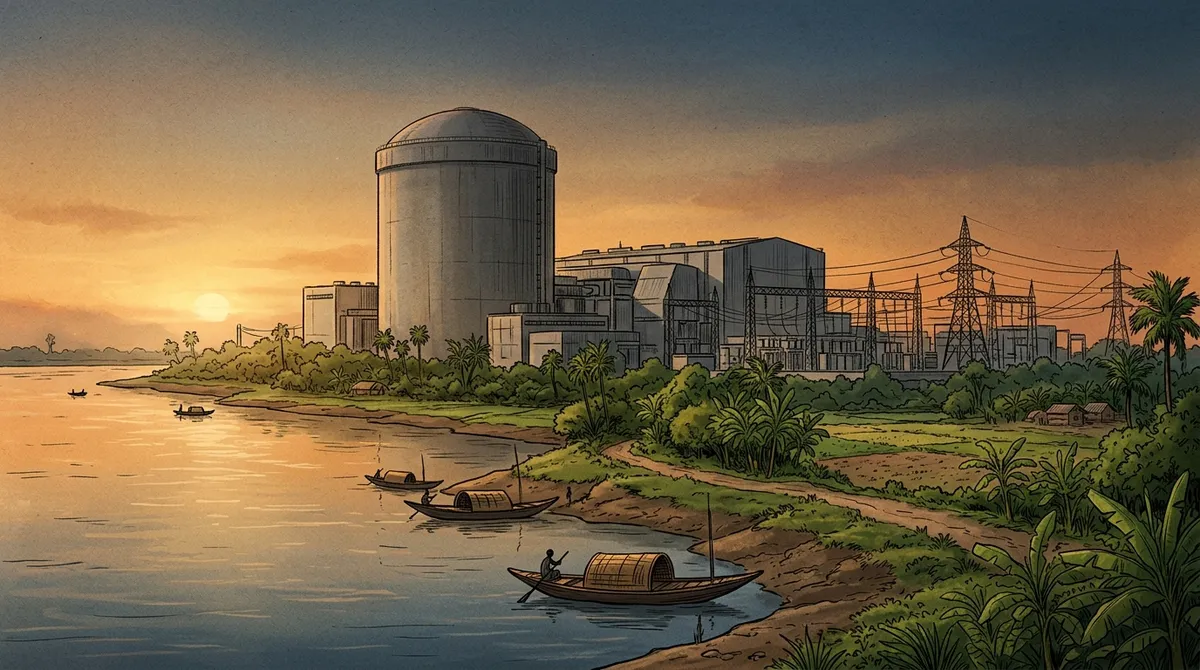
Bangladesh gets its first nuclear electricity as Rooppur 1 connects to the grid
Sources American Nuclear Society published Nov 19, 8:44 AM ET
What happened: Unit 1 of the Rooppur nuclear power plant fed electricity into Bangladesh's national grid for the first time on November 17, with initial output reaching 350 MW and lasting 8 to 10 hours, according to state-owned Power Grid Bangladesh. Science and technology minister Fakir Mahbub Anam said the country has become the 33rd nation to generate nuclear power.
What's genuinely new: The November 17 output was a grid-synchronisation test run — an engineering check of voltage, frequency, the turbine and other systems, not commercial generation. The Russian-built and -financed 1,200-MWe VVER-1200 reached criticality in October, and plant managing director Zahedul Hasan says checks will continue at various capacity levels for several months, with regulator approval required before the next phase of trials. Full capacity is expected in early 2027, commercial operations after about 10 months of trial runs, and fuel loading of unit 2 by June 2027.
Watch: Regulator approval of the next operational trials, capacity escalation toward the 2027 commercial start, and unit 2's fuel-loading progress.
IEA raises its nuclear outlook as the energy crisis reshapes forecasts
Sources World Nuclear News International Energy Agency International Energy Agency, link 2 published Nov 19, 6:39 AM ET
What happened: The International Energy Agency's World Energy Outlook 2026 says disruption from the Middle East conflict and the Strait of Hormuz will reinforce the comeback of nuclear power, and it has revised its nuclear forecast upward. Much of the upside is in China and the United States. Nearly 90 GW of new nuclear capacity was under construction at mid-year, the highest level in more than 35 years.
What's genuinely new: Under the Current Policies Scenario, global nuclear capacity rises from 420 GWe in 2024 to 583 GWe in 2035 and 825 GWe in 2050, up from 728 GWe for 2050 in last year's edition. The Stated Policies Scenario reaches 592 GW in 2035, and the Net Zero Emissions by 2050 Scenario reaches 734 GW. The report adds two cases testing the Hormuz disruption, which the IEA says has cost 2.8 billion barrels of oil and 60 billion cubic metres of Gulf gas supply.
Watch: Whether governments turn the energy-security response into formal nuclear policy, and whether capacity tracks the 2035 path.
More context: International Energy Agency says that "in an echo of the 1970s" the 2026 crisis is set to reinforce the comeback of nuclear power, with nearly 90 GW of new nuclear capacity under construction as of mid-year — the highest level in more than 35 years — and nuclear generation revised upward from last year's outlook, with most of the upside in China and the United States. International Energy Agency Executive Director Fatih Birol says he does not see "any credible pathway for the energy world to return to the way it was before" the Hormuz crisis, adding that in pursuing energy security countries must take care "not to replace one dependency with another."
UK laser lab joins First Light Fusion on FLARE's heating step

Sources Tech Times CASRAI
What happened: The Central Laser Facility at the Rutherford Appleton Laboratory has begun modelling the laser-heating step of First Light Fusion's FLARE concept, UK Research and Innovation said in a November 18 announcement. FLARE splits fusion into two steps: compressing deuterium-tritium fuel, then heating it with a short, intense laser pulse. First Light says it has validated compression on its M3 machine, but the heating step has not been shown in an integrated experiment.
What's genuinely new: The CLF team will study how the laser pulse produces energetic electrons, how those electrons travel through plasma and how efficiently they deposit energy in dense fuel. The work will also explore engineered targets and magnetic fields to guide electrons, with the aim of cutting the laser energy ignition needs. First Light's projected gain of up to 1,000 is a company model result; the best measured result at the US National Ignition Facility is about 4. No funding amounts or laser energy figures were disclosed.
Watch: UKRI says the modelling over the next year will help define laser requirements for ignition and, later, for a potential high-gain demonstrator. Watch for whether integrated FLARE experiments follow.
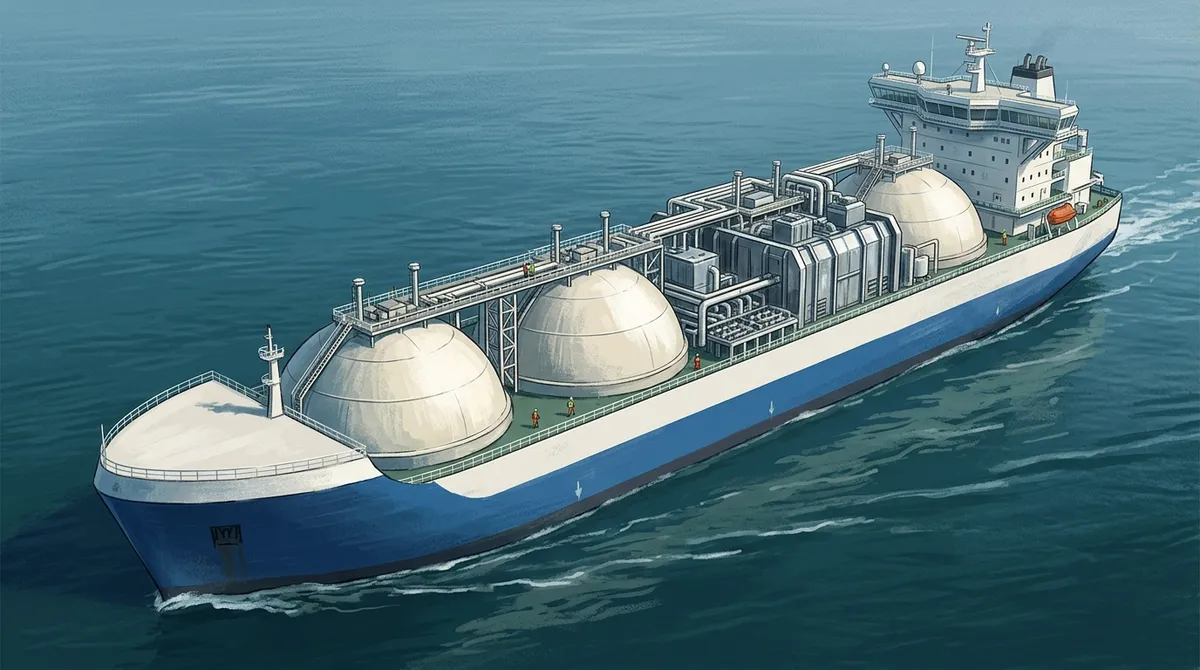
Samsung Heavy Industries and Tesser Atomics team on a nuclear-powered LNG carrier
Sources World Nuclear News published Nov 19, 10:31 AM ET
What happened: South Korea's Samsung Heavy Industries and Texas-based Tesser Atomics have signed an exclusive strategic collaboration, at a signing in Norway, to develop a demonstration ship: the first nuclear-powered LNG carrier, expected to run commercially between the United States and Europe. Each becomes the other's exclusive partner — Samsung as shipbuilder, Tesser as reactor supplier.
What's genuinely new: The project pairs Samsung's design and construction with Tesser's Triton reactor, a compact molten-salt-cooled high-temperature reactor using TRISO fuel with online refuelling, sized small enough to fit a large cargo ship while powering it. The demonstration grew out of Norway's NuProShip research programme and continues within the SFI SAINT project led by NTNU. No schedule or cost was disclosed.
Watch: Concept validation and licensing steps for the demonstration vessel, and any dates attached to construction and transatlantic operation.
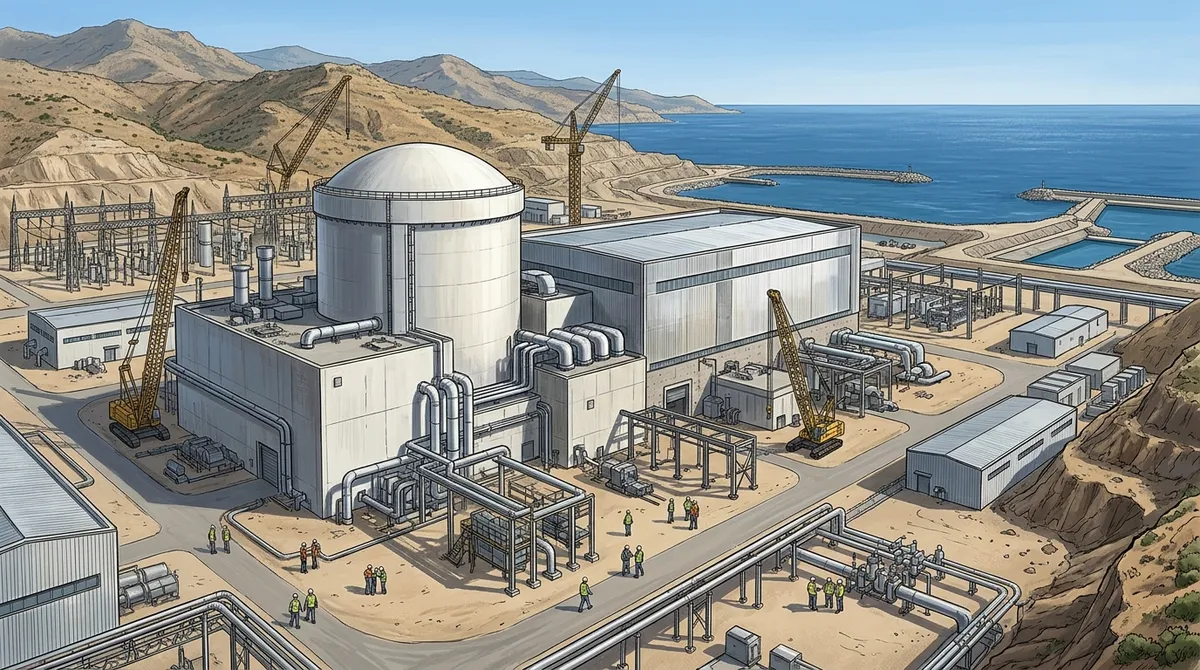
Akkuyu 1 enters commissioning testing ahead of planned start-up
Sources World Nuclear News published Nov 19, 5:46 AM ET
What happened: Turkey's first nuclear reactor, Akkuyu unit 1, has moved into hot and cold commissioning tests: equipment in the primary and secondary circuits is being checked under operating conditions — strength, piping, vibration, safety and reactor control systems — with dummy fuel assemblies loaded. The primary coolant is being brought to its rated 285°C and 16.5 MPa.
What's genuinely new: After the tests, Turkey's nuclear regulator must inspect the unit and grant a permit for real fuel loading before physical start-up. Rosatom director general Alexei Likhachev, quoted through Rosatom's in-house publication, hopes fuel loading can begin as early as December if the tests succeed, with unit 1 targeted to supply the Turkish grid by the end of 2026. The four-reactor, 4,800-MWe build-own-operate plant is expected to meet about 10% of Turkey's electricity needs when complete.
Watch: Test outcomes, the regulator's fuel-loading permit, and Turkey's talks with Canada and South Korea about further reactor projects.
Bulgaria's state utility joins an MoU to assess BWRX-300 deployment
Sources World Nuclear News published Nov 19, 5:42 AM ET
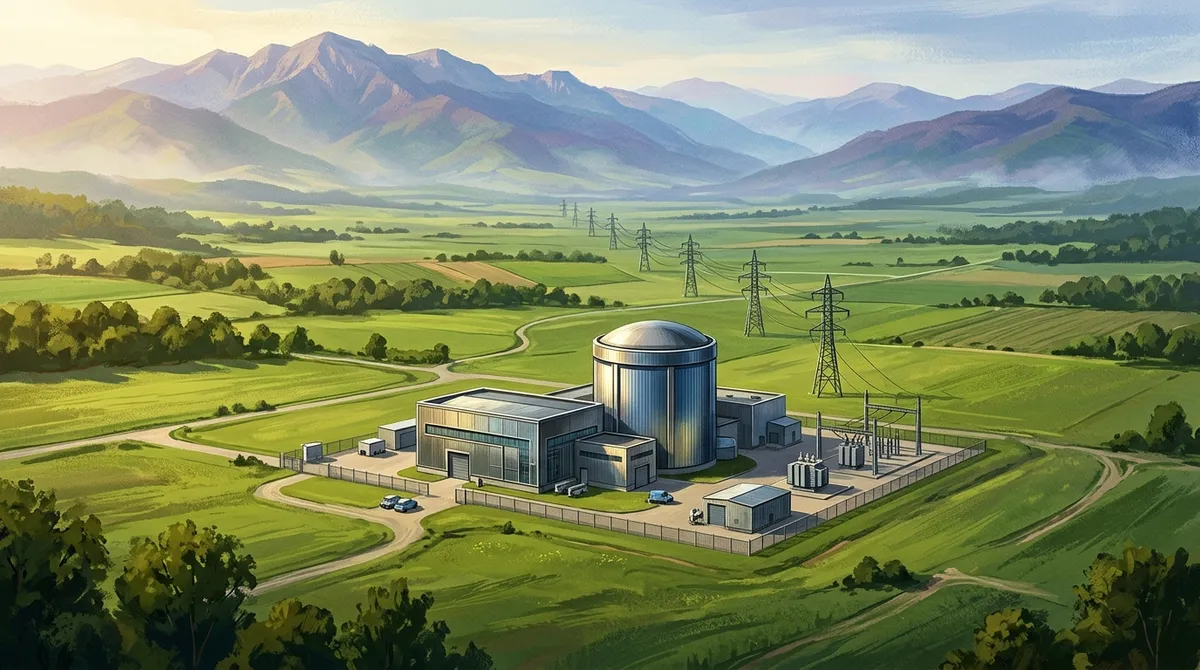
What happened: Natsionalna Elektricheska Kompania (NEK), Bulgaria's state electricity company, signed a memorandum of understanding with Poland's SGE — exclusive regional lead for GE Vernova Hitachi's BWRX-300 in much of Central and Eastern Europe — and Bulgaria's Blue Bird Energy on potential deployment of the small modular reactor in Bulgaria, signed in the presence of Energy Minister Iva Petrova.
What's genuinely new: The parties will jointly assess potential sites, financing structures, project delivery models, and the licensing and regulatory framework for future SMR deployment, expanding a letter of intent SGE and Blue Bird signed last year. Bulgaria gets about a third of its electricity from two operating reactors at Kozloduy and has two large Westinghouse AP1000 units planned there for 2035 and 2037.
Watch: Site and financing assessments, and whether SMR plans mesh with the AP1000 programme at Kozloduy.
Brief
- US Army microreactor funding: A new US Army program has allocated $2.2 billion to five microreactor developers to help derisk initial deployments, Reuters reports.
- New York nuclear master plan: Governor Hochul unveiled the Advanced Nuclear NY master plan at an event in Rochester, outlining state actions to support advanced nuclear plants in Upstate New York, per WROC Rochester and WWTI Watertown.
- French EPR2 cost audit: A report by France's Court of Auditors puts the six-reactor EPR2 programme at €84 billion (about $92.5 billion) and warns of financing strain if baseload prices fall below €70 per MWh, with EDF's final investment decision expected within weeks, per ANS.
- Iowa nuclear project proposal: ONE Nuclear Energy says it is evaluating sites for a planned 1,000 MW nuclear project in Iowa, linked to a letter of intent with the SOO Green transmission line to Illinois. The company says the letter reserves no transmission capacity and first generation is targeted for the mid-2030s, per Business Insider.
- China small modular reactor: The Financial Times reports that Beijing is nearing a nuclear milestone with the expected launch of a small modular reactor for commercial operations, which it frames as a challenge to US leadership of the sector, per Financial Times.
- IAEA updates — Ukraine, Iran, North Korea and growth forecasts: The IAEA says Zaporizhzhia suffered its 27th complete loss of off-site power on November 8 and now relies on a single line, with one employee killed in a drone attack and another in an explosion; Director General Rafael Grossi told the Board of Governors the agency has had no information from Iran, outside Bushehr, on its declared nuclear material for roughly 18 months, flagged construction expanding North Korea's Yongbyon enrichment capacity, and revised long-term projections to 1,045 GWe of nuclear capacity by 2050, per American Nuclear Society.
- Blykalla HALEU contract detail: POWER Magazine adds that the Blykalla–Urenco HALEU enrichment contract was signed November 12 and announced November 16, is Urenco's third HALEU supply contract after Radiant (September 2025) and Antares Nuclear (May 2026), and that Blykalla has confirmed uranium-dioxide fuel for its SEALER design and NRC pre-application engagement since June 2026, per POWER Magazine.
- Newcleo–Curio MOX fuel agreement: Newcleo announced a November 16 partnership with US recycler Curio, whose NuCycle technology would recover plutonium, uranium and other materials from used fuel to feed Newcleo's proposed MOX fabrication plant at the Department of Energy's Savannah River Site; no NRC licence application has been filed, and the Nuclear REFUEL Act passed the House on November 9, per American Nuclear Society.
- Ontario nuclear economic report: A report for industry coalition Ontario's Nuclear Advantage estimates four major projects — the Darlington SMR build, Pickering refurbishment, and potential construction at Bruce C and Wesleyville — could add CAD882 billion (USD617 billion) to Canada's GDP and 3.45 million job-years, per World Nuclear News.
- NANO Nuclear–SJ Group MoU: NANO Nuclear Energy signed a memorandum of understanding with Surbana Jurong Infrastructure, an SJ Group affiliate, on knowledge exchange and capability building in advanced nuclear energy across Southeast Asia, per Business Insider and Energynews.pro.