Space digest — Nov 26, 2026
Top line: The FCC's Starmind approval for SpaceX's million-satellite constellation drew astronomy and environmental objections, with four of six orbital shells on hold pending a debris plan. Mexico asked the United States for formal talks on Starbase launches after suspected Starship debris washed up in Tamaulipas, and Russia's Progress MS-36 docked at the space station.
- New Glenn's next flight tentatively dated February 20, 2027
- FCC's Starmind approval draws Earthjustice challenge and astronomy objections
- Progress MS-36 docks at the International Space Station
- Mexico asks the United States for talks on Starbase launches and debris
New Glenn's next flight tentatively dated February 20, 2027
Sources Advanced Television Stocktwits
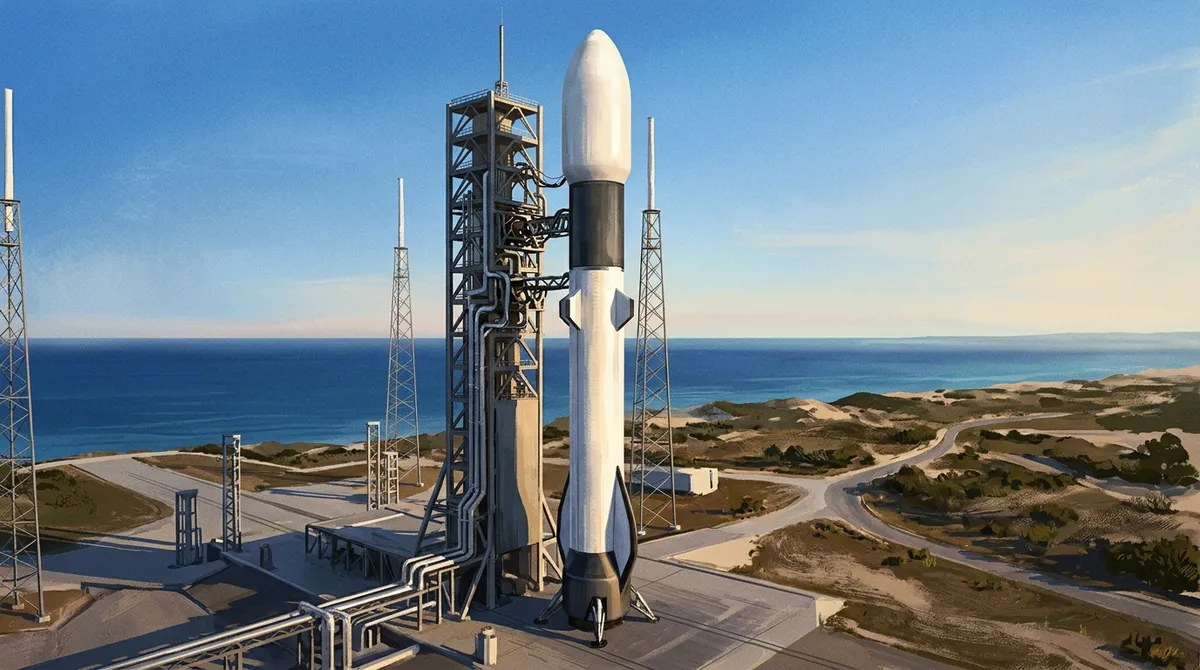
What happened: An FAA planning slide lists February 20, 2027 for the next New Glenn flight, the vehicle's fifth, with its payload still unconfirmed; air-traffic coordination advisories carry the same tentative date. No formal company announcement has been reported.
What's genuinely new: The first tentative date for the flight after the return to flight, which Blue Origin moved to January 2027 after the May 28, 2026 launch-pad explosion destroyed a New Glenn at Cape Canaveral. Blue Origin's backlog for the vehicle includes Amazon Leo satellites, NASA lunar missions and national-security payloads, and AST SpaceMobile expects its BlueBirds 17–19 satellites to fly on New Glenn in early 2027.
Watch: Whether Blue Origin confirms the date and names a payload; the January 2027 return-to-flight target; the AST SpaceMobile BlueBird launch expectations.
FCC's Starmind approval draws Earthjustice challenge and astronomy objections
Sources PCMag Los Angeles Times Live Mint ShiftDelete Euronews TechSpot Stocktwits ThinkPol MEAWW Tbreak
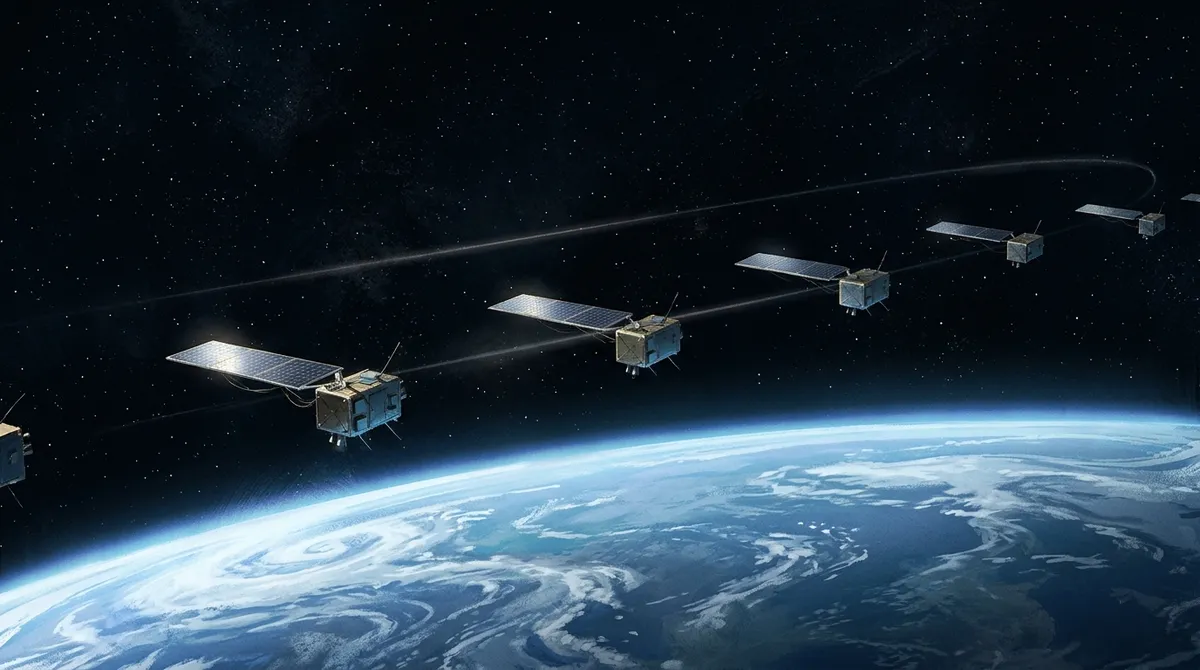
What happened: Opponents of the FCC's November 25 Starmind authorization went public: Earthjustice called the approval "reckless" and said it came with no environmental review, and the American Astronomical Society said it was "disheartened and dismayed," warning that the million computing satellites would appear as bright objects for longer periods. The order denied petitions from Amazon Leo, Viasat and the society; Amazon's March filing had called Starmind "a lofty ambition rather than a real plan" and argued deployment could take SpaceX "centuries." SpaceX shares closed 1.3% higher after a 9% intraday drop.
What's genuinely new: The FCC ruled night-sky and atmospheric concerns outside its authority for a radio licence, citing an October rule that satellites in orbit are "extraterritorial" and do not trigger environmental review. Debris compliance was accepted only below 600 km, so two of six approved shells are usable now; the other four, near 686–1,002 km, wait on a final disposal plan. SpaceX told investors it could start deploying as early as 2028, targeting a first Starmind launch aboard Starship in the third quarter of 2027 ahead of milestones from a first working satellite by November 25, 2033 to the full constellation by 2040.
Watch: Whether opponents move from statements to a formal challenge — no court filing has been reported yet; the four higher shells' final debris plan; the FCC's pending decisions on rival filings including Blue Origin's 51,600-satellite Project Sunrise.
Progress MS-36 docks at the International Space Station

Sources International Space Station NASASpaceflight published Nov 26, 7:21 AM ET
What happened: Russian cargo ship Progress MS-36 docked with the International Space Station on November 26, completing a mission launched from Baikonur on November 24 carrying roughly 2,500 kg of supplies for the Expedition 75 crew. NASA's space station account announced the docking of the spacecraft NASA designates Progress 97; NASASpaceflight, which covered the Soyuz 2.1b launch, confirmed it.
What's genuinely new: The docking, which was the open question after a launch flown with "unusual secrecy" — Roscosmos sharply curtailed public coverage and NASA said little about the liftoff, leaving the confirmation to NASA's space station account. Flights from Baikonur's Site 31/6 resumed in March after the November 2025 mobile-service-platform incident closed it for months.
Watch: Whether Progress MS-35 relocates to the Zvezda aft port, and Jared Isaacman's floated extension of the station past its planned 2031 retirement.
Mexico asks the United States for talks on Starbase launches and debris
Sources Al Jazeera The News International
What happened: Mexican President Claudia Sheinbaum announced that her government is seeking formal talks with US aviation and space authorities over SpaceX's use of Mexican airspace — asking for airspace authorization permits, strict limits on launch frequency and, if necessary, relocation of the launch site — and over rocket debris on Mexico's coast. Initial discussions have already been held with the US Embassy in Mexico City.
What's genuinely new: The debris dispute moves from shoreline cleanup to government-to-government diplomacy. It follows the November 13 Starship launch from Starbase, where the Super Heavy booster broke apart over the Gulf of Mexico and fragments washed ashore at Playa Bagdad in Matamoros; Mexican inspectors recovered about 6 kilograms and stored it at a Mexican Navy facility. SpaceX disputes that the debris is clearly from its operations but says it is working with Mexican authorities. Mexico is pushing back as SpaceX seeks FAA approval to sharply expand Starbase launch rates.
Watch: Whether US agencies respond — neither SpaceX nor the State Department had answered the request; the FAA's decision on expanded Starbase launch rates; PROFEPA's tests on the recovered debris.
Brief
- Elon Musk has doubled his SpaceX share pledge for US children to two shares each — one from the company, transferred next month, and one from him personally in June 2027 — worth about $18.6 billion combined at the recent $127.44 close. SpaceX separately said it will issue one new Class A share to every active Trump Account, with Musk donating an equal number from his own holdings and president Gwynne Shotwell pledging more than 2 million of her own shares; how many accounts are active and how transfers would work were not disclosed. AFP · TipRanks
- The White House has asked Congress to raise NASA's Artemis funding rate to an annualised $9.8 billion, up $2 billion (25%) from $7.8 billion. The request is a rate change, not an immediate appropriation, and it sits in a list of budget exceptions for stopgap spending legislation due before December 11. BigGo Finance
- EnduroSat has booked two dedicated New Glenn 7x2 missions from Cape Canaveral, the first in 2029, reserved for its own customers. Financial terms were not disclosed. Tech Times
- Rocket Lab's Electron launch of a Synspective StriX radar satellite is scheduled from New Zealand for November 26 US Eastern — November 27 locally — on the mission "Night Owls Never Sleep," targeting a 569-kilometer, 38-degree orbit. It would be Electron's 101st mission and its 14th for Synspective, which has 47 Electron flights contracted after a September 2026 deal for 20 more launches in 2028–2031. Tech Times · Space.com
- Mizuho initiated coverage of Rocket Lab on November 23 with an Underperform rating and a $40 price target, about 6% below the share price, while rating SpaceX Outperform with a $205 target. On Rocket Lab it calls the business model "among our favorites" but says the valuation already reflects much of the growth. TIKR · TipRanks
- NASA has cleared the PRIMA far-infrared space telescope into Phase B — detailed design and technology maturation ahead of a later confirmation review. The mission, a 1.8-meter telescope cooled to about 4.5 kelvin, managed by JPL and named the first in NASA's Probe Explorers class, targets a 2033 launch, with possible Japanese participation still under domestic review in Japan. ECIKS
- An Ariane 6 flight lifted off from Kourou on November 24 after a 24-hour postponement for a ground-support issue, carrying 36 more Amazon Leo satellites; Ariane 6 program director Jerôme Rives said the goal is nine to ten Ariane 6 launches annually starting in 2027, and Amazon's European consumer head Martijn van Delden counted nearly 400 satellites deployed — "the third-largest constellation in the world and the fastest to reach that number." El Mundo
- Intuitive Machines' system for powering spacecraft through the roughly 14-day lunar night cleared a preliminary design review, with a test aboard the International Space Station planned for early 2028 under an existing $8.2 million Air Force Research Laboratory contract extension. Stocktwits
- ESA director-general Josef Aschbacher urged EU leaders to protect space investment in the union's next long-term budget for 2028–2034, warning that cutting space spending now "would mean less capability, less autonomy and less capacity to act together" as other space powers accelerate, ahead of an upcoming ESA ministerial meeting in Rome. Josef Aschbacher (@AschbacherJosef)
- Blue Origin ran a static fire test of New Glenn's second stage as return-to-flight preparation continues toward the January 2027 target. Space.com via MSN