Robots digest — Nov 27, 2026
Top line: Tesla's Optimus supply chain fills the day: the EMAG machine-tool acquisition is on paper at Germany's cartel office, and Taiwan supply-chain reports say tight TSMC 3nm capacity keeps the AI5 chip out of Tesla's cars until 2028 — Optimus gets the first allocation. Morgan Stanley expects China's humanoid investment to accelerate, with selective commercial deployments from 2027.
- Tesla's antitrust filing puts the EMAG deal on paper
- Hexagon's AEON begins training on Volvo's Ghent assembly floor
- Morgan Stanley: China's humanoid investment to accelerate, selective commercial use in 2027
- Report: TSMC capacity crunch delays AI5 for Tesla's cars until 2028
- GXO plans a 2027 acceleration of warehouse robotics across its US footprint
Tesla's antitrust filing puts the EMAG deal on paper
Sources The News TipRanks Cryptopolitan SWR Teslamag
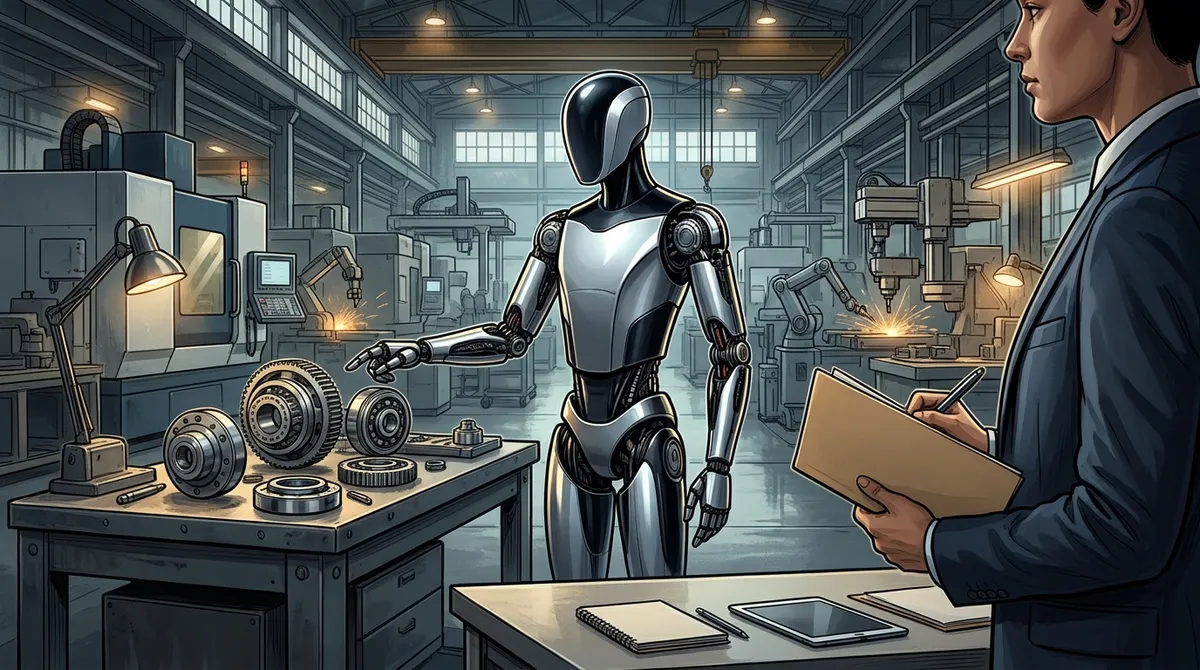
What happened: Tesla has submitted plans to Germany's Federal Cartel Office (Bundeskartellamt) to acquire EMAG, the financially strained Salach machine-tool maker that builds the production systems for three gear components inside humanoid rotary actuators — flexsplines, wave generators and planetary gears, with at least 14 rotary actuators in current humanoids including Tesla's Optimus. Neither company has issued a statement and no terms are disclosed.
What's genuinely new: The reported acquisition has moved to filed paperwork: the antitrust submission surfaced November 27, and German commercial-register documents list Tesla Machining Technologies Management SE, capitalised at €120,000 (about US$125,000), at EMAG's Salach headquarters as of November 9, with Tesla Germany sales chief Maximilian Stromberger named as managing director and about 220 EMAG employees expected to transfer if it clears. In-house gear machining would address the supply bottlenecks Tesla has named on the path to its target of 20,000 Optimus robots a week by late 2027.
Watch: the Bundeskartellamt review and its decision, whether the purchase completes, and any sign EMAG's gear capacity enters Optimus supply planning.
More context: Tesla has asked Germany's federal cartel office for clearance to take over EMAG, the Salach machine-tool maker whose machines are needed to produce drives for humanoid robots, SWR reports. EMAG's 2024 annual report showed losses of around €43 million, and the company had already announced it would cut roughly a third of its jobs in Germany because of weak orders, SWR reports. Teslamag reports the notification is dated 23 November, is registered as an acquisition of assets from the EMAG group under file number B5-132/26, and points to less than a takeover of the whole company.
Hexagon's AEON begins training on Volvo's Ghent assembly floor
Sources Interesting Engineering Tech Times Stuff eWeek The Next Web TechSpot Volvo Cars
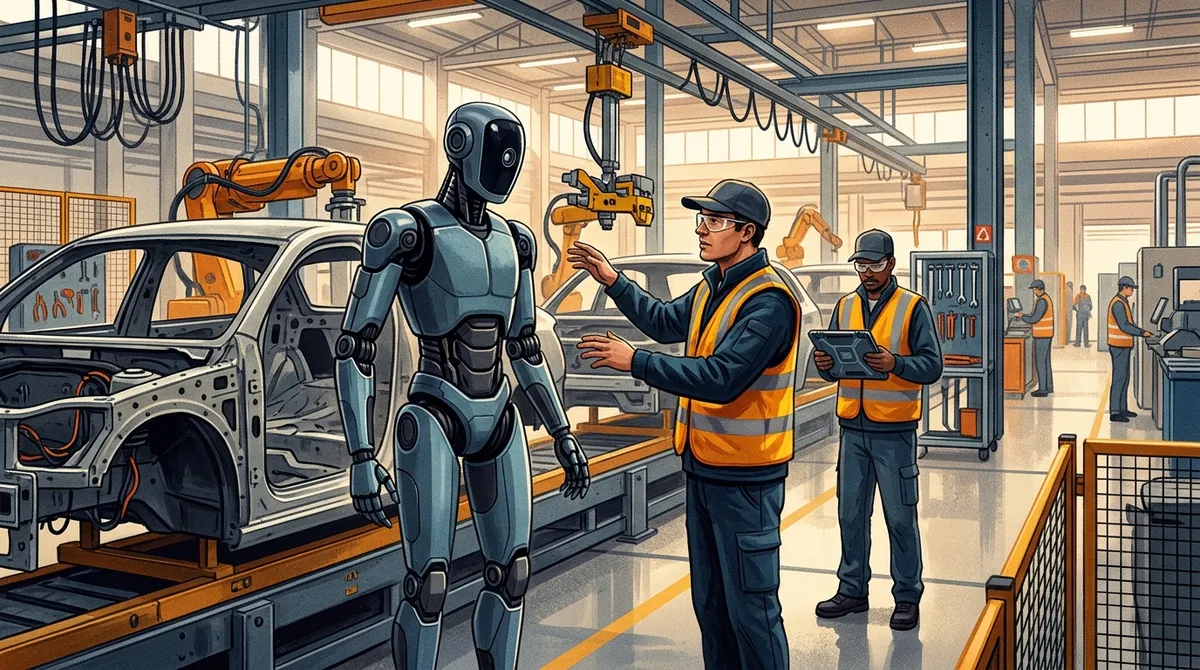
What happened: Volvo Cars has started teaching Hexagon's AEON humanoid robots at its Ghent, Belgium plant — the first Volvo factory to test humanoids — using imitation learning, per a company release dated November 26; the first task is placing components into two fixtures with high precision. A wider pilot with more AEON units is planned for the first half of 2027 and real production use from mid-2027, aimed at relieving employees of repetitive and ergonomically demanding work, with BMW's Leipzig plant the platform's other automotive proving ground.
What's genuinely new: eWeek flags a payload ambiguity in the specs: Hexagon rates AEON at 8 kg continuous and 15 kg short-term, below Volvo's stated 10 kg carrying capacity, whose applicable operating conditions go undisclosed. It also details five hours of operation per charge with a one-minute automated battery swap, and no published task or intervention rates for Ghent. TechSpot adds context: Volvo announced plans in October to cut 2,500 jobs worldwide, 2,000 of them in Sweden, which the company has not linked to the robot program.
Watch: whether the first-half 2027 pilot holds, the first disclosed task success and intervention rates and fleet size, the mid-2027 production start, and which payload rating the pilot runs to.
More context: Volvo Cars says the AEON robots at its Ghent plant — the first Volvo factory to test humanoids — are learning by imitation and are first tasked with placing components into two fixtures with high precision, with more units due for a broader factory pilot in the first half of 2027 and production use aimed at mid-2027.
Morgan Stanley: China's humanoid investment to accelerate, selective commercial use in 2027
Sources Economic Times Firstpost Livemint CNBC The Next Web
What happened: A Morgan Stanley report expects investment in China's humanoid robots to accelerate, with improving AI enabling initial commercial deployments in selected applications in 2027 even as widespread adoption remains some distance away. Spending on data collection, robot training and early customer deployments is set to rise, creating order flow for suppliers of cameras, sensors, robotic hands and motors before adoption broadens.
What's genuinely new: The report cites a robotics benchmark in which a newer model's success rate more than doubled to 41.2 per cent from 19.6 per cent while average response time fell 33 per cent, and it passes on company targets: UBTECH aiming at about 4,000 industrial and commercial humanoid deliveries in 2026 plus 1,500–2,000 household units, and Geekplus shipping a first batch of around 300 humanoids by end-2026 or early 2027. Precision machining, equipment availability, skilled labour and production yields are the named bottlenecks; repeat purchases, productive working hours and cost competitiveness with human labour are the tests it sets.
Watch: whether the 2026 delivery targets print (UBTECH's roughly 4,000; Geekplus's around 300) and the selective 2027 deployments.
More context: In background, Morgan Stanley had already sharply raised its forecast for China's humanoid robot shipments to 50,000 units for 2026 — nearly double its previous 28,000 — and estimated the market at $2 billion this year, growing to $15 billion by 2030, CNBC reports. Chinese EV maker Xpeng will begin mass-producing its Iron humanoid in January 2027 and train it as a store assistant first, with co-president Brian Gu saying it could do household chores in one or two years and that the company targets tens of thousands of sales next year, The Next Web reports.
Report: TSMC capacity crunch delays AI5 for Tesla's cars until 2028
Sources Electrek Wccftech published Nov 27, 9:48 AM ET
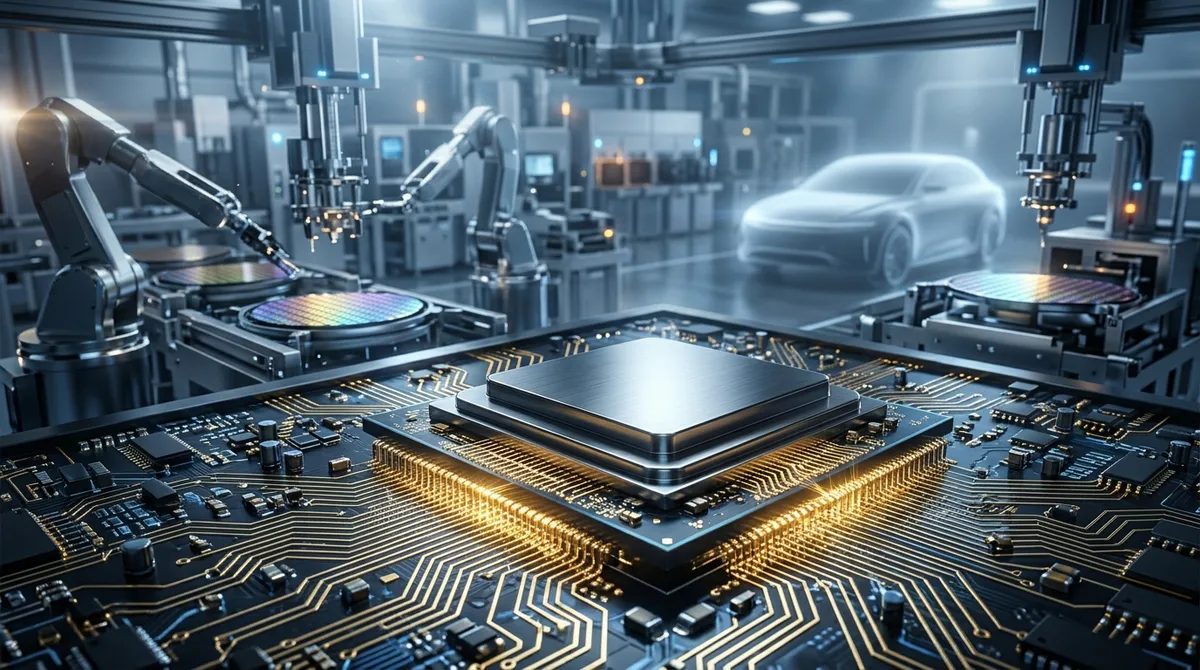
What happened: A Taiwan supply-chain report says Tesla's next AI5 chip will not be mass-produced in 2027: Tesla's chip design partner Global Unichip (GUC) is allocating its limited TSMC 3nm capacity for 2027 first to Google and Microsoft data-center chips, and the relatively small allocation left for Tesla is expected to go straight to Optimus rather than cars.
What's genuinely new: Commercial Times reports GUC's 2027 TSMC N3 quota, though larger than this year's, still can't serve all customers, so Google's Axion processors and Microsoft's in-house chips go first — high margins and stable order visibility. Tesla's 2027 quota can't supply a fleet of millions of cars; the supply chain expects the first AI5 volume to reach Optimus around April 2027 and cars only from 2028, when TSMC's Tainan 3nm fab, a second Arizona fab and Samsung's Taylor, Texas 2nm line add volume. Musk said on Sunday that AI5 is "going to Optimus" while cars stay on AI4.
Watch: whether the first AI5 batch lands on Optimus around April 2027, TSMC's Tainan and Arizona fabs scaling in 2027, and Samsung's Taylor volume production in the second half of 2027.
GXO plans a 2027 acceleration of warehouse robotics across its US footprint
Sources The Robot Report published Nov 27, 8:56 AM ET
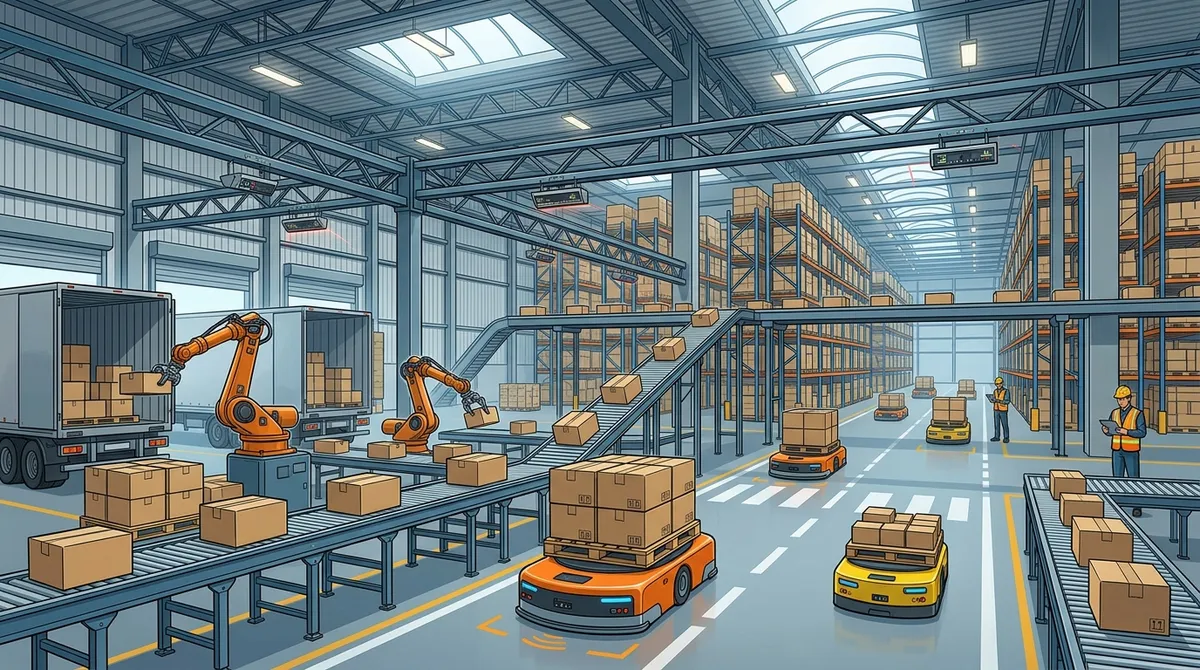
What happened: GXO Logistics says it will accelerate deployments of adaptive robotics across its US operations in 2027 — a phased rollout starting at priority sites and continuing over the following 12 months — covering pallet-carrying autonomous mobile robots for repetitive material transport, robotic arms for inbound unloading and packing, AI-enabled vision for hands-free data capture, and flexible automated sortation. The company has not named providers.
What's genuinely new: The rollout plan itself, announced with no named suppliers: GXO's existing deployments span Exotec's Skypod storage-and-retrieval system at a Guess facility, Dexory inventory robots in the Netherlands, and an Autoload trailer-loading system at a Polish brewery, alongside humanoid partners — Apptronik, whose expanded GXO partnership targets a global rollout of up to 1,000 Apollo humanoids over four years, with CEO Jeff Cardenas citing 96 per cent of a human benchmark on kitting tasks in testing; and Agility Robotics' Digit, bound for GXO sites in North Carolina and Tennessee in early 2027 after more than 100,000 totes moved at Flowery Branch, Georgia. GXO's CEO acknowledged in August that humanoids were not yet producing a return on investment.
Watch: which providers win the 2027 rollout, the first priority-site deployments, unit counts against the 1,000-Apollo and Digit plans, and ROI reporting.
Brief
-
Zoomlion's autonomous excavator debuts at bauma CHINA 2026. The Chinese machinery maker showed in Shanghai on November 24 an AI-powered excavator driven by a vision-language-action model, with 360-degree panoramic cameras, a 3D visualization system extending coverage to 540 degrees, centimeter-level placement accuracy through a Steelwrist hydraulic attachment, and a voice-controlled cab; it also presented its Z01 and Z03 humanoid robots — the wheeled Z03 sorted randomly arranged objects with millimeter-level precision — under a shared "Zbrain" platform backed by an industrial internet network of more than 1.8 million connected machines. Per Interesting Engineering; Construction World covers the same unveiling.
-
Japan's robot makers favour factory machines over humanoids. Nikkei Asia frames Japan's physical-AI push as deliberately unshowy — shop-floor data as the edge as competition with China intensifies — citing Mitsubishi Electric's screwing robots, which autonomously adjust their positions to accommodate the tilt of a workpiece.
-
China's humanoid IPO queue: suspensions, inquiries and confidential filings. A 36Kr status report on 13 humanoid and embodied-AI companies finds Leju Robotics' Shenzhen review suspended since September 30 over expired financials, DeepMotion's STAR Market prospectus under inquiry with planned fundraising of about ¥2.5 billion (≈US$352 million), Agibot's Hong Kong IPO reportedly suspended since October 13 while the company seeks new financing of ¥1–1.5 billion (≈US$142–212 million) at a valuation near ¥50 billion (≈US$7.1 billion), and Songyan Dynamics and Xinghaitu reported to have filed confidentially with the Hong Kong exchange — Unitree's Shanghai listing from September remaining the sector's reference point (36Kr) (single source).
-
Lupa Robotics raises $1.67 million to teach robots human dexterity. The seed round, led by Long Journey Ventures, funds the Cape Town-raised, Harvard-based founder Nureldin Mohamed's approach to dexterous manipulation: sensor-equipped gloves and head-mounted cameras record hand movements and force while people work, building datasets and models the company plans to licence to robotics firms and AI labs, with manufacturing, textiles and warehouse automation as early uses and no valuation or pilot date disclosed. Via iafrica.com.
-
Hellmann and Exotec to automate a Siemens warehouse in Nuremberg. A Skypod goods-to-person system — autonomous robots storing, retrieving and carrying containers to picking stations under Exotec's Deepsky software — is scheduled to go live in mid-2027 at the Siemens Smart Infrastructure Buildings site, with about 35,000 storage bins at launch and room to add bins and stations (All About Industries).
-
One robot, two shifts. Zhongtai Juneng CTO Peng Xiaozhou described at the WISE2026 summit in Beijing on November 26 how the company's humanoid serves mall floors by day — guiding visitors, broadcasting events, drawing foot traffic — then switches at night to inspecting machine rooms and fire points, with deployments in shopping malls including Joy City since the start of the year and certification work for power-grid inspection behind it (36Kr) — company account, no independent report yet.
-
Musk puts households in the Optimus demand picture. At the November 18 TomorrowX Summit, BigGo Finance reports, Elon Musk repeated that Optimus should be capable of washing dishes and taking out the trash within about 12 to 18 months — a task, he conceded, no humanoid can do today — and expects households to want "one, if not two." First meaningful revenue is framed as industrial, with external deliveries around the end of 2027; Tesla still gives no price, delivery date or consumer launch.
-
Korean robot stocks surge as Samsung's robotics push firms. Maeil Business reports Samsung Electronics' Device Solutions division operates a Robotics Team under its Global Manufacturing & Infrastructure Headquarters to develop robot technologies for semiconductor plants and introduce them into production, with a self-developed humanoid planned for CES 2027 (January) and Rainbow Robotics — with reducers from SPG — the only confirmed supply relationship in Samsung's humanoid chain so far. Cosmo Robotics and Daesung Hitech traded at their daily limits on November 27, Rainbow Robotics gained about 12 per cent, and analysts name Robotis, Samhyeon, DKTI, Korea PIM and SBV Tech as supply-chain names to watch ahead of CES 2027.
-
XPeng pushes IRON into showrooms — and a Hong Kong R&D centre. Blockonomi reports IRON robots welcoming visitors and answering product questions at the Guangzhou Auto Show ahead of first-quarter 2027 Chinese retail deployments, with an international rollout in the second half of 2027, a ninth global R&D centre in Hong Kong focused on humanoid robotics and motion control, and a 4.12 per cent pre-market share rise; Electronics For U counts IRON's more than 1,500 touch-sensing points across 80 per cent of main body surfaces.
-
China Post's Hangzhou humanoids claim 1,200 parcels an hour. Tech Times reports ROBOTERA says 45 of its M7 humanoid sorting units reached about 1,200 parcels an hour in Hangzhou postal operations — a vendor figure with the counting unit left unstated and no independent measurement yet; Interesting Engineering adds that the testing program began in April 2026 with an initial rate of roughly 500–600 parcels an hour, that ROBOTERA also claims operational accuracy above 90 per cent, and that the reported throughput reflects performance during specific testing periods rather than a sustained rate.
-
Cosine Robots raises ₹22.36 crore (about US$2.4 million) for robotic actuators. The Bengaluru startup's round, led by Avaana Capital with WEH Ventures and angels, funds a combined research and production facility for integrated servo, cycloidal and planetary actuators for robot arms, cobots, quadrupeds and humanoids, with commercialisation targeted around February 2027 and no valuation disclosed (Lapaas Voice).
-
Linde Material Handling adds two scalable warehouse systems. The S-MATIC cube, a pallet-shuttle storage system handling pallets up to 1,500 kg, stores up to ten rack levels in existing buildings (project configurations to 40 metres) and suits deep-freeze facilities, while the S-MATIC bin pairs small-item storage up to 12 metres high with mobile robots feeding picking stations, claimed at 400–600 order lines per hour and up to 300 per cent picking capacity over manual operations (The Machine Maker) — vendor launch, no named customer deployments.
-
Denmark's Mobile Robot Company wins an Innobooster grant. Innovation Fund Denmark awarded DKK 840,000 (about US$120,000) for an 18-month project beginning January 2027 on self-learning navigation for the company's J1600 autonomous pallet jack — building and maintaining a 3D map as warehouse layouts change — within a DKK 2.4 million (≈US$350,000) research project (The Oklahoman via EIN Presswire) — press-release account, single source.
-
Robotics and physical AI funding totals $97.3 billion in 2026. A tally of the year's biggest raises, from Waymo to Jeff Bezos' Prometheus, puts 2026 funding at $97.3 billion so far, more than double 2025's total (MSN).
-
Tesla's Optimus factory pours four press foundations. A November 27 drone update by Giga Texas observer Joe Tegtmeyer shows concrete in all four foundations at the Austin Optimus factory that he identifies as mounts for giant casting presses, with the steel frame at about 60 per cent complete — much of it four storeys tall — and steel work expected to wrap around the end of March 2027; Tesla has not said what the presses will make (Teslanorth) (single source).
-
Faraday Future's stake in its robotics listing lands near 75 per cent. FF EAI Robotics (FFR) filed a preliminary Schedule 14C with the SEC carrying pro forma financials for the robotics business acquired from Faraday Future (FFAI): as of November 25, FFAI beneficially owned about 14.7 million FFR shares — roughly 53 per cent of 27.7 million outstanding — and is expected to hold about 80.1 million shares (roughly 75 per cent of the anticipated 106.2 million) after the transaction's share issuance, an implied value of about US$41 million at the November 25 close, with all newly issued shares under an 18-month lock-up (StockTitan) (single source).
-
Prensilia launches the NH1 Era robotic hand for industrial humanoids. The Italian hand maker unveiled at SPS 2026 in Nuremberg (November 24–26) a hand for humanoids and cobots with underactuated fingers that adapt to different shapes by mechanical design, up to 70 N of thumb fingertip force with tri-axis fingertip force sensors, an ISO 9409-1-compatible mechanical interface or a humanoid-wrist interface, and ROS libraries, targeting kitting and assembly, machine loading and unloading, and delicate-component handling; pre-orders for the first production batch are open (Robotics Tomorrow).
-
Ant Group's Robbyant open-sources robot navigation models. The embodied-AI unit released LingBot-Map 2.0 and LingBot-Navi, two open-source models for mapping physical environments and autonomously navigating with persistent spatial memory of objects and locations between missions. Robbyant reports LingBot-Map 2.0's average trajectory error over a 5.2 km urban route falling to 4.72 metres from 31.12 metres — roughly 85 per cent lower — and first place across three dense 3D reconstruction benchmarks (CroCoDL, EuRoC, Oxford), and claims a 68.60 per cent task success rate for LingBot-Navi on a GOAT-Bench simulation subset; technical reports, source code, model weights and a 511-scene dataset are on GitHub, with on-device operation supported. Via Robotics & Automation News — vendor figures, no independent testing yet.