Energy digest — Nov 28, 2026
Top line: NASA is taking bids for Lunar Reactor-1, a 20-kilowatt reactor meant to power a Moon base through the two-week lunar night, with proposals due December 21. Campbell County, Virginia, advanced zoning for what could be the first US small modular reactor site, while Florida's utilities plan no advanced nuclear despite governor-elect Byron Donalds's push.
- NASA takes bids for the first reactor on the Moon
- Florida's incoming governor pushes nuclear while utilities stay on the sidelines
- Campbell County advances an SMR zoning ordinance for the Joshua Falls site
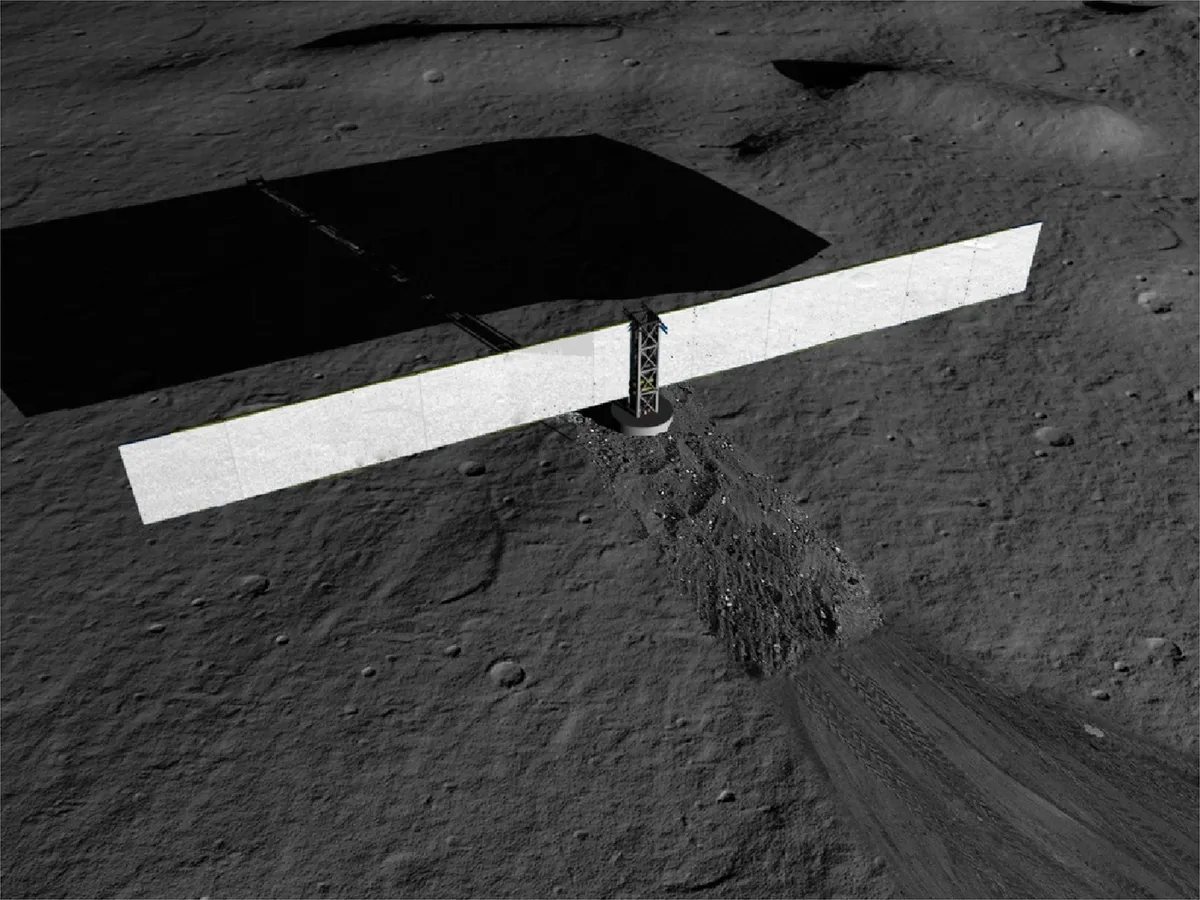
NASA takes bids for the first reactor on the Moon
Sources Neutron Bytes
What happened: NASA's request for proposals for Lunar Reactor-1 (LR-1) — a 20-kilowatt fission power system to be launch-ready by 2030 and operate on the Moon for at least five years — is out, and the final solicitation folds in feedback from the agency's draft released in August 2026 and a September industry day at the Ohio Aerospace Institute in Cleveland. Vendor proposals are due December 21, 2026, and designs must meet Department of Energy nuclear safety standards.
What's genuinely new: Program manager Brian Giblin calls the solicitation an important step toward an enduring human presence on the lunar surface, with space nuclear systems delivering continuous power without depending on sunlight. LR-1 shares a home with SR-1 Freedom in NASA's Space Reactors Division, run with DOE: the nuclear-propulsion demonstrator launches in 2028, makes Mars flybys in 2029 and fall 2030 to release three SkyFall helicopters, then restarts for hard stress-testing meant to feed LR-1's surface power program. NASA may add task orders for other space nuclear power systems.
Watch: Proposal awards against the December 21 deadline; SR-1 Freedom's 2028 launch feeding data to LR-1; the launch-ready 2030 goal.
Florida's incoming governor pushes nuclear while utilities stay on the sidelines

Sources POLITICO
What happened: Florida governor-elect Byron Donalds is expected to push policies boosting nuclear energy once he takes office in Tallahassee in January, but Florida's utilities currently plan no advanced nuclear in the next decade. Duke Energy Florida's Ten Year Site Plan proposes new solar and upgrades to existing units, with advanced nuclear "still a longer-term option," a company spokesperson said.
What's genuinely new: The Nuclear Energy Institute's Kristy Hartman says Florida is just beginning to explore a nuclear policy framework — "dipping its toe" while Illinois and New York are all-in on new nuclear projects. Southern Alliance for Clean Energy director Stephen Smith argues solar, at about 9 percent of Florida's generation in 2025 and expected to reach roughly 23 percent by 2035, is the better bet, and calls commitments to unproven reactor technology with a history of overruns and unresolved nuclear-waste handling a "huge red flag" for ratepayers. Donalds dismissed solar on the campaign trail as inconsistent and "a fad"; predecessor governors Rick Scott and Ron DeSantis also spurned it.
Watch: Donalds takes office in January; whether he advances a state nuclear policy framework — and whether any Florida utility adds advanced nuclear to its ten-year site plan — will show if momentum matches the rhetoric.
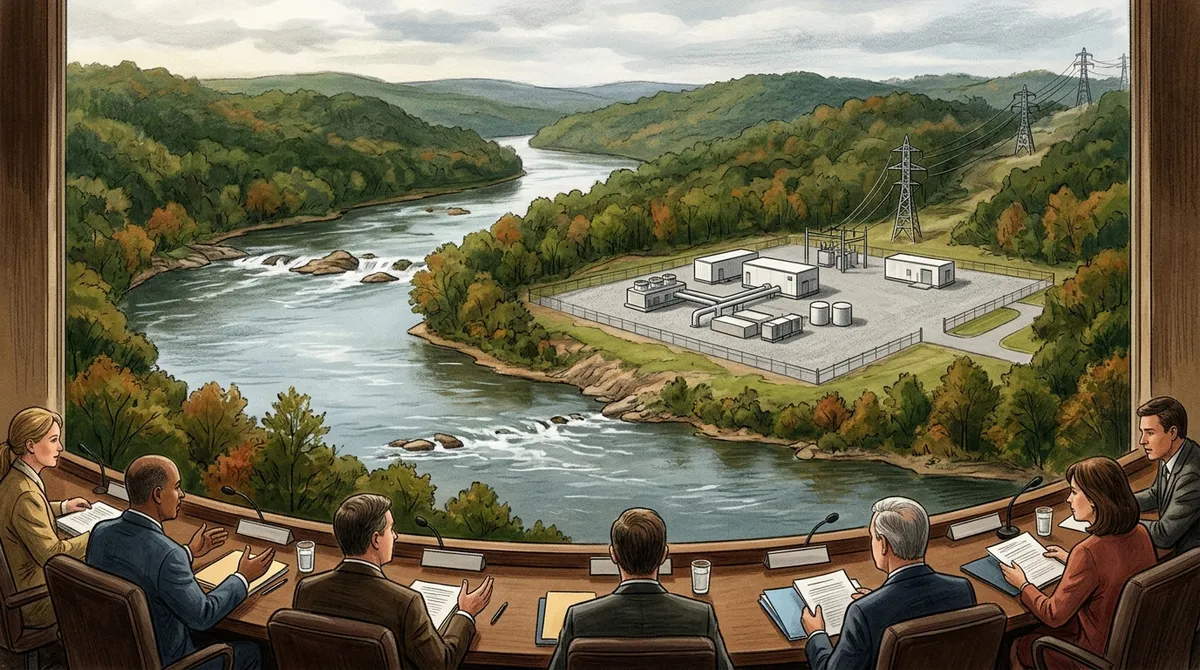
Campbell County advances an SMR zoning ordinance for the Joshua Falls site
Sources NewsAdvance.com
What happened: Campbell County, Virginia's board of supervisors agreed 4–2 on November 17 to let county staff go on drafting a standalone "SMR Zone" ordinance for a proposed small modular reactor facility at the Joshua Falls site along the James River, where AEP subsidiary Appalachian Power wants to build reactors. Supervisors Kenny Brown, Tom Lawton, Justin Carwile and Paul Dowdy gave the green light; Jon Hardie and Matt Cline voted no. No commercial SMRs have been built in the US yet, and NuScale is the only company with NRC-approved SMR designs.
What's genuinely new: The draft language is out for board inspection: a 100-foot setback from residential areas and 50 feet from agriculturally zoned land — distances two supervisors called too close, contrasting with a required 3-mile distance from daycares and private schools. The draft also bars long-term or permanent nuclear waste storage on site, with that definition left vague because the federal government has no national repository; Cline wants a limit of under ten years. Hardie argued the risks are too high ("The risks are very high… There's not one in America"). Staff deferred to the NRC, which must issue an operating licence for the project to move ahead.
Watch: Staff will revise the draft and send it to the Campbell County Planning Commission, which must hold a public hearing before issuing a recommendation — the next concrete checkpoint. The Wyoming SMR that won an NRC construction permit earlier this year went through state-level permitting without strict siting rules, making Campbell's local ordinance a test case for local control of US SMR siting.
Brief
- Japan's industry ministry (METI) on November 18 officially selected stellarator startup Helical Fusion for a subsidy capped at ¥19.2 billion (about US$130 million) under a fusion social-implementation programme, a project of about ¥30 billion (about US$200 million) running to the end of February 2029 and aimed at building a commercial plant rather than funding basic research; it follows the company's October Series B second close of ¥3.23 billion (about $22 million) with Fuji Electric, Fujikura and Tokyo Gas as partners, and Aichi grocery chain Aoki Super's December 2025 power purchase agreement for the startup's planned 2030s plant (note.com)
- Japan's industry ministry (METI) on November 18 officially selected stellarator startup Helical Fusion for a subsidy capped at ¥19.2 billion (about US$130 million) under a fusion social-implementation programme, a project of about ¥30 billion (about US$200 million) running to the end of February 2029 and aimed at building a commercial plant rather than funding basic research; it follows the company's October Series B second close of ¥3.23 billion (about $22 million) with Fuji Electric, Fujikura and Tokyo Gas as partners, and Aichi grocery chain Aoki Super's December 2025 power purchase agreement for the startup's planned 2030s plant (note.com)
- France will spend $15.4 billion to kick off building its six planned EPR2 reactors, with the state auditor warning of funding problems for the planned plants (Neutron Bytes)
- Bulgaria's state-owned NEK has signed an MOU for a potential BWRX-300 SMR deployment and Lithuania is to assess building small modular reactors; Kyoto Fusioneering is to supply gyrotrons for Type One Energy's Infinity One stellarator; and SpaceNukes has opened a manufacture and materials facility in Los Alamos (Neutron Bytes)