Space digest — Nov 28, 2026
Top line: SpaceX's first quarterly operating profit as a public company — $2.791 billion on AI-compute-driven revenue — still leads the day, but two pads set the freshest pace: Northrop Grumman's Cygnus XL launches for the space station Sunday with a sonic-boom advisory for nine Florida counties, and Rocket Lab's Electron has just notched its busiest orbital-launch year yet.
- SpaceX posts its first quarterly operating profit, with AI compute at 52% of revenue
- Starship logged seven minutes inside Mexican airspace; FAA weighing 456 Starbase launches a year
- Electron's 101st flight caps Rocket Lab's busiest orbital-launch year
- Cygnus XL cargo ship rides a Sunday Falcon 9 to the space station, sonic booms advised for nine counties
SpaceX posts its first quarterly operating profit, with AI compute at 52% of revenue
Sources Crypto Briefing KuCoin News
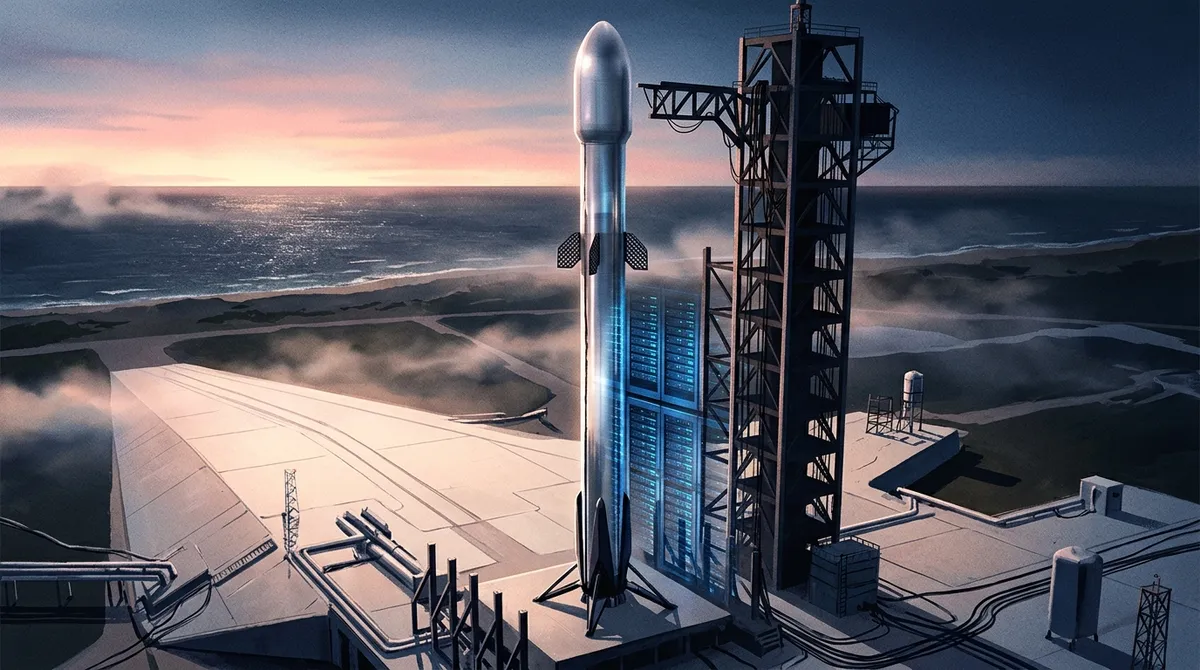
What happened: SpaceX posted a GAAP operating profit of $2.791 billion for the three months ended September 30 — its first since going public in June 2026 — on total revenue of $14.58 billion, up 161% year over year, versus a $273 million operating loss in the same quarter a year earlier. The compute unit it calls "Super Intelligence," which leases AI hardware to customers such as Anthropic, brought in $7.56 billion, 52% of revenue.
What's genuinely new: the segment's own operating income of $431 million, which absorbs a $1.2 billion stock-compensation charge from the August acquisition of Cursor; roughly $1 billion of Bitcoin gains sitting below the operating line in other income; Q3 capital spending of $19.6 billion, 84% of it for AI infrastructure and larger than the quarter's entire revenue; and analyst stances — Jefferies initiating coverage with a Buy and a $210 target, Bernstein maintaining Buy at $268. Anthropic's roughly 34.5% share of revenue, already named in the Q3 10-Q, remains the concentration risk analysts point to.
Watch: whether Anthropic's revenue share shifts in Q4 and how capex tracks against Super Intelligence revenue; the Cursor charge's trajectory; whether the financing that buys the leased chips shows up in formal disclosure; and the December 8 IPO lock-up expiration, when up to 797.6 million shares become eligible to sell.
Starship logged seven minutes inside Mexican airspace; FAA weighing 456 Starbase launches a year
Sources Tech Times Al Jazeera Tiempo La Noticia Digital FAA
What happened: President Claudia Sheinbaum said Nov. 26 that Mexico has asked Washington, through the U.S. Embassy, for a meeting on permission for SpaceX launches to use Mexican airspace, how often that use would be allowed and, "if necessary," relocating the Starbase launch site. No meeting is scheduled; the embassy referred questions to the State Department, which did not immediately respond, and SpaceX did not immediately comment.
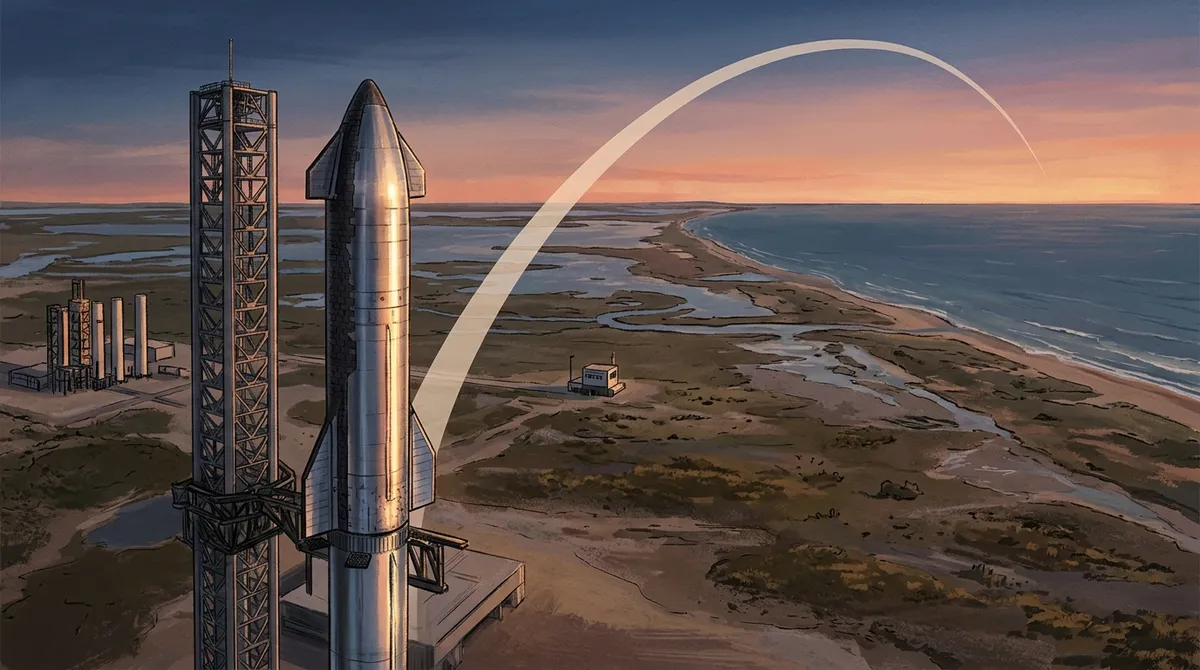
What's genuinely new: Mexico's air navigation service, SENEAM, says Starship's upper stage was inside Mexican airspace for seven minutes on Nov. 14, entering at 3:08 p.m. Mexico City time after an FAA notification the day before. The FAA's Oct. 14 notice of intent studies a Phase 2 of up to 456 launches and 912 landings a year at Starbase — more than 18 times the current 25-launch cap — and mentions temporary airspace closures but never foreign airspace. Profepa says it will ask SpaceX to take responsibility for debris fragments; SpaceX disputes the material is its own.
Watch: Whether the meeting gets scheduled; Profepa's findings and any SpaceX response on responsibility; and the FAA's launch-rate decision, whose public-comment dates differ between the FAA project page (Dec. 7) and the Federal Register notice (Nov. 30).
More context: Al Jazeera reports that President Claudia Sheinbaum said Mexico is seeking, through its embassy, a meeting between U.S. and Mexican airspace authorities to establish permission for the use of Mexican airspace, how often it would be used and, "if necessary, the relocation of the launch site." Tiempo La Noticia Digital reports that Mexico's air navigation service SENEAM and civil aviation agency AFAC recorded Starship entering Mexican airspace at 3:08 p.m. Mexico City time on Nov. 14 and leaving at 3:15 p.m., a crossing the transport ministry said posed no risk to air operations. FAA says a second phase of its study would allow up to 456 Starship launches and 912 landings a year at Starbase, against 25 launches a year now authorized, and that the public comment period has been extended to Dec. 7, 2026.
Electron's 101st flight caps Rocket Lab's busiest orbital-launch year
Sources Spaceflight Now BigGo Finance
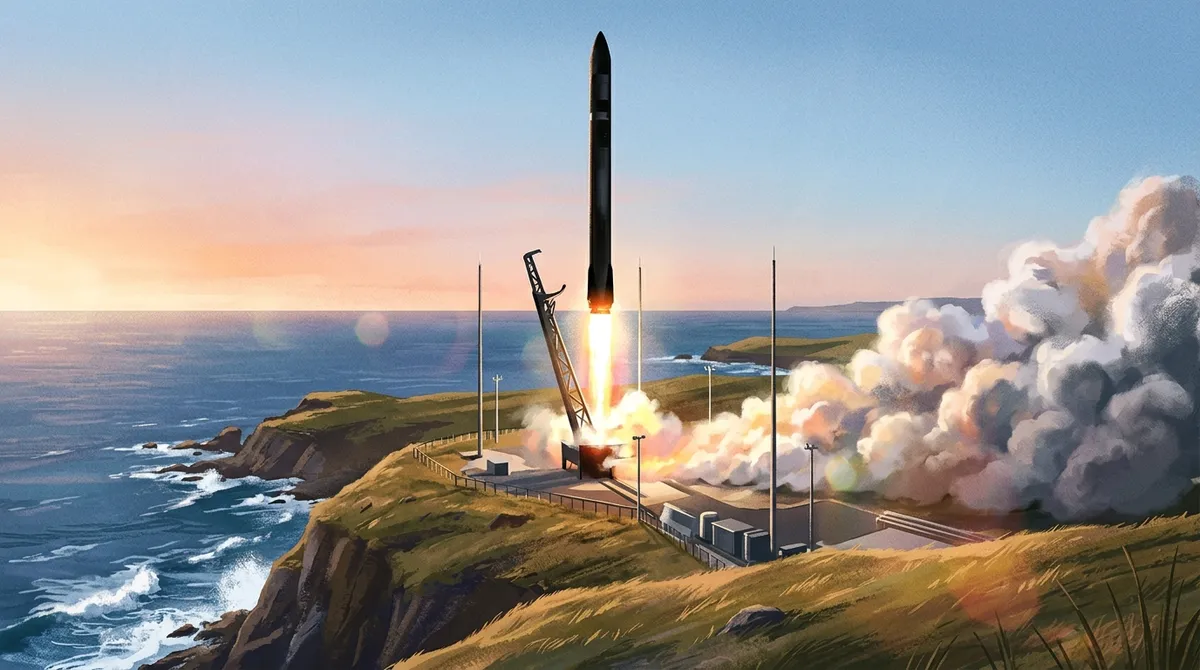
What happened: Rocket Lab flew Electron for the 101st time on Nov. 27, launching the "Night Owls Never Sleep" mission from Mahia, New Zealand, and deploying Japanese company Synspective's 14th StriX radar satellite into a 569 km orbit. All 14 of Synspective's satellites have flown on Electron rockets, and the company says more launches are coming before year-end.
What's genuinely new: The cadence mark: 19 orbital Electron launches in 2026, one more than 2025's 18, against 14 in 2024 and nine in 2023 — the most orbital flights Electron has logged in any calendar year. The Synspective backlog behind it runs to 47 reserved Electron flights through 2031 after the 20-launch deal signed in September, the largest single Electron order to date.
Watch: StriX 14's checkout and data-collection testing, and the remaining flights Rocket Lab says it has this year.
Cygnus XL cargo ship rides a Sunday Falcon 9 to the space station, sonic booms advised for nine counties

Sources NASASpaceflight Spaceflight Now Orlando Sentinel Hoodline published Nov 28, 4:44 PM ET
What happened: Northrop Grumman's Cygnus XL cargo ship, named the S.S. James "Jim" A. Lovell after the Apollo 13 commander, is targeting launch on a Falcon 9 from Cape Canaveral Space Force Station at 10:47 a.m. EST on Sunday, Nov. 29 (backup Nov. 30 at 10:24 a.m.), carrying 4,990 kg (about 11,000 pounds) of supplies and science on the NG-25 mission — the 25th Cygnus flight and the 24th to reach the station — with arrival at the ISS around 2:35 a.m. EST on Dec. 1.
What's genuinely new: NASASpaceflight's mission preview adds the cargo: the stretched Cygnus XL's third flight, built to carry up to 5,000 kg, with Lockheed Martin's JOINS welding demonstration — slated to become the first robotic welding test in open space, running from March 2027 — NASA's Ohalo III crop-growth prototype and a Connecticut drug-delivery experiment among the payloads, alongside more than 35 ISS National Lab experiments. The ship berths at Unity's nadir port for up to 200 days and disposes of station trash on reentry by May 2027, while Northrop officials say repairs to the damaged NG-22 cargo module remain underway with no new launch date.
Watch: the liftoff and the Landing Zone 40 return, the Dec. 1 grapple and berthing, and Antares 330 — the Northrop–Firefly replacement rocket expected no earlier than late 2027.
Brief
- Jonathan McDowell on X: for the CRS-25 cargo flight, NASA's ISS mission overview for the first time gives only approximate masses — to the nearest 100 pounds instead of the usual 1-pound precision.
- BigGo Finance: Tradr ETFs plans to launch the Tradr Triple Threat 2X Long Space Daily ETF (Cboe: SPAT) on Dec. 1, which delivers twice the daily return of an equal-weighted, actively managed portfolio of AST SpaceMobile, Rocket Lab and SpaceX.
- Ventura County Star: SpaceX targets a Falcon 9 launch for the classified U.S. Space Force mission USSF-380 from Vandenberg Space Force Base this weekend, with a four-hour window opening 8:39 p.m. PT on Nov. 28 and a Nov. 29 backup — the booster's 27th flight, aiming to land on the drone ship "Of Course I Still Love You."
- Anil Menon on X: astronaut Anil Menon aboard the International Space Station says the crew will use the robotic arm this week to bring in the Cygnus cargo ship, with Luke Delaney and Jessica Watkins at the controls.
- TechXplore: an analysis piece examines the physics limits — the "physics wall" — facing proposals to run AI data centers in orbit, the project SpaceX's Starmind constellation now has regulatory clearance to pursue.
- Startup Fortune: Berenberg downgraded AST SpaceMobile to Hold on Nov. 27, cutting its price target to $30 from $92 on satellite-launch delays — the bank now models a funded fleet of about 100 satellites by 2028 with free cash flow turning positive in 2030.
- The Washington Post: a reported exclusive says Iran used Elon Musk's Starlink to help wage attacks against U.S. forces early in the Iran war, and that Musk was furious to learn of violations of his satellite internet service by both Tehran and the Pentagon — no second independent report yet on the wartime use or Musk's response.