Starship Flight 15: the first double-catch attempt takes shape
From the Space digest for Nov 9, 2026
Sources Gadget Review USA TODAY Gizmodo Astronomy NASASpaceflight NASASpaceflight, link 2 SpaceX published Nov 9, 5:47 PM ET
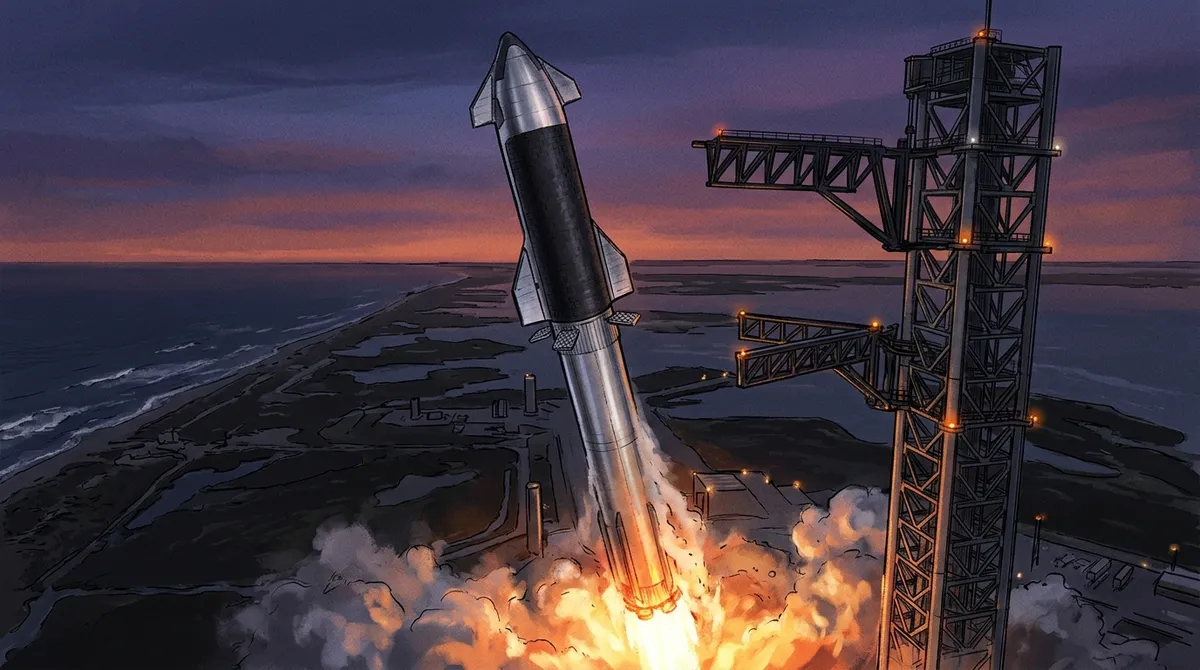
What happened: Flight 15 remains on course to lift off from Starbase on November 13, pending regulatory approval, with a 75-minute launch window opening at 5:45 p.m. Eastern and the first attempt to catch both the Starship upper stage and the Super Heavy booster with the launch tower's mechanical arms. The mission plans an orbit about 275 km up, more than 22 hours aloft across roughly 14 orbits, and 26 Starlink V3 satellites — three of them modified to photograph the heat shield during reentry, when ground observation is limited. The upper-stage catch is conditional: abort trajectories and ocean-splashdown options are built into the profile. SpaceX's own Flight 15 page sets a 75-minute window opening at 4:45 p.m. Central (5:45 p.m. Eastern) on Friday, November 13, and describes the mission as the first attempt to return both Starship and the Super Heavy booster to the launch site — which, if it works, would be the first full recovery of an orbital launch system (SpaceX). The ship is to orbit at about 275 km for roughly 14 orbits over more than 22 hours while deploying 26 Starlink V3 satellites, each adding one terabit of capacity so that the batch equals about ten Falcon 9 launches of Starlink V2 Minis, with three of the satellites fitted with cameras to scan the heat shield and send imagery to operators (SpaceX).
What's genuinely new: the launch-window time, the planned orbit profile, three Starlink V3 satellites modified to photograph the heat shield, and the built-in fallbacks that make the catch a planned objective rather than a guaranteed outcome; a preview also frames the contrast between the routine booster return and the upper stage's new demands — reach orbital velocity, survive reentry, and arrive at the tower correctly aligned. NASASpaceflight live coverage shows Booster 22, set to fly the mission, in transport on the road to Pad 2.
Watch: the hardware reaching Pad 2, the November 13 window opening, and whether both stages are caught or the fallbacks are exercised.