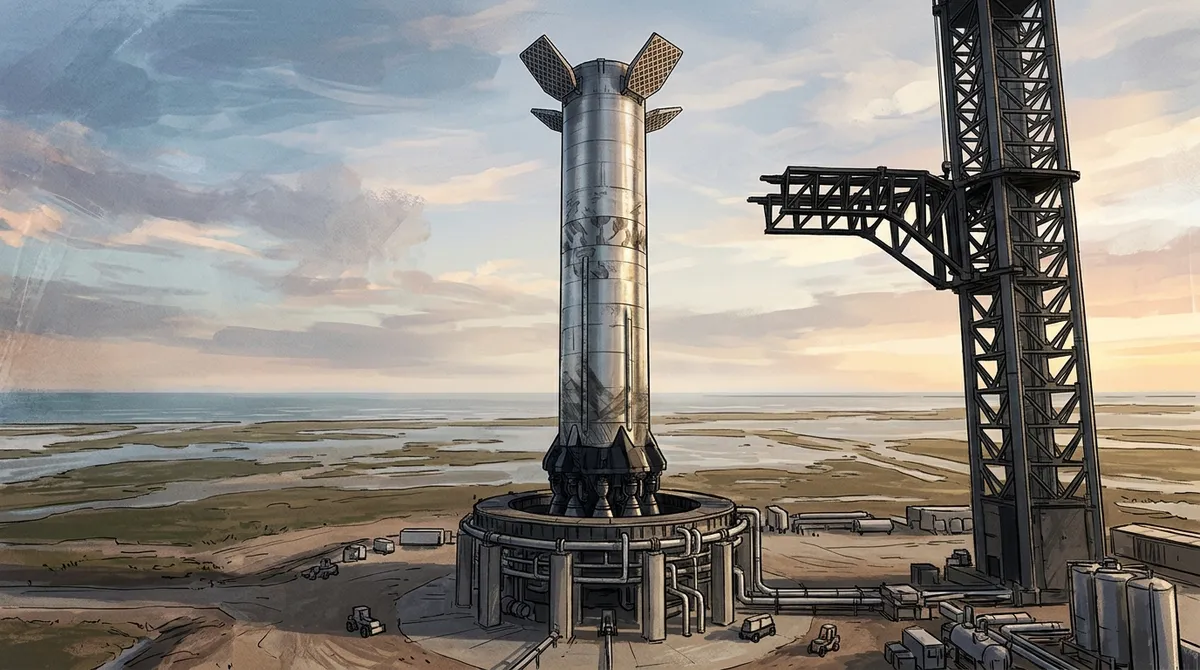
Flight 15's Booster 22 goes up on Starbase Pad 2 before the first double-catch attempt
From the Space digest for Nov 10, 2026
Sources NASASpaceflight on X NASASpaceflight on X, link 2 SpaceX autoevolution India Today Space.com published Nov 10, 1:26 PM ET
What happened: Flight 15's Super Heavy booster — Booster 22, carrying its 33 Raptor engines — is now seated back on the orbital launch mount at Starbase Pad 2 after its roll to the pad, NASASpaceflight relays, which also names Ship 42 as its flight partner, completing the move from pre-flight checks into physical pad integration for a mission targeted as early as November 13 pending regulatory approval (NASASpaceflight on X). SpaceX said the booster ran its final catch testing upon arrival — including a suspended squeeze test at catch height — and that it is the first Super Heavy V3 booster slated to return to the launch site for catch (Space.com). The booster and spacecraft have each completed their static-fire tests (India Today). SpaceX says Flight 15, launching as soon as Friday, November 13, in a 75-minute window opening at 4:45 p.m. CT, is planned as the first flight to return both the Starship upper stage and the Super Heavy booster to the launch site for catch — what the company calls "the first full recovery of an orbital launch system" (SpaceX). The upper stage is slated to orbit at roughly 275 km for more than 22 hours, completing about 14 orbits, and deploy 26 Starlink V3 satellites, each adding a Terabit of capacity, with the flight profile able to fall back on deorbit and ocean splashdowns at pre-set areas if systems misbehave (SpaceX). Coming back from the west, Starship's reentry path is set to cross populated parts of northern Mexico and southern Texas while steering around the major Rio Grande Valley cities before its final flip toward Pad 2, so sonic booms are expected (autoevolution). The ground track also carries Starship over parts of India several times during orbit, a rare set of viewing passes for skywatchers there, and a backup launch opportunity is planned the following day with contingency reentry over a cleared Indian Ocean area if orbital insertion is not reached (India Today). A separate 11,000-ft temporary flight restriction for a "high energy testing ground hazard" at Starbase takes effect November 12, published as a testing notice apart from the mission's launch and reentry restrictions (NASASpaceflight on X).
What's genuinely new: the booster seated on the Pad 2 launch mount — the roll away from check-out is done, with the ship to follow — plus the suspended squeeze test at catch height on the first V3 booster slated to return to the site, Ship 42's naming as the Flight 15 upper stage, the testing-only flight restriction over Starbase from November 12, and the India-visible ground track on the roughly 14-orbit plan. Flight 15 is set to carry 26 Starlink V3 satellites and attempt the first-ever catch of both stages, with the ship catch still gated by the FAA's licence modification and ocean-splashdown fallbacks as the planned contingency.
Watch: rollout of the combined stack, the FAA ship-catch licence modification, the November 13 launch attempt, and whether both stages are caught or the fallback trajectories are exercised.