ULA's Vulcan is back on the pad, carrying 40 Amazon Leo satellites
From the Space digest for Nov 12, 2026
Sources Orlando Sentinel GCN NASASpaceflight ULA via NASASpaceflight USA Today About Amazon published Nov 12, 9:38 AM ET
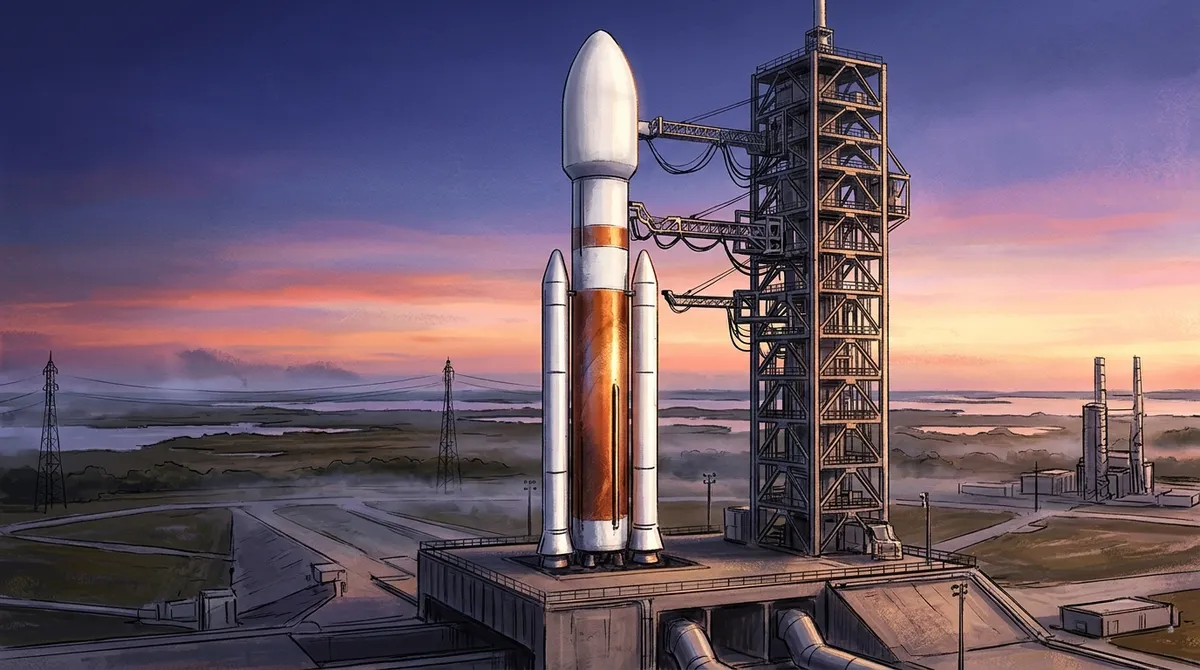
What happened: United Launch Alliance rolled its Vulcan to Space Launch Complex 41 at Cape Canaveral ahead of a liftoff at 12:54 p.m. on November 13, 2026, inside a 29-minute window — the rocket's first flight since February 12, 2026, when the nozzle on one of its Northrop Grumman-supplied solid rocket boosters burned off during ascent on Vulcan's second national-security mission — its first flew in August 2025 — which still delivered its Space Force payload. The flight carries 40 Amazon Leo broadband satellites to a near-circular orbit about 285 miles (460 km) up, inclined at 51.9 degrees — the first of 38 Vulcan missions Amazon bought to launch more than 1,500 of its 3,232 first-generation satellites, and the debut of the rocket's most powerful configuration, six boosters plus six first-stage engines producing more than 3.8 million pounds of thrust. ULA says it understands how the burn-through occurred and has made design and process fixes to the nozzle, without pinning down one culprit; the Space Force still has not said when it will trust payloads back on Vulcan, and all national-security launches have flowed to SpaceX in the interim. Amazon has just 396–398 satellites in orbit against FCC deployment requirements it missed — 1,616 by July 30, 2026, conditionally waived on June 5, 2026, with the full 3,232 first-generation fleet due by July 30, 2029 — and says initial service in the US, UK, France, Germany and Canada starts before the end of 2026. The Space Coast's cadence has fallen off 2025's record 109 orbital flights, with Blue Origin's New Glenn out until 2027 after the May pad explosion and SpaceX winding down its Falcon manifest, which limits government launch options after 2028, per Orlando Sentinel.
What's genuinely new: The rocket is on the pad and the flight is dated — the first of 38 Vulcan missions for Amazon, the VC6L heavy configuration's first flight, and the first on-flight test of the booster-nozzle fixes under a more demanding thrust profile. The deployment math behind the FCC's July 2029 deadline — thousands of satellites still to go on 80+ contracted launches across five rocket families — now rests on this cadence.
Watch: The November 13 launch and booster performance, the Space Force's clearance for Vulcan national-security missions, the FCC make-up schedule toward July 2029, and whether the end-2026 initial-service window for Amazon Leo holds.