Google's Project Suncatcher locks in New Glenn for its 2029 test flight
From the Space digest for Nov 20, 2026
Sources Crypto Briefing Cryptopolitan Ars Technica Engadget Blue Origin Blue Origin, link 2
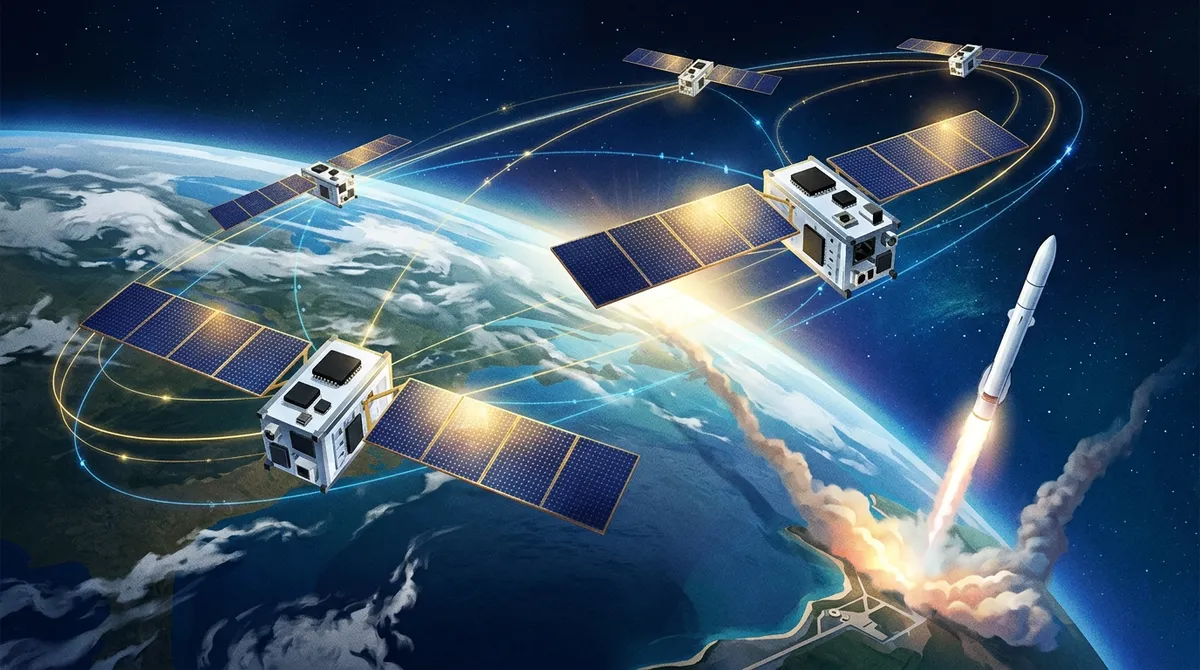
What happened: Google has signed a launch services agreement putting Project Suncatcher — solar-powered satellites carrying its Tensor Processing Units — on Blue Origin's New Glenn, targeting a first-quarter 2029 launch into Sun-synchronous orbit for nearly continuous sunlight. It is the program's first dedicated heavy-lift commitment, announced by Google's senior director Travis Beals; a four-TPU prototype already flew on October 1 and ran the Gemma 4 model in orbit.
What's genuinely new: The 2029 flight is set to ride the smaller 7×2 New Glenn variant, which has launched three times, and Google has not named who will build the several-ton satellites (Ars Technica). Google's own cost math, cited by Cryptopolitan: about $810 per kilowatt-year for solar power in orbit versus $570–3,000 on the ground, workable only if launch prices fall to roughly $200 per kilogram from about $7,000 today. A Wall Street Journal estimate puts a one-gigawatt space data center at about 10,000 satellites and $30 billion, with each satellite carrying roughly a data-center rack's compute (Engadget).
Watch: New Glenn's return to flight ahead of the launch; the two test satellites planned for 2027 and their laser-communication links; a named satellite builder; thermal-management design updates.
More context: Google and Blue Origin have signed a launch services agreement that will fly Project Suncatcher's solar-powered satellites — each carrying Tensor Processing Units and computing at roughly the scale of a data center rack — to Sun-synchronous orbit in the first quarter of 2029, Blue Origin says. New Glenn has not flown since a May static-fire anomaly at Cape Canaveral, though an updated BE-4 main oxygen valve has now completed qualification testing and the investigation was expected to finish in November, Blue Origin says.