Space digest — Nov 20, 2026
Top line: NASA's revised Moon plan keeps Artemis III in low Earth orbit and moves the first crewed landing to Artemis IV before end-2028; the Vulcan failure keeps squeezing Space Force launch options while Amazon rebuilds its Leo count. Relativity closes Terran R flight-one structure qualification, and Google's TPU satellites lock in New Glenn for 2029.
- Vulcan failure leaves the Space Force short of launch options
- NASA's revised Moon plan keeps Artemis III in low Earth orbit
- Google's Project Suncatcher locks in New Glenn for its 2029 test flight
- Terran R closes structural qualification and books a lunar mission
Vulcan failure leaves the Space Force short of launch options
Sources Air & Space Forces Magazine SatNews The Planetary Society BGR
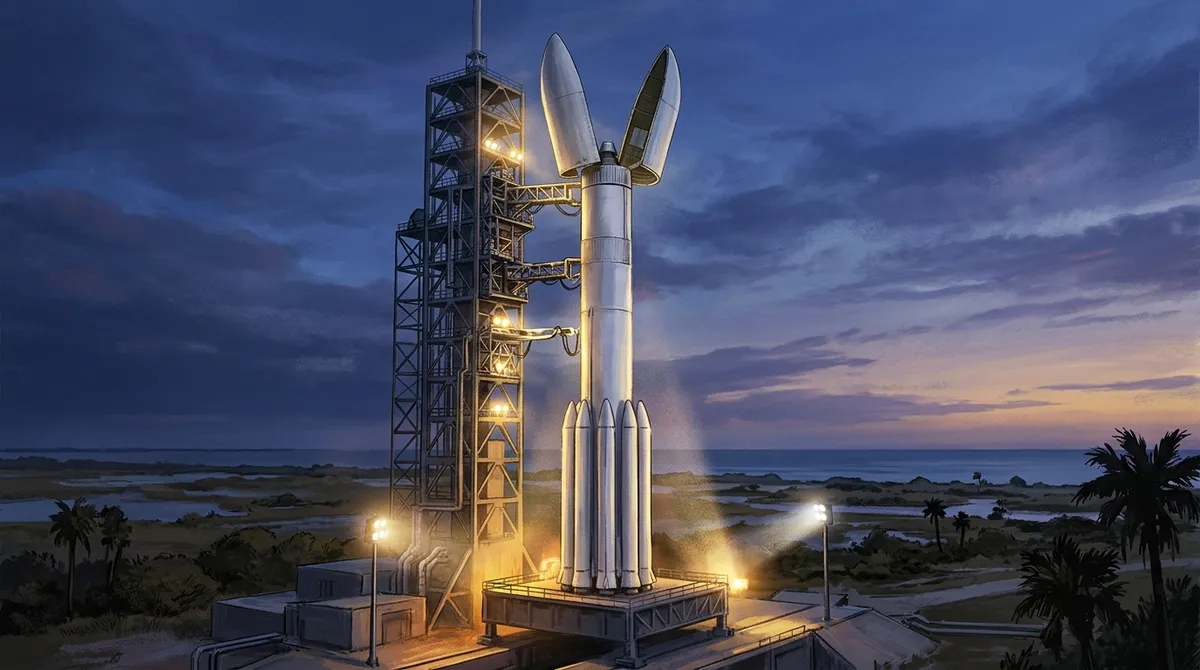
What happened: The November 15 loss of ULA's Vulcan Centaur — which destroyed 40 Amazon Leo satellites — is squeezing Space Force launch capacity harder than earlier setbacks. ULA has cleared Blue Origin's BE-4 engines, narrowing the investigation to the core stage's fuel supply (SatNews), a finding that also lifts a shared-engine risk from New Glenn. Analysts told Air & Space Forces Magazine the strategy of shifting missions to SpaceX is near its limit, with the Pentagon hedging on $150 million loans to Rocket Lab and Stoke Space.
What's genuinely new: Todd Harrison of the American Enterprise Institute says Falcon 9 is "operating at almost its max flight rate" with little left to swap off Vulcan, that only SpaceX currently has vehicles cleared for the most demanding national-security launches, and that the government could invoke the Defense Production Act to keep Falcon 9 flying — never used for a space system this way before. Starship's Starlink-oriented deployment design doesn't yet carry conventional large spacecraft, so no certified successor exists. Blue Origin must still complete NSSL certification even after a January 2027 commercial return to flight.
Watch: the Vulcan fuel-delivery root cause and return-to-flight clearing; whether the Space Force names alternative vendors; Blue Origin's NSSL certification path; financial close on the Rocket Lab and Stoke loans.
More context: Since 2020, seven of every 10 NASA launches have gone up on SpaceX rockets, and eight upcoming science missions — including Dragonfly, NEO Surveyor and the Rosalind Franklin Rover — are already booked on Falcon vehicles, The Planetary Society reports. Amazon, for its part, stands at 391 Leo satellites in orbit against a planned constellation of about 3,200 — the destroyed batch was its largest deployment to date and the program's first failure in 16 launches since deployments began in October 2023 (BGR), with Arianespace, SpaceX and — once it returns to flight — New Glenn as the recovery options.
NASA's revised Moon plan keeps Artemis III in low Earth orbit
Sources Ars Technica SatNews
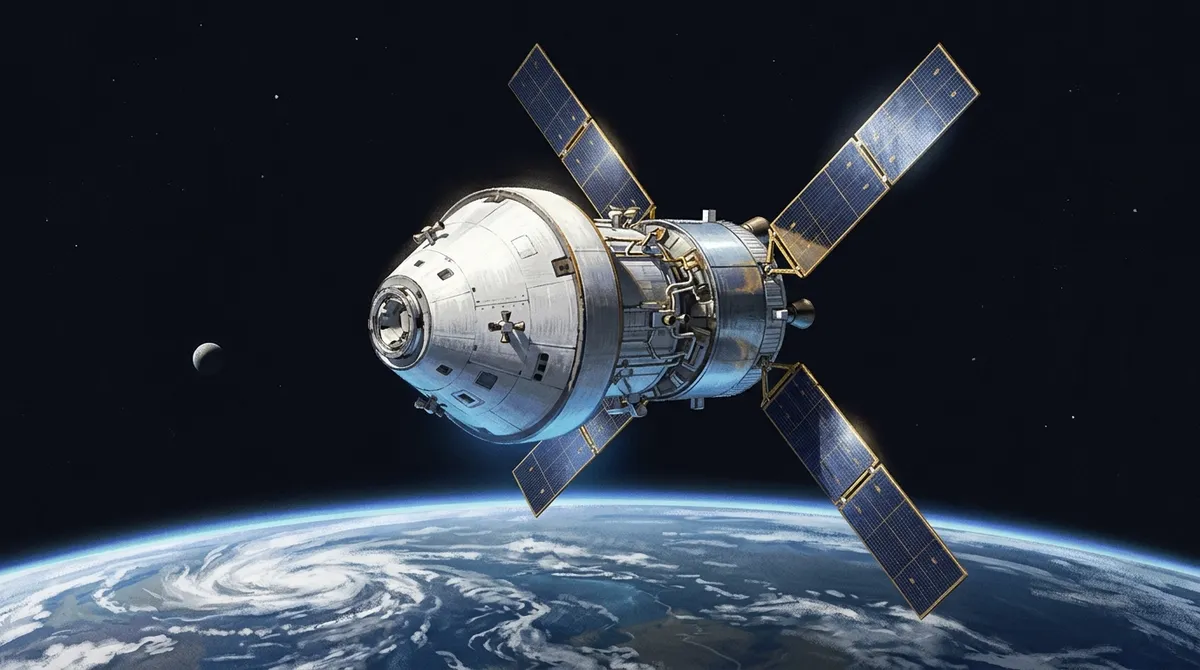
What happened: NASA's reworked Moon plan holds Artemis III to a low-Earth-orbit mission and moves the first crewed lunar landing to Artemis IV, targeted before the end of 2028. Human Landing System program manager Steve Creech told Ars Technica that on Artemis III the four-person Orion crew will dock with Blue Origin's Blue Moon lander for two days, opening hatches and entering its pressurized cabin to test environmental control and life support, then dock with SpaceX's Starship for only about two hours without going aboard.
What's genuinely new: The split keeps SpaceX focused on orbital refueling, which the uncrewed Starship landing demo needs in bulk and which has slipped two years since late 2024. NASA added a milestone to SpaceX's lander contract: a prototype crew compartment, Cabin One, under construction at Starbase for ground testing, beside a planned hotfire of Blue Moon's future three-engine configuration in a vacuum chamber at NASA's Ohio facility. Initial mission surface stays are shortened from six-and-a-half days to four, and the 90-day lunar-orbit loiter is dropped from the lander architecture.
Watch: whether Artemis IV's before-end-2028 landing target holds; SpaceX's long-delayed refueling demonstration; Cabin One ground tests; Blue Moon Mark 1's first test mission, planned for early 2027 after the May pad explosion delay.
More context: The revised Artemis III will run its dual-lander rehearsal in a circular low Earth orbit about 460 kilometers up, with Orion docking alongside Blue Origin's lander and then nose-to-nose with a Starship test article, marking the first time NASA integrates hardware and software from both lander providers on one mission, SatNews reports.
Google's Project Suncatcher locks in New Glenn for its 2029 test flight
Sources Crypto Briefing Cryptopolitan Ars Technica Engadget Blue Origin Blue Origin, link 2
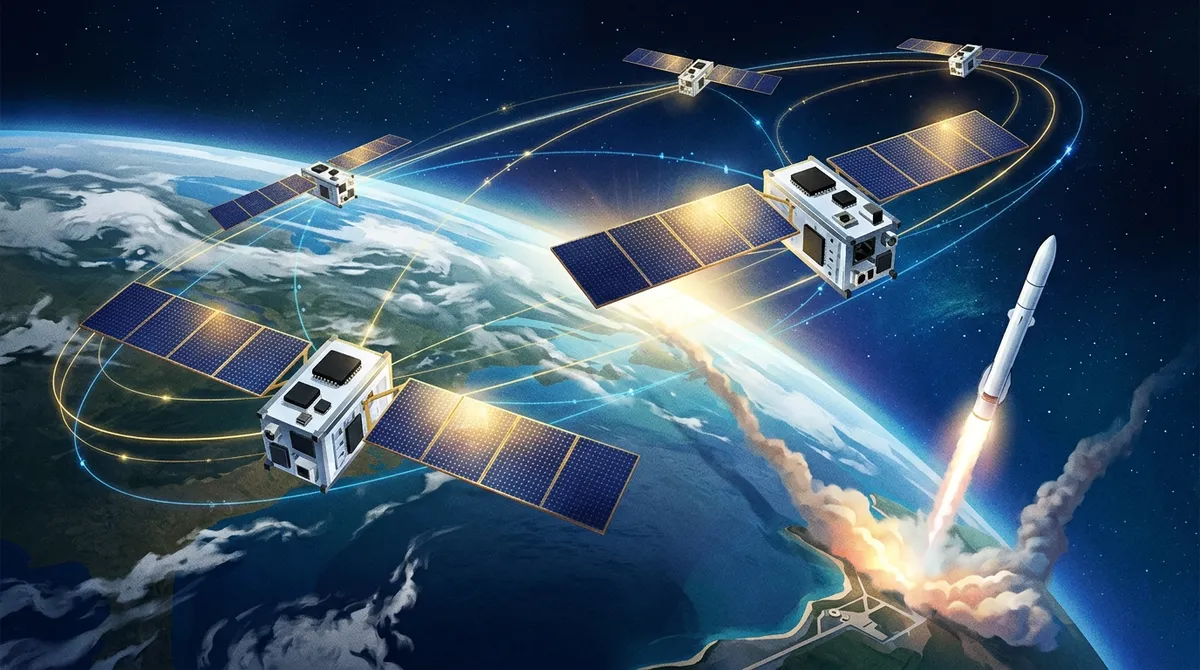
What happened: Google has signed a launch services agreement putting Project Suncatcher — solar-powered satellites carrying its Tensor Processing Units — on Blue Origin's New Glenn, targeting a first-quarter 2029 launch into Sun-synchronous orbit for nearly continuous sunlight. It is the program's first dedicated heavy-lift commitment, announced by Google's senior director Travis Beals; a four-TPU prototype already flew on October 1 and ran the Gemma 4 model in orbit.
What's genuinely new: The 2029 flight is set to ride the smaller 7×2 New Glenn variant, which has launched three times, and Google has not named who will build the several-ton satellites (Ars Technica). Google's own cost math, cited by Cryptopolitan: about $810 per kilowatt-year for solar power in orbit versus $570–3,000 on the ground, workable only if launch prices fall to roughly $200 per kilogram from about $7,000 today. A Wall Street Journal estimate puts a one-gigawatt space data center at about 10,000 satellites and $30 billion, with each satellite carrying roughly a data-center rack's compute (Engadget).
Watch: New Glenn's return to flight ahead of the launch; the two test satellites planned for 2027 and their laser-communication links; a named satellite builder; thermal-management design updates.
More context: Google and Blue Origin have signed a launch services agreement that will fly Project Suncatcher's solar-powered satellites — each carrying Tensor Processing Units and computing at roughly the scale of a data center rack — to Sun-synchronous orbit in the first quarter of 2029, Blue Origin says. New Glenn has not flown since a May static-fire anomaly at Cape Canaveral, though an updated BE-4 main oxygen valve has now completed qualification testing and the investigation was expected to finish in November, Blue Origin says.
Terran R closes structural qualification and books a lunar mission
Sources NASASpaceflight published Nov 19, 5:08 PM ET
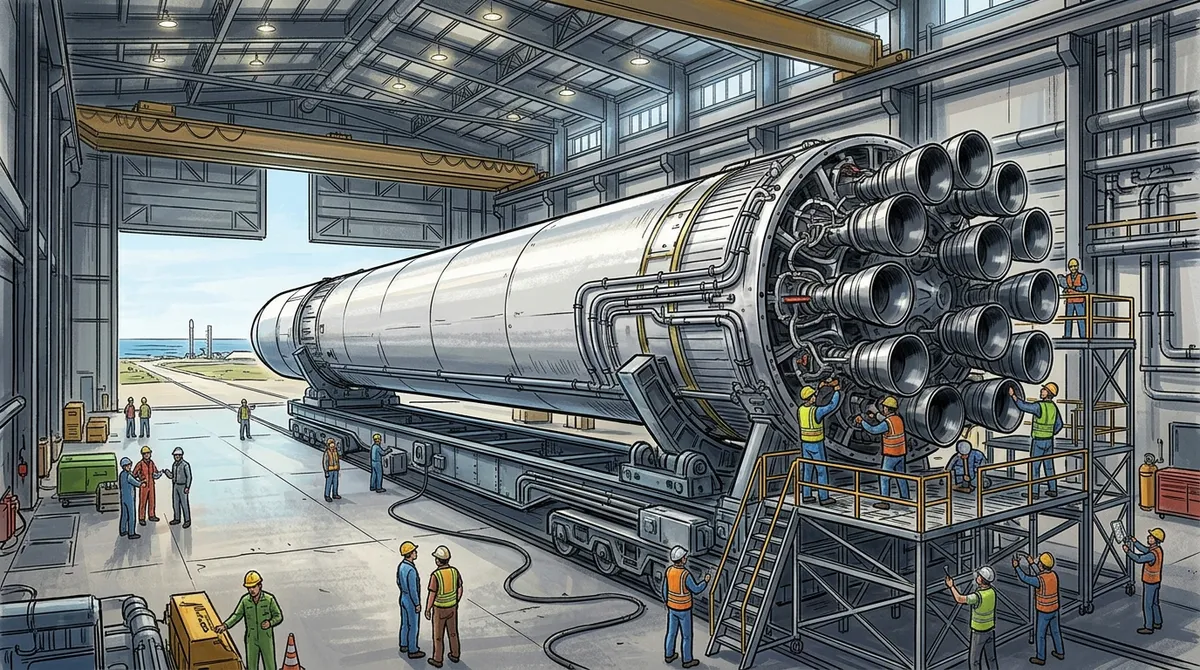
What happened: Relativity Space reports Terran R's interstage passed structural testing and the first stage's thrust structure completed breakover — rotated horizontal with all 13 Aeon R engines, fluid lines and avionics installed — as the company prepares the inaugural flight from Launch Complex 16 at Cape Canaveral. NASA has also assigned Impulse Space's lunar mission to Terran R under a Venture-Class task order from November 7.
What's genuinely new: The interstage survived millions of pounds of compressive load, grid-fin punch loads and separation-latch preloads above flight levels, closing structural qualification for all primary flight-one structures — after Stage 2's October mission-duty-cycle demonstration at Stennis. At LC-16, the lightning-protection down-conductor towers are finished, with overhead catenary wiring, grounding tests and range-safety sign-off still ahead. The task order makes Impulse the prime contractor: Terran R launches Impulse's Helios kick stage and lunar landers to orbit beginning in 2028 for NASA's Moon Base program.
Watch: a first-flight target for Terran R; LC-16 range-safety sign-off; the Impulse lunar mission's 2028 timeline.
Brief
- SpaceX stock broke below its IPO price at $131.16, down 5%, as the Financial Times and Bloomberg reports relayed by 247wallst describe two lender worries: that the debt package restrict Musk from launching into orbit the Nvidia chips securing the financing, and the $32 billion of bonds inside the $40 billion package priced at a yield well above average US investment-grade. Rocket Lab fell about 3% during November 20's session and AST SpaceMobile 1% in the same AI-linked sell-off; Rocket Lab's November 19 close was $50.99, down 3.8%
- Flight 15 post-flight: Ship 42's tower catch scraped ablative off its side and a missing centreline heat-shield tile baked a rust-colored streak across reentry, pushing SpaceX toward a steel-wool-mesh heat-shield fix tested on this flight; Elon Musk says Ship 42 likely won't fly again, and SpaceX's next step is catching both stages on a single mission (NASASpaceflight).
- Europe's next Ariane 6 launch is set for November 23, lifting off from Kourou between 11:09–11:38 GMT as final preparations finish at the Spaceport (ESA Space Transport on X).
- Rocket Lab's 101st Electron launch is set for next week — the "Night Owls Don't Sleep" launch window opens at 1:00 pm NZDT on November 27, deploying a StriX Earth-imaging satellite for Synspective; the stock closed November 19 down 3.8% at $50.99 (Traders Union).
- Barclays has issued a positive report on Rocket Lab and raised its share-price target to $138 (Advanced Television) — a move higher against the post-print round that trimmed Morgan Stanley to $103, Piper Sandler to $58 and Roth to $80.
- Starship: Ship 44, assigned to Flight 17, rolled to the Massey's test site for cryogenic testing, with Booster 24 — its Flight 17 counterpart — rolling out to join it there (NASASpaceflight; CeaserG33 on X); the Starbase Giga Bay build site lowered the final boom of its last tower crane, a construction milestone.
- A media tour of SpaceX's Starfactory — about 1 million square feet building both Starship stages — reports the company completing roughly one Ship upper stage every two weeks and one Super Heavy booster every four weeks, with nose cones in production as high as Ship 51, a windowed nosecone spotted that appears to be the Artemis lunar-lander version, and the under-construction Gigabay sized for up to 24 vehicles at a time (Space.com).
- SpaceNews reports Europe is seeking "indispensable" new roles in Artemis (SpaceNews).
- Starship's first Cape launch has been removed entirely from the high-profile missions planning slide circulated to air-traffic authorities — the first negative signal for the Kennedy Space Center debut expected around month's end (SpaceNotices on X).
- The same planning slide marks New Glenn's return to flight as no earlier than January 8, the firmest public date since the company-official January 2027 slip (SpaceNotices on X — the planning slide).
- Stoke Space says Zenith development is complete: flight engines are clearing acceptance testing and shipping to Cape Canaveral weekly for integration with Nova's first stage (Newspace Economy).
- Elon Musk says cities on the Moon and Mars need "about a megaton per year to orbit" — roughly 5,000 Starship flights a year at his 200-ton payload figure (TIKR).
- MaiaSpace has signed Space Cargo Unlimited as the customer for its first commercial launch (SpaceNews). No launch date given.
- A Senate committee has advanced NASA and FCC nominees despite a partisan dispute (SpaceNews).
- China's Shijian-24 satellite reached Sun-synchronous orbit on a Long March 2D launch from Taiyuan on November 18, with no mission or builder named (Tech Times).
- Dcubed, a German space-hardware supplier, has raised $30 million (SpaceNews).
- The FAA held an open virtual hearing on SpaceX's proposal for more rocket launches from South Texas, after the comment period was extended (ValleyCentral).
- Europe's The Exploration Company unveiled new renders of its reusable Nyx capsule.
- Intuitive Machines' third-quarter results surface in a stock-comparison piece: revenue of $269 million, an order backlog of $1.9 billion (up $1.2 billion from the end of 2025), fiscal-2026 revenue guided to $935 million and a first profit expected in 2029 (The Motley Fool).
- President Ferdinand Marcos Jr. says the Philippines wants to become a SpaceX launch site and is already in talks with the company, framing it as a launch business rather than a space programme; he cited Cagayan's position on the western Pacific (ABS-CBN). No agreement, site details or date given.