Amazon Leo's broadband push hits a launch bottleneck
From the Space digest for Nov 24, 2026
Sources The Wall Street Journal Spaceflight Now NASASpaceflight on X Bloomberg Telesatellite SpaceNews Ars Technica WESH Orlando published Nov 24, 6:15 AM ET
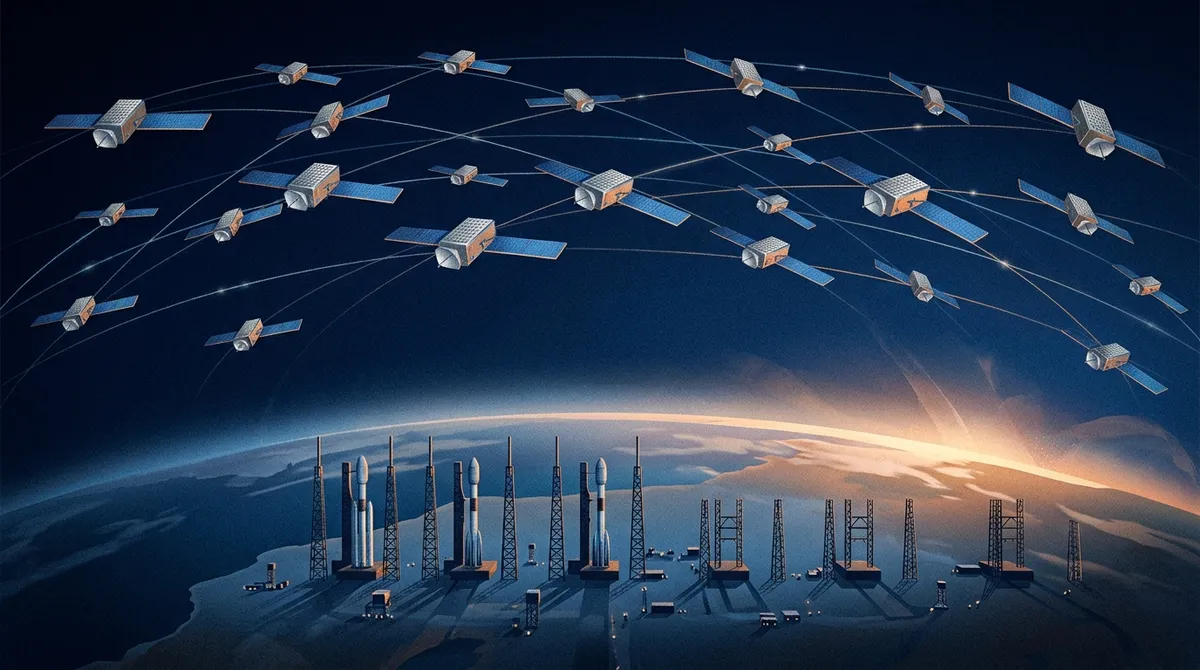
What happened: The Ariane 64 flight carrying 36 Amazon Leo satellites lifted off from Kourou, French Guiana, on November 24 — a day later than planned after a November 23 ground-equipment problem — and completed the deployment: contact has been established with all 36 satellites after release into a roughly 460 km orbit, from where each rises to its 630 km operating altitude. Arianespace says its four Leo missions this year have placed 136 satellites in under ten months, and the fleet stands near 432 against more than 11,000 for Starlink — the first launch since the November 15 Vulcan failure destroyed 40 satellites.
What's genuinely new: Amazon is accelerating the Falcon 9 flights it bought from SpaceX: the next Leo launch on Falcon 9 has moved up to December from next year, with several more to follow in rapid succession and hundreds of satellites waiting in storage. Seventeen of the 102 contracted launch flights are complete with one failure; Vulcan stays grounded for months, and New Glenn, out since a May pad explosion, could resume early next year. The Wall Street Journal puts each satellite at about $2 million and this year's Leo spend at $4 billion or more, with 3,232 spacecraft still to fly by July 30, 2029 and a year-end service start riding on the pace.
Watch: The December Falcon 9 flight, the year-end service start, Vulcan's and New Glenn's return-to-flight dates, and deployment pace against the July 2029 deadline.