Starship debris washes ashore in Mexico and the government steps in
From the Space digest for Nov 24, 2026
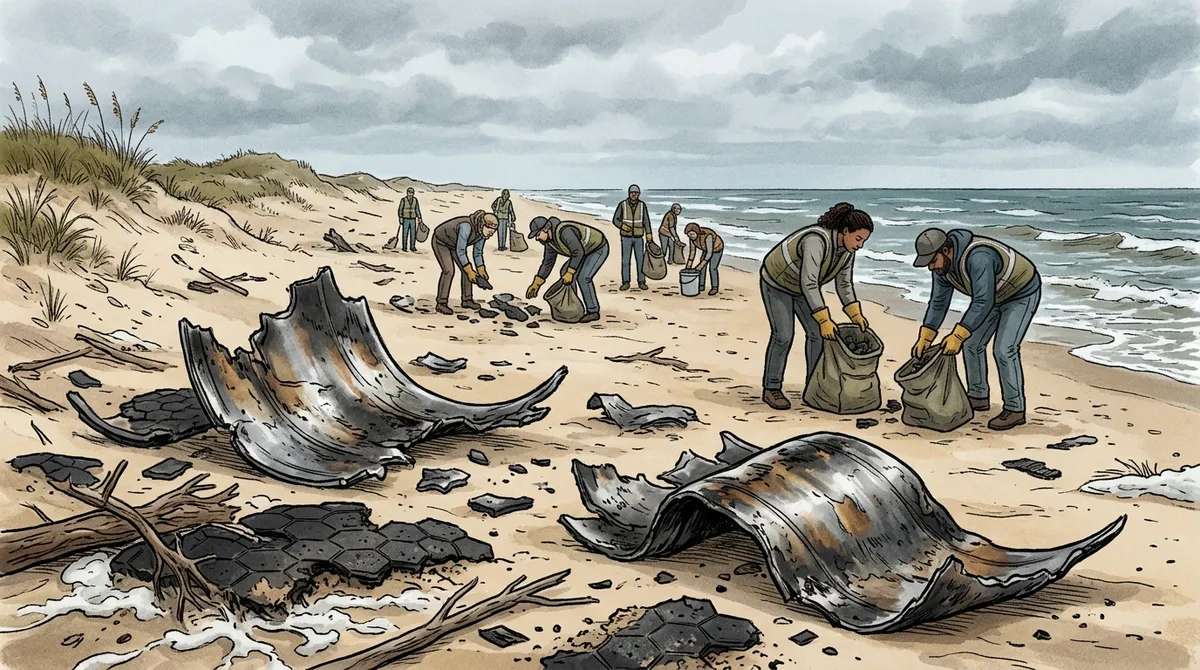
What happened: Rocket debris from SpaceX's South Texas operations is washing ashore along Mexico's Tamaulipas coast, and the Mexican government is now involved: the federal environmental agency PROFEPA reports collecting 6 kilograms (about 13 pounds) of suspected rocket debris and transferring it to the Mexican Navy, while volunteers with the environmental group Conibio Global have gathered more than 1,500 fragments, some bearing SpaceX markings. FOX San Antonio cameras filmed the November 13 Super Heavy booster explosion over the Gulf after the booster aborted its return to the launch site.
What's genuinely new: SpaceX's dispute and the environmental question now sit with both governments: a November 19 company statement to Mexican media says the booster executed a safe abort maneuver, disputes reports of widespread debris and says independent testing shows no chemical, biological or toxicological risk — without water or sediment results. No scientific link connects launches to the dead dolphins, sea turtles and manatees reported along the coast or to fishermen's accounts of a 60% catch decline, but an April 2025 FAA environmental assessment acknowledged potential harm to sea turtles in launch failures.
Watch: PROFEPA's review of the SpaceX materials, an independent veterinary review of the dolphin footage, and any disclosure of water or sediment testing after the November 13 explosion.
More context: Mexico's federal environmental protection agency, Profepa, says it will ask SpaceX to take responsibility for the suspected rocket fragments recovered on Tamaulipas beaches, and has kept the area under watch with the Mexican Navy since the Nov. 13 explosion, Aristegui Noticias reports. Conibio Global identified the debris arriving at Playa Bagdad as large plastic fragments coated in metallic tape plus black rubber it attributes to the booster's internal propulsion components, with the heaviest concentrations 17 to 18 kilometers south of where the booster exploded, Aristegui Noticias reports.
Links: FOX San Antonio · Newsmax · Nov 24 · Aristegui Noticias