Sandia's SPINE robot to inspect Hanford's narrow waste-tank pipes
From the Energy digest for Nov 24, 2026
Sources ANS published Nov 24, 8:12 AM ET
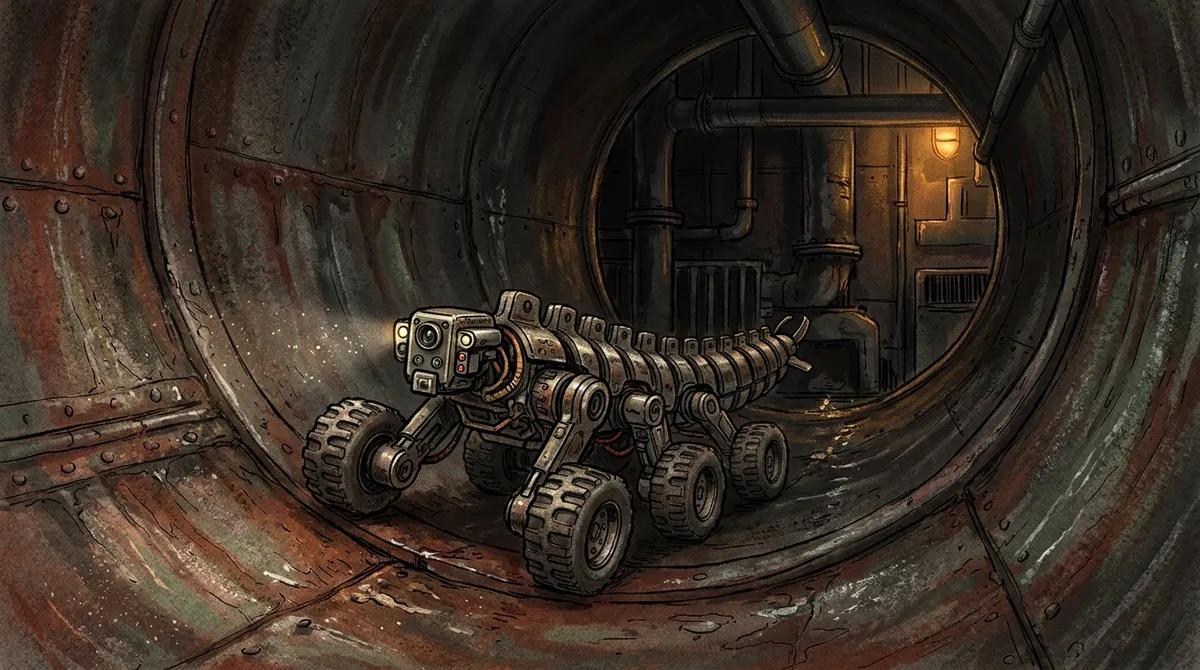
What happened: Sandia National Laboratories has developed SPINE — Self-Propelled Interior Inspector for Nondestructive-Testing Examination — a two-by-six-inch, six-wheeled robot built to crawl hundreds of feet through pipes as narrow as two inches in diameter. It is designed to inspect the aging lines that link underground radioactive-waste storage tanks at the Hanford Site in Washington state. Waste there dates to Manhattan Project-era plutonium production, and today's push cameras examine only about ten feet of pipe at a time.
What's genuinely new: A design paper appeared in the journal Robotics in October 2026. The robot uses a flexible, multi-axis body with adaptive wheels, steers through sharp bends and T-joints, and is driven from a standard video-game controller. It carries payloads such as ultrasonic or electromagnetic probes. The team solved the capstan effect, the friction build-up that makes dragging a cable through many bends increasingly hard, so multiple robots can work over hundreds of feet on one cable.
Watch: Self-cleaning, failsafe-recovery and ultrasonic-sensor upgrades before SPINE deploys at Hanford.