Energy digest — Nov 24, 2026
Top line: NASA opened bidding for Lunar Reactor-1, a 20-kilowatt fission reactor meant to power habitats and rovers on the Moon, launch-ready by December 2030. The Senate passed a permitting overhaul carrying four nuclear amendments, and TVA signed its first data-center deal under the new large-load tariff. Posiva ran its first test cask transport to the Olkiluoto encapsulation plant.
- Senate passes permitting overhaul with nuclear amendments
- TVA's first large-load tariff customer: $1.7 billion from an unnamed data center
- Posiva runs its first test transport to the Olkilueto encapsulation plant
- India: RAPP-8 cleared for first criticality, Kaiga 1 restarts after a 600-day refurbishment
- US uranium output slumped 78% in Q3 as White Mesa readies a December restart
- Sandia's SPINE robot to inspect Hanford's narrow waste-tank pipes
- Standard Nuclear files final safety analyses for two new TRISO plants
- Zambia's nuclear-power plan reviewed by the IAEA
- NASA solicits proposals for Lunar Reactor-1
Senate passes permitting overhaul with nuclear amendments

Sources ANS KOSU Aspen Daily News published Nov 24, 1:23 PM ET
What happened: The Senate passed the Bipartisan American Affordability and Jobs Act on November 19, 62–33, just before the Thanksgiving recess — a permitting-reform bill for energy projects carrying four nuclear provisions: making uncontested NRC licensing hearings optional instead of mandatory, letting uranium enrichment facility construction begin before licence issuance, raising NRC staff pay to help the agency compete with industry employers, and requiring an annual Department of Energy report to Congress on its nuclear authorizations. The bill now goes to the House.
What's genuinely new: The four provisions are the Senate counterparts of House bills passed this fall, so the House and Senate nuclear permitting agendas now sit in one bill. A Columbia University white paper calls BAAJA the most comprehensive federal permitting-reform effort in years, projecting faster approvals and fewer legal hurdles, with transmission projects benefiting most and a likely net emissions reduction of unknown size. Some environmental groups and Native American tribes oppose it, Democrats are divided between passing it this year and waiting for the new Congress in January, and lawmakers return to a December 11 government-funding deadline.
Watch: House action on BAAJA in the lame-duck session or the new Congress, and floor action on the four nuclear provisions.
More context: The National Association of Tribal Historic Preservation Officers called the measure a “legislative assault on Tribal sovereignty,” its executive director saying the bill was written without consulting Tribal Nations, KOSU reports. Colorado’s two Democratic senators split on the bill, with John Hickenlooper voting in favor and Michael Bennet voting against, Aspen Daily News reports. The House has voting days scheduled only through December 17, after which leaders would have to extend the session or call lawmakers back before the new Congress takes over on January 3, Aspen Daily News reports.
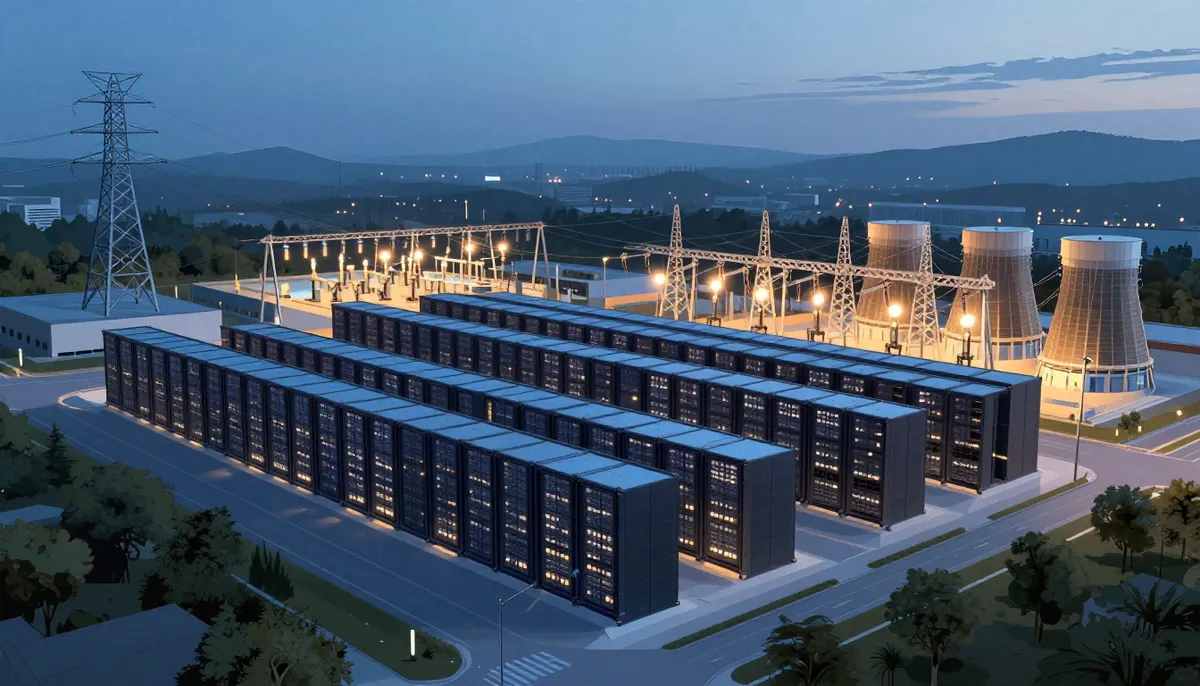
TVA's first large-load tariff customer: $1.7 billion from an unnamed data center
Sources Utility Dive published Nov 24, 11:11 AM ET
What happened: TVA will receive $1.7 billion in aggregate payments from an unnamed data-center customer under its new tariff for loads above 5 MW, per a November 12 SEC filing. Capacity commitment charges run about $1.5 million per MW of requested capacity above 5 MW, based on TVA's cohort pricing, and the tariff took effect October 1 with a phase-in through 2029 for existing customers.
What's genuinely new: CEO Mike Skaggs, made permanent at the November 10 board meeting after coming out of retirement as interim, said the higher data-center rates support investments including extending the lives of existing nuclear units and building up a nuclear fuel and supply hub in East Tennessee. TVA plans $13 billion of capital spending over three years, targets a 1.5-GW gas plant online by 2032 — funded with $463 million already spent on the defunct Middle Tennessee project plus up to $3.1 billion more — and still has not decided whether to build a BWRX-300 at Clinch River despite holding its construction permit.
Watch: The customer's identity, further signings under the tariff, and TVA decisions on the gas plant and Clinch River.
Posiva runs its first test transport to the Olkilueto encapsulation plant
Sources World Nuclear News World Nuclear News, link 2 published Nov 24, 6:11 AM ET
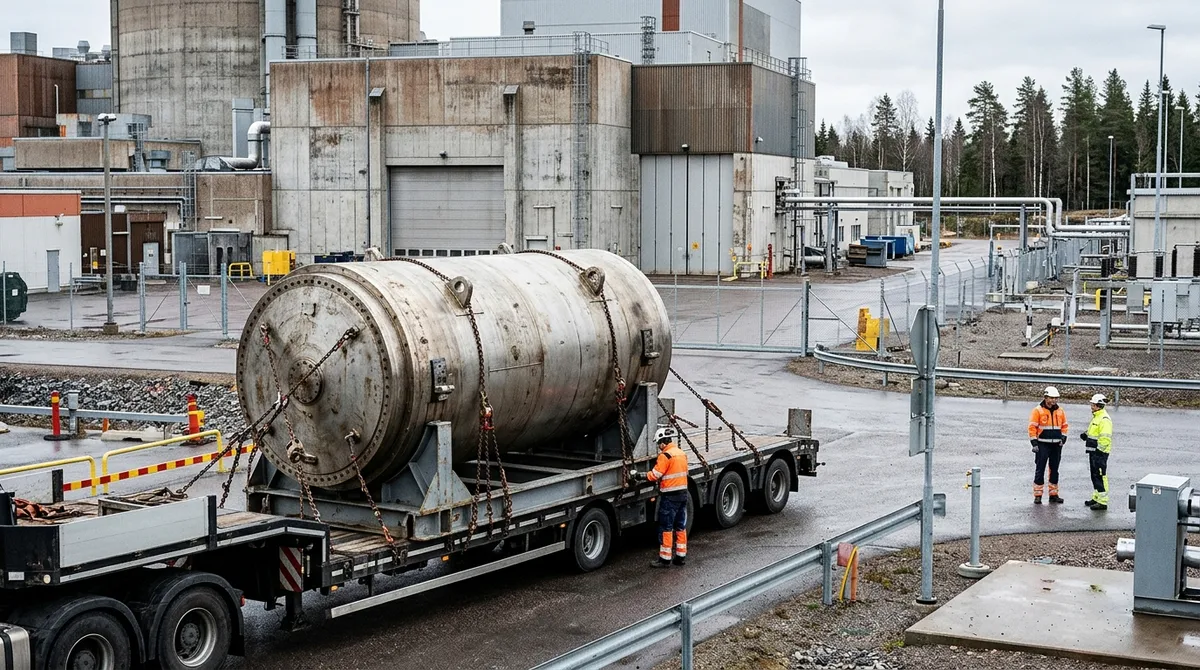
What happened: Posiva, Finland's radioactive waste management company, has completed the first test transport of a used-fuel transfer cask to its encapsulation plant at Olkilueto. Casks run between the plant's reactor sites and interim storage for years, but never before all the way to the encapsulation plant. The route stretched from a few hundred metres to about three kilometres, and the cask, carrying no actual fuel, was docked to the handling cell that will receive genuinely used fuel once disposal begins.
What's genuinely new: The test extends the commissioning programme under the operating licence Posiva applied for in December 2021 and received in October 2026, running from March 2024 to the end of 2070 and covering fuel from TVO's Olkiluoto and Fortum's Loviisa plants. Posiva reports the run went without surprises, will make minor equipment adjustments, and still has a fuller test of the fuel transfer machine ahead.
Watch: The next cask test run and the start of production operation — up to 60 copper-and-cast-iron canisters a year, roughly 3,300 in total, with disposal running into the 2120s.
More context: The operating licence behind the work, granted by the Finnish government in October 2026, allows Posiva to dispose of up to 6,500 tonnes of uranium in roughly 3,300 copper-and-cast-iron canisters at a maximum of 60 a year, with disposal expected to continue into the 2120s, World Nuclear News reported at the time.
India: RAPP-8 cleared for first criticality, Kaiga 1 restarts after a 600-day refurbishment
Sources World Nuclear News published Nov 24, 12:10 PM ET
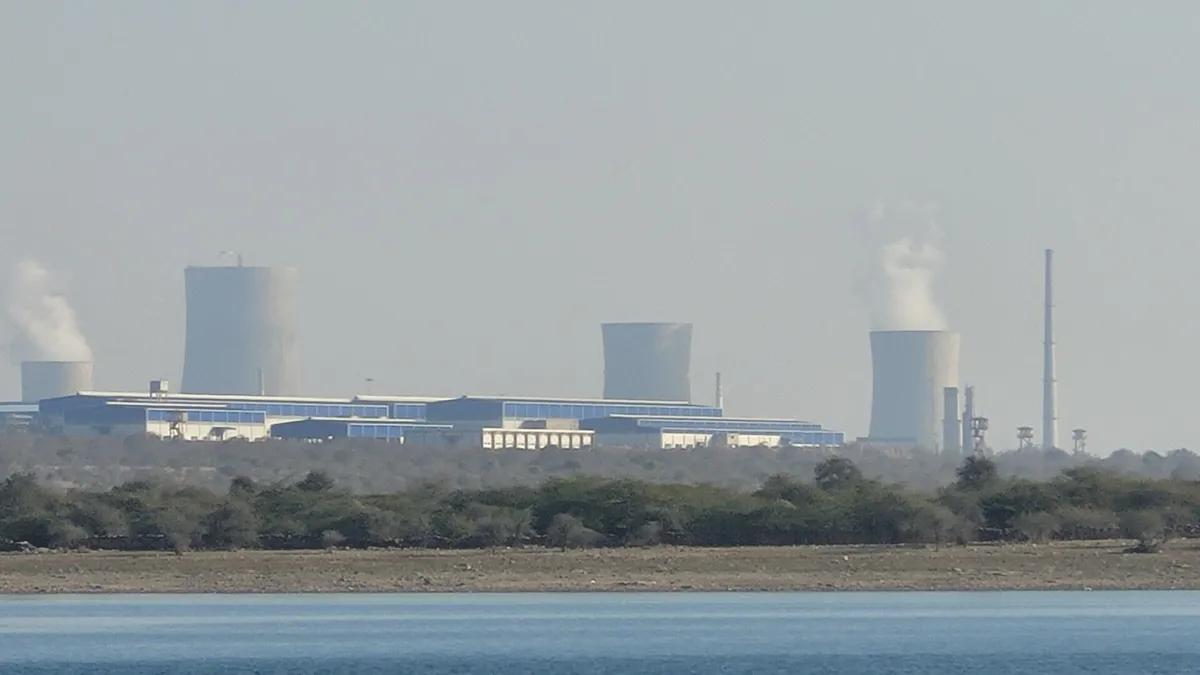
What happened: India's regulator, the Atomic Energy Regulatory Board, cleared Nuclear Power Corporation of India's RAPP unit 8 — a 700-MWe pressurised heavy water reactor at the Rajasthan Atomic Power Project — for its First Approach to Criticality on November 19, after safety reviews and inspections. Fuel loading began there on September 19. Kaiga unit 1, a 200-MWe reactor first connected to the grid in 2000, returned to criticality on November 22 after a full refurbishment shutdown that began April 1, 2025.
What's genuinely new: Kaiga 1's coolant-channel and feeder replacement took 600 days — a fleet-wide benchmark, NPCIL says, and the first of its reactors to reach criticality that soon after such an outage. RAPP-8 is the second of a 700-MWe pair at Rajasthan and the fourth of sixteen such units being built; its neighbour RAPP-7 reached full power in 2026 after first criticality in September 2024 and grid connection in March 2025.
Watch: RAPP-8's criticality, commissioning tests and regulatory permissions on the path to commercial generation.
US uranium output slumped 78% in Q3 as White Mesa readies a December restart
Sources World Nuclear News EIA published Nov 24, 5:22 AM ET
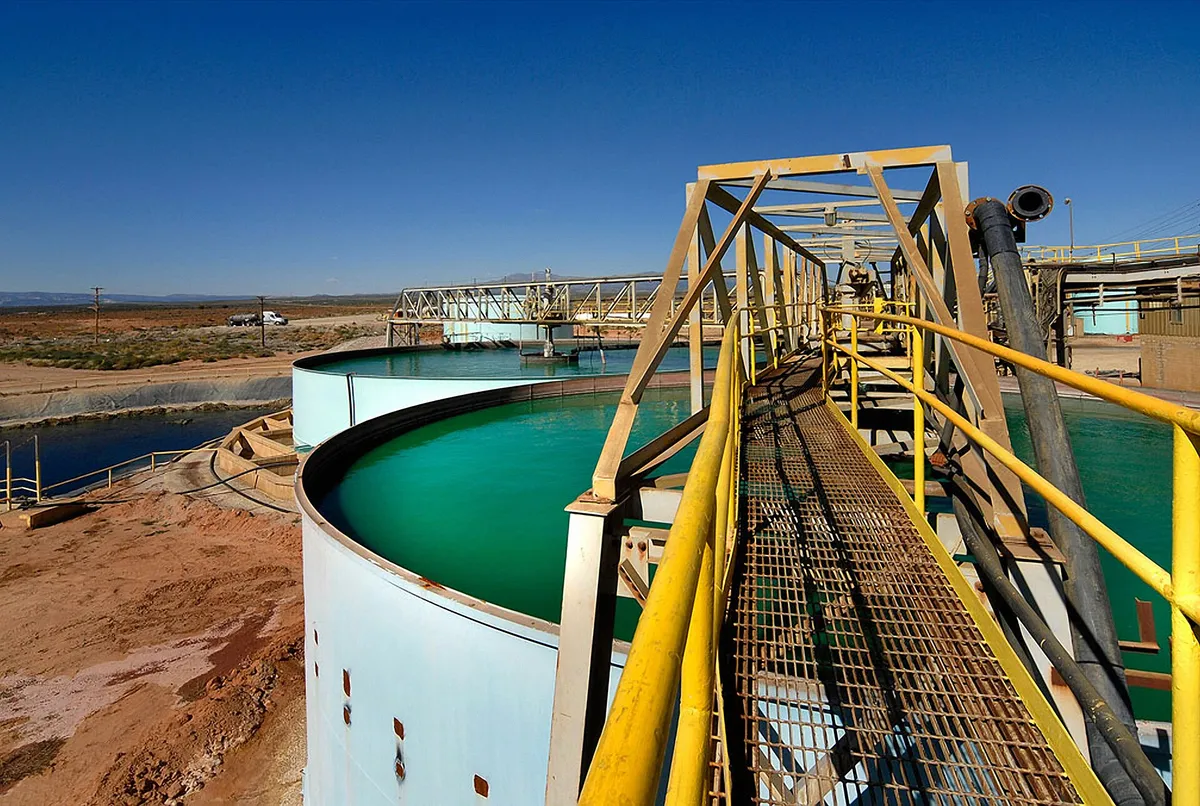
What happened: US production of uranium concentrate fell 78% in the third quarter of 2026, to 243,673 pounds U3O8 (about 110.5 metric tonnes), per the Energy Information Administration. The drop was driven by the pause at Energy Fuels' White Mesa mill in southern Utah, the only operating conventional uranium mill in the US, which stopped uranium processing in June after hitting its 2026 guidance to rebuild ore inventory and switch to rare-earth processing. Eight in-situ recovery plants in Wyoming, Texas and Nebraska kept producing.
What's genuinely new: Energy Fuels plans a large-scale uranium campaign beginning in December 2026, expected to produce about 1 million pounds U3O8 and support contract deliveries through 2028, before the mill returns mostly to rare-earth processing through much of 2027–2028. It still expects 1.6–2.0 million pounds total for 2026 and is advancing Whirlwind (nearly production-ready, first output scheduled for 2028, in Colorado on the Colorado–Utah border about 150 miles north of the White Mesa mill), with Energy Queen and Bullfrog in Utah plus drilling at Nichols Ranch, Wyoming — together capable of about 1.25 million pounds a year.
Watch: The December campaign volumes, Whirlwind's permitting and 2028 start, and a possible Nichols Ranch restart, as Pinyon Plain winds down.
More context: The EIA reports that third-quarter 2026 US uranium concentrate output of 243,673 pounds U3O8 was a 78% fall from the 1,087,504 pounds produced in the second quarter, all of it from eight in-situ recovery facilities in Wyoming, Texas and Nebraska.
Sandia's SPINE robot to inspect Hanford's narrow waste-tank pipes

Sources ANS published Nov 24, 8:12 AM ET
What happened: Sandia National Laboratories has developed SPINE — Self-Propelled Interior Inspector for Nondestructive-Testing Examination — a two-by-six-inch, six-wheeled robot built to crawl hundreds of feet through pipes as narrow as two inches in diameter. It is designed to inspect the aging lines that link underground radioactive-waste storage tanks at the Hanford Site in Washington state. Waste there dates to Manhattan Project-era plutonium production, and today's push cameras examine only about ten feet of pipe at a time.
What's genuinely new: A design paper appeared in the journal Robotics in October 2026. The robot uses a flexible, multi-axis body with adaptive wheels, steers through sharp bends and T-joints, and is driven from a standard video-game controller. It carries payloads such as ultrasonic or electromagnetic probes. The team solved the capstan effect, the friction build-up that makes dragging a cable through many bends increasingly hard, so multiple robots can work over hundreds of feet on one cable.
Watch: Self-cleaning, failsafe-recovery and ultrasonic-sensor upgrades before SPINE deploys at Hanford.
Standard Nuclear files final safety analyses for two new TRISO plants
Sources World Nuclear News published Nov 24, 8:40 AM ET
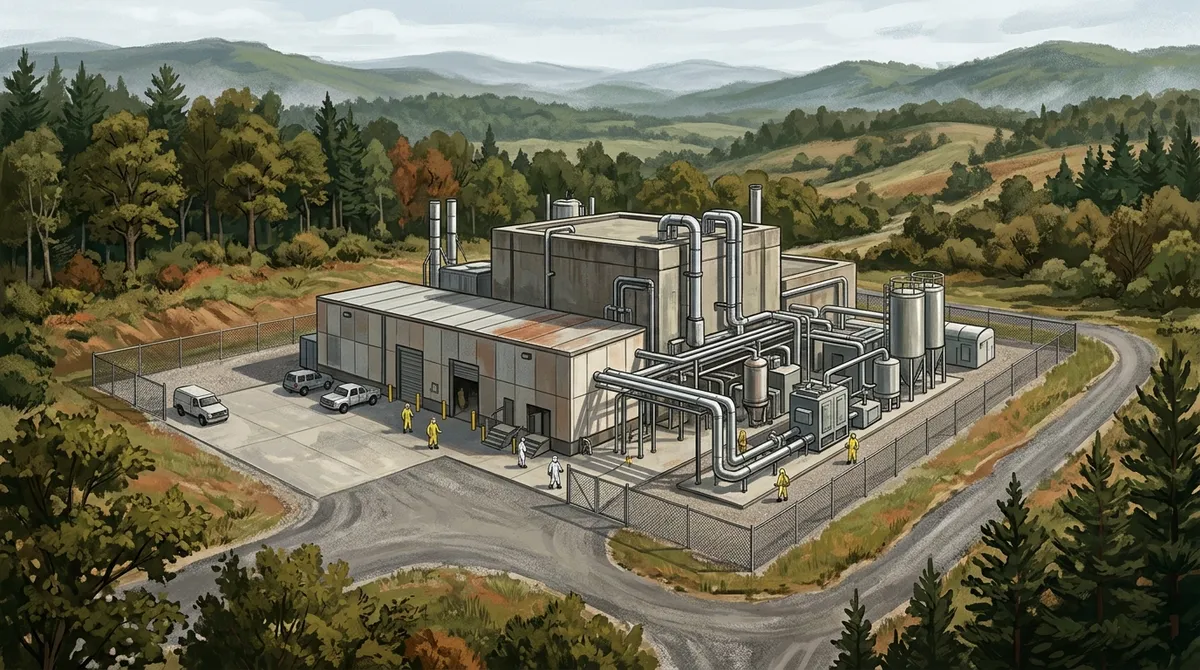
What happened: Standard Nuclear, a reactor-agnostic producer of TRISO fuels, has submitted Documented Safety Analyses for two new identical TRISO fuel plants — one in Tennessee and one in Idaho — to the US Department of Energy for review, submitting them on November 6 and November 12. TRISO fuel is made of poppy-seed-sized uranium spheres wrapped in layered carbon and ceramic, each acting as its own containment, and is the preferred fuel in several advanced reactor designs.
What's genuinely new: The Documented Safety Analysis is the final and most comprehensive step in DOE authorization, building on preliminary analyses the DOE approved for both facilities in July 2026. Approval would let the company fulfil existing 2027 fuel production orders. Standard Nuclear already produces DOE-authorised HALEU TRISO fuel at its SN-0 plant at the former K-25 site in Oak Ridge and holds NRC approval for production in Richland, Washington through its joint venture with Framatome.
Watch: DOE review outcomes for the Tennessee and Idaho plants, and delivery of the 2027 fuel orders.
Zambia's nuclear-power plan reviewed by the IAEA
Sources World Nuclear News published Nov 24, 4:33 AM ET
What happened: An International Atomic Energy Agency mission says Zambia has made good progress developing the infrastructure for a nuclear power programme as the country considers building a nuclear plant. An Integrated Nuclear Infrastructure Review mission in the first week of November brought five experts from Egypt, Kenya, Morocco, Russia and South Africa plus four IAEA staff.
What's genuinely new: Zambia's cabinet approved in principle continuing the nuclear power programme in 2025 and instructed all relevant institutions to do the preparatory work, ministers Peter Kapala and Felix Mutati said. Nuclear would back a 10,000-MW generating-capacity ambition and cut reliance on hydropower. The mission flagged good practices — regional regulatory knowledge-sharing with other African countries, early postgraduate university programmes and national-census-run opinion surveys — and recommended strengthening the programme's coordination, finalising the national strategy's report and studies, enhancing the legal framework, and defining funding and staffing needs.
Watch: An integrated IAEA–Zambia work plan and the national strategy's completion.
NASA solicits proposals for Lunar Reactor-1

Sources ANS published Nov 24, 4:47 PM ET
What happened: NASA has issued a request for proposals for Lunar Reactor-1 (LR-1), a small fission power system to support "future habitats, communications systems, rovers, scientific instruments, and other essential infrastructure" on the Moon. The reactor must generate 20 kilowatts electric and hold that output after a single system failure, be launch-ready by December 2030, and run at least five years without maintenance through the 14.75-day lunar night at the south pole.
What's genuinely new: The RFP covers preliminary design and hardware demonstration: selected contractors get 18 months for component-level radiation testing and a nonnuclear Engineering Test Unit demonstrating heat transport, power conversion, heat rejection and power management in a lunar-relevant thermal-vacuum environment. LR-1 uses closed Brayton conversion with high-assay low-enriched uranium, must keep a habitable zone one kilometre away below 5 rem above lunar background per year, and falls under DOE safety standards (DOE-STD-1271). It sits in NASA's Space Reactors Division alongside SR-1 Freedom, whose 2028 launch should supply supporting data.
Watch: Bid selection, whether SR-1's 2028 launch feeds LR-1 as planned, and the December 2030 launch-ready date.
Brief
- The NRC is reviewing a construction-permit application for two SMR-300 units — Pioneer Unit 1 and Pioneer Unit 2 — beside the Palisades plant in Covert, Michigan, filed on behalf of Holtec subsidiary Palisades SMR, LLC and received by the agency on September 30, 2026: Part 1 (December 31, 2025) sought a limited work authorization for early construction, and Part 2 carries the complete preliminary safety analysis report. Staff are doing an acceptance review under docket NRC-2026-0265, and if the application is docketed, further Federal Register notices will explain how the public can take part (Ecoticias)
- On November 23 the NRC found no significant environmental impact from a fuel site in Oak Ridge, Tennessee, for 1-megawatt microreactors built by Radiant Industries, per the same report (Ecoticias)
- Research and Markets has added a paid report, "The Global Nuclear Small Modular Reactors (SMR) Market 2027-2047," to its catalogue, projecting global SMR capacity scenarios in 2047 ranging from about 90 GW to more than 700 GW by reactor type, region and application. AI data centers, industrial heat and energy security are named as demand drivers, and HALEU fuel availability is flagged as a constraint (GlobeNewswire via Yahoo Finance)
- A Japanese-language profile of fusion startup Helical Fusion — founded October 2021 on National Institute for Fusion Science research, pursuing the helical (stellarator) approach — recaps the company's Helix Plan: component tests in the mid-2020s, the Helix HARUKA demonstration device under construction in Toki, Gifu Prefecture, completed in the mid-2030s, and first practical generation at the Helix KANATA plant. It puts total funding at about ¥33.2 billion (roughly $220 million), including a METI subsidy of up to ¥19.2 billion (roughly $130 million), with Fujikura, Fuji Electric, Mitsui Mining & Smelting, Sugino Machine, Tokyo Gas and Ando Hazama named as partners (note.com)
- Governor Kathy Hochul is pitching New York's advanced nuclear master plan beyond state lines, saying the completed 30-point roadmap with its 5-gigawatt new-nuclear target can serve as a model for other states (NucNet)
- Idaho National Laboratory's Center for Used Fuel Research has picked Guidedwave's acoustic-emissions sensors for a demonstration monitoring a simulated nuclear-fuel canister at the shuttered San Onofre plant in California, where a Holtec UMAX canister can be heated to mimic operating conditions. Guidedwave won after predemonstration testing against fellow finalist Sensible Voltaics; automated monitoring is pitched at a consolidated federal storage complex that could grow to thousands of canisters holding more than 90,000 metric tons of used fuel (ANS)
- Knoxville fusion startup Type One Energy and the University of Tennessee won Tennessee's first-ever IRIS grant — a two-year, $5.8 million research partnership split evenly between the company and a matching $2.9 million from the state economic-development department — to develop coated ceramic breeder "pebble" particles for producing and managing tritium, announced by Gov. Bill Lee's administration on November 23. The company also still has Project Infinity in Clinton, holding the nation's first commercial fusion project licence issued August 31 (Hoodline)
- Westinghouse Electric announced an agreement qualifying BWXT Canada to manufacture key AP1000 reactor components in Canada and the US, giving BWX Technologies access to Westinghouse specifications, designs and manufacturing expertise for large nuclear-grade equipment as its completed Cambridge, Ontario expansion adds capacity for steam generators and pressure vessels (Simply Wall St. via Yahoo Finance)
- POWER's write-up of the NRC record behind the Long Mott construction permit adds that Dow selected a NextEra Energy Resources subsidiary to operate the four-unit, 800-MWth pebble-bed Xe-100 project at Seadrift, Texas, and is expected to weigh a preliminary investment decision in 2027 — ahead of the separate final decision that would authorise full-scale nuclear construction — with initial energy delivery targeted for the early 2030s; the November 9 permit is the agency's first for an HTGR since 1968 (POWER)