Energy digest — Nov 23, 2026
Top line: New York's completed Advanced Nuclear Master Plan leads the day, alongside the DOE's user-facility designation of Idaho National Laboratory's computing center, which launches the Arco supercomputer. Nuclear construction is at a 35-year high in the IEA's outlook. The NRC also opened comments on the Crownpoint uranium project in New Mexico.
- IEA World Energy Outlook: nuclear building at a 35-year high
- New York completes its Advanced Nuclear Master Plan
- INL computing facility becomes DOE-NE user facility, launching its Arco supercomputer
- Type One Energy and University of Tennessee win the state's first IRIS grant for fusion research
- First uranium-molybdenum fuel plates move FRM II toward low-enriched fuel
- NRC opens public comments on the Crownpoint uranium project's environmental review
- SR-1 Freedom team lays out space reactor startup and ground-test plans
IEA World Energy Outlook: nuclear building at a 35-year high
Sources American Nuclear Society published Nov 23, 10:31 AM ET
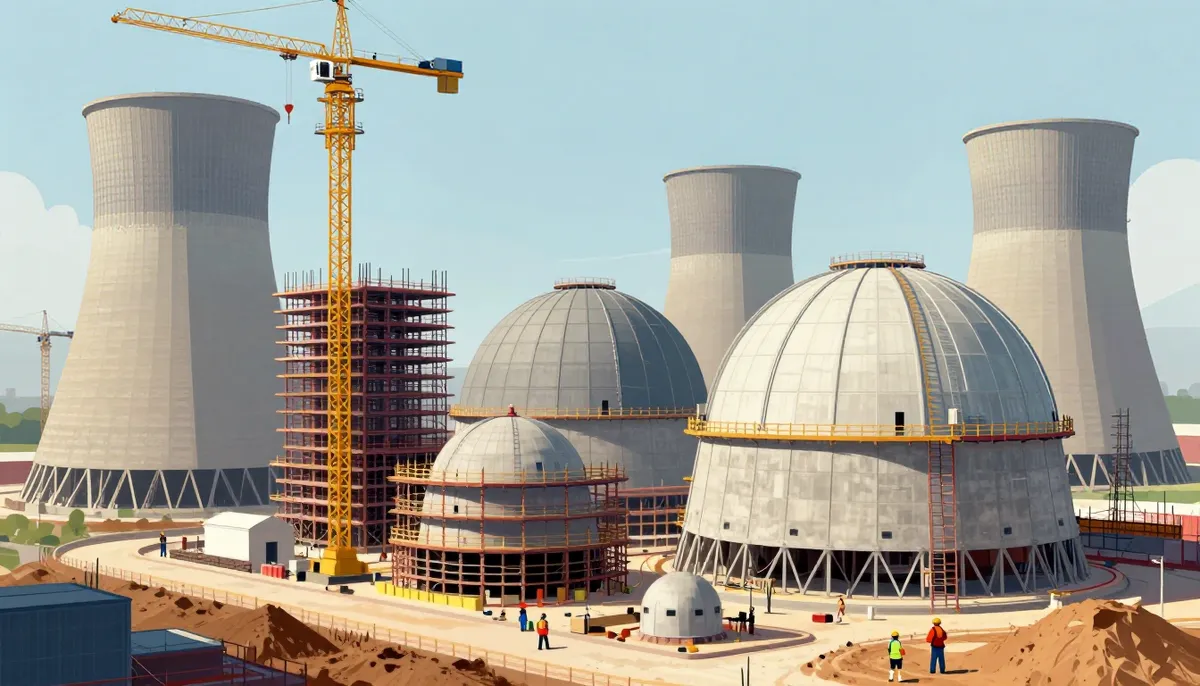
What happened: The IEA's World Energy Outlook 2026 counts nearly 90 GW of new nuclear capacity under construction in 17 countries in 2026 — the highest level in more than 35 years — with construction starting on eight reactors in the first half of 2026, among the highest levels in 40 years. More than 50 countries have nuclear plans in place or under discussion, many interested in small reactors. Under the outlook's Current Policies scenario, nuclear generation more than doubles by 2050, lifting nuclear's share of the global energy market to as much as 10 per cent.
What's genuinely new: the construction-start count of eight reactors in the first half of 2026, the 50-country tally and the 2050 doubling projection, alongside an upward revision to the construction tally. The IEA frames the Middle East conflict and Strait of Hormuz disruptions — "the largest energy supply shock in history" — as pushing countries toward domestic, firm energy sources, with AI and data-center demand strengthening nuclear's case.
Watch: whether construction and policy track the scenario paths to 2035.
New York completes its Advanced Nuclear Master Plan

Sources World Nuclear News WRFA published Nov 23, 10:55 AM ET
What happened: Governor Kathy Hochul announced completion of New York's Master Plan for Responsible Advanced Nuclear Development, a 30-point roadmap toward the state's target of 5 GW of new nuclear capacity in upstate New York — on top of the 3.4 GW already operating. Drafted by the state energy research authority and the Department of Public Service with 12 supporting studies, it sets out a deployment policy framework, site and host-community identification (including brownfields), a nuclear supplier readiness programme, workforce building and adaptations to state regulation.
What's genuinely new: completion of the plan with its full detail, including the US Army's Janus Project microreactor plans at Fort Drum and a national model framing from Hochul. The plan lands amid the New York Power Authority's push to build at least 1 GW upstate, for which ten developers have qualified; Chautauqua County Executive PJ Wendel also reaffirmed pitching the former NRG Dunkirk plant site, citing grid connections, Lake Erie access and a $1.29 million Jamestown Community College nuclear-workforce grant.
Watch: host-community and site selection, NYPA's reactor technology choice, and follow-on state policy actions.
INL computing facility becomes DOE-NE user facility, launching its Arco supercomputer

Sources American Nuclear Society Idaho National Laboratory published Nov 23, 8:08 AM ET
What happened: The Department of Energy's Office of Nuclear Energy designated the Idaho National Laboratory Computing Facility an official user facility — the first US facility of its kind for high-performance computing focused on nuclear energy research. Its modeling, simulation and Collaborative Computing Center resources are now open to users from industry, universities, national laboratories and federal agencies. The designation coincided with the launch of Arco, a GPU-accelerated supercomputer built on Nvidia H200 GPUs and a Hewlett Packard Enterprise XD670 system, optimized for machine-learning and AI workloads in nuclear energy research.
What's genuinely new: both the user-facility designation and Arco's launch. Arco joins Teton, commissioned in January 2026, which quadrupled INL's computing capacity at 20.8 quadrillion calculations per second. The facility aligns with DOE's Genesis Mission AI initiative and backs the 32-partner Prometheus collaboration led by INL, which received a Genesis Mission award to deploy AI across nuclear plant design, licensing, manufacturing, construction and operations.
Watch: which external users take on research at the facility, and the Genesis Mission and Prometheus workloads running on Arco.
More context: The Department of Energy's Office of Nuclear Energy has designated the Idaho National Laboratory Computing Facility a user facility, making it the first high-performance computing facility in the country dedicated to nuclear energy research, Idaho National Laboratory says. The lab recently deployed Arco, a GPU-accelerated supercomputer funded through the Nuclear Science User Facilities program and built on Nvidia H200 GPUs, which follows the January 2026 commissioning of Teton and gives researchers complementary CPU and GPU resources, according to Idaho National Laboratory. INL is leading Prometheus, a 32-partner collaboration that recently received a Genesis Mission award to deploy artificial intelligence across nuclear plant design, licensing, manufacturing, construction and operations, Idaho National Laboratory states.
Type One Energy and University of Tennessee win the state's first IRIS grant for fusion research
Sources WBIR-TV Knoxville TNECD published Nov 23, 12:25 PM ET
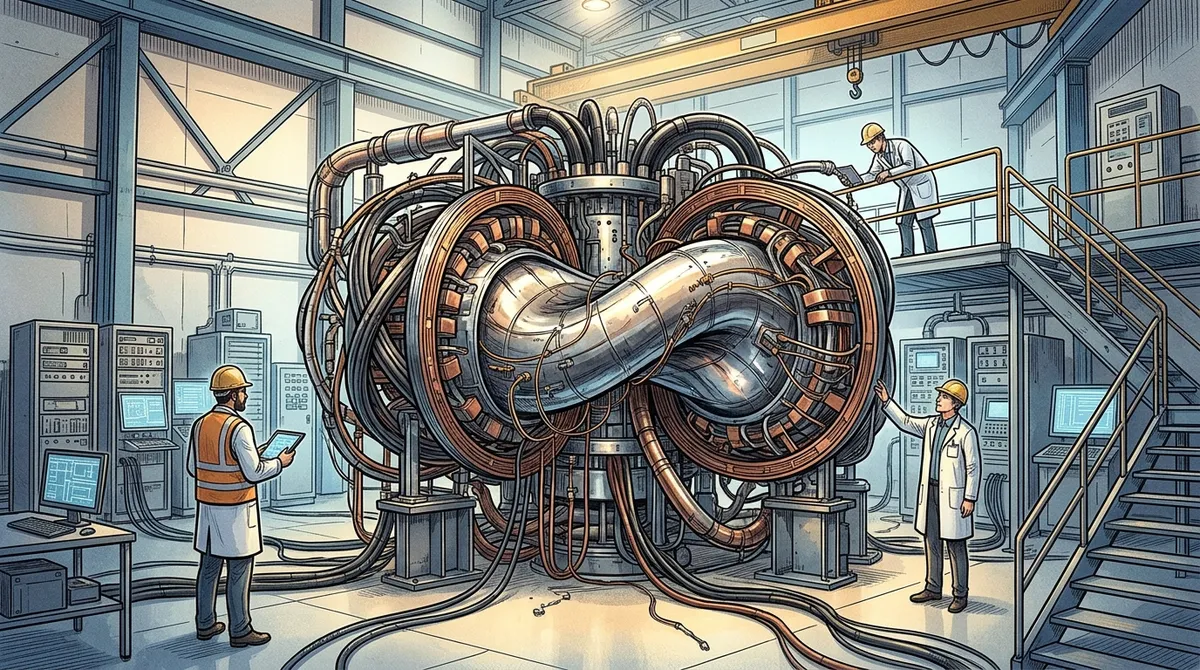
What happened: Tennessee Governor Bill Lee and Deputy Governor Stuart McWhorter announced that Type One Energy and the University of Tennessee, Knoxville's Tickle College of Engineering are the first recipients of the Tennessee Department of Economic and Community Development's Innovation & Research for Industry Success (IRIS) grant. The two-year project, worth $5.8 million — $2.9 million from Type One Energy plus a $2.9 million state grant — will develop a new class of coated ceramic breeder particles, or "pebbles," aimed at producing and managing tritium, the fuel future fusion power plants need.
What's genuinely new: the first-ever IRIS grant, drawn from the $63 million innovation allocation in Tennessee's FY2026 budget approved in 2025, launches a new state program pairing Tennessee companies with universities. Type One chief science & engineering officer John Canik ties the work to Project Infinity — the company's 400-MWe Infinity Two commercial plant planned in Clinton, Tennessee.
Watch: results from the breeder-pebble research, and future IRIS grantees.
First uranium-molybdenum fuel plates move FRM II toward low-enriched fuel
Sources World Nuclear News published Nov 23, 10:42 AM ET
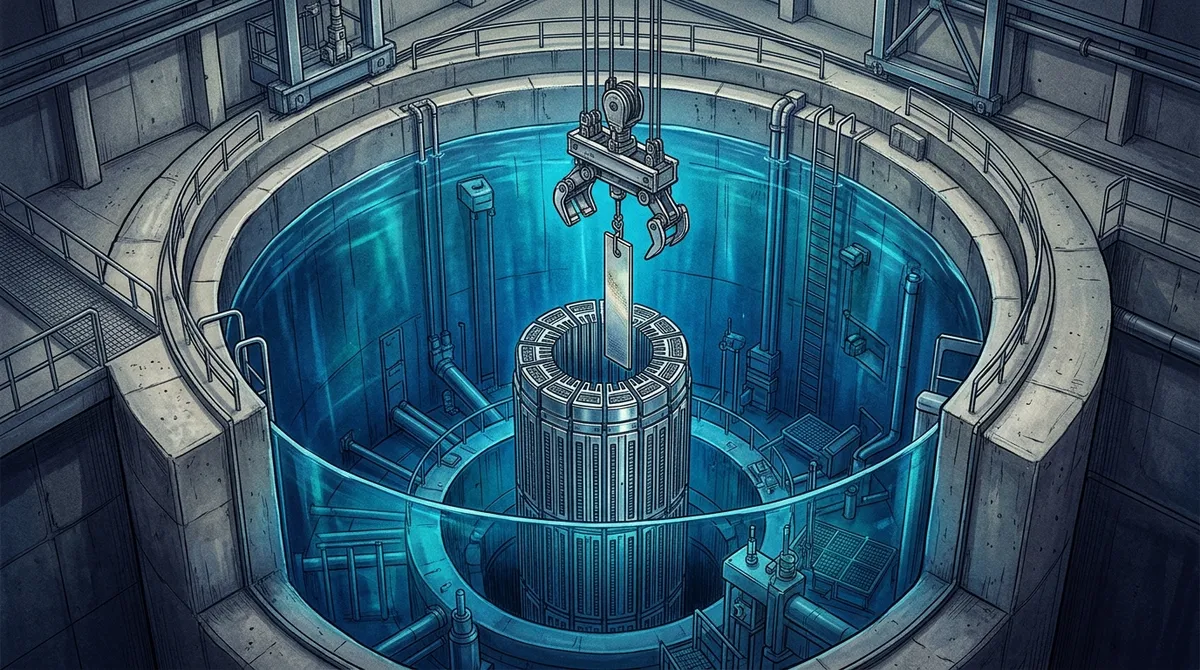
What happened: Framatome has fabricated the first depleted-uranium plates of the monolithic uranium-molybdenum fuel being developed to convert the Technical University of Munich's FRM II research reactor from highly enriched uranium, containing over 95% uranium-235, to fuel enriched below 20%. The plates were made at Framatome's CERCA plant in Romans-sur-Isère, France, under a 2024 cooperation agreement with the university; the reactor, a 20-MW high-flux neutron source since 2005, is being converted because of nuclear-proliferation concerns.
What's genuinely new: the first two plates at final dimensions, which Framatome says validate the manufacturing technology for Europe's highest-density fuel — an industrial-capability step funded by Bavaria and the European Commission's EUR12.8 million (USD13.3 million) EU-CONVERSION project. A test assembly of high-assay low-enriched uranium plates is next, with irradiation testing scheduled for 2028; the plates themselves are not for reactor use.
Watch: fabrication of the test assembly, the 2028 irradiation campaign and fuel qualification.
NRC opens public comments on the Crownpoint uranium project's environmental review
Sources American Nuclear Society published Nov 23, 2:01 PM ET
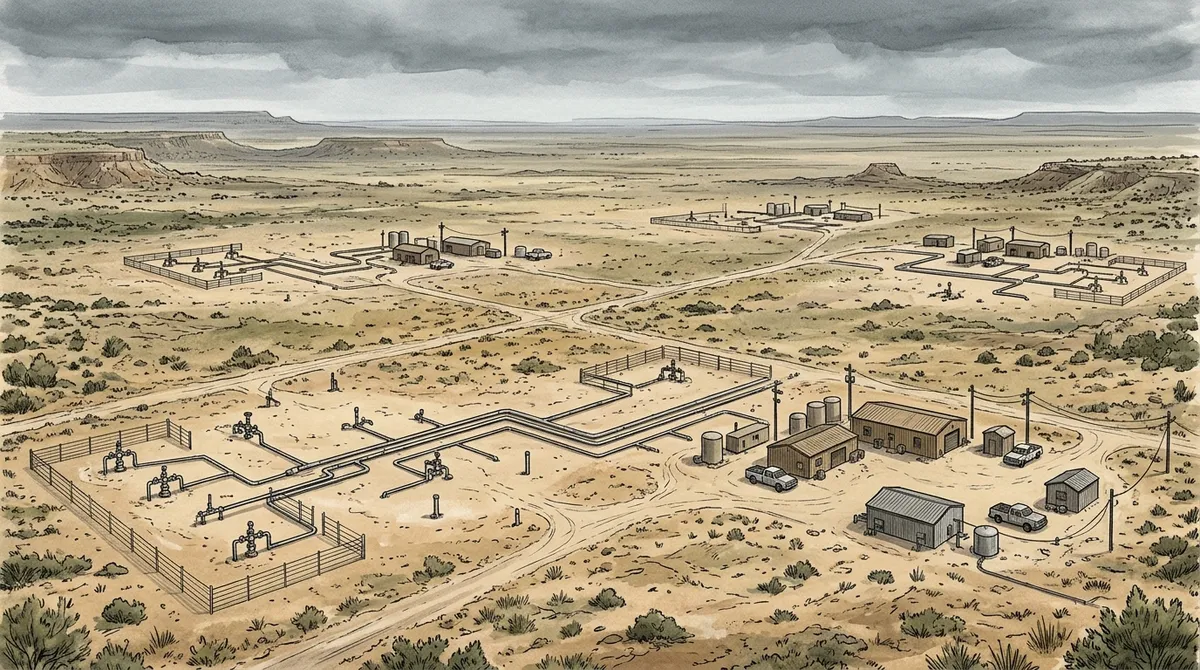
What happened: Through December 21, the Nuclear Regulatory Commission is accepting public comments on a draft environmental assessment, a draft programmatic agreement and a finding of no significant impact for NuFuels' renewal of license SUA-1580 to build and operate the Crownpoint Uranium Project — four in situ recovery uranium mining sites in McKinley County, New Mexico. NuFuels is a subsidiary of Laramide Resources. The project's initial license dates to 1998, but construction never began amid litigation, uranium-market swings and negotiations with the Navajo Nation, whose 2005 Diné Natural Resources Protection Act bans uranium mining and milling on Navajo land.
What's genuinely new: the open comment period — 30 days from the November publication of the draft assessment — and the current state of New Mexico's Department of Justice petition to intervene, filed in July: the NRC found six environmental and two safety contentions admissible and recommended the Atomic Safety and Licensing Board grant it in part, and the state has 30 days from the draft assessment's publication to add amended contentions. The renewal also lands inside an August 2026 ban on new uranium mining on New Mexico state lands.
Watch: amended contentions from New Mexico's Department of Justice, the licensing board's ruling on the petition, and what the comment period draws.
SR-1 Freedom team lays out space reactor startup and ground-test plans

Sources American Nuclear Society published Nov 23, 5:16 PM ET
What happened: Panels at the American Nuclear Society Winter Conference in Phoenix laid out how Space Reactor-1 Freedom — the Idaho National Laboratory-led program aiming to be the first demonstration of nuclear propulsion in space — would actually run. After launch, the reactor is started up under Department of Energy procedures, with a DOE reactor operator sitting next to a NASA operator at Johnson Space Center and about seven days of checks before the reactor is shut down again until the Skyfall payload is delivered to Mars; afterward it restarts for testing that may include purposely failing components. Control is automated with human stopping points, not autonomous.
What's genuinely new: the mission's startup sequencing and the ground-test schedule — the VALKRE test reactor at Idaho National Laboratory, which will operate flight control hardware to the zero-criticality point, is scheduled to go critical in the summer of 2027, with zero-power criticality testing of SR-1 itself also planned at INL and an engineering demonstration unit in development. NASA Administrator Jared Isaacman has described SR-1 as a "70 percent solution to prove that it works"; program lead Dianne Ezell called it a "C+ reactor" whose data helps industry build a better one. SR-1 is also designed to support a lunar reactor, LR-1, and a later SR-2 mission.
Watch: VALKRE's summer 2027 criticality, the engineering demonstration unit and zero-power testing, and SR-1's launch schedule.
Brief
- Japan's Ministry of Economy, Trade and Industry selected stellarator developer Helical Fusion for its milestone-based fusion public-private partnership programme, with up to ¥19.2 billion (about USD 130 million) to support technology development and design of a first power-generating facility targeted for demonstration in the 2030s (Nikkei · Fusion Industry Association) (single source)
- Energy Fuels disclosed a plan to process about one million pounds of uranium concentrate at its White Mesa Mill in Utah from December through the first quarter of 2027, supporting delivery contracts that raise expected 2027 contracted sales to 1.11 million pounds from 820,000 pounds in 2026 (24/7 Wall St.) (single source)
- Iran's Atomic Energy Organization says the country is preparing to commission its first fully indigenous nuclear fusion system, with AEOI head Mohammad Eslami citing progress within the project's schedule and potential radiopharmaceutical and diagnostic applications — a state-media claim with no independent verification yet (Tehran Times)
- Korea Trade Insurance Corporation (K-Sure) and Slovakia's Eximbanka signed a memorandum of understanding to support power and utility projects including nuclear plants and their supply chains; nuclear supplies more than half of Slovakia's electricity, and the country is pursuing new reactors (World Nuclear News)
- Commonwealth Fusion Systems co-founder and CEO Bob Mumgaard tells The Economist that fusion power is "about to start working," crediting advances in computing, manufacturing and superconducting magnets, with the company's SPARC machine scheduled to begin operations in 2027 (The Economist)
- The NRC's statutory public notices on Holtec's phased construction permit application for two SMR-300 Pioneer units at the Palisades Energy Center in Covert, Michigan, have reached the third of four required weekly notices: Part 2 — the complete preliminary safety analysis for the roughly 680-MWe twin units, filed September 30, 2026 after Part 1 in December 2025 — is under acceptance review in docket NRC-2026-0265, with early site excavation and diaphragm cutoff wall construction already allowed by exemption ahead of a limited work authorization (CASRAI) (single source)